Open Science is a Liberating, Bumpy Road
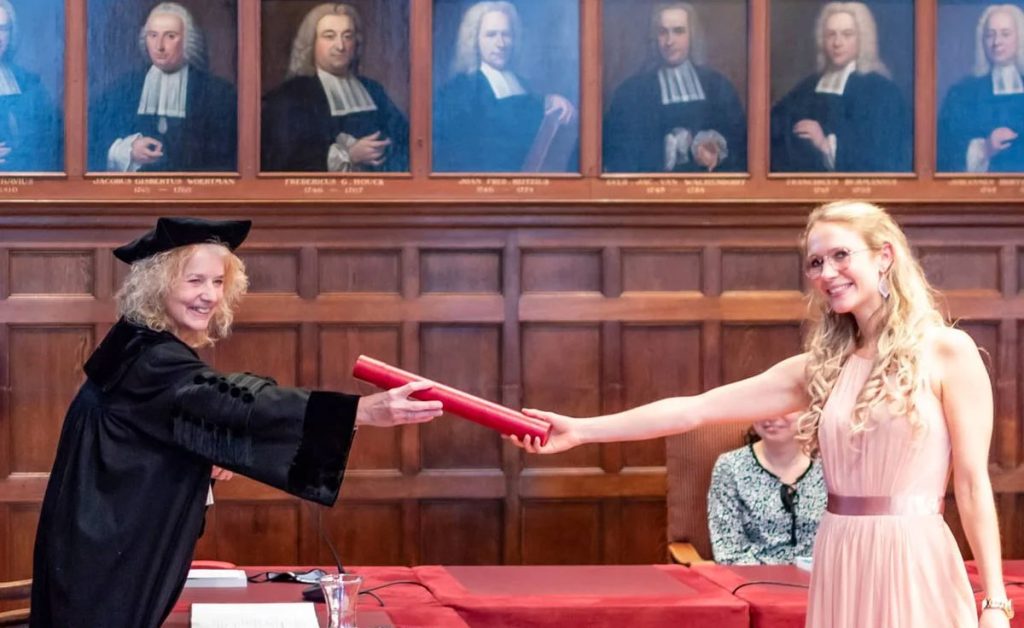
Lydia Laninga-Wijnen
I am Lydia Laninga-Wijnen, a senior research fellow at INVEST and coordinator of the Open Science Community in Turku. I live in the Netherlands.
During my master’s studies, I was taught to conduct research following the “old models of science”. The advice was clear: if I had a research idea and some hypotheses, I should first dive into the data, extract results, and then craft my paper in a way that built neatly toward those findings — maximizing my chances of publication. I followed this approach, believing it was the proper way to do science.
When I began my PhD, Open Science initiatives were gaining traction in the Netherlands. I was intrigued by discussions about “questionable research practices” — many of which I had learned during my education. Examples of questionable research practices are HARKING: pretending like you had a hypothesis all along (while you actually just made up a hypothesis after knowing the results). Or p-hacking: trying to obtain a significant finding by throwing in more covariates in your model, or selecting a slightly different sample.
I came to understand how these practices could lead to non-replicable findings, ultimately threatening the integrity of science. Yet, abandoning them was not easy. Fear held me back. I needed publications to complete my PhD, and I worried that Open Science might slow me down. I also doubted myself: what if I pre-registered a flawed idea? What if my shared syntaxes contained mistakes?
Fortunately, my department embraced Open Science, and my supervisors encouraged me to adopt its practices. Once I did, I realized it was not as daunting as I had feared. In fact, it was liberating. And — contrary to my concerns — it even saved me time! Knowing that others would need to understand my work, I became more structured in saving my syntaxes, making revisions and sensitivity analyses much easier. Pre-registering my studies helped me think critically about the best strategies for answering my research questions, preventing me from hitting dead ends. My pre-registrations became my roadmap and my safe haven—especially when reviewers requested additional results.
But it is not only rainbows and unicorns. Pioneering in Open Science sometimes comes along with frustrating experiences, for instance because editors at leading journals seem not up to date on Open Science developments. I submitted a Stage I registered report outlining clear, theory-based hypotheses: I aimed to examine whether victims of bullying feel better when others defend them. The report was desk-rejected in one leading journal of the field. The editor reasoned, “What if your hypotheses are not supported? Then the study would be worthless.” Yet, another leading journal later accepted it with almost no revisions. In another case, I received an in principle acceptance for a registered report at Stage I, meaning my research plan was approved. However, upon submitting Stage II, where adherence to the plan should have been the focus, the editor — seemingly unhappy with the results — began questioning elements that had already been approved in Stage I.
These experiences showed me that Open Science still has a long way to go before it is fully embedded in the research ecosystem. For individual researchers, the road can be bumpy. But what keeps me going is the realization that we are raising a new generation of researchers —o ne that is better informed about both the benefits and challenges of Open Science.
Ultimately, Open Science has made me a better researcher. I have been fortunate to work in environments that actively support it. Some people fear that Open Science could become a rigid dogma, but it is not. The old model — that was a dogma.
Open Science encourages us to critically reflect on what science is and what it should be. It does not impose unnecessary rules. I do not always share my data (for instance, when participant anonymity cannot be safeguarded). I do not always pre-register a study (such as when it is highly exploratory). Open Science fosters critical reflection on research practices, promotes collaboration, and increases the impact researchers can make. It is not without flaws or bumps, but I think Open Science practices often improve the way we conduct science.
I took the Open Science bus — on a liberating, bumpy road. And I am glad I did.
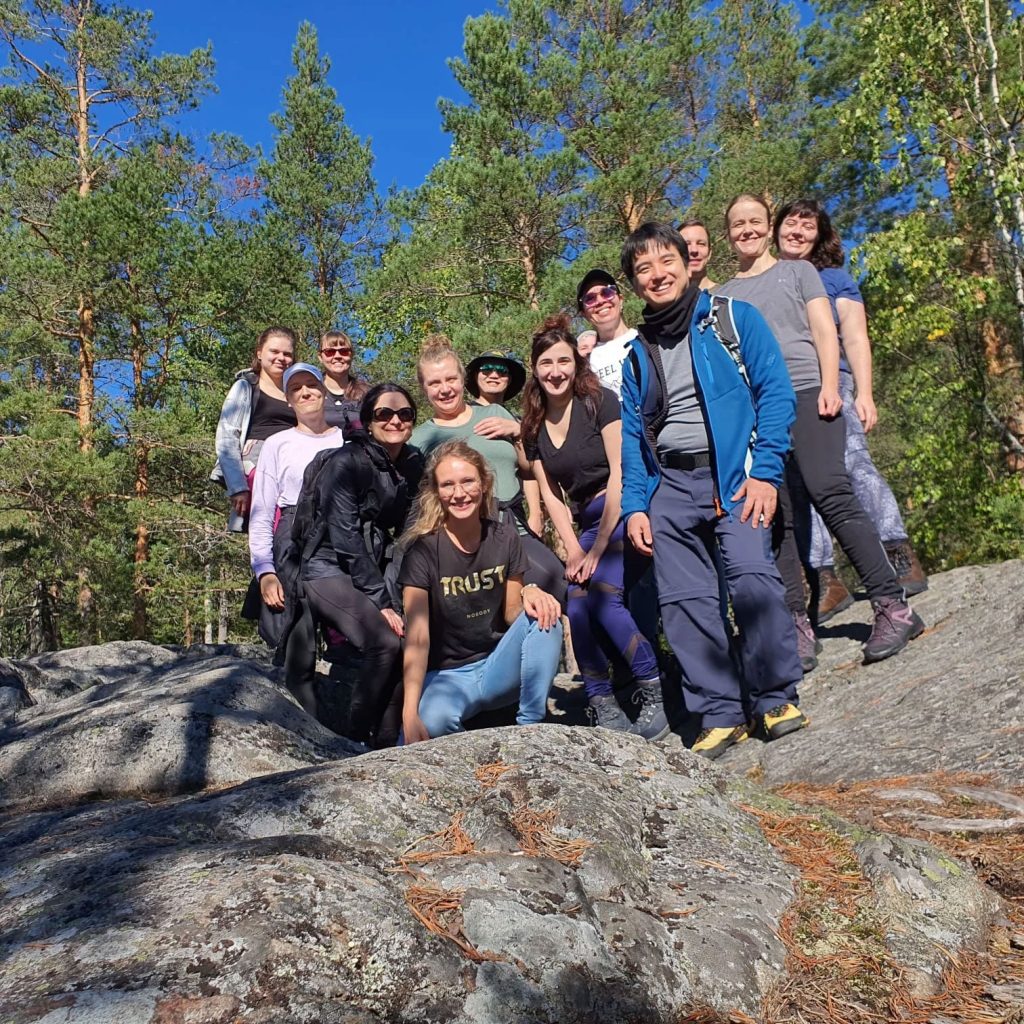
Lydia Laninga-Wijnen (front and center in the photo) with her research group at the INVEST Research Flagship Centre.