
For many in academia, September is the busiest month of the year. We are no exception. It’s been applications, meetings, deadlines, and syllabi all month long. And this September we, Xin Liu and Oscar Winberg, are also taking over the editorship of the TIAS blog. So, as the month is drawing to an end it seems appropriate for us to introduce ourselves and tell you a little bit about our work and our vision for the blog.
-
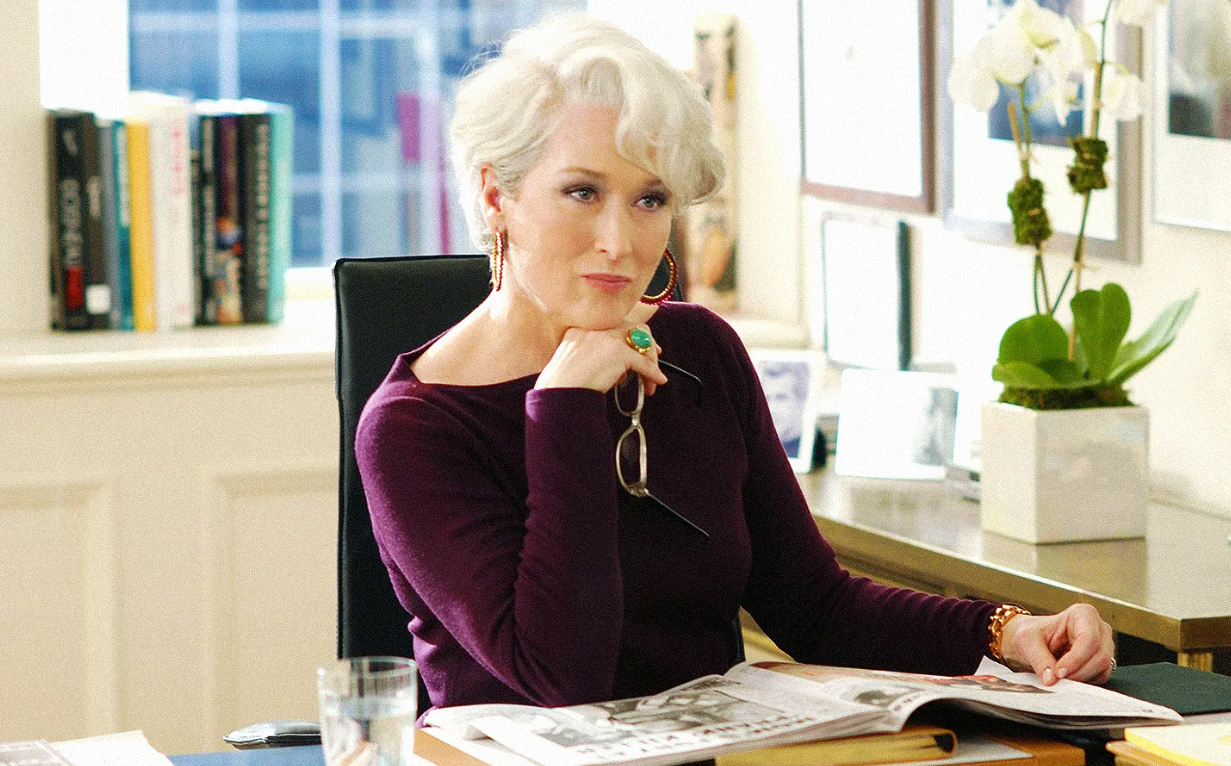
- Meryl Streep in the Devil Wears Prada (2006) modelling the sharp eye of an editor.
Who are you?
Xin: I’m Xin Liu. I am a TIAS collegium fellow, a social scientist, and a game enthusiast. I also hold the position of Associate Professor in Gender Studies at Karlstad University.
Oscar: I’m Oscar Winberg. I am a TIAS postdoctoral fellow, a historian, and a professional television viewer. I’m also the dude people turn to with their questions about Donald Trump.
What do you work on and why?
Xin: My research interests range from wealth and environment to popular culture and digitalization. At TIAS, I study the phenomenon of lottery and the promise of wealth in the Chinese context from historical cultural, political economic, and social perspectives. Before that, I researched issues such as the racial politics of language acquisition in the context of migration, air pollution and digitally mediated environmental politics, and the political economy and affective dynamics of digital games and gamification practices. In addition, I have been collaborating with artists exploring forms of artistic research on the topic of atmosphere. My work explores and explains the production of differences such as the mechanisms of exclusion, hierarchization, and exploitation that underpin socio-cultural, political economic, and technological processes.
Oscar: My focus is the relationship between media and politics in the modern history of the United States. For my TIAS project, I study congressional attempts to control, combat, and change television news through hearings, investigations, and legislation in the 1960s and 1970s. Before that, I worked on the role of television entertainment in political life in the modern United States. My work is informed by a belief that historians spend too much time consuming media content and too little time analyzing media coverage. Media forms popular understandings not only of candidates and campaigns but of what politics is and what politics can do.
-
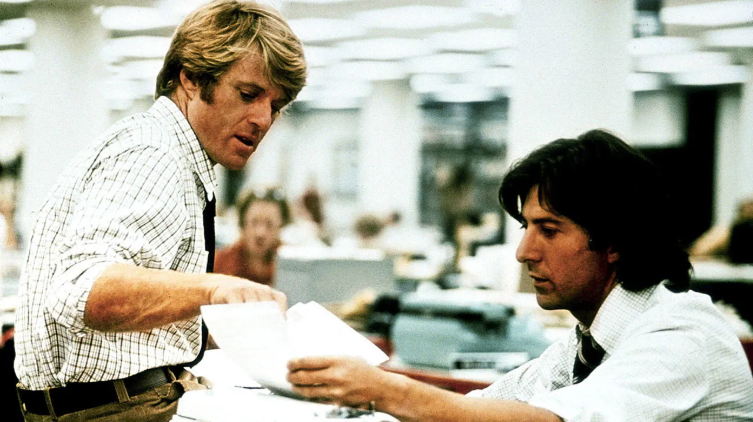
- Robert Redford and Dustin Hoffman exhibiting the spirit of collaboration in All the President’s Men (1976).
What do you bring to the role of editor?
Xin: As a researcher and educator in multi-disciplinary fields and international settings, I find translation a crucial and challenging task. By translation I mean the process through which an idea is explained in a different language, concept, representational genre. Translation is important because it generates shared meaning making practices while making visible different ways in which a problem is understood, experienced and framed. Translation is also important for bridging academic and societal debates, especially in a political climate that is shaped by digitally mediated “echo chambers” that feed into anti-scientism, autocracy and authoritarianism. The blog can offer a space for engagement and time for reflection that breaks away from the algorithmically mediated social media opinion battle fields. As a co-editor of the blog, I am committed to facilitate the TIAS blog as a platform where basic science meets hot topics, and where practices of “in other words” are generative of new approaches to major issues defining our time.
Oscar: Throughout my career, I have been fortunate to have had the opportunity to participate in media discussions of the politics, culture, and history of the United States. I have almost ten years of experience of national and international press, radio, and television interviews. My take-away? We need academics to bring context, nuance, and expertise to public conversations. Finland, a country that regularly ranks among the first in media literacy and trust in the media, is actually a really good place to do this.
But an evening news interview on public broadcasting is very short. Last week, I was given three minutes (which is considered a lot in television news!) to explain the complex issues of free speech, government censorship, the consolidation of media companies, and Jimmy Kimmel. As co-editor of the TIAS blog, I cannot guarantee the reach of an international online publication such as The Conversation or even the local newspaper, but we can provide a space to try out new ideas (in more than three minutes!). And I believe that is valuable.