Learning from Loss: When the People You Study Pass Away

On Monday, I awoke to the news that director, actor, and political activist Rob Reiner and his wife, photographer and producer Michele Singer Reiner, had been killed in their home. Reiner became famous for his role as Michael Stivic on television’s All in the Family in the 1970s, established himself as one of the most respected directors in the 1980s with masterpieces such as This Is Spinal TapThe Princess Bride, and Stand by Me, and turned his fame and money into political activism fighting against the tobacco industry, for children’s education, and leading the charge for same-sex marriage in California and nationally. 

Rob Reiner: I'm going to make a coming of age drama, a fantasy adventure story, a romantic comedy, a psychological horror and then a courtroom drama.Us: Across your entire career?Reiner: In a 6 year period. Us: That sounds-Reiner: -Each one will be arguably the best movie in that genre.

Richy Craven (@richycraven.bsky.social) 2025-12-15T08:04:08.202Z

The tragedy left me with a deeper sense of unease than I expected. I have spent the past decade researching the television show on which Reiner made his name and the political activism at which Reiner excelled.  

No, I didn’t lose a friend. In fact, I never met Reiner. But I have listened to countless hours of oral histories and interviews with him, read an endless number of articles about his work, and watched and re-watched him on the screen more times than I can count. So yes, I did lose somebody. You do form some kind of relationship with the people you study – even if we seldom talk enough about that connection. 
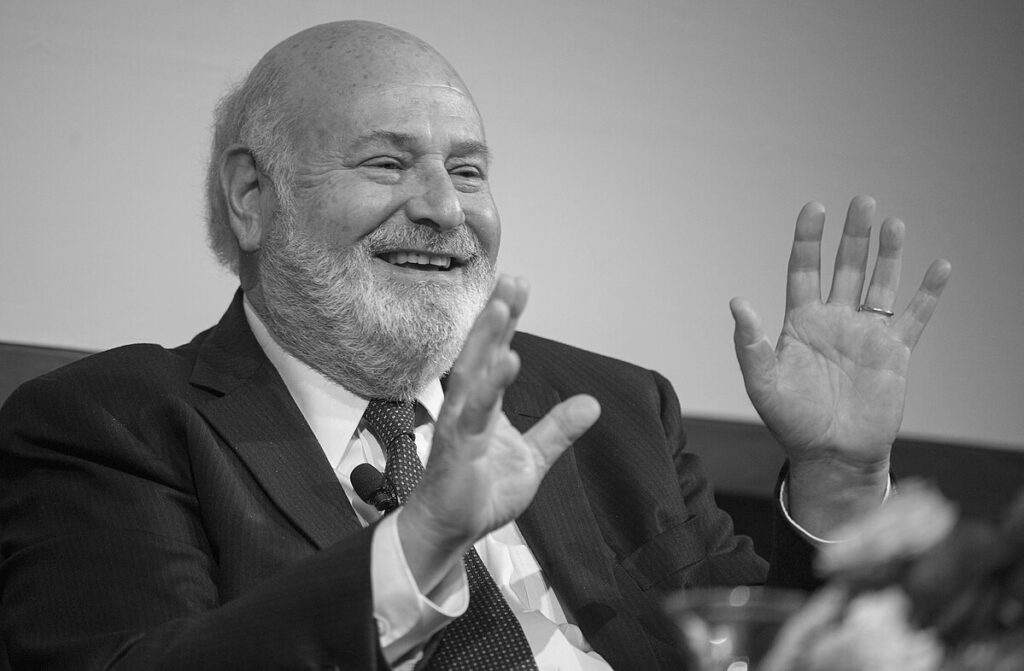
Rob Reiner at an event in 2016.

Rob Reiner at an event at the LBJ Presidential Library in 2016.

Most historians have the reassuring knowledge that their cast of characters are dead and buried long ago. It’s easier, in a certain sense, to riffle through somebody’s private letters or secret diary when you know that they are no longer around. Sometimes, I can feel a sense of envy towards my colleagues specializing in ancient Greece, medieval monasteries, or early modern nobility. 

The ethical considerations are different when you know that the people you study, and their family, are still among us. The responsibilities are also different. The subtitle of Claire Bond Potter and Renee C. Romano’s edited collection on Doing Recent History begins to capture the challenges inherent in the field: On Privacy, Copyright, Video Games, Institutional Review Boards, Activist Scholarship, and History That Talks Back. There is not, however, a chapter on what happens when a central figure in your research passes away. 

I began thinking about these questions more around two years ago, when producer Norman Lear passed away at age 101. Lear is the central figure in my first monograph. When doing the research, I met with Lear, interviewed him on two occasions, and received access to his private archive. I have close friends I have spent less time with than the total number of hours I used reading Lear’s letters, listening to him talk about his work and life, reading about him in everything from the New York Times to Playboy (yes, they are digitized and available on Internet Archives), and laughing at his stories on Johnny Carson, David Letterman, and Jimmy Kimmel. 

It’s not exactly a parasocial relationship, the historian is not a fan and the archives are not mass mediated. But it is often a one-sided and non-reciprocal bond that is formed in the archive. Both Lear and Reiner were kind and decent people looking to make people laugh while working to make the world a better place, but this isn’t about idolization. I have colleagues who recognize a similar bond with the most vile and objectionable figures imaginable. I think this is about storytelling. The people you study are also the characters in your story. 

Novelists often talk about their fictional characters as real and beloved friends or even as their children. An article in the Atlantic, from 1887, on the subject notes that “[e]ven the elder Dumas, whose stories were made up of adventure and intrigue, with only here and there an attempt at portraiture, would shed tears over the memory of his genial giant, Porthos.” More recently, a study at the Edinburgh international book festival found that over 60% of authors could hear their characters speak or viewed them as capable of acting independently. Crime novelist Val McDermid, for example, acknowledged that “when I’m working on a novel, I have conversations in my head with them.” 

Academic writing is, of course, different. Scholars cannot form the characters through imaginative conversations. We are limited by the historical record and the ethical and methodological considerations of our disciplines. This also means we have no control over the actions or fates of our characters.  

Based on the number of messages I received from fellow historians after the tragic news of Reiner’s death, there is a wide recognition of the connection between scholar and the subject of the study even if none of my colleagues could find the right words to describe it. An “unsettling feeling” is the closest I have come to a definition.  

I recognize, of course, that the tragic death of Reiner is distinct in 1) his celebrity, 2) the violent nature of his death, and 3) the cruel reaction by the president of the United States to the news. Still, I would welcome further conversations on the general subject of how to cope with the passing of a figure you study and, in particular, I want to hear experiences from scholars in other fields (for example literature, media studies, or sociology) on this sensation. 

It should, perhaps, surprise no one that I turned to the trade of the historian to process my own thinking and feelings – going back to the sources (including revisiting some of his oral history interviews and re-watching Reiner in an episode of All in the Family and screening his directorial masterpiece A Few Good Men), talking with colleagues, and writing down my thoughts. That’s what historians do.
Posted in Personal thoughts, Research | Tagged , , , , , | Leave a comment

Breast Milk is Best but…does it also contain Virtues / Vices?

Photo of Ranjana Saha.

Ranjana Saha
Marie Sklodowska-Curie Actions (MSCA) COFUND Turku Institute for Advanced Studies (TIAS) Turku Intersectoral Excellence Scheme (TIES) Fellow, Department of European and World History

Hello everyone, my current MSCA COFUND TIAS TIES project is about decolonising ‘scientific’ motherhood titled ‘Mothers, Mothercraft & Materialities: Urban India and Transnational Histories of ‘Scientific’ Motherhood in the Nineteenth and Early-Twentieth Centuries’.

I am trained in the field of social history of medicine in colonial India. I have completed my PhD research from the Department of History, University of Delhi, Delhi, India. My research was funded by national and international grants which allowed me to conduct research at various archives and libraries in Delhi and Kolkata, India, and in London, United Kingdom. I will remain indebted to my PhD supervisor Dr. Biswamoy Pati for this entire journey and beyond. His untimely passing has left an irreplaceable void. I wrote this book to fulfil what was actually his dream.

I am, therefore, happy to share that my PhD thesis has finally begun to see the light of day as it has now turned into a book, Modern Maternities Medical Advice about Breastfeeding in Colonial Calcutta (2023), published by Routledge (London & New York) about three months ago. Here is the link in case you might like to have a look sometime:

https://www.routledge.com/Modern-Maternities-Medical-Advice-about-Breastfeeding-in-Colonial-Calcutta/Saha/p/book/9781032066196

So, what can I say to encourage you to give this book a chance? Well, I think my strongest argument would have to be that Modern Maternities is one of the first books to focus entirely on breastfeeding advice in colonial India with a spotlight on Calcutta.

The subject of breastfeeding in colonial Calcutta is an important yet relatively unexplored topic. ‘Pure’/ ‘polluting’ and ‘good’ / ‘bad’ biocultural qualities believed to have been transmissible through blood and milk are central to my interrogation of the crisscrossing perceptions of colonial modernity, medicine and motherhood. The rationale behind the book is to bring to light rare British and Bengali textual and visual materials on breastfeeding in colonial Calcutta.

It explores medical opinions about breastfeeding by the bhadramahila (my focus is mainly on the ‘respectable’ Bengali-Hindu women from upper and middle classes and castes), memsahibs (European women), and dais (indigenous midwives and/or wet nurses from lower classes and/or castes, derived from dhā meaning ‘to nurse’). I locate breastfeeding advice at the centre of the very making of ‘modern’ maternities in nineteenth and twentieth century Calcutta. Maternities were usually characterised by age, bodily and emotional ‘maturity’, socioeconomic and cultural backgrounds of the mother and wet nurse, various infant feeding methods, customary and socio-religious beliefs and practices, and medicalised guidelines about motherhood, often popularised as ‘mothercraft’ and central to the global infant welfare movement.

Could a mother or wet nurse feed milk along with her virtues/vices through breast milk? Why was medical surveillance over ‘who’ was breastfeeding the baby necessary? Were ‘race’, class and/or caste, and character relevant when breastfeeding? Did breastfeeding figure in the very definition of who was a ‘good’ versus ‘bad’ mother? How was breastfeeding related to ideas and initiatives concerning the medicalisation of childbirth and midwifery? How did child welfare exhibitions display ‘ideal’ motherhood and care of the newborn? Were tradition/modernity, colonialism and nationalism connected with breastfeeding? Did breastfeeding advice in a colonial setting like Calcutta have global resonances? These are few of the questions I raise and attempt to find answers to in my book – I am curious to learn what would be your main question(s) if you decide to read this book?

If you are interested in my research, please feel free to contact me at ranjana.saha@utu.fi

Posted in Research | 2 Comments

Made In The Shade

Photo of Martin Cloonan

Martin Cloonan
Director, Turku Institute for Advanced Studies

So, I’ve got a new book out. It’s called Made in Scotland and I co-edited it with my good friends and colleagues Simon Frith and John Williamson. You can get it on Amazon and other places. But why, dear reader, should you care?

Well, first of all it’s about music. You know, that thing we take for granted as just being there. In fact, it’s there at nearly all of the major events of our lives. Weddings, funerals, christenings, social gatherings of all sorts. At all these events we have music. To me, that makes music somehow special. We don’t generally watch films or plays or look at art on the occasions I’ve just noted, but we do have music. So, think about that.

Second, this is about music in Scotland. Why should that matter? Because Scotland is different. It’s a country which is within another country – the United Kingdom. Whether that arrangement continues time will tell, but while it does it has certain consequences. Made in Scotland is part of a series of books on music entitled Made in X. This has included books on Finland, Australia, Greece and Taiwan. The point of such books is to move the study of popular music away from an Anglo-US hegemony and towards places which might otherwise be seen as peripheral. All of the aforementioned books are about nation-states. Scotland is a nation, but not a state. This means that making music there is different as matters which affect musicians such as broadcasting, copyright, minimum legislation and immigrations are legislated for somewhere else – London. In this sense to be Made in Scotland is to be made somewhere different.

Scotland is also simultaneously part of and apart from the Anglo-US hegemony. Its artists generally perform in English and have access to all the benefits provided by the UK being one of the world’s most important places for the production and consumption of popular music. UK-produced music is internationally successful and Scottish artists have been part of that success. So in this sense music made in Scotland is part of the prevailing hegemony. However, to remain in Scotland is to be outside the UK “norm” of being in and around London – the location of the major record companies, live music promoters, broadcasters, copyright organisations etc. Scottish artists need access to such things and so need to cross the border in order to succeed. Very few artists can make a living on working in Scotland alone. While such internationalism is, of course, true of many musicians, Scotland gives it a particular flavor.

So, what is in the book? I’m glad you asked. Having three editors meant that we ended up having three sections: Histories (edited by John Williamson), Politics and Policies (me) and Future and Imaginings (edited by Simon Frith). We did not try to be comprehensive (one potential reviewer has already bemoaned the lack of reggae in the book), but are hopefully illustrative. We cover broadcasting, live music, record labels, jazz, girl groups, festivals, Gaelic music, musical heritage, music education, representations of Scottishness, hip-hop, the use of music to promote Scottish nationalism and the interaction of Scottish music and fiction. In all these areas the distinctiveness of music production and reception in Scotland is evidenced

Are the topics we cover enough? Quite possibly not. There is no country music (which is huge in Glasgow and its environs), not much on music by the country’s ethnic minorities, nothing on contemporary art music, no sonic art and only two references to Calvin Harris. What were we thinking? Well, what we were thinking is who do we know and who can we convince to write something for the usual academic fee of precisely nothing? We tried to be diverse, but maybe not diverse enough for some people. Moreover, we wanted this “academic” book to include the voices of musicians and those within the Scottish music industries. So, interspersed with academic analysis there are interviews with musicians and promoters (but none with Scottish record labels). We end the book with the thoughts of some within the Scottish music industries on the future of music in Scotland.

Of course, we hope that the book will become a standard text on popular music degree programmes in Scotland and beyond. Like all authors, we want to be read. But more importantly, we want it to change people’s perceptions both of Scotland and of the music made there. We do want it to challenge the Anglo-US hegemony. For me personally, this is another instance where I point out what is missing or overlooked in popular music studies. I have previously charted the untold story of censorship in UK music, examined music policy, published on the use of music in violence and spearheaded a movement which has moved the study of popular music on from examining recorded music to a consideration of live music. In all this my work has tried to fill in some missing gaps. I have said “Hang on a minute, there is something missing here” – then found it and explained it. It’s been a blast.

In this respect Made in Scotland is a statement. Its very existence means that we are claiming that there is something worth knowing about how music is produced and consumed in the country. There have been previous studies of music in Scotland, but this is the first academic collection. Popular music is now a global force, but Made in Scotland reminds us that how that music is produced and how we experience it is affected by place. There is something unique in the Scottish experience of music – of its production and reception.

If you’ve read this far, you should read the book. Hopefully it will change the way you think. That’s all we’re trying to do.

Posted in Research | Leave a comment

Pandemic Screenings: The Covid-19 pandemic and the digital screen

Marjo Kolehmainen
TIAS postdoctoral fellow, Turku Institute for Advanced Studies & Media Studies, University of Turku;
Docent in Gender Studies, University of Tampere

 The Covid-19 pandemic elevated digital screens to the core of everyday life. Screens can be found everywhere, including museums and galleries, stock exchanges, train stations, aeroplane seats, banks, food courts, record stores, gas stations, office desks and in the palm of one’s hand (Wasson, 2007). While screens are examples of everyday digital materialities (Sumartojo & Graves, 2021), the Covid-19 pandemic foregrounded in particular the significance of live video calls in sustaining everyday lives. During the pandemic, screen technology supported various societal infrastructures and cultural practices, such as distance learning, white-collar remote work, online health care consultations and remote dance and music lessons. The health measures of physical distancing, in particular, have shifted many activities online. I have also personally experienced it, including work-related Zoom meetings, children’s dental care via Microsoft Teams and attending a celebration via live stream on YouTube.

My interest in screens was initially sparked when conducting a study on how psychotherapists, psychologists, family counsellors and other therapy and counselling professionals experienced technology in their work during the pandemic. I originally collected interview data as part of a research consortium, Intimacy in Data-driven Culture (IDA), funded by the Strategic Research Council at the Academy of Finland. Several of my interviewees reflected upon the change in setting and venue, and the themes of visibility and invisibility recurred. For instance, they described how screen view limits the amount of visual information they receive, from seeing the body as a whole to a variety of gestures (Kolehmainen, 2022). The screens were repeatedly experienced as barriers, either in physical, affective or mental ways. Similar descriptions, of course, have been voiced by many professionals regarding screen usage in other contexts, such as university lecturers on teaching in higher education.

Yet my research also shows that screens should not be viewed solely as limiting human-to-human interaction and as reducing communication to ‘talking heads’. Concerns over remote encounters echo the negative attributes with which technology is often associated. Especially in care work, technology is often seen as ‘cold’, impersonal and instrumental in contrast to human care and warmth (Pols, 2012). In debates concerning digitalised psychotherapy, for instance, this takes the form of framing remote treatment as a ‘substitute’ or otherwise starting with a dichotomous opposition of in-person and technologically mediated consultations. Posthuman theory enables us to recognize how screens, with their own affordances and qualities, come to matter in various ways. As humans, we expand both expression and perception through screens. My interviewees recalled several instances in which they made novel observations. These observations were both enabled by the chance to see the client in a new setting and by the purposeful exhibition of one’s home, artwork or pets.

Image source: Pexels

As suggested earlier, screens also have their own affordances and qualities. One example is how they make the materiality of time and temporality tangible. The interviewees recounted how the possibility of switching the camera off for a while might make it easier for clients to talk about painful memories or feelings. One of my interviewees pondered about frozen screens, being concerned that they might influence a session. A frozen screen might leave their faces in an unintended and uncontrollable position, thus threatening the goal of having a neutral, professional face. Another one recalled the difficulties of having real-time eye contact with a client via a screen view, since there was always a tiny delay that made eye contact impossible. These varied experiences all speak to the importance of recognizing screens as ‘vibrant matter’ (Bennett, 2010), as the screens—assemblages themselves—influence the therapy sessions.

Screens also expand and exceed themselves in several ways. Whereas we might take for granted the (Western) assumption of one device, one person (Pinch et al., 2022), a deeper look at remote therapy and counselling reveals the multi-layered inter-dependencies as well as structural inequalities that materialize through screens. For instance, many clients use devices owned by their employers, meaning that discussing sensitive issues remotely is considered risky. Or perhaps the email invitations to online therapy sessions cannot be sent to one’s work email address for fear of them popping up on a colleague’s screen. Further, where and when people access their screens makes visible several aspects of social privilege and disadvantage. The wealthy ones, for instance, might own an in-house-sauna, summer cottage or a car, and thus can access their mobile screens from a variety of locations. In this way, they can ensure privacy. However, not everyone can access these types of venues, and their experiences with digital screens might differ drastically. In this way, screens also provide a view of inequalities and asymmetries concerning pandemic experiences.


References

Bennett, J. (2010). Vibrant matter: A political ecology of things. Duke University Press.

Kolehmainen, M. (2022). Intimate technology? Teletherapies in the era of COVID-19. In M. Kolehmainen, L. Annukka, & L. Kinneret (Eds.), Affective intimacies (pp. 63–80). Manchester University Press. https://www.manchesteropenhive.com/view/9781526158574/9781526158574.00009.xml

Pinch, A., Birnholtz, J., Rawat, S., Bhatter, A., Baruah, D., & Dange, A. (2022). Someone else is behind the screen: Visibility, privacy, and trust on geosocial networking apps in India. Social Media + Society8(3). https://doi.org/10.1177/20563051221126076

Pols, J. (2012). Care at a Distance: On the Closeness of Technology. Amsterdam University Press.

Sumartojo, S., & Graves, M. (2021). Feeling through the screen: Memory sites, affective entanglements, and digital materialities. Social & Cultural Geography22(2), 231–249. DOI: 10.1080/14649365.2018.1563711

Wasson, H. (2007). The networked screen: Moving images, materiality, and the aesthetics of size. In J. Marchessault, & S. Lord (Eds.), Fluid screens, expanded cinema (pp. 74–95). University of Toronto Press. http://www.jstor.org/stable/10.3138/9781442684355.7.

Posted in Research | Leave a comment

Leveraging the use of population data toward improving health and care for everyone

Pande Erawijantari

Pande
Erawijantari
TCSMT Postdoctoral Researcher

I always find population study, a study that is conducted in representative samples from the population, to be fascinating. Especially due to its potential to process various information toward beneficial policies and actions. So, when I first learned about bioinformatics data analysis, I kept looking for the possibility of applying it in population level data, particularly to answer health-related research questions. Seeing how big data transform into beneficial interpretations for wider use, intrigues me to get involved in this research area.

When I moved to Finland to follow my husband, I felt lucky because Finland is one of the countries that have comprehensive population data ranging from Cancer Registry that has been established since 1953 to the most recently added Register of Primary Health Care Visits in 2011. The records are originally meant to develop new ways to model the complex relationships between health and risk factors using high-resolution longitudinal data. The findings are then used to develop preventive and personalized health care for general citizens. For example, The National FINRISK Study, which was initiated in 1972, was highly successful in presenting preventable measures to tackle the high incidence of cardiovascular diseases, marked by decline of risk factor levels and coronary heart disease morbidity and mortality in the province of North Karelia, Eastern Finland at the time1. In 1976, the study was then expanded to the entire nation to target more broadly on major non-communicable diseases. When I  joined the Turku Data Science Research group in 2021, I got the opportunity to take part in analyzing this cohort, particularly those collected in 2002 (FINRISK 2002), aiming to explore how microbiome, collections of microbes that live with us, influence long-term health status2.

High-quality data is indeed a foundation of a successful health and care system. It could serve as a system enabler for integrative data information towards better healthcare policy. For example, it helps in deciding on the best care, researching and improving treatments, addressing health inequalities, managing contagious diseases, improving efficiency, and planning services for now and future. When COVID-19 pandemic occurs, insight from population data is critical to help public health and humanitarian leaders to respond more effectively to the pandemic, particularly by analyzing preventive actions, the spread of the disease, population mobility, and systems or people’s resilience to cope with the virus. An effective response is always needed with every crisis, and here is why the collective effort for population data could play an essential role.

Although leveraging the population’s data for better healthcare has been implemented by many countries, several parts of population are still understudied. As an example, in genomic study, the vast majority (86%) of the population data only cover individuals of European descent3. This could result in missed scientific opportunities that could exacerbate health disparities. One famous example is the difficulty in generalizing the use of polygenic risk score, an estimate of genetic risk, in different populations. Despite its increased power to predict certain diseases such as breast cancer and cardiovascular diseases in European-descent populations, the prediction’s accuracy decreases when applied to populations with increasing genetic distance from the study cohort. This example shows that the lack of diversity in population data may result in inaccurate assessment of risk and lack of interventions, especially in under-studied populations. Hence, comparing a diverse set of populations unravels the possibility of gaining valuable information for greater insight in understanding the complexity of certain health conditions.

On the optimistic side, several initiatives have been started recently for understudied populations. In genomic fields, several flourishing studies have targeted low- and middle-income countries in Africa, Asia, and Latin America also indigenous populations study in Australia. There are several factors that contribute to their success such as: (1) international project funding that promotes inclusion;  (2) large-scale training for the local community to contribute to the project; (3) strategic collaborations with an established institute to support both infrastructures and knowledge experts; and importantly, (4) clear ethical guidelines to build trust between community and researcher.3 I am quite hopeful as well, as Biomedical and Genome Science Initiative (BGSi) also started recently this year in my country, Indonesia. This could have a major impact, as Indonesia is the 4th most populated country (based on population number), and home to 1,340 recognised ethnic groups.

Despite a massive increase in data collection, there has been relatively little progress in data analysis and application4. A joint effort of a large number of scientists with a diverse sets of skills could be part of the solutions. One of example is a collaborative scientific competition, known as Challenges could provide a unique way of engaging researchers to collectively solve a complex problem, and provide a framework for robust methodologies for data analysis, including for health data setting. Recently, our research group has been taking part in organizing an Open Challenge that adopts the data and problems from the FINRISK cohort, where we invite everyone to provide novel insight in predicting heart failure using information on conventional risk factors and microbiome compositions.

To summarize, population data has opened opportunities to substantially improve health outcomes. Ensuring the inclusion of diverse populations could accelerate progress. To warrant such practice, many aspects need to be accessed, and successful projects could serve as an excellent example. Importantly, an appropriate governance framework must be developed and enforced to protect individuals and ensure that healthcare delivery is tailored to the characteristics and values of the target communities. Finally, collective effort could help to accelerate the translation of data toward improving health outcomes that could benefit everyone.

References

Borodulin K, Tolonen H, Jousilahti P, et al. Cohort Profile: The National FINRISK Study. Int J Epidemiol. 2018;47(3):696-696i. doi:10.1093/ije/dyx239
Ruuskanen MO, Erawijantari PP, Havulinna AS, et al. Gut Microbiome Composition Is Predictive of Incident Type 2 Diabetes in a Population Cohort of 5,572 Finnish Adults. Diabetes Care. 2022;45(4):811-818. doi:10.2337/dc21-2358
Fatumo S, Chikowore T, Choudhury A, Ayub M, Martin AR, Kuchenbaecker K. A roadmap to increase diversity in genomic studies. Nat Med. 2022;28(2):243-250. doi:10.1038/s41591-021-01672-4
Wyber R, Vaillancourt S, Perry W, Mannava P, Folaranmi T, Celi LA. Big data in global health: improving health in low- and middle-income countries. Bull World Health Organ. 2015;93(3):203-208. doi:10.2471/BLT.14.139022
Posted in Personal thoughts, Research | Tagged , , , | 1 Comment

“Fund people not project”, is the project-based funding scheme adequate?

Collegium Researcher Sophie Reichert, Ecology and Evolutionary Biology, Adjunct Professor, Department of Biology

The idea to write about project-based funding schemes for this blog piece originated from the recent French elections (yes there’s actually a link there). With these elections came a new government, with a new Minister of State for Higher Education and Universities. Not long after her appointment, the new minister stated that (French) public research should be an economically profitable investment and that project-based funding schemes should be generalised. Which led me to wonder whether such a funding scheme was actually adequate and “profitable” for research. Over the past of decades, European public research became increasingly concerned with performance objectives and relevance. More and more, the requirement of relevance for public research is becoming synonymous with its direct contribution to economic competitiveness and innovation. In response to this requirement for economic relevance, many Western governments have introduced specific policies to stimulate “scientific excellence”; and the funding of public research in the form of project-based grants and contracts gradually developed in many countries. The rise in project funding shifted control of research funds towards funding agencies that distribute these funds across individuals/groups; as opposed to a steady yearly research fund allocation (as it used to be the case). These funding schemes are grounded in the belief that differentiating resource allocations will produce better performance of the science system; but they generate financial capacity for a select number of individuals and research groups at the receiving end and increase the unequal distribution of funding in the science system. Governments hope that increasing concentration among researchers that perform ‘best’ will increase effectiveness, decrease low-quality research, and yield more and better outcomes for the science system. Continue reading

Posted in Personal thoughts | Tagged , | Leave a comment

Metals for the existence and applications of oligonucleotides with metal-mediated base-pairs

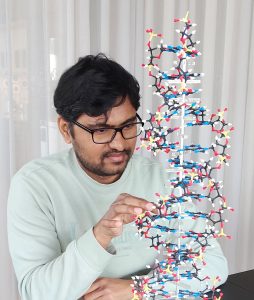
Tharun Kumar Kotammagari TCSMT Postdoctoral Research Fellow Bioorganic group Department of Chemistry University of Turku

Tharun Kumar Kotammagari
TCSMT Postdoctoral Research Fellow
Bioorganic group
Department of Chemistry
University of Turku

For our body to function, we need to supply it with a variety of nutrients that we get from our diet. However, our bodies can not use the food as it is when it enters our digestive system. The process of chemical digestion uses different proteins and enzymes to break down large molecules into usable nutrients that our cells absorb. Where are the instructions to manufacture these and all types of proteins we need to stay alive? The instructions to make proteins are contained within our DNA.

DNA is a biopolymer that stores the genetic information in the sequence of four nucleic acid bases – adenine (A), thymine (T), cytosine (C), and guanine (G). These bases are strung along with the ribbons of a deoxyribose sugar-phosphate backbone and form a double-helical structure with the help of hydrogen bonding. The above-mentioned proteins and Watson-Crick base pairing properties are well established in the literature. Metal ions such as K+, Na+, and Mg2+ are also responsible for catalyzing the reactions of metabolism and the correct folding of biopolymers (nucleic acids). Generally, the sugar-phosphate backbone carries a negative charge and these charges are partially neutralized by the aforementioned alkali and alkaline earth metals. These metal ions also play a key role in the central dogma of biology (replication, transcription, and translation). However, less attention is given to the inorganic components of a biological cell, which are required for a biopolymer to function.

Metal mediated base pairs form by replacing the hydrogen bonds between complementary nucleobases in DNA with coordinate bonds formed by the metals, especially transition metals. Coordinate bonds have more strength than the H-bonds and transition metals readily form coordinate bonds with nucleobases. Due to this DNA duplexes possessing metal-mediated base pairs show higher thermal stability than the natural H-bonded DNAs. Continue reading

Posted in Personal thoughts, Research | Tagged , , | Leave a comment

Sugar boost for photosynthetic microorganisms to improve biotechnology applications

Tuomas Huokko, TCSMT Postdoctoral Researcher, Molecular Plant Biology

Tuomas Huokko, TCSMT Postdoctoral Researcher, Molecular Plant Biology

Today’s society is still to a great extent dependent on fossil fuels because we use them plenty to e.g. run our vehicles, heat our homes, provide us with electricity and power different industrial sectors. As is well known, fossil fuels are not infinite energy source and importantly contributing heavily to the accumulation of greenhouse gases. Thus, humankind faces a major challenge to replace these by alternative energy sources which would be carbon-neutral and completely renewable.

Solar energy is the most abundant energy source available on Earth. Cyanobacteria are an exceptional group among prokaryotes due to their ability to perform oxygenic photosynthesis where physical energy from sunlight is converted to chemical energy to reduce atmospheric CO2, having water as an electron source, and releasing O2 as a by‐product.  Using synthetic biology photosynthetic cells can be modified to living cell factories to produce e.g. fuels, chemicals and food supplements in a sustainable way with energy from photosynthesis. In addition, some cyanobacterial species can grow under photomixotrophy which is a metabolic state that enables photosynthetic microorganisms to simultaneously perform photosynthesis and utilize imported organic carbon substrates which leads to improved biomass production, and consequently to higher yields of desired valuable compounds when compared to photosynthesis alone. Thus, photomixotrophic growth provides an interesting opportunity for blue and circular bioeconomy through acceleration of biomass production by utilization sugar side streams e.g. from wood industry.  Additionally, genetically engineered photosynthetic microorganisms can act as a chassis for the whole cell photobiotransformation enabling sustainable synthesis of organic compounds because several enzymes utilised as photo-biocatalysts use reducing agents deriving from light-driven photosynthetic electron transfer reactions. Continue reading

Posted in Personal thoughts, Research | Tagged , , , | Leave a comment

Vastaväittäjänä vieraassa maassa

Dosentti, Jetro J. Tuulari
TSCMT kollegiumtutkija
Kliininen laitos, psykiatria

Väitöstilaisuus on selkeä virstanpylväs, siirtymäriitti tieteentekijöiden yhteisön jäseneksi. Oman väitöksen lisäksi olen päässyt seuraamaan yhden ohjattavan ja monen tutkijakollegan väitöstä. Vaikka Suomen järjestelmässä väitöstilaisuus on seremoniallinen, tunnelma on usein tiivis – jännityksestä kustoksen ilmoittamasta väitöksen alusta hänen toiseen puheenvuoroonsa, joka päättää tilaisuuden.

Väitöskäytännöt vaihtelevat maittain ja kun sain viime vuoden lopulla kutsun Englantilaiseen yliopistoon vastaväittäjäksi hyväksyin kutsun innoissani. Lontoossa sijaitsevan Kings Collegen protokollassa väitös on englantilaiseen tapaan suljettu tilaisuus, thesis examination, eli väitöskirjan tarkastus tai koe. Tohtorikandidaatti on myös mahdollista reputtaa tässä kokeessa ja väitöskirjaan voi edellyttää suuriakin muutoksia. Saamissani ohjeissa kerrottiin seikkaperäisesti, miten väittelijää pitää testata ja annettiin lupa olla tiukka, mutta toisaalta myös kannustettiin inhimillisyyteen ja mm. kehotettiin antamaan niin monta taukoa väitöksen aikana kuin kandidaatti toivoo. Continue reading

Posted in Personal thoughts | Tagged , | Leave a comment

Kimmo Luoma

Kimmo Luoma
Collegium Researcher, Laboratory of Quantum Optics

My first year as a collegium researcher in Turku is behind and now is a good time to look back how the year has gone by. Already for my undergraduate and graduate studies I have been in Turku so coming back here felt like coming back home. Scientists, as well as everyone else have been greatly affected by the covid pandemic during the last two years. Besides a lot of worries, it has not only been a bad thing, though. The pandemic has helped, or rather forced us all to embrace the possibilities of various online tools for meetings, teaching and research.

I spent almost six years in Germany after my PhD and a lot of my research is done in collaboration with people from all over the world. As a consequence of moving during the pandemic, nothing much actually changed in my day-to-day business; still most of my meetings take place online. The surroundings changed from the vineyards at Elbe river valley to the beautiful Archipelago surrounding us here in Turku.

My first year here has been also a busy one. I have started setting up my own research group at the Department of Physics and Astronomy for the first time, and the process has been very exciting.
Now we are up and running and doing theoretical physics on the intersection of quantum optics, open quantum systems and quantum thermodynamics with applications to quantum technologies.
I am associated with the Laboratory of Quantum Optics at the Department of Physics and Astronomy. Our lab shares here a corridor and – maybe even more importantly – a coffee room with the Laboratory of Theoretical Physics, which had made it easy to integrate at the Department. It has been a great joy to be talking to other researchers at the „corridor“ (following the corona restrictions, of course), exchanging ideas, and forming new collaborations.

Scientific and university life in general does not look the same as before the pandemic.
I do miss old fashioned paper and pen discussions or having casual coffee table discussion by the blackboard not mention the color which the students bring on the campus on a daily basis.

I am hopeful that we are moving towards more normal times and for a coffee and and interesting discussion soon!

Posted in Personal thoughts | Tagged , | Leave a comment