Early life nutrition for lifelong benefit: An insight from gut microbiome research into my baby’s feeding journey

Pande Erawijantari

Pande Erawijantari
TCSMT Postdoctoral Researcher

Over the past six years, I received various opportunities to explore a small-but-diverse universe, a collection of microorganisms that lives within us, known as the human microbiome. This fast-developing research field of human microbiome led me to venture out from my original field of biology into learning how to code and importantly connecting the dots from data to potential clinical applicability and daily habit. Besides the abundance in human microbiome numbers and remaining mysteries surrounding them, what intrigues me the most is the association of its compositions, particularly those living in the gut, into later health status and even mortality risk.

When my baby was born last spring, I remembered certain findings that the majority of microbiome colonization occurs in early years of life. Then, I started to wonder what I can do to nurture my baby’s microbiome so that she could get the long-term health benefit. While pondering about this idea, I constantly remind myself to not oversimplify it, especially because the composition of our “little friends” is driven by a complex interaction between host genetics and environmental factors, such as diet, lifestyle, and geography. Particularly in babies, mode of delivery (vaginal or cesarean section delivery) has shown to be largely impacting the early microbiome colonization. Environmental exposures, including diet, then later influence their microbiome dynamics. Continue reading

Posted in Personal thoughts, Research | Tagged , , | Leave a comment

When do we stop being students?

Aino Kalske

Aino Kalske
TCSMT postdoctoral researcher

I was out for a fancier-than-usual lunch with some postdoc and researcher colleagues when the waiter casually presented us with an innocent, yet loaded question, “Are you students?”. All of us were in our mid-thirties. A full decade had passed since our undergraduate and master’s degree studies, and at least four years since any of us had been even PhD students. Maybe this was an attempt to flatter, to say you look young enough to be 23? No, we were not students and even the most suspicious salesperson in Alko rarely asked for our IDs anymore, so we definitely did not even look that young. This perhaps well-meant question sparked a conversation in our table about how should we feel about the assumed student status, does it imply that our work is not real work and when do the regular folk start taking us seriously.

During my time in the US as a postdoc, I found it even more difficult than in Finland to convey the seriousness of what I did to the outside world. Explaining to some of my non-academic friends and acquaintances that I am a postdoc frequently incited the question “So… Are you going to get a job at some point?”. While I am fairly certain they did not mean to undermine the value of the time I was spending in the greenhouse, field and lab uncovering the mysteries and evolutionary origins of plant-plant communication, I was baffled and felt misunderstood. Every time. Without skipping a beat, I found myself explaining that “I actually do get paid, you know.” Maybe not the most convincing argument in conveying the importance academic research and my part in it, but they caught me by surprise. Every time.

Should we take these casual comments to mean that what we do for work is not real work? We are world experts in our fields, our research gets recognized by the global, international community of peers, we find answers to questions no-one even though to ask ten years ago and still, to the outsider we are simply students. If getting to spend our days fueled by curiosity and discovery is not considered, by some, to be real work then is that something to be upset about? Perhaps it is not work in the sense that our productivity is not yielding a direct monetary or material benefit to anyone in the time scales other more traditional work does. Full disclosure, I have spent some of my work days as a postdoc punching holes in plant leaves with a metal pet brush. The purpose of this activity was to create a uniform repeatable damage treatment to my experimental plants, but put out of context, it just sounds like the goings on of a crazy person.

If our work not being considered work is a mere problem of terminology, then we should take these comments as opportunities for conversation about what is it like to have the creation of knowledge as a profession. However, if they echo a deeper mistrust and dismissal of the role of science in society, we should be worried. Perhaps we need to start making it clear to more than just the occasional waiter that even though what we do on a day to day basis may not always sound like work, the academic pursuit for a more profound understanding of our world is, nonetheless, of unquestionable importance.

Posted in Personal thoughts | Tagged , , , | 1 Comment

Bioteknologian keinoin homemyrkkyjä vastaan

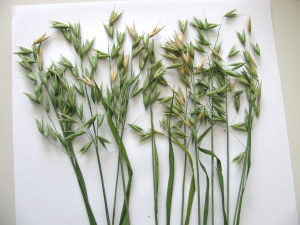
Punahomeen saastuttamaa kauraa Turun lähistöltä heinäkuun lopulla 2012.

Punahomeen saastuttamaa kauraa Turun lähistöltä heinäkuun lopulla 2012.
Kuva: Tapani Yli-Mattila.

Kirjoittaja: tutkijatohtori Riikka Peltomaa, Luonnontieteiden, lääketieteen ja tekniikan tutkijakollegiumi

Homemyrkyt eli mykotoksiinit ovat homesienten tuottamia yhdisteitä, jotka voivat aiheuttaa ihmisille ja eläimille vakavia terveydellisiä haittoja sekä äkillisesti että pitkäaikaisen altistumisen seurauksena. Otollisissa olosuhteissa näitä myrkkyjä tuottavat sienilajit voivat muodostaa homekasvustoja eri ravintokasveihin, pääasiassa viljoihin, pähkinöihin ja hedelmiin. Homekasvustot voivat aiheuttaa haitallisia tauteja kasveille, ja ne voivat myös muodostaa myrkyllisiä mykotoksiineja kasvupaikalla tai edelleen viljavarastossa ja kuljetuksen aikana. Joidenkin tilastojen mukaan mykotoksiineja on havaittu jopa 60−80 prosentissa maailman elintarvikesadosta.

Homesieniä kasvaa kaikkialla maailmassa, sillä ne ovat äärimmäisen sopeutuvaisia erilaisiin elinympäristöihin. Monet sienet elävät tiiviissä vuorovaikutuksessa muiden organismien, kuten bakteerien, kasvien ja eläinten, kanssa, ja ne ovat joutuneet kehittämään erilaisia vuorovaikutus- ja suojautumistapoja esimerkiksi estääkseen muiden kilpailijoiden selviytymisen. Niinpä tietyissä kasvuolosuhteissa tai haitallisissa ympäristöolosuhteissa sienet tuottavat erilaisia toissijaisia aineenvaihduntatuotteita eli niin kutsuttuja sekundaarimetaboliitteja. Tuhansien tai jopa miljoonien erilaisten sienten sekundaarimetaboliittien joukosta on tunnistettu monia hyödyllisiä yhdisteitä, merkittävimpinä ehkä antibiootteina tunnetut penisillisiini, kefalosporiini ja muut beetalaktaamit, mutta myös immunosuppressiivisia lääkkeitä, kasvihormoneita sekä hyönteisille myrkyllisiä yhdisteitä. Lisäksi sienet tuottavat sekundaarimetaboliitteina myös ihmisille ja eläimille myrkyllisiä yhdisteitä, joita kutsutaan mykotoksiineiksi. Continue reading

Posted in Personal thoughts, Research | Tagged , , | Leave a comment

A Pessimist in the Academia

Henna-Riikka Pennanen, Postdoctoral Researcher (TIAS)

I am a bit of a pessimist. It is not that I do not believe things will work out in the end, it is just that I do not think they are likely to work out for the best. Presumably, this vague outlook colors my academic work just as it does my personal life, but how exactly?

Ronald Barnett writes that it is “easy enough to be pessimistic about the character of academic life in the twenty-first century, for there is much to be pessimistic about —” (Academic Working Lives, 2014). The distorted work–life balance, instrumentalism, and auditing and surveillance regimes are merely some of the pessimism-inducing aspects of the academic workplace Barnett recites. Not to mention constant rejections, precarious positions, and the unending competition. In fact, my wonderful pessimist colleagues and I have internalized the mantra of cut-throat competition so well that our favorite pastime is to compete over who thinks they have the least chances of success in landing a grant or getting published. Thus, there is a symbiotic relationship: the academia indulges my pessimism, and then my cynicism and resignation add to the general pessimistic atmosphere. If it were not for my equally wonderful optimist colleagues, I doubt nothing would ever change for the better around here.

My research revolves around pessimism as well. The primary sources I am currently working with are rife with pessimism. This is unsurprising since I am studying U.S. perceptions and representations of rising Japan as a threat to the United States and world peace in the early decades of the twentieth century. In the primary sources of a historian, pessimism comes in many forms: a general philosophy of history as a (often cyclical) process tending to the worse; a philosophical or religious belief that the humanity is the worst or the world they have created is the worst of possible worlds; and skeptical or even alarmist reactions to specific events and intellectual, political, or social currents. Historical pessimism is reflected in “time-consciousness.” That is, the individual or collective consciousness of “a given present in relation to its past and future,” as K. F. Helleiner, Professor of Economic History, argued in an essay in 1942.

For example, in 1919, Thomas Millard predicted a conflict involving China, Japan, and the United States (Democracy and the Eastern question). A journalist and a “China Hand,” Millard speculated on the likely causes of future international conflicts. Drawing from Professor Charles W. Eliot, Millard argued that the causes of war were:

national distrusts, dislikes, and apprehensions, which have been nursed in ignorance, and fed on rumors, suspicions, and conjectures propagated by unscrupulous newsmongers

and

clashing commercial or industrial interests, contests for new markets and fresh opportunities for profitable investments of capital.

Cover page of Millard’s Democracy and the Eastern Question. Public domain.

In addition, there was an ideological element involved. Millard believed that two opposing theories of international polity—namely autocratic militarism and democracy—were drawing nations into conflict in the East, just as these theories had recently battled out in Europe in the Great War. In the Northeast Asia, rising Japan stood for autocratic militarism and China for the “weak and apprehensive democracy.” According to Millard, preventing this coming contest and shielding China from Japanese aggression necessitated “direct and active participation—some say leadership—of America,” if not for any abstract ideological principles, then for U.S. national security and interests.

Sounds eerily familiar, right? Similar gloomy assessments of a coming international conflict involving the United States and a rising—or more accurately, a risen—East Asian power abound today, as does the ideological framing of the conflict in terms of democracy versus autocracy. Only the roles assigned to China and Japan have been reversed, and the historical analogy pundits draw from is the Cold War instead of World War I. Consequently, just as the early twentieth-century U.S. Americans were wondering whether they were destined to fight Japan, the whole world is now speculating on whether China and U.S. are heading towards a new Cold War.

When working with my historian’s hat on, my aim is to understand a historical text in its proper historical context(s). Accordingly, if I wish to assess the time-consciousness of the author as it is reflected in the text, I need to read the text against the context and the collective time-consciousness of the day.

Thus, we can note that as the World War I was briefly followed by liberal optimism for a peaceful future of world affairs, Millard’s prediction of an international conflict appears pessimistic. Then again, the tide of opinion regarding Japan was slowly turning. A reviewer in the American Journal of International Law denounced the book, writing that the author was “frankly and aggressively anti-Japanese” and that “Mr. Millard may be wrong, but he has no doubts.” And yet, the reviewer also noted that while the U.S. observers were “always ready to assume the worst of European monarchies,” some of them were now beginning to have misgivings about Japan, too. In this atmosphere, Millard’s reading of the situation could be judged more generously as realistic, and for example, another reviewer in The Journal of International Relations did not find fault with the book. However, only with the benefit of hindsight can we conclude that Millard was not sounding an alarm for nothing.

Studying history, I can put aside my personal time-consciousness and the collective time-consciousness of my own time. Studying the present, they are more difficult to sidestep. Today, the general mood regarding world affairs is starkly more pessimistic than a hundred years ago. Tim Stevens and Nicholas Michelsen depict pessimism as our Zeitgeist (Pessimism in International Relations, 2020), exacerbated by, for example, the tightening geostrategic competition between China and the United States and fears of democratic backsliding.
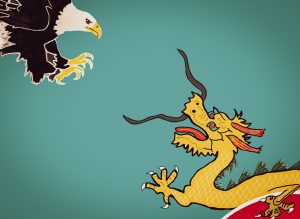
Image: Henna-Riikka Pennanen

So, coming back to the debate on whether there will be a new Cold War—and leaving aside the question whether this is a fitting historical analogy in the first place—it would be (far too) easy to find affirmative evidence, and present an analysis confirming my own pessimistic disposition and conforming to the sweeping pessimism of our age. To avoid this, I have come up with two strategies: the (in)famous academic “on the one hand/on the other” and joining forces with optimists. If any of you wonderful pessimists and optimists out there have worked out other strategies to reach nuanced and balanced assessments of the present, please let me know.

Posted in Personal thoughts, Research | Leave a comment

Thoughts on Academic Career Structures

Jianwei Li, head and torso, photograph in front of trees

Jianwei Li, Collegium researcher and group leader in MediCity

Discussions on academic career structures have recently become popular in Germany, a leading country in science and technology. The #IchBinHanna Twitter hashtag emerged in the German academic society in the summer of 2021. The discussion was triggered by a two-minute video made by the German Ministry of Education and Research (BMBF). The video was conceived to tell the story of how to find a permanent academic position in Germany. As a result, BMBF received extremely large amounts of protests about the academic career structures in Germany. The German Federal Statistical Office suggested that in 2019 87% of academics were working on fixed-term contracts. Everyone knows that the fixed-term contracts force the employee to move every few years. Temporary contracts increase feelings of insecurity in the researchers and inhibits scientific innovation, as high-risk projects need a stable academic environment. Continue reading

Posted in Personal thoughts | Tagged , , | 1 Comment

Tähtienvälistä pölyä ja vuosittaisia supernovaräjähdyksiä

Picture of author Erkki Kankare

FT Erkki Kankare
Kollegiumtutkija (TCSMT)
Fysiikan ja tähtitieteen laitos

Suurimman osan ajasta tähdet ovat tasapainossa tähden omaan energiantuotantoon perustuvan paineen ulospäin työntämän voiman ja tähden oman massan sisäänpäin vetävän painovoiman välillä. Tähtien energiantuotannon lähde on ydinfuusio, jossa kevyemmät alkuaineet muuttuvat raskaammiksi, kuten vety heliumiksi, vapauttaen energiaa tähden ytimessä. Massiivisimmissa tähdissä prosessi voi edetä aina rautaan asti. Kaikkein massiivisimpien, noin kahdeksan Auringon massaisten ja tätä suurempien tähtien elinkaaret päättyvät pääsääntöisesti niin sanottuun luhistumissupernovaräjähdykseen.

Luhistumissupernovaräjähdykset ovat hyvin kirkkaita, erityisesti ensimmäisten muutamien kuukausien ajan, ja täten niitä voidaan havaita ja tutkia toisista galakseista aina kosmologisille etäisyyksille asti. Vertailun vuoksi, Auringon kaltaisen tähden elinkaaren pituus on noin kymmenen miljardia vuotta. Massiivisten, luhistumissupernovana räjähtävien tähtien elinkaaret ovat puolestaan vain miljoonien tai kymmenien miljoonien vuosien luokkaa. Täten luhistumissupernovien esiintymisrunsaus myös seuraa aktiivista tähtienmuodostumista. Mitä enemmän galaksissa syntyy uusia tähtiä, sitä runsaammin siinä myös räjähtää luhistumissupernovia. Omassa Linnunradassamme on arvioitu eri menetelmillä räjähtävän supernova keskimäärin pari kertaa vuosisadassa. Linnunradassa ei ole kuitenkaan havaittu itse supernovaräjähdystä sitten vuoden 1604 Keplerin supernovana tunnetun paljain silmin nähdyn kohteen jälkeen. Tärkeä syy tähän on tähtienvälinen pöly, jolla viitataan pieniin mikrometrin luokkaa ja sitä pienempiin grafiiteista tai silikaateista muodostuviin kiinteisiin hiukkasiin, jotka himmentävät näkyvää valoa. Pari pölyn himmentämää supernovajäännettä viimeaikaisemmista supernovaräjähdyksistä onkin modernina aikana löydetty eri menetelmin. Continue reading

Posted in Research | Tagged , | 1 Comment

Biomimicry: A fairway to seek sustainable solutions for a better world

Tharun Kumar Kotammagari TCSMT Postdoctoral Research Fellow Bioorganic group   Department of Chemistry University of Turku

Tharun Kumar Kotammagari
TCSMT Postdoctoral Research Fellow
Bioorganic group
Department of Chemistry
University of Turku

Biomimicry is “Innovation Inspired from Nature.” It is nothing but learning from nature or taking design ideas from nature. It is a new way of inventing by looking at the natural world for inspiration. When I was in school and my biology teacher taught about photosynthesis, I wondered how this complex process could happen in the leaf using water from the roots, CO2, and the presence of sunlight. The leaf is amazing when doing such things. This inspired people studying leaves to start working with solar cell manufacturers. Plants do not see CO2 as a poisonous gas, as we see it as a greenhouse gas now!

Plants found a way to convert CO2 into glucose and starches in a sustainable manner. Now it is our turn to find a sustainable solution for this. One of the best ideas presented is converting CO2 into polycarbonates, biodegradable plastics. This is what plants are doing, and the idea was implemented by Geoffrey W. Coates from Cornell University. Many researchers around the world are working to convert CO2 into a fuel in different ways by using carbon engineering, artificial photosynthesis, etc. If researchers can address questions regarding sustainability in this process, it will definitely be a groundbreaking innovation. However, critics argue that the world’s main priority should not be to capture CO2, but instead to emit less of it. Continue reading

Posted in Personal thoughts, Research | Tagged | 3 Comments

Vettä ja voimalinjoja: elämän suurten valintojen äärellä

Dosentti, Jetro J. Tuulari
TSCMT kollegiumtutkija
Kliininen laitos, psykiatria

Olen juuri aloittanut kollegiumtutkijan tehtävässä Oxfordin yliopistossa vietetyn jakson jälkeen. Pian sen jälkeen kun tulin valituksi tähän pestiin, ilmestyi tällä palstalla Teemu Niirasen blogikirjoitus (07/2020), jossa käsiteltiin lääkäritutkijan uran vaiheita ja tutkimusryhmän johtajan varsinaisia esihenkilötehtäviä. Se herätti ajattelemaan matkaa, jolle urallani olisin pian lähdössä sekä palautti miettimään aikaisempia valintoja.

Kollegiumtutkijan tehtävä oli erilainen päätepiste kuin aiemmin. Aikaisemmin uran suuret valinnat kiteytyvät usein kahteen vaihtoehtoon: ammattisotilas vai lääkäri, yliopisto-opettaja vai aivotutkija, kliinikko vai tutkijalääkäri, tutkimustyön jatkaminen kotimaassa vai post doc ulkomailla. Tästä eteenpäin valinta lienee enemmän: ollako vai eikö olla tutkimusryhmän johtaja. Ja jos vastaus on kyllä, minne olen kuljettamassa omaa tutkimustani aiheen, menetelmien ja aineistojen osalta.

Kirjoitin hiljattain vaativan ERC Starting Grant – hankehakemuksen ja nyt kun olen ehtinyt vetää hieman happea tiukan rutistuksen jälkeen huomaan pohtivani, miten nyt päivänpolttava ja haussa toivottavasti vaaditulla tavalla “innovatiivinen” tutkimussuunta on todennäköisesti vain välivaihe seuraavaan. Se on lohdullinen ajatus. Aina on varaa uusiutua ja sitä jopa edellytetään.

Olen tehnyt suuret uran valinnat asuessani asunnoissa, joissa on ollut lähistöllä vettä ja voimalinjoja. Mika Waltarin hahmo Turms Kuolematon keräsi kiven elämänsä merkityksellisillä hetkillä. Oma muistojeni ankkuri on vähemmän runollinen, mutta luultavasti lenkkeilen taas voimalinjojen kautta seuraavaa hanketta suunnitellessa.

Saavutettuasi huipun jatka kiipeämistä.
– Zen-sananlasku

Posted in Personal thoughts | Tagged , , , | Leave a comment

Medicinal Chemistry: an essential field in dire need of dedicated experts

Author Pankaj Kumar Singh

Pankaj Kumar Singh
TCSM Postdoctoral Researcher
Institute of Biomedicine
University of Turku

I was in Italy when the first case of COVID-19 appeared in China, but when things became more serious globally, I moved back to India. Suddenly Italy, the place that was like a second home to me, got wrecked by COVID, and slowly the whole world, including India, was taken over. So, the first thing everyone went looking for was a cure. COVID being a health-related problem, finding a cure meant discovering either a drug, a therapy, or something else able to stop the virus taking so many human lives. Everyone knows discovering a drug is a complicated and time-consuming process. What is not as widely known is that the central piece of any drug discovery puzzle is a medicinal chemist – a trained professional of medicinal chemistry. While discovering a drug requires hefty contributions from biologists (pharmacologists) and experts from other sciences, at the core are medicinal chemists, who provide the drug molecule on which everyone works.

Of the thousands of research papers published on COVID in the last 12-15 months, excepting a few papers reporting on the structures of different proteins of SARS-COV-2, the majority are on designing inhibitors for the reported proteins. The reason for this is, quite correctly, that the first step in a drug discovery process for any disease is the identification of lead molecules, which is usually the responsibility of a medicinal chemist. However, many of the authors were not medicinal chemist and probably did not have the training required to keep basic considerations in mind. As may be expected, most of these papers were published ‘for the sake of it’, or to benefit from a hot and current topic. In most of cases, the information provided is simply redundant and can never be utilized in a practical scenario. Only a handful of the published papers provide any significant outcome.

Continue reading

Posted in Personal thoughts, Research | Tagged , , , | 1 Comment

Now is the time to stand in solidarity, not project blame on the ‘Other’

Olga Cielemęcka
TIAS Postdoctoral Researcher
Department of Gender Studies

Novelist Arundhati Roy suggests that we might think about the current COVID-19 pandemic, a deadly global health crisis which has been disorganising planetary life and exacerbating social inequalities for over a year now, as a portal. She suggests we experiment with thinking about it as an opportunity to imagine the world otherwise; an opening through which peeks a future different – kinder – than the present we are living in: ‘Historically, pandemics have forced humans to break with the past and imagine their world anew. This one is no different. It is a portal, a gateway between one world and the next’ (1).

According to Roy, this is a moment of reckoning – we can either choose to reorganize the surrounding social reality and the world of relationships that composes it, or we can choose hatred, bigotry, and old prejudice. Many are choosing the latter. The number of racist and xenophobic aggressions related to the COVID-19 outbreak, targeting particularly people of East and Southeast Asian descent, has been on the rise. Coronavirus hate crimes are now devastating communities, breaking the bonds between us, enlivening the zombies of the persistent narratives about the other, the foreigner, the stranger as disease-ridden, toxic, contagious – a carrier of a threat. Since at least the HIV/AIDS epidemic in the 1980s, we understand that the inner workings of the process of stigmatization consist of discursively establishing an association between the groups presumably or factually affected by a plague with the plague itself. And it is deadly. Now this lethal rhetoric comes back in expressions such as the ‘Wuhan virus’ or ‘Chinese virus’ (2), in microaggressions and attacks on people of Asian descent, as well as other racialized or immigrant members of our communities. I was devasted to hear about the mass shootings on March 16, 2021 in which eight people including six women of Asian descent were murdered in Atlanta, Georgia, United States – a city where I once lived, and which I grew to love and care about. A city in the American South scarred by the Jim Crow laws but one which also has a long, proud history of standing up to racist hate, of Black organizing and resistance, the legacy of Martin Luther King Jr. and the civil rights movement. If the pandemic were to serve as a portal leading to a different future, we must choose which histories and legacies to build it on and which ones to denounce and turn away from.

In Finland, residents and Finns of Asian descent have been reporting discrimination and racism prompted by the COVID-19 pandemic (3). In mid- March 2021, the University of Turku informed about a cluster of infections that broke out in the student village affecting primarily University of Turku ‘international students’ and ‘exchange students’. Media reporting further highlighted this particular piece of information (4). It implicitly blamed students and their alleged irresponsible behaviour, including partying, for the outbreak rather than explaining the practical impossibility to physically distance in student accommodation where facilities such as kitchens are shared. With tv cameras rolling and increased policing, the residents of the students’ village were made to feel like it is their fault. One student has shared with me that they are ashamed of having tested positive for COVID. It sends chills down my spine to think that anyone would be made to feel that way.

As a migrant and a member of an international academic community, I know the thrill and excitement of being in a new environment but also the loneliness that comes with it. That is why, as members of the University of Turku community we should pay particular attention to making sure that our colleagues and students who may not have family (however defined) and/or extensive social networks in the area are taken care of, safe, and comfortable.

The rhetoric which presents ‘international’, ‘exchange’ or otherwise foreign bodies as vectors of infection perpetuates racist, xenophobic, and anti-migrant sentiments. One recent news article, quoting the Mayor of Turku, advised on avoiding the areas of the student village and Varissuo. Varissuo, being an immigrant neighborhood of Turku with an estimated 32% of residents with non-Finnish background, is also one of the largest residential districts in Turku, which leaves me wondering who is the intended recipient and the imagined readership of such message? COVID-19 related racism and xenophobia affects not only East and Southeast Asian communities but also Black and Brown communities in Finland and non-white Finns. It operates through externalizing responsibility – blame – for the pandemic onto those imagined as ‘others’ (non-white and/or non-Finnish/Nordic). As the COVID-19 pandemic intensifies feelings of fatigue and uncertainty, the worst possible response to this crisis is to mobilise the deadly, racist politics that break us apart through introducing a cut between a certain ‘us’ – the presumably healthy body of the population and the sick/ening ‘them’ (5).

Instead, we need careful words and caring solidarities as well as a clear and loud condemnation of racist and xenophobic language and violence. Now is the time for solidarity and mutual aid.


Notes


All blog posts represent the personal views of their authors and not that of TCSMT and TIAS.

Posted in Personal thoughts | Comments Off on Now is the time to stand in solidarity, not project blame on the ‘Other’