
Fieldwork in biology during the COVID-19 pandemic by Antoine Stier

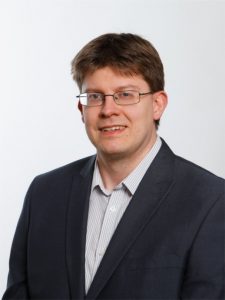
PhD Antoine Stier
TCSM Postdoctoral Researcher
Ecology and Evolution Biology

The ongoing COVID-19 pandemic has a strong impact on our everyday life, forcing us to adapt both our personal and professional lives. Many academics now face the challenges of getting used to remote working, but many tasks remain impossible to conduct from home. While essential empirical work can still be conducted within research premises in most Universities, conducting work outside the laboratory (i.e. in the field) incurs some specific challenges. Biology researchers within the University of Turku  are not only conducting fieldwork in Finland, but also in various places around the world ,such as in South-America for studying the Amazonian forest, Myanmar for studying Asian elephants or some remote French sub-Antarctic islands (Crozet Archipelago) for studying king penguins in my case.

While many countries cancelled most fieldwork-related activities last spring (an unfortunate timing considering that many field activities are restricted to a narrow time-window during this season), we have been relatively lucky in Finland to have the possibility to conduct minimum to normal fieldwork activities thanks to a relatively quiet COVID situation and support from our institutions. However, conducting fieldwork abroad has mostly been cancelled and is continuing to be cancelled (for very valid reasons), incurring the inevitable loss of precious data. Continue reading

Posted in Personal thoughts | Leave a comment

Motivation across a transition by Heta Tuominen

Collegium Researcher (TIAS) Heta Tuominen

Once again students have returned from summer holidays back to school and started their academic years. Some of them (including my daughter, by the way) are starting off their sixth, that is, the final year in elementary school and, thus, approaching the transition to lower secondary school (grades 7–9). Studying young people’s motivation and well-being in school is, in my view, always relevant, but could it be especially important across such an educational transition period in early adolescence.

Yes, it seems so. Previous studies show that an overall negative change in academic motivation takes place during early adolescence and that this decline is most pronounced during educational transitions. Also, negative changes have been seen in adolescent students’ school-related well-being. That is to say, educational transitions can indeed pose a risk for adolescents’ academic motivation and well-being.

In our recent study (Tuominen, Niemivirta, Lonka, & Salmela-Aro, 2020), we looked precisely into this by investigating 1) what kinds of motivational profiles can be found among sixth- and seventh-graders, 2) how do these profiles change across the transition from elementary to lower secondary school, and 3) how they are linked to well-being, in this case, school engagement (how engaged a student is in schoolwork) and school burnout (how exhausted, cynical, or inadequate a student feels in relation to school demands). Continue reading

Posted in Research | Tagged | Leave a comment

Pohdintoja tutkijanuran vaiheista, kirjoittajana Teemu Niiranen

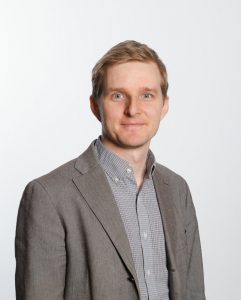
Henkilökuva kirjoittaja Teemu Niirasesta, ylävartalo ja kasvot näkyvät.

Dosentti Teemu Niiranen
TCSM kollegiumtutkija
Kliininen laitos, sisätautioppi

Lääkäritutkijan uralla otetaan monia askelia, joista kaikki eivät aina välttämättä tunnu askelilta eteenpäin. Kliinisen erikoistumisen jälkeen yleistietämys omasta erikoisalasta on parhaimmillaan, minkä jälkeen aletaan usein keskittymään hallintotehtäviin sekä yhä kapeampiin lääketieteen osa-alueisiin. Tutkijan uralla tilanne on usein samankaltainen. Väitöksen jälkeisen post doc -jakson lopussa tutkija on usein tehokkaimmillaan, kun hän pystyy oleellisimmat tutkijan taidot opittuaan keskittymään 100-prosenttisesti tutkimustyöhön.

Mikäli tutkija kuitenkin perustaa post doc -jakson jälkeen oman tutkimusryhmänsä, työpäivän sisältö ei yleensä olekaan enää entisen kaltainen. Varsinainen tutkimustyö, eli ainakin omassa tapauksessani datan tuottaminen, analysointi ja raportointi, onkin muuttunut loputtomiksi puhelinkokouksiksi, budjettien laatimiseksi ja henkilöstöhaasteiden ratkomiseksi. Continue reading

Posted in Personal thoughts | Leave a comment

Turku Medieval Market: researcher and popular history by Reima Välimäki

https://mail.utu.fi/owa/service.svc/s/GetPersonaPhoto?email=rsmval%40utu.fi&UA=0&size=HR96x96

Reima Välimäki, postdoctoral researcher, TIAS

Like the previous blog post, https://blogit.utu.fi/collegia/2020/06/05/explaining-quantum-physics-with-arts-and-games/ my text discusses outreach: a part of a researcher’s work that might not be rewarded as a curriculum activity, but which is extremely rewarding in itself.

I am a medieval historian. Some of my research has been a very technical study of medieval manuscripts, their authorship, dating and provenance. Fundamental research, but not stuff for popular books. Yet, in addition to that, I have always felt that an academic historian’s duty is, in addition to research and teaching, to be an expert in the service of society. This means that one must be able to a certain extend to step outside one’s comfort zone, the narrow research area in which one publishes their journal articles.

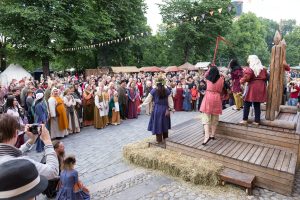
For me, such an opportunity has been Turku Medieval Market, an annual medieval fair at the heart of historical Turku, in the Old Market Place near the Cathedral. It is the oldest and largest event of its kind in Finland and with its ca. 150 000 visitors one of the major summer events. Of course, not this year. As I am writing this, the Medieval Market is taking place online due to the COVID-19 restrictions. If you want to check it out, the programme is available also after the event days 25–28 June: http://keskiaikaisetmarkkinatverkossa.fi/

Image 1: Medieval Market attracts every year well over 100 000 visitors from Finland and abroad. Photo: Sami Maanpää/Keskiaikaiset markkinat

Continue reading

Posted in Uncategorized | Tagged , , , , | 1 Comment

Explaining quantum physics with arts and games by Matteo Rossi

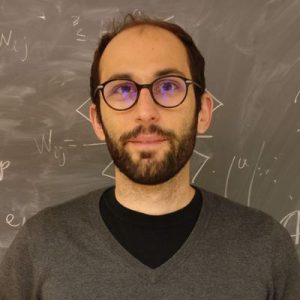
Author Matteo Rossi faces forward infront of a blackboard. Head and torso are visible.

Author PhD Matteo Rossi
TCSM Postdoctoral Researcher
Turku Quantum Technologies group

This post is about one aspect of our job as scientists that we often tend to neglect or avoid as much as possible but plays a very important role towards the society: outreach. Outreach is a challenging task, as it requires us to rethink our everyday work from the perspective of someone completely new to the topic, to communicate the relevance of your research engagingly, to explain in a few minutes concepts that you learned in years of studies and training.

Some topics are particularly challenging, as they are so far from common experience. With these, the hardest part is to find a way to give an intuitive description of the phenomena that happen, and this is exactly the case I’ve been facing in explaining quantum mechanics.

Quantum mechanics was formulated a century ago to explain the physics of the microscopic constituents of matters, such as atoms, molecules or photons. While it is a clear, sound mathematical construction, that can predict experimental results with high accuracy, it is well known for being a difficult topic to understand. Continue reading

Posted in Personal thoughts, Research | Tagged , , , , | Leave a comment

Pandemic Mothers by Helena Duffy

Collegium Researcher Helena Duffy

More than ever I am surrounded by my ‘Holocaust mothers’ (the focus of my TIAS project). I used to get a break from them by going to conferences, writing articles on unrelated topics, or even going to the swimming pool. I loved my Finnish lunch. Early and boundless. And, unlike anything else in this country, affordable. And followed by a cup of coffee. Well, actually two cups of coffee. A stroll by the river. Then another cup of coffee at the main library. Coffee, proximity of books and sense of my own anonymity were so conducive to writing.

But things have now changed and I am mostly stuck at home with the ghosts of women wearing 1940s dresses and hairdos and fussing over their children. They are in my kitchen making gefilte fisch or kugel. They are working with margarine in the absence of butter, replace double cream with condensed milk. They chop liver. They make the best noodles in the world. They still observe the kosher rules and the Shabbos and take pride in being able to feed their families with the little that there is to feed them with. Continue reading

Posted in Personal thoughts, Research | Tagged , , | Leave a comment

Striving for sustainability by Karoliina Lummaa

Karoliina Lummaa, collegium researcher, TIAS

Climate change, biodiversity loss and other global environmental crises pose a monumental challenge to societies. We are now facing the situation where societies need to be reconstructed ecologically within the next ten to thirty years, and the reconstruction has to be implemented in ways that are socially just, culturally imaginable and economically feasible.

The ecological, social, cultural and economic facets of societal development are elemental in the sustainable development framework, which is nowadays broadly adopted in politics and business policies, nationally and internationally. In 2015, all United Nations member states agreed on 17 Sustainable Development Goals. The concept of sustainable development was first introduced by the so-called Brundtland Commission (initiated by the United Nations and chaired by Gro Harlem Brundtland) in their report Our Common Future (1987), where sustainable development is defined as “development that meets the needs of the present without compromising the ability of future generations to meet their own needs”. Continue reading

Posted in Personal thoughts | Tagged , | Leave a comment

What is life? By Jianwei Li

Jianwei Li, head and torso, photograph in front of trees

Jianwei Li, Collegium researcher and group leader in MediCity

“Jianwei, can you tell us what life is?” This is a question asked by an opponent Prof. Harutyunyan in my PhD thesis defense. The answer to this question is quite simple by telling the audience without hesitation three main characteristics of life: compartmentalization, metabolism, and reproduction. Such a certain answer is well and perfectly defined if the word “life” means biological life in science. However, science is not all.If you have ever been asked the same question, I bet the first reaction of most of us is to regard the word “life” as our existence or everyday living and cannot come up with an answer immediately.

What is life in this respect? The answer becomes complicated. 1000 people have 1000 kinds of opinions. Life cannot be predicted precisely. Continue reading

Posted in Personal thoughts | Leave a comment

Koronavirus muokkaa toimitusketjuja, entäpä ilmastonmuutos? Sini Laari

Tutkijatohtori Sini Laari

Koronaviruksen leviäminen globaaliksi pandemiaksi on nostanut toimitusketjut valokeilaan. Monet yritykset ovat jo pitkään ulkoistaneet tuotantonsa halvemman kustannustason maihin. Samoin ne ovat pyrkineet vähentämään varastoon sitoutuneen pääoman määrää, ja pitävät vain pientä varmuusvarastoa luottaen globaalin logistiikan tehokkaaseen toimintaan. Kun koronavirus iski Kiinaan, monet toimitusketjut ajautuivat vaikeuksiin, kun tuote- ja komponenttipula aiheutti dominoefektin lailla toimitushäiriöiden sarjan ja paljasti moniportaisten toimitusketjujen haavoittuvuuden. Koronavirus aiheutti esimerkiksi pitkistä logistisista ketjuista riippuvaiselle autoteollisuudelle valtavat tappiot tuotantolaitosten seisahtuessa ja uusien autojen myynnin sakatessa lähes kokonaan. Korona iski rajusti myös risteilyvarustamoihin, mikä voi kerätä Suomen meriteollisuuden taivaalle synkkiä pilviä. Maaliskuussa monet suomalaiskuluttajat puolestaan näkivät ensimmäistä kertaa elämässään markettien hyllyjen ammottavan tyhjinä. Yllättävä kysyntäpiikki tyhjensi mm. wc-paperihyllyt, kun toimitusketjut eivät pysyneet hamstrauksen perässä. Viime päivinä puolestaan Suomessa huolta ja julkista keskustelua on herättänyt erityisesti suojavarusteiden saatavuus. Asiantuntijat ennustavatkin koronaviruksen seurauksena muutoksia toimitusketjujen rakenteeseen. Monet yritykset harkitsevat varmasti alihankintaketjunsa lyhentämistä ja paikallisten toimittajien määrän lisäämistä. Continue reading

Posted in Personal thoughts, Research | Tagged , , | Leave a comment

2019 Novel Coronavirus – 2020 New Challenge!

Yu Cao, TCSM Postdoctoral Researcher, Faculty of Medicine

Yu Cao, TCSM Postdoctoral Researcher, Faculty of Medicine

New coronavirus 2019 (2019-nCoV), was discovered due to Wuhan, Hubei, China, virus pneumonia cases in 2019, and was named by the World Health Organization on January 12, 2020. [1] Coronaviruses are a large family of viruses that are known to cause colds and more serious diseases such as the Middle East Respiratory Syndrome (MERS) and Severe Acute Respiratory Syndrome (SARS). The new coronavirus is a new coronavirus strain that has never been found in humans before. The real appearance of 2019-nCoV is show in a rendered pseudo-color photo. [2] The image looks so harsh, but it also shows the 2019-nCoV virus’s ugly face, covered with crowns on its surface, like a demon’s mouth

2019-nCoV is the seventh known coronavirus that can infect humans, and the remaining six are HCoV-229E, HCoV-OC43, HCoV-NL63, HCoV-HKU1, SARS-CoV and MERS-CoV.[3] This virus can cause severe respiratory illnesses, it has infected more than six hundred thousand people in world to date and killed at least 30000 people, and spread to more than 190 other countries and territories. Continue reading

Posted in Personal thoughts, Research | Leave a comment