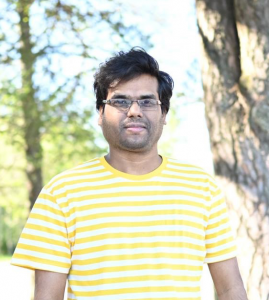
Lihua Sun, post doctoral researcher at the Turku Collegium for Science, Medicine and Technology
I sincerely wish everyone a happy new year! The 2020 was extraordinary, particularly shaded by the pandemic. Normal academic life is challenged, but it seems not to be only negative. For instance, several my colleagues expressed higher effectiveness in remote working including mentoring and writing. On my side, working remotely seems to be ideal since I can flexibly arrange my work hours while helping with family members. Nevertheless, somewhat lack of social life sounds depressing for many people, not to mention other challenges like unemployment or loss of close ones. Beyond all consequences of the pandemic, however, I would like to raise my concern for winter blues which may also greatly affect sociality and joyfulness.
We are still in the darkest wintertime, where emotionally down with less motivation for social interactions (maybe also sleeping too much, little to no energy, or eating too much) characterizes the winter blues, or known as the seasonal depression. You may be surprised that, in Finland, winter blues or its sub-syndromes affect over one third of the population. Causal factors for it include the short daylength, and the first-in-line choice for treatment is light therapy. Daylength in southern Finland ranges seasonally from 6 till 20 hours (or 7 till 23 hours when counting the morning and evening twilight). Darkness is a prominent character of the Finnish winter, since it lacks daylight plus the mostly cloudiness. While darkness often accompanies bad emotions that we may subjectively feel, my recent study highlighted one brain mechanism potentially explaining it, i.e., seasonal variation in socio-emotionally important brain neurotransmission.