

A quarter of century ago, when this millennium was young and believed in its dreams, I along with some students – younger and smarter than me – began to think, discuss, write and publish what we saw arising on the horizon: information era and knowledge intensive firms. Plenty of water and some blood has fallen down in all the rivers of the world since then, so it is time to update these thoughts.
Information era did not become after all essentially a knowledge society. There are striking news to show that stupidity has increased. What young people learn at schools has measurably deteriorated. A similar trend has taken place in the IQ-tests of Finnish recruits in our conscription army representing about 75% of young men and an increasing amount of young volunteer women of the nation. Yet, the information storage has grown to colossal heights. So have its distribution channels, networks and sites. This text is just one in a thick jungle and I do not dream for a second for it to carry any further than shouting in a thick forest. It is just an attempt to correct what I once wrote.
Then, I was not able to see digitalization, just a presentiment of it, which was not enough to realize its amount, importance and power. Reading, and even reading skills have eroded. Books are still published, so there must be some people to read them. Quality papers remain, but fewer and fewer subscribe to them. Increasingly, information is picked from digital sites. Digital skills have replaced ABC-books. Algorithms have replaced teachers on the highways and byways of information. But the road to wisdom remains as narrow and cumbersome as ever and good educators can still pave the way. Artificial intelligence beats the human brain in speed and capacity. It takes a great thinker to surmount what AI can do.
As the amount of available information has grown to gigantic dimensions, no one can manage or even observe it all. As a consequence, knowledge is fragmented and split. Then the same knowledge can be shared by fewer and fewer, and people are left in their bubbles to share their information, knowledge, misunderstandings, fake news and prejudices with likeminded fellows that have been exposed to similar influence. Hence, people are fooled into bubbles in a finite information space with an infinite information space outside their bubbles. To rescue oneself out from this bubble requires mental force like the way a rocket needs propulsion force to win the gravitation on its way to a wider orbit.
The information around us has not led to better understanding between people. On the contrary, fragmentation, indeed polarization between groups, social layers, entire societies, within the humankind at large, seem to be growing. Connections, willingness to talk between people across the bubbles has weakened, while aggression between people in their social media traps has intensified. People listen to their fellows, share with their fellows, quote their fellows. These discourses arise as spirals growing to typhoons, that roar around the bubbles accentuating distinctions. Where there is connectivity, frontiers are built.
There is a growing concern about the concentration of information. Data about our daily transactions are collected for commercial, potentially military purposes. Europeans have been alarmed by being wired to a few American mega corporations in the same way they are militarily hooked in NATO.
A Spanish Philosopher and essayist José Ortega Y Gasset provoked the literary world between the two World Wars with his book La Rebellión delas masas (The tyranny of the Majority). He asserted that the brutal collective mediocrity threatens individuality, free will and minorities. There may have been more connectivity then, as there was not information technology to wrap all nonsense. He did not have an inkling about the (un)social media when he wrote his then unpopular message.
Enough about information era.
KNOWLEDGE NOW
The traditional (smokestack)industry has diminished in volume, but it remains influential due to its export and lobbying power. The Finnish forest cluster has actually been a resource curse. Many oil rich countries have had growth without development, as they have been complacent and have not diversified their economy. Likewise, Finns have not used their forests for biotechnological development. Instead, we have exported plank to Denmark and imported it back in furniture and exported pulp to China and imported it back as cardboard around Chinese products. Where did the value-added go in this lo(gist)ic? Why has not the forest cluster been able to arise above its trees?
A Finnish village carpenter can carve as good piece of furniture as IKEA, but we are short of a concept to make it a household name. Now the Danish Novo Nordisk is the most valuable Scandinavian company. The Finnish timberfeet have not been able to follow suit. Why? Why!
There is, however, new know-how and know-why based on digitalization and, it is reaching global markets. There is Oura, Elomatic, Planmeca, Ponsse, ICEYE, Digital Workforce just to mention a few. Some companies have seized digitalization to cut middle men between them and the customers in a revolutionary manner. These people have not sat singing the old psalm about the poverty of Finland but searched capital of the world to their attractive business ideas. After all, there is knowledge, knowledge capital, even a knowledge society in Finland. It is just finding new ways to new productive habitats.
What about Values?
Values have not become softer the way it was predicted early this millennium. Even though climate indicators, even points of no return are more alarming than ever green values and environmental issues are not high on today´s agenda. Instead, wars and militarization make capital headlines. When Putin attacked Ukraine, military readiness took the place of pacifism. Also pandemics, unemployment and fear of losing one´s job increase hard values.
According to a recent youth barometer, young people are more pessimistic about their future than earlier generations. It is known that values and attitudes are adopted early in life and they are difficult to change later. Youth is the future – and also a time bomb.
Politicians have worked hard to make the country a functional whole, a homeostasis, where all its parts fit together. It is fair to say, that to an extent, it has been achieved. Yet, always some dysfunctional elements remain. Communism belongs to the past. But a new cry is being heard: “Brothers, it is cold out there, we wanna get out”. In old movies the sun is shining, clouds sail on the blue skies and they are not torn by storms. But it is hard to sustain illusions. Nostalgia is not a strategy.
Transactional Organizations
New organizations pop up. Many, even die short of oxygen early. The ones that cross over the first valley of death grow organically increasing their services and customers. In growing, they confront a new shortage of oxygen and again, deaths will follow. Some succeed by buying other organizations, or by getting merged into them. The new fusions become a springboard for new growth. Fused companies become fused and fused again. In the end, industries are so concentrated that competition authorities cannot make heads or tails of them.
This is how mega corporations are born. In the United States information and entertainment businesses are merging. So people get their news, entertainment and other information from one silo, and avoid influence discordant with their views.
The siloes have mutual transactions, i.e., they buy and sell their services among each other. And they have subcontractors with transactional connectivity between them, and the main contractor. They make up worldwide, mainly American transactional clusters. The clusters are not hierarchical but transactional. The glue that binds them together consists of trust and reciprocity. Then, they avoid rigidity, creaking joints, resistance to change and prestige conflicts, all too typical of hierarchical organizations.
Once upon a time, pharmacists used to have catalogues of physicians and their services. Then the doctors got the idea to merge, and make polyclinics or medical centres. Then the centres began to merge and merge. And later they were bought by big foreign medical companies. At the same time individual doctors began to privatize themselves into one person companies that transacted with patients and with their parent medical company. Somewhat similar trends are seen among law firms and other professional partnerships.
There is even an opposite transactional movement, viz. big conglomerates are broken down to transactional units. The Finnish Road Construction Authority built Finnish roads and waterways and was the biggest employer in the country. It decided to withdraw from building, became a governing agency and privatized all building to Destia. Destia, in turn split its assignments to small enterprises, teams, masons and other skilled workers. This kind of transactional clusters built the Finnish suburbs and their highest buildings.
The Finnish Broadcasting Company (YLE) had a theater, a choir, an orchestra and many other fascinating platforms (there still is Radio Symphony Orchestra, RSO). Now with fewer platforms of its own, YLE shows more programmes than ever in more channels than ever, all connected with podcasts by myriads of producers globally, and YLE, in turn, sends its own productions to wherever there are willing watchers.
There is one more realm of human endeavour, that could be modernized by transactional mindset. Universities exist for research and education. Research had better be organized as projects. Researchers abound, and they can be picked for projects, and, in the same vein, researchers can propose new projects. Education is easier to provide than ever before. University readers are still needed to guide young innocent students in the wild jungle of higher learning. The sturdiest professors could be sent to Russia to lecture about trust, reciprocity and transactional thinking to students grown into the authoritarian way of governing.
The paper is based on a presentation in Torpanranta Debate Forum 7.4.2026
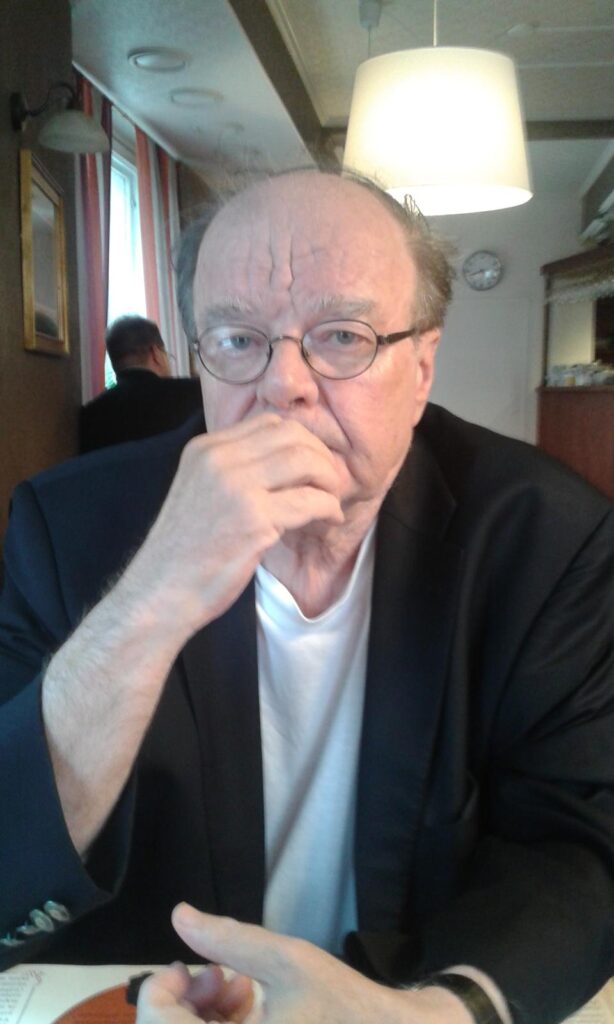
The writer, Raimo Nurmi is Emeritus Professor of Turku School of Economics and Estonian Business School.
rw.gmail@com
Vastaa