Time flies when you have JAZZ!

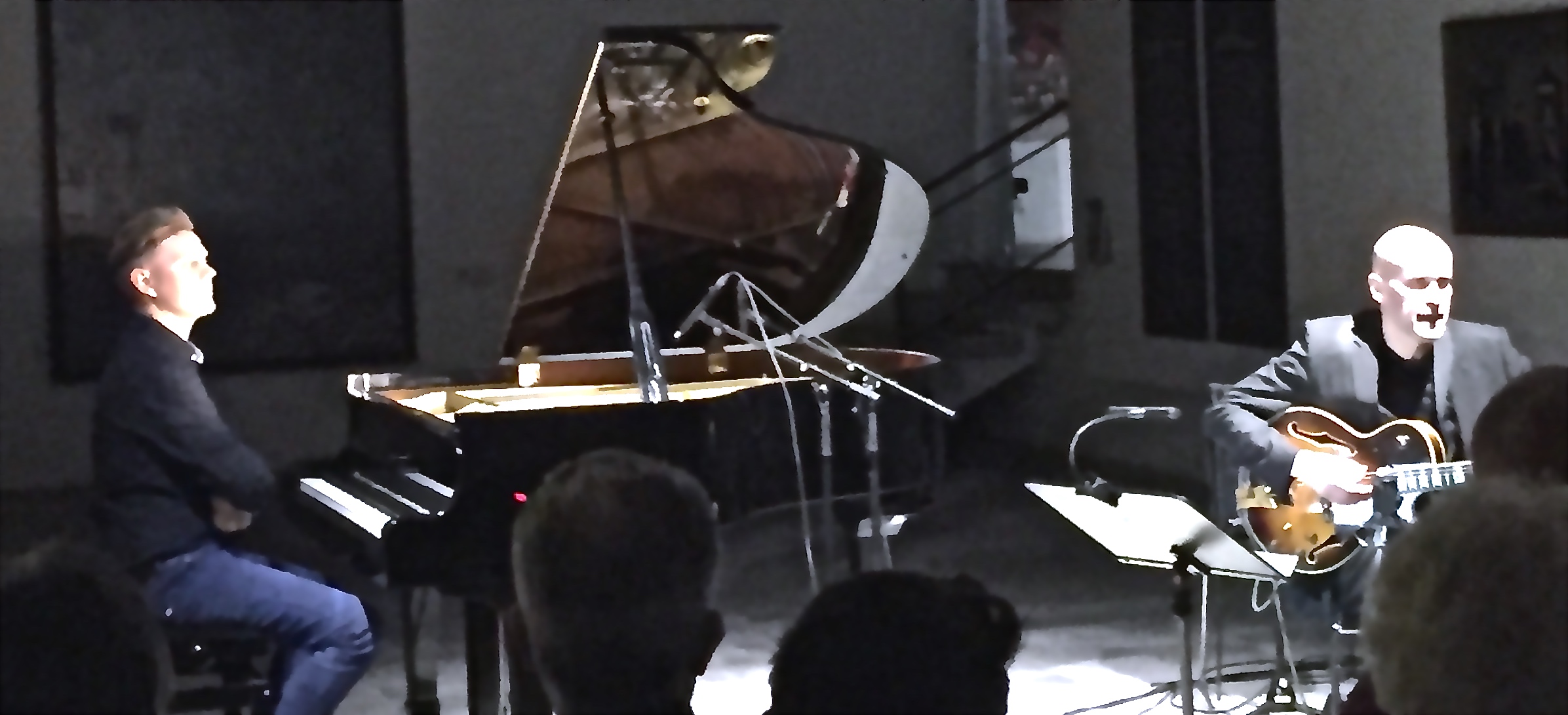
The English Department makes traditional ‘City Hikes’ to Turku destinations. This time the goal was to be jazzed at the Wäinö Aaltonen Museum with their Tuesday concert series. The programme promised a treat by the duo of the jazz pianist Aki Rissanen and the Finnish jazz guitar genius Niklas Winter.

The (unexpected, unprogrammed) overture was Aki’s solo consisting of a piece from Medieval French composer Guillaume de Machaut (d. 1377), followed by a part of the Finnish composer Leevi Madetoja’s (1887–1947) Syksy (Autumn) series of songs. All in ‘jazz’. Niklas tried to enter the stage after Aki’s first number but was, convivially, only allowed to enter after the Madetoja piece.

The programme consisted of many compositions by the duo, some of which were dedicated to memorable musicians (J. J. Cale, Charlie Parker, Billy Strayhorn). The guitar and the piano played well together, and created a timeless sound world.
jazz1

Aki Rissanen, piano, Niklas Winter, guitar. Photo: JK.

As to the etymological roots of jazz, then, it is a complex type of beast. With Western African origins, it can be said to have been brought to life and light in New Orleans (since the beginning of the 20th century). The ‘exact’ meaning is shrouded in innuendoes, ambiguities, and especially euphemisms. Subsequently, such an ambiance created a shrowd of unaccceptability (and also counterhegemonic prestige) for jazz for decades, some of which continues in its reception even in today’s (self-acclaimed) uninhibited musical sphere.

There are myriad forms of jazz – and even more of its derivatives and fusions. The most familiar ones are perhaps Bebop, Swing, Big Band, and (maybe only by reputation) Free Jazz. Even a short list of major names of jazz performers and composers (or my meagre list of favourites) itself exceeds the limits of this platform.

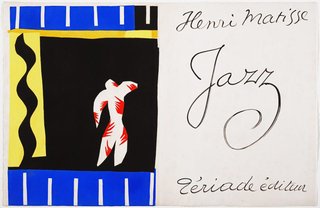
Intertextually, ‘jazz’ may bring into mind Tony Morrison’s (Chloe Anthony Wofford, born 1931–) historical 1992 novel Jazz, director Bob Fosse’s autobiographical movie All that Jazz (1979), Henri Matisse’s (1869–1954) art collage book Jazz (1947), or any number of other cultural artefacts. Be as it may, jazz is a state of mind.
jazz2
Henri Matisse, “The Clown” (1947)

Text and photo by Joel Kuortti
There’s a new professor in town: Q&A with Matti Peikola

img_1872-matti
Professor Peikola in academic regalia.

1. Tell us a little bit of who you are.

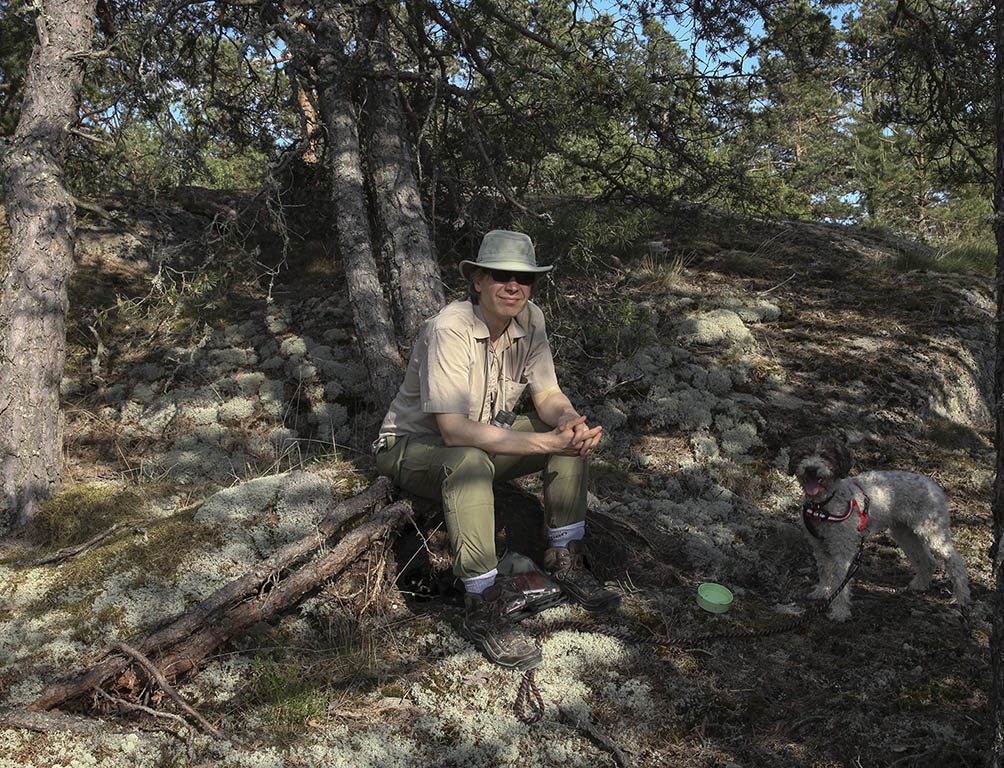
I am a 48-year-old Doctor of Philosophy and a lifelong learner. I live in Turku with my wife Kirsi and our Lagotto Romagnolo dog. My academic career has primarily been at Turku, with shorter periods at Helsinki, Münster, Oxford, York and London.

2. What kinds of courses do you teach? How and when can our students meet you?

I mostly teach compulsory and elective courses on the Philological MA thesis track. I am available for consultation on Wed 14–15 or by appointment.

3. What do you do research on? What would you like to study in future?

Texts and books are my passion. I am interested in how texts are produced, circulated and consumed, from medieval to modern times. How does language use vary and how are material texts shaped in various communicative and cultural contexts? My current research interests include paratextual communication, manuscripts of English biblical translations and recorders of the Salem witchcraft papers. These and other projects will keep me busy in the foreseeable future.

4. Can you describe what a typical working day is like for professors?

No two days are alike, which is both a bonus and a challenge. Often things come up that require instantaneous attention. I value the chance to collaborate with my colleagues on co-taught courses, shared publications and joint project applications. A lot of my time goes into the reading and supervision of students’ work, which I enjoy a lot, because it allows me to learn new ideas from them. Professors are responsible for the development of their field, which requires us to follow what is going on in the academia and in the society more broadly.

5. What do you do when you are not a professor? Any time for other things in life?

The borderline between work and leisure is fuzzy. In addition to my family, nature means a lot to me: walking outdoors; watching the seasons change; spotting plants, birds and constellations in the night sky. Music is also great source of inspiration.

img_1962-matti3
Professor Peikola and his dog enjoying the outdoors.