Research visit to Philipps University Marburg

As part of my postdoctoral research period in the Research Council of Finland funded project Fluency and Disfluency Features in L2 Speech (FDF2; 2020–2024, PI Pekka Lintunen), I spent six months as a visiting researcher at Philipps University Marburg in Germany during January–June 2023. The main purpose of this research visit was to facilitate collaboration with a member of the project’s international advisory board, Professor Sandra Götz. 

It’s all about collaboration

My six months in Germany ended up, indeed, facilitating the collaboration with Prof. Götz in various ways. I appreciated the opportunity to discuss various research-related and other matters with her in our weekly meetings. Working in adjacent offices also allowed us to deepen and extend our existing collaboration, notably on a study addressing the speaking style and task mode effects on L2 speech fluency. I am also grateful to Prof. Götz and the Department of English and American Studies for making it possible to invite one of our collaborators, Dr. Loulou Kosmala from Université Paris Nanterre, for a short visit to Marburg. Her visit greatly facilitated the progress of our collaborative work on the links between fluency and gesture, which is based on the interactional data collected in the FDF2 project. Our pilot study has been published as part of the DiSS workshop 2023 proceedings. My research stay in Marburg, therefore, not only facilitated the collaboration with German colleagues, but also brought me closer to my other central European colleagues, including Dr. Kosmala.

Happy hosts (me and Prof. Götz on the left) and our visitor, Dr. Kosmala (on the right)

Getting to know the department

While working at the Department of English and American Studies, I had the privilege to get to know the department’s wonderful staff. I familiarized myself with the research done in the department by participating in their Linguistics colloquium research meetings and got to present our FDF2 project to the group. During lunches and other casual meetings, I learned that one of my colleagues, Aoife Holmes-Rein, hosts a podcast called Grandiose Grammar, including 45 episodes (and counting!) on various aspects of English Grammar.

During my stay in Marburg, I also got to witness the beginning of a great new practice facilitating casual encounters among the department’s students and staff, namely the Language lovers’ lunch club (3LC), launched by Holmes-Rein, Kathrin Kircili and Prof. Götz. The department has an Instagram account (@iaa_marburg) where they post about the lunch meetings and other activities at the department.
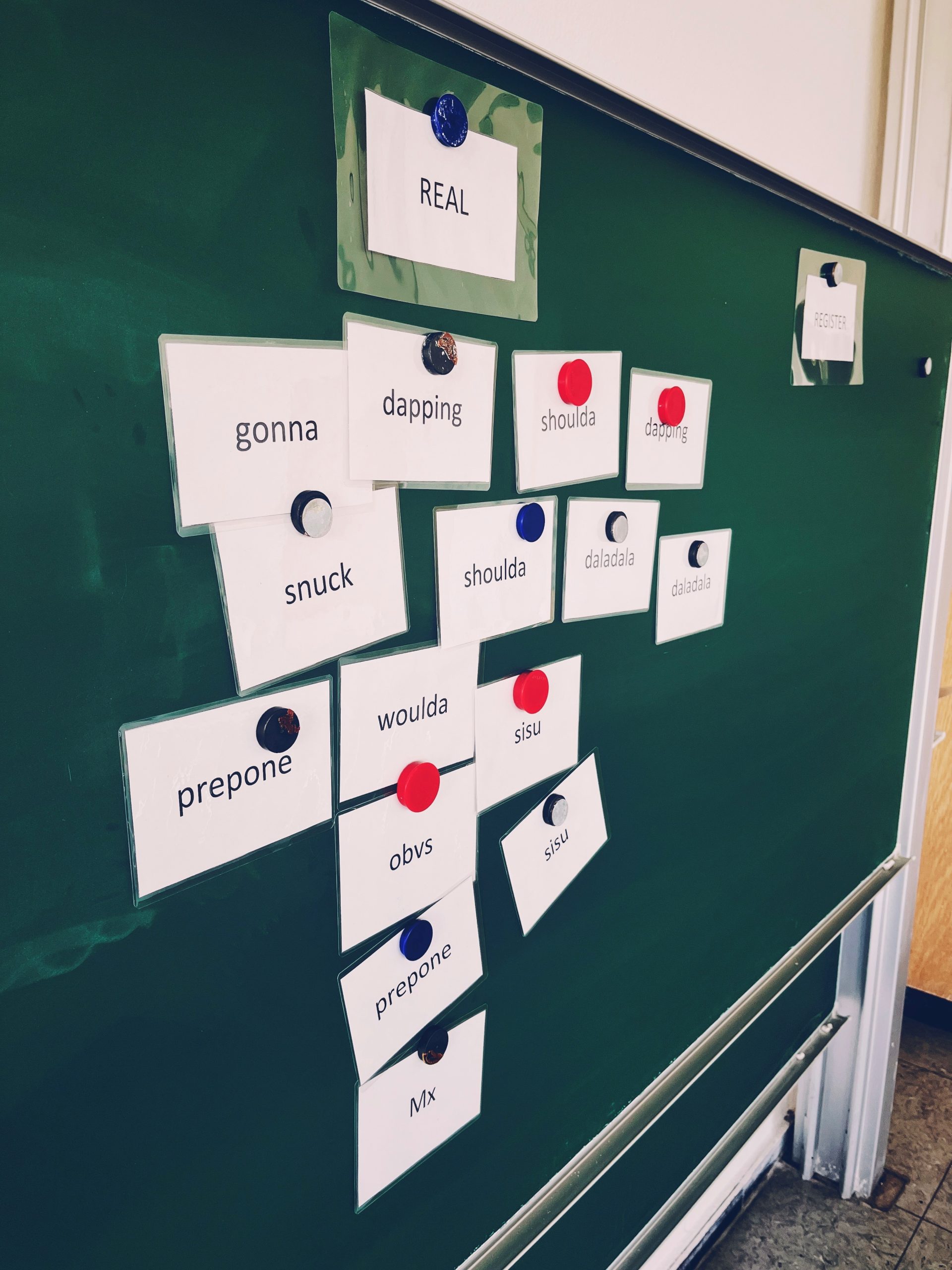
In the first 3LC meeting, the topic was language change and lexical innovation. Finnish “sisu” mentioned!

Teaching benefits research

While my visit was focused on research, I was happy to get the chance to give some guest lectures as well. I talked about social approaches to language learning on a course focusing on linguistic theory and the history of linguistic ideas. In addition, I gave fluency-themed talks on two different courses: one focused on spoken English and another focused on English as a foreign language. The participants on the latter course were future teachers of English, so we focused especially on the teaching of speech fluency. Getting to reflect on these topics with various groups of students gave a lot of food for thought also for my own research. I am grateful to all students in Marburg who attended these classes and to Prof. Götz and my dear “roommate” at Marburg, Kathrin Kircili, who kindly gave me the chance to join their courses as a visiting lecturer.

Other activities

A lot of my spare time during the visit was spent exploring my hometown, Marburg, as well as the cities nearby. To make the most of the central European rail network, I travelled both within Germany (for instance to Cologne, Hamburg, and Berlin) and to neighboring countries (France). In addition to these non-work-related trips, I also travelled outside Europe during my stay to participate in the annual conference for the American Association for Applied Linguistics in Portland, Oregon. At the conference, I presented preliminary findings on the effects of L1 speaking style and task mode on L2 fluency and got to meet colleagues especially from outside Europe.
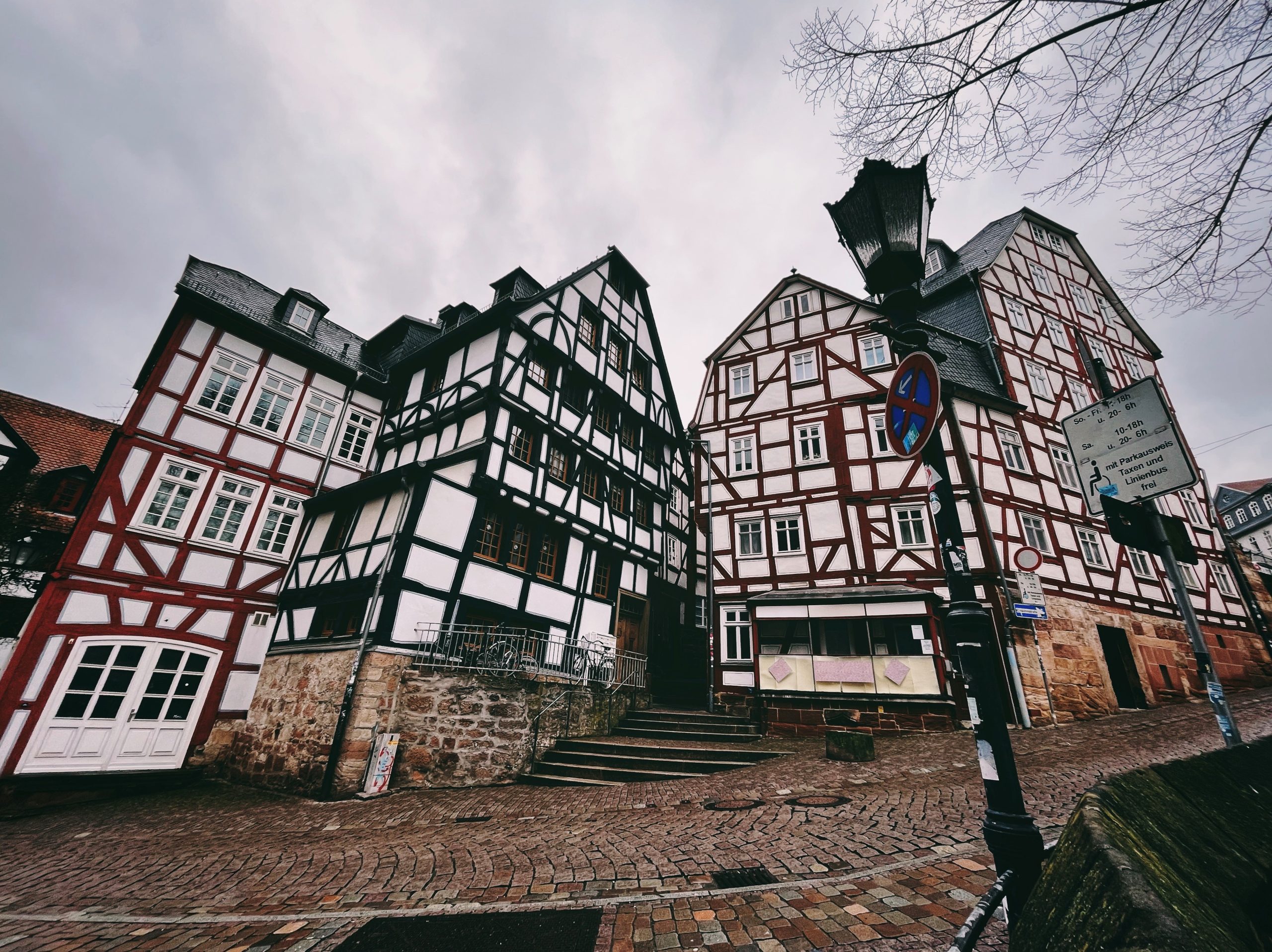
The Old Town of Marburg.

All in all, the six months I spent in Marburg were really enjoyable and rewarding, both from personal and professional perspectives. I learned a lot during my stay. I know that our collaboration will continue at least remotely, but I hope I can return to Marburg for another visit sometime in the future. 

Thank you to Prof. Sandra Götz, the Department of English and American Studies at Philipps University Marburg and the Research Council of Finland for making this visit possible.

Text by Pauliina Peltonen

First photo by Sandra Götz, second and third photos by Pauliina Peltonen
A long way to Arcanum: the English Department on the move

When the staff of the English Department have just moved into their brand-new premises in the newly renovated Arcanum building on the University’s lower campus at the beginning of 2023, this may be a convenient moment to take a brief look at the previous oases on the itinerary of the departmental caravan from its beginnings to the present day. There have been altogether five stops on the way to Arcanum.

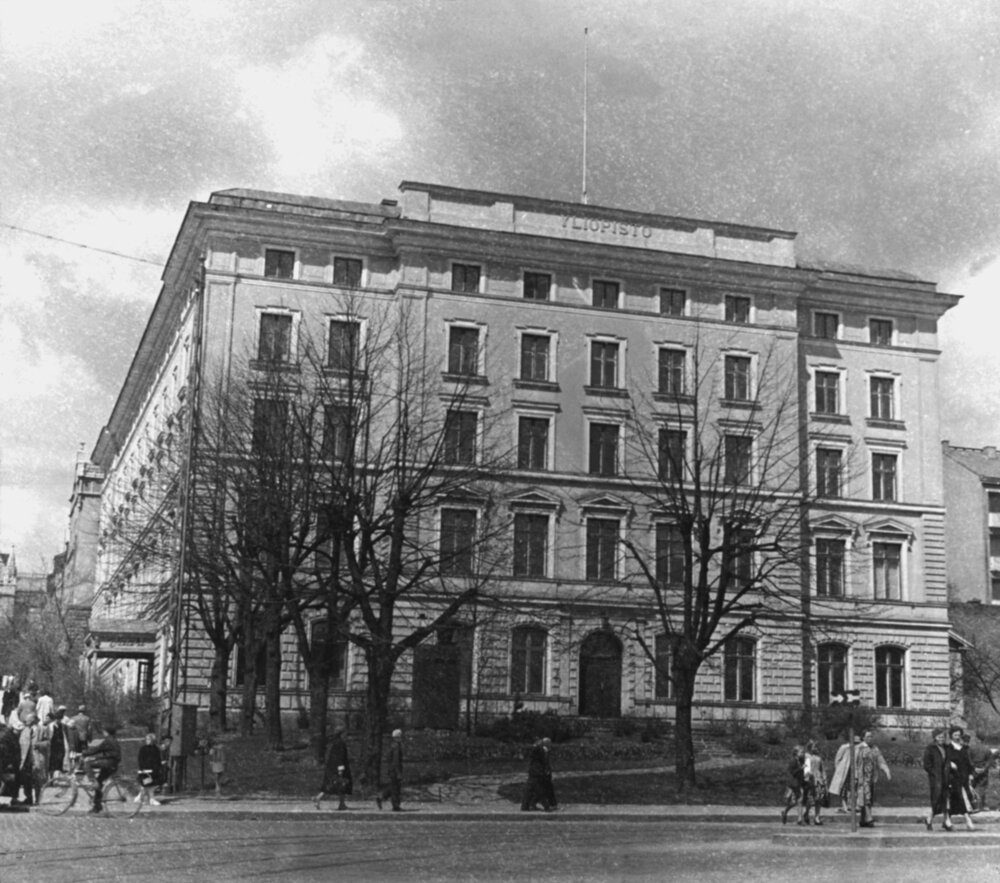
Taking the founding of the chair for English Philology in 1945 as the date of the founding of the Department, it was first located, together with the entire academic community of the new Finnish-speaking university of Turku, in the premises of the old Hotel Phoenix, a colossal late nineteenth-century building on the market square. Phoenix itself no longer exists, for it was demolished 1959.  

The building Phoenix in springtime in mid-1950s (photo from the Central Archives of the University of Turku)

Any available space for the departments in the building, originally designed for an entirely different purpose, must have been very limited, for the many functions of the new establishment, including teaching, administration and library, were housed under the same roof. As a result, there was a pressing need for expansion.

In the next phase, the University makes a move closer to the location of the old Academia Aboensis (1640) around the Cathedral. The oldest of the modern buildings on the current University hill date back to the 1950s. The Library was completed 1954 and the Main building 1958. From the mid-fifties until the mid-seventies, the English Department had its own library in three of the seminar rooms on the top floor of the Library building, within the space of present Feeniks library. In addition, there may have been some temporary space available for office hours, and the like, on the second floor of the Main building until the early 1960s.

Along with the increasing numbers of students and staff in the English Department during the 1960s, there was an acute need for more office space. At this point in the mid-1960s, the premises in Hämeenkatu 1, previously occupied by the Department of Dentistry, became available when a new building for dentistry was completed in Lemminkäisenkatu 2 in 1965.

The premises in Hämeenkatu 1 consisted of one long corridor with a number of rather small rooms on either side, originally designed for the needs of dental practices. The rooms were shared between several humanities departments, including history and philosophy. English had four rooms. One of them was the department office, and another was reserved for a visiting Fulbright professor. The other two were mostly used for office hours and consultation. Working at (and from) home was very much the norm for the staff at the time, and any joint meetings of staff and students were held elsewhere on campus.

Many of the long-standing problems of inadequate facilities and insufficient working and teaching space were resolved when a whole new building was constructed for the Humanities in Henrikinkatu 2 in 1975. The H-shaped building was originally called Humaniora II, Humaniora I having been Fennicum in Henrikinkatu 3, completed 1969. Humaniora II was renamed Juslenia, and it became a home for the Department until 2012. For the first time, most of the Indo-European language departments came to be in the same building, together with several other humanities subjects from archaeology and history to literature and cultural studies.

Having individual offices for the members of staff was one of the highly appreciated innovations of Juslenia. Also, having several teaching rooms close by in the same corridor was another welcome novelty we had not experienced earlier. Similarly, there was an easy access to the seminar library on the same floor as the Department. Yet another big change was the much-needed social space for the staff in the form of a coffee-room. With its iconic round table, this new facility had a lasting and enormously important positive impact on our social and academic interaction.

Over the years, with our initial enthusiasm gradually waning, we became more and more aware of the shortcomings of the building. Many of these had their origin in the stark contrast between the original design of the building and its practical realisation. As a result of an economic setback coinciding with the building project, the University was unable to carry out the construction, as originally envisaged. Among other things, one entire floor, containing a cafeteria/restaurant, had to be deleted from the plan altogether. Also, the surface area of each of the remaining floors had to be drastically reduced. Consequences of such dysfunctional adjustments could not pass unnoticed. They would be apparent, for example, in an awkward organization of the space, just as well as the crudish design of the interior and the limitations of available facilities. In the end, the pros for tearing down the entire building outweighed the cons for repairing it.

Still, in spite of its unevenness and roughness, Juslenia always brings to mind happy and pleasant memories, probably because we stayed there for such a long time, close to forty years. The final fall of Juslenia was complete in 2019, but in the Department, we had already lived through the upcoming loss by ceremonially cutting a gingerbread replica of the building into pieces of cookies at a Christmas party before leaving the building.   

Gingerbread Juslenia (photo by Mari-Liisa Varila)

Our penultimate stop before Arcanum takes us to Rosetta and its sister-building Signum, both charming old buildings from the turn of the twentieth century. After the property had become part of the University, it was renovated on several occasions for different purposes, most recently for housing the departments of English, French and German translation. Both buildings had offices and teaching rooms, and a joint library of the translation departments in Signum. After the merger of the translation departments with the respective philologies in 2010, the latter, with English among them, moved into Rosetta/Signum a couple of years after. All departments moved out of these premises by the end of 2022.  

There are many positive things to be said about Rosetta/Signum as a workplace. First and foremost, there was an atmosphere of a handsome old building about them, which was very nice. The staff rooms varied in size, but were on the whole quite comfortable, and much the same can be said about the teaching rooms. There was also a joint common room for those working in the building. My impression is that colleagues were generally quite pleased with the place and what it had to offer.

One aspect of the Rosetta building that was sometimes criticised had to do with the interior of its architecture, especially the number of doors everywhere. With the offices aligned along both sides of the numerous corridors with separating doors at both ends made the building a bit like a labyrinth, where students and visitors might have had difficulties finding their way around.

Aerial view of Rosetta and Signum (behind). Photo by Hanna Oksanen, copyright University of Turku Communications

Finally, we’ll get to Arcanum. From what I have seen so far, the building is superior to all the earlier ones in a number of ways. It is not only a modern building to begin with, but one that has been very recently renovated and refurbished completely for the needs of its users. Everything is conveniently accessible and close at hand. The teaching rooms are pleasant and spacious with excellent, up-to-date facilities. Another truly great improvement is the fact that all departments of the current Faculty of Humanities are for the first time in the very same building. This is a tremendous asset for the spirit of cross-disciplinary interaction and cooperation and will, no doubt, amply prove its worth in the years to come. 

Arcanum in winter. Photo by Suvi Harvisalo, copyright University of Turku Communications

It has sometimes been said that the walls are less important in Academia; it’s more important what goes on within the walls. This is true, of course, but only up to a point. The splendid premises of Arcanum rather indicate a very close interaction between the outside and inside. When the walls are constructed in harmony with the wishes, efforts and needs of the people inside, they connect rather than separate. It is a great joy to see that our long journey from Phoenix has been brought to such a happy close in Arcanum.

P.S. I am grateful to Teppo Jakonen and Janne Skaffari for their help in the preparation of this contribution. Teppo very kindly assisted in finding the photographic illustrations.

Text by Risto Hiltunen

Becoming an English teacher in Namibia and Finland

This autumn, the School of Languages and Translation Studies has had a visitor from the University of Namibia (UNAM), Dr Meameno Shiweda, who is a specialist in teacher education. In this blog post, Meameno and Janne Skaffari talk about similarities and differences in what and whom they teach and, more broadly, in the educational systems of our two countries.

Janne: How does one become an English teacher in Namibia?

Meameno: Anyone with an interest in teaching English can enrol in a teacher training program for junior/senior primary or junior/senior secondary levels, provided that they have good grades in five subjects, and a minimum of a C grade in English at Namibia Senior Secondary Certificate. A minimum C grade in another language is also a requirement. C is roughly the same as cum laude or magna in your matriculation exam.

J: It is quite different from Finland, where you apply to study English as your major or minor at university, and teacher training is basically a minor subject that corresponds to one year’s work. It is often completed as part of the MA degree. This route is for secondary-school English teachers, but for primary schools, you do not necessarily need more than a primary-school teacher’s university degree in Education. When does English begin in your program? Our majors do English Department courses from the first semester on.

M: Throughout their four years of teacher training, our students receive a mix of English modules and teaching-methods training. English majors also commence from the first semester onwards, and they are taught by English subject specialists from various departments in the School of Education. The first year begins with phonetics, phonology and children’s literature, and in the second year they focus on speaking and youth literature. The third year is reading and writing, while the fourth and final year is adult literature and grammar.

J: Oh, grammar comes that late! What kinds of observations have you made about teaching and studying during your visit?

M: The length of time a student studies English before having to determine whether or not they want to become English instructors is an important observation I have made here. Additionally, I have learned that prospective teacher-training students are interviewed to gauge their level of preparedness for the teaching profession, as opposed to our practice at UNAM.

J: We think it is important that students have time to become familiar with their major and minor subjects at the BA stage and then focus more on a particular career during MA studies.

M: I’ve learned from my experiences here and from talking to colleagues that getting extensive English training before concentrating on a teaching job is more realistic.

J: Yes, we really hope it helps! Students also get to see that there are other career opportunities.

M & J: We wish all our students – in Namibia and Finland – good luck with their studies and future careers!

Text by Meameno Shiweda & Janne Skaffari

Photo by Teppo Jakonen

75 Years of the Joys of English

The Department of English became a subject department at the University of Turku 75 years ago in 1946. In 1980, translation studies were transferred from Language Institutes into the university, and were merged with the philology departments in 2010. We celebrated this anniversary on Tuesday 14 December 2021. The Corona epidemic had postponed the occasion but this did not defeat the festive spirit.

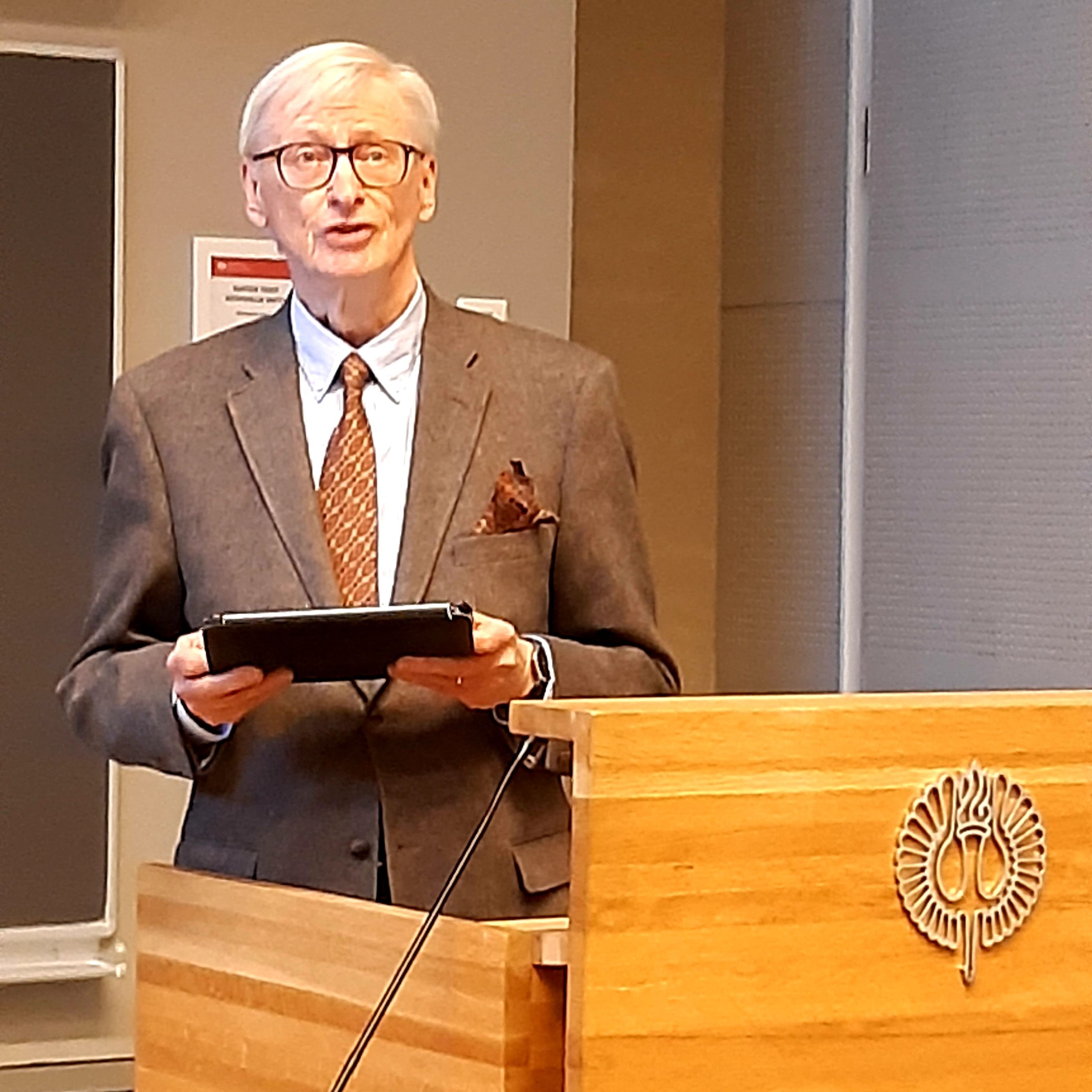
Professor Emeritus Risto Hiltunen chronicling the department’s 75-year history — and beyond.

The programme of the seminar included an overview of the history of the department by Professor Emeritus Risto Hiltunen. He took us through the years from the first chair in English held by Yrjö M. Biese (and even earlier times) to the gradual expansion of the department, the merger of philology and translation departments and the introduction of the 2010 Universities Act that changed the juridical position of Finnish universities, until the present.

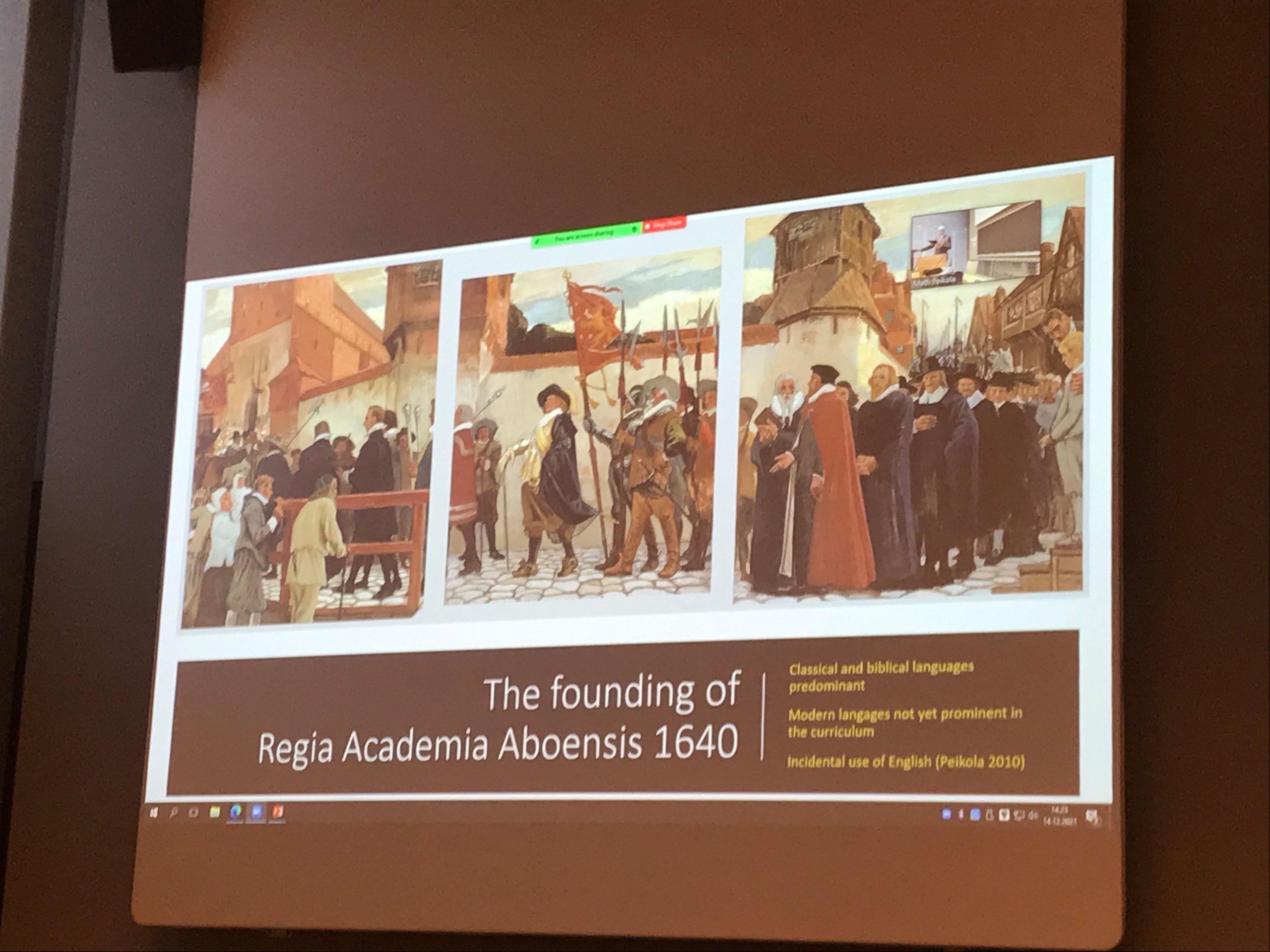
Risto’s speech reached all the way to the history of Academia Aboensis, the origin of university-level study of languages in Turku.

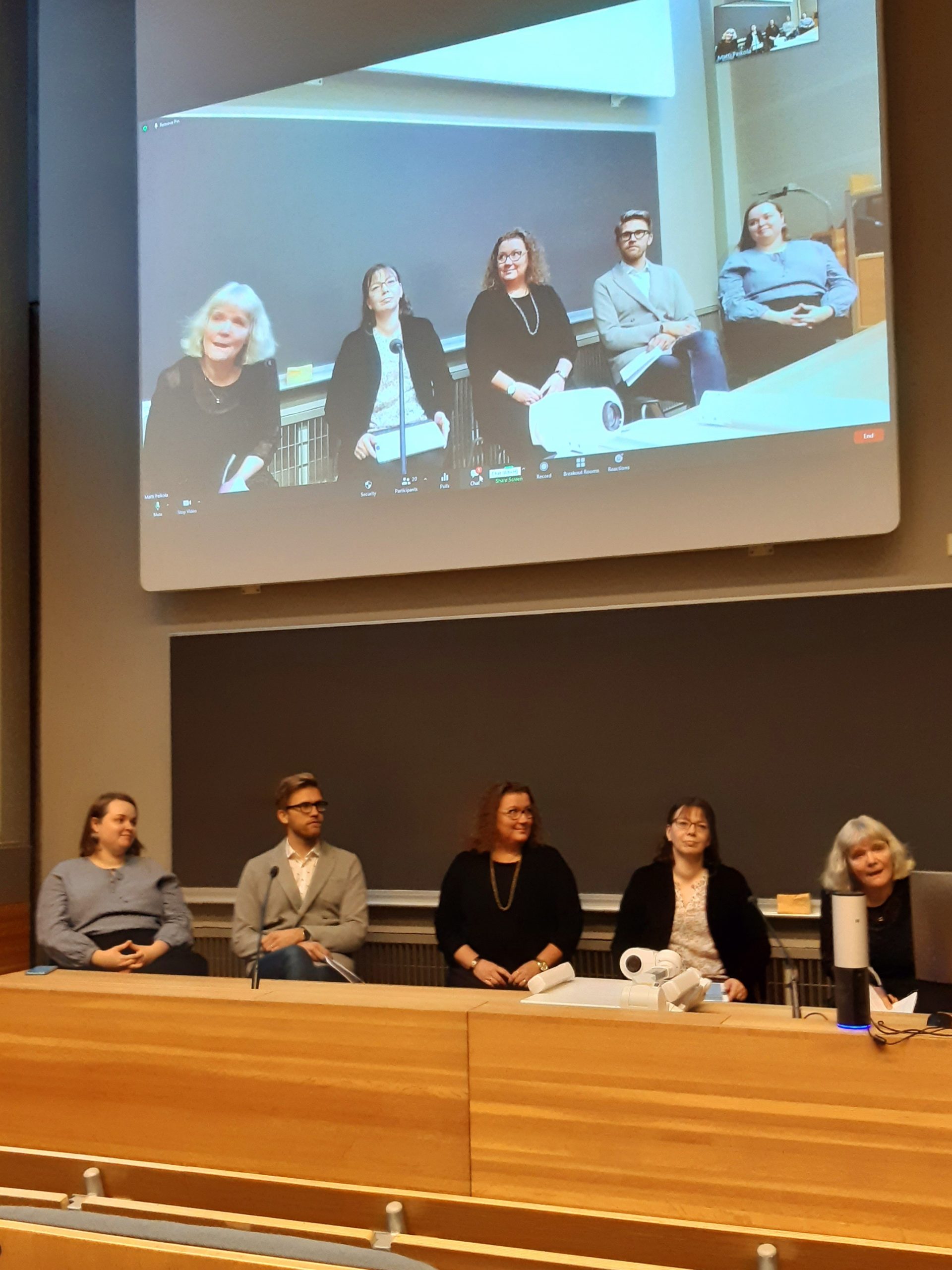
Risto’s presentation was followed by a panel discussion chaired by Professor Matti Peikola, representing our alumni and present students: Taru Savolainen, Miika Katajamäki, Maija S. Peltola, Sanna-Kaisa Tanskanen and Marianna Sunnari. All the panelists had started their studies in different decades, and have had different careers, and were thus a very good cross-section of the Department. The discussion was very lively and higlighted various sides of the Department’s history and the people who had worked and studied there.

The alumni panel offered various views on studying English at Turku. All positive!

One of the highlights of the event was the presence of Professor Emerita Liisa Dahl. Liisa followed Inna Koskenniemi in the first English Assistant Professorship after Inna toook over Yrjö’s Professorship. Another delightful highlight was the tea and coffee service that we had at the end – provided by the ever so wonderful students of Anglica.

At the event, we also witnessed the publication of MM Examina: Two Thousand Theses from the Department of English, University of Turku 1950–2020 edited by Joel Kuortti. This volume, fresh from the printers, follows the former M Examina (edited by Janne Skaffari in 1995) by listing a thousand more theses and dissertations from the Department that have been completed after the 50th anniversary in 1995.

Current head of department, Professor Joel Kuortti, showcasing the new MM Examina bibliography. Professor Outi Paloposki (right) taking a photo in turn!

All in all, the event brought light and joy to a dark winter day in a time otherwise burdened with long-standing and widespread troubles and uncertainties. It gives great pleasure to celebrate with such a great bunch of people – past, present, and future!

Text by Joel Kuortti, Professor, Head of Department

Photos by Janne Skaffari and Elina Valovirta

Hamlet in Turku

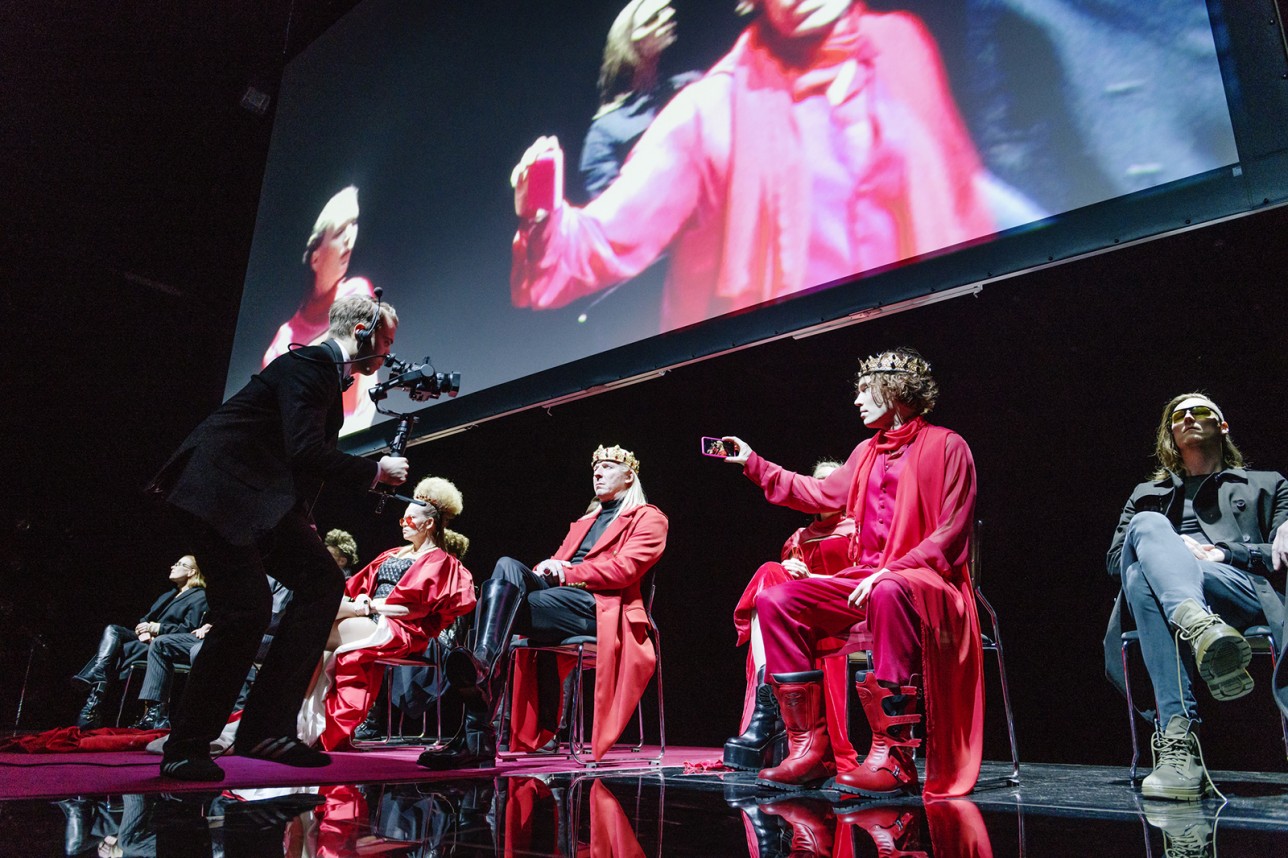
The Department paid a visit to see Hamlet in the Turku City Theatre in March 2019. The production has garnered good reviews both by critics and audiences, and it was great to have an opportunity to see it, especially as the season is, alas, short.

SPOILER ALERT – what happens in Hamlet

If you like to keep up suspense, do not read further as I am about to give some spoilers. First of all, Hamlet’s father’s death turns out to have been murder by poison rather than an accidental snakebite. There are also other deaths: Ophelia, Polonius, and – in the end – practically everybody dies. (Not Horatio, though.)

This is good for the undertaker’s business – in the show presented in a very provoking, even thought-provoking way.

One of the most striking elements in the Turku Hamlet is the set. It combines traditional and contemporary elements in a very inventive way. In the programme booklet, the scenographer Markus Tsokkinen comments on the Finnish terms for building the set – ‘lavastaa’ and ‘kulissit’ – as derogatory terms for deception whereas he considers the set a way to enhance the truth elements of a play. Considering this, the amalgamation of old and new functions very well in bringing Shakespeare’s vision to us today.

Hamlet is one of the Bard’s big tragedies. In Finland it has been produced almost once in a decade after the first production in 1906, and it has been translated several times: by Paavo Cajander (1879), Yrjö Jylhä (1955), Lauri Sipari (1975), Eeva-Liisa Manner (1981), Veijo Meri (1982) and Matti Rossi (2013). The Turku Hamlet is based on Manner’s translation but with noticeable changes in the dialogue.

For a tragedy, Paavo Westerberg has direected a highly humorous – but in no way banal – version of Hamlet’s story. (Although Yorick might disagree.) It is multimedial, multilingual, intertextual, intermedial, intercultural – in short, multi-inter!

One of the most surprising things, personally, was Claudius. Eero Aho’s acting here was excellent, but Carl-Kristian Rundman as Polonius (very much like Gollum), Pia Andersson as Ophelia (rebel girl) and, especially, Jussi Nikkilä as Hamlet were even better. (Esko Salminen’s ghostly presence as Hamlet’s father’s ghost is also brilliant.)

To conclude, you would love to see the way they have done “To be or not to be” …

Text by Joel Kuortti
Photo by Otto-Ville Väätäinen/Turku City Theatre

Soup with Paul Auster


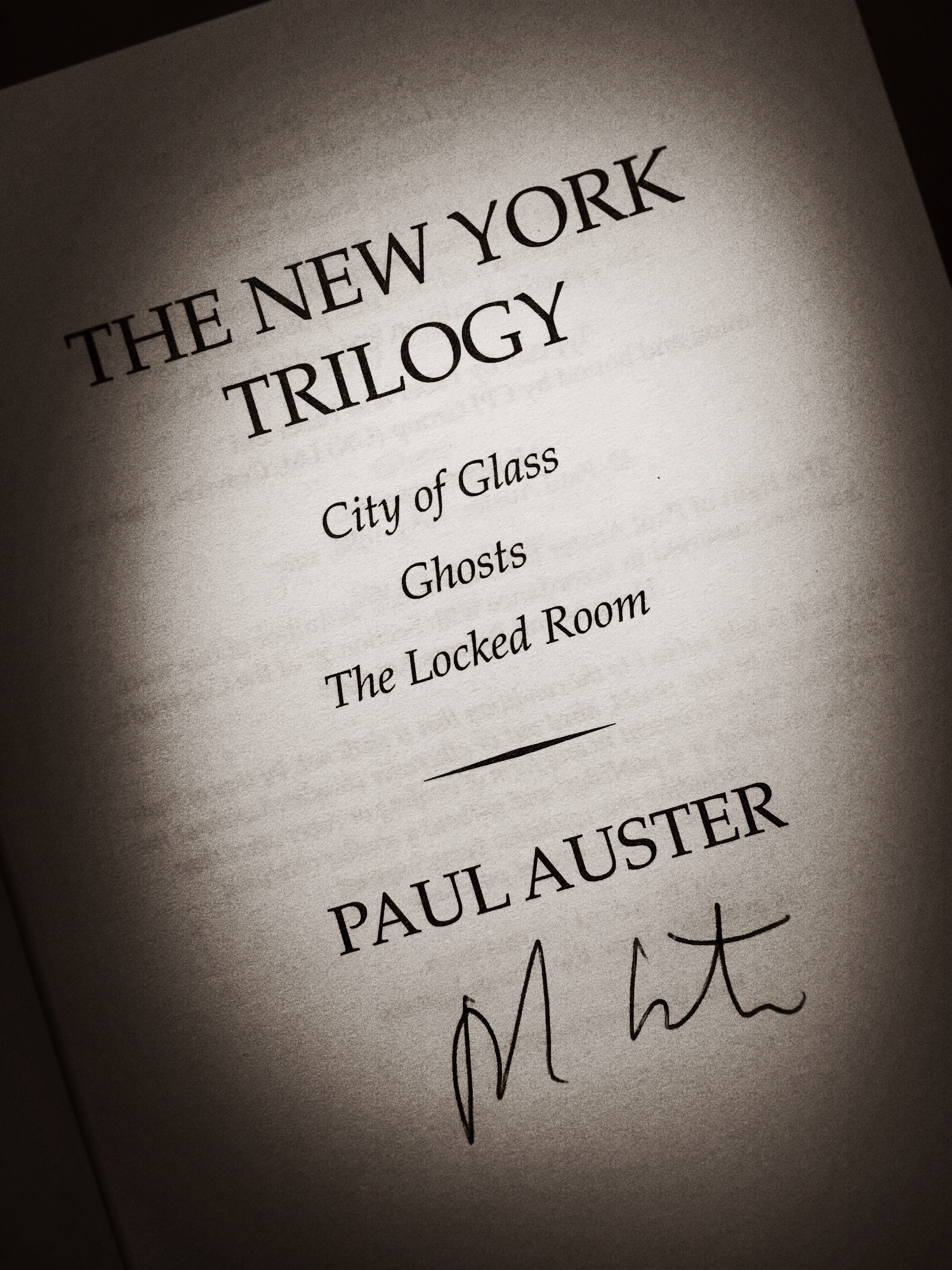
There is something surreal about eating the same soup as Paul Auster. All of a sudden, the intangible, enigmatic, almost disembodied author, whose books I read, whose films I watch and whose activities I follow in the media, is scooping mashed potatoes (and soup) on his plate (not the one that had the soup) at the “grubby little place” (his words, not mine) next to the House of the Estates in Helsinki and ranting enthusiastically about Beckett. Such encounters are, of course, one of the somewhat nerve-racking benefits of studying a living author.

At the turn of August and September 2017, the Finnish Society of Sciences and Letters organized a two-day seminar in honour of Finland’s centenary, titled Open Windows: Democracy, Censorship, Literature. As an avid defender of freedom of expression, a former Vice President of PEN America (2005-2007) and a member of its Board of Trustees (2004-2009), Paul Auster was a most suitable guest of honour.

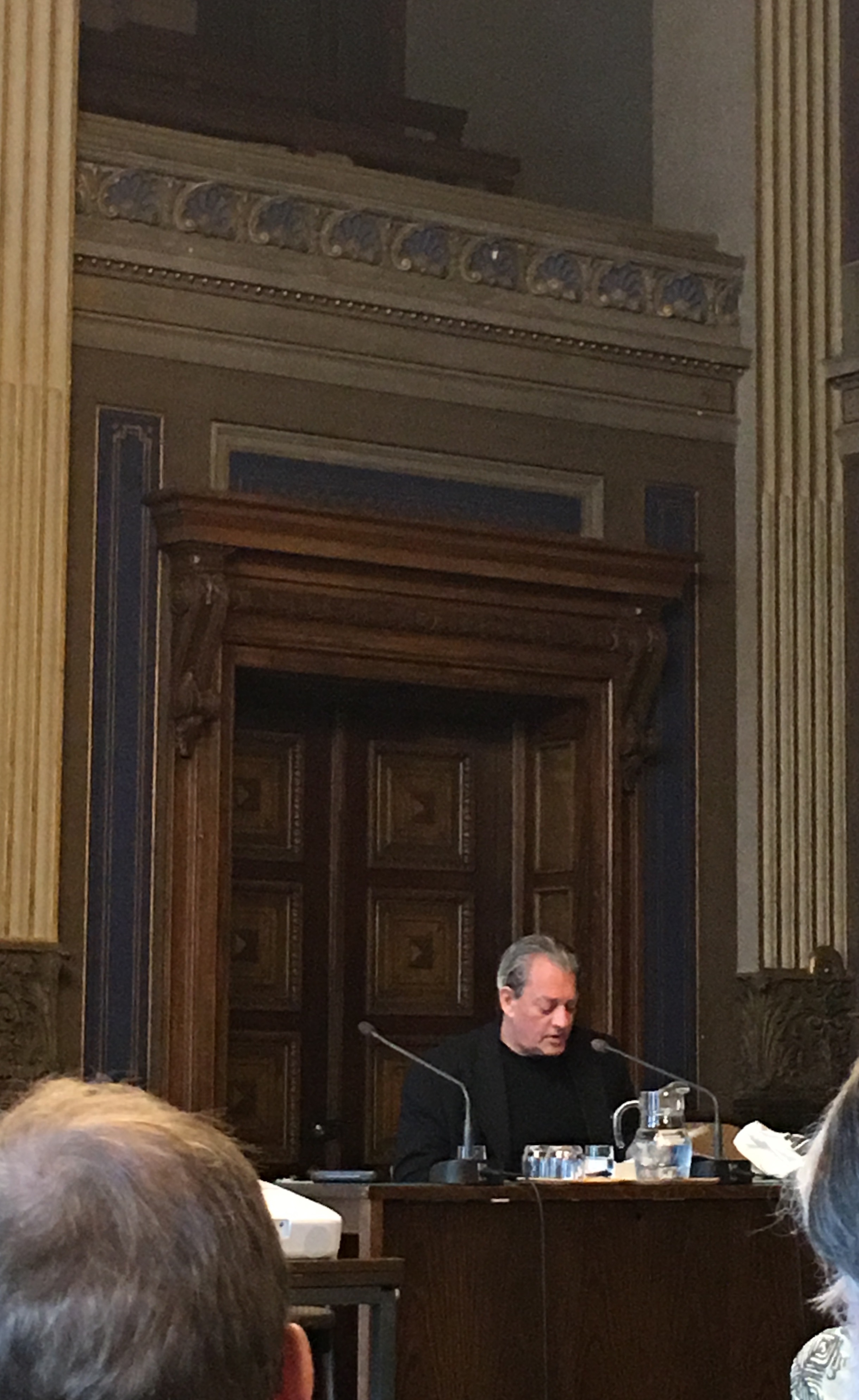
The seminar begun with Professor Bo Pettersson interviewing Auster on, among other things, his latest novel 4 3 2 1. What struck me the most was the calm yet enthusiastic way Auster approached every question, the passion with which he engaged his work and life in general, the way his speech flowed as eloquently as his writing. I hadn’t really thought what he would be like, but in hindsight, he could not have been more Paul Auster.

The seminar continued with Auster reading passages from 4 3 2 1, but unfortunately he could not stay for the rest of the first day’s presentations. The five or so days he spent in Finland were packed with interviews and other engagements, and he further claimed that the one-month-nine-countries tour would be his last of the kind.


Auster did, however, return on the second day for a panel with the Finnish author Sirpa Kähkönen, pictured above with Auster. Towards the end of the discussion, Auster remarked along these lines:

      Writing a novel is a political act, even if the writer is not conscious of it. Novels are about ordinary lives; authors get to enter the lives of the most ordinary people in the most intimate ways. Literature and writing are, therefore, democratic acts, because even the smallest of lives matter. Literature is a defence against tyranny; in connecting the reader with those who are not yourself, literature creates and teaches empathy. Novels are democracy in action.

This manifesto was accompanied by applause, and I’m sure I witnessed a few in the audience discreetly dab tears from the corners of their eyes.

Text and photos by Ira Hansen

Ceremonial Conferment of Doctoral Degrees, 25-26 May 2017

Academic festivities are there for a reason: they help us remember that we are part of a long scholarly tradition which is our cultural and intellectual heritage. That is where we belong. Not to mention the fact that they are extremely fun and enjoyable! 136 young doctors and 12 honorary doctors participated in a two-day conferment ceremony at the University of Turku towards the end of May. Our department was involved in two important ways: Professor Kenneth Hyltenstam from the University of Stockholm, a prominent scholar who has published widely on bilingualism and SLA and who has had a strong impact on research conducted in our department, had been invited to receive the title of honorary doctor on our initiative, and our very own Mari-Liisa Varila was among the young doctors on whom the doctoral degree was conferred in the ceremony (see Mari-Liisa’s own words below).


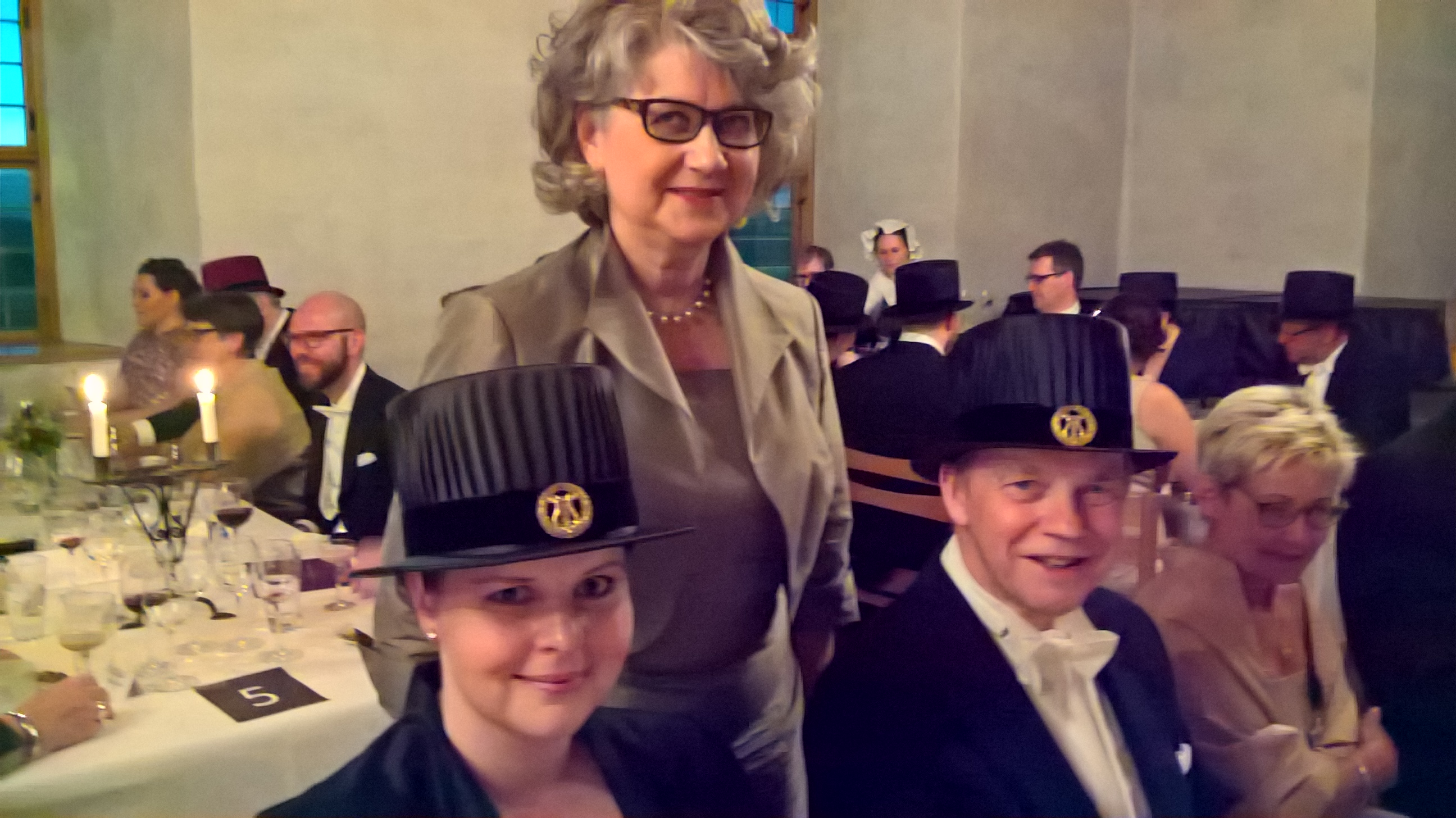
Mari-Liisa Varila, Päivi Pietilä and Kenneth Hyltenstam celebrating at Turku Castle.

It must have felt like two rather hectic days for our esteemed honorary doctors. All practical arrangements had been planned carefully beforehand by the organizing committee, including a fitting session on the morning of the first day, to make sure the white tie was the right size (the dress code is notably very strict on these occasions!), and transportation from the hotel to the various events and back again. The events consisted of a rehearsal at the Concert Hall, a sword-sharpening ceremony on the eve of the big day, the conferment ceremony itself, an academic procession from the Concert Hall to the Cathedral, a service at the Cathedral, a banquet at Turku Castle in the evening, and finally a ball at the Turku VPK House. In earlier years, the festivities went on even longer, as there was a boat trip to Naantali and lunch at Kaivohuone. Maybe it is not such a bad thing that the programme has been cut slightly; it is rather exhausting to be festive for two entire days, let alone three! But on the other hand, the two days were thoroughly enjoyable, and even the weather was better than anyone could have wished for: sunshine and a bright blue sky.

Text by Päivi Pietilä

The doctor in the hat

My doctoral degree was awarded already in June 2016, but the ceremonial conferment of doctoral degrees is only organised once every two or three years. To officially receive my hat, sword, and doctoral diploma, I participated in the festivities this year. It is not obligatory to take part in the ceremonial conferment, but I felt that it was a good way to stop for a moment and celebrate my achievement together with the other young doctors, the honorary doctors, and our academic community.


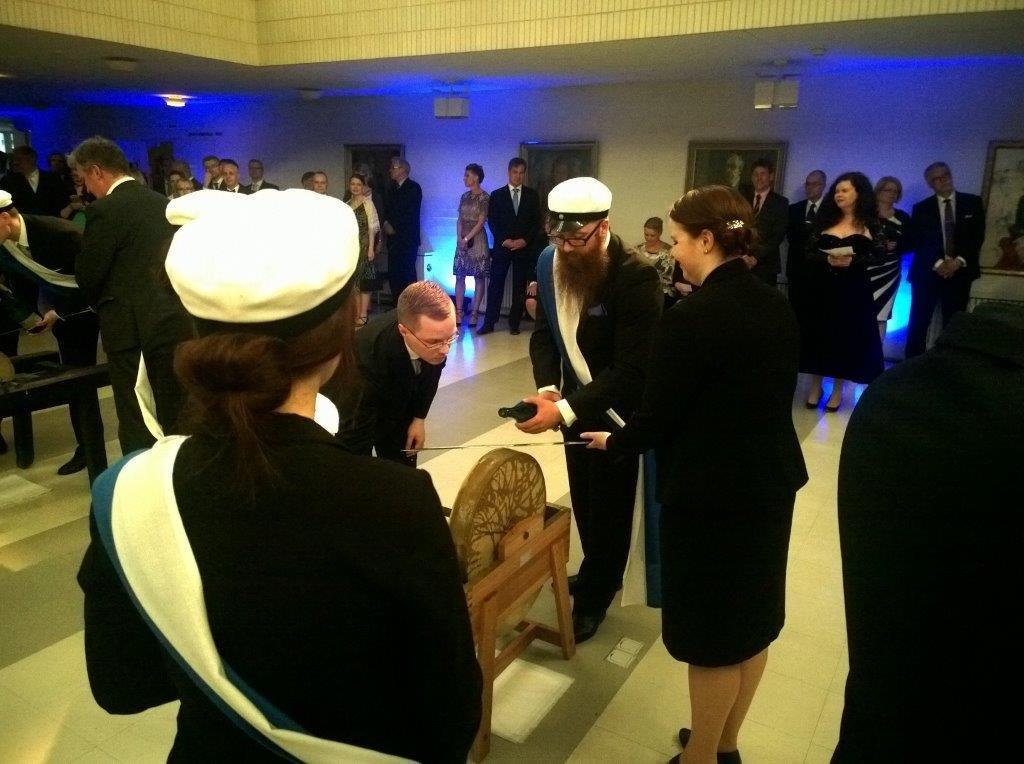
In the rehearsal on Thursday afternoon, we practised solemnly walking in pairs, receiving the sword, and bowing to the conferrer without dropping our hats. Excitement filled the air. In the sword-sharpening ceremony on Thursday evening, we symbolically honed our blades for the big day. Our avecs turned the grindstones while the heralds poured some bubbly on the swords.


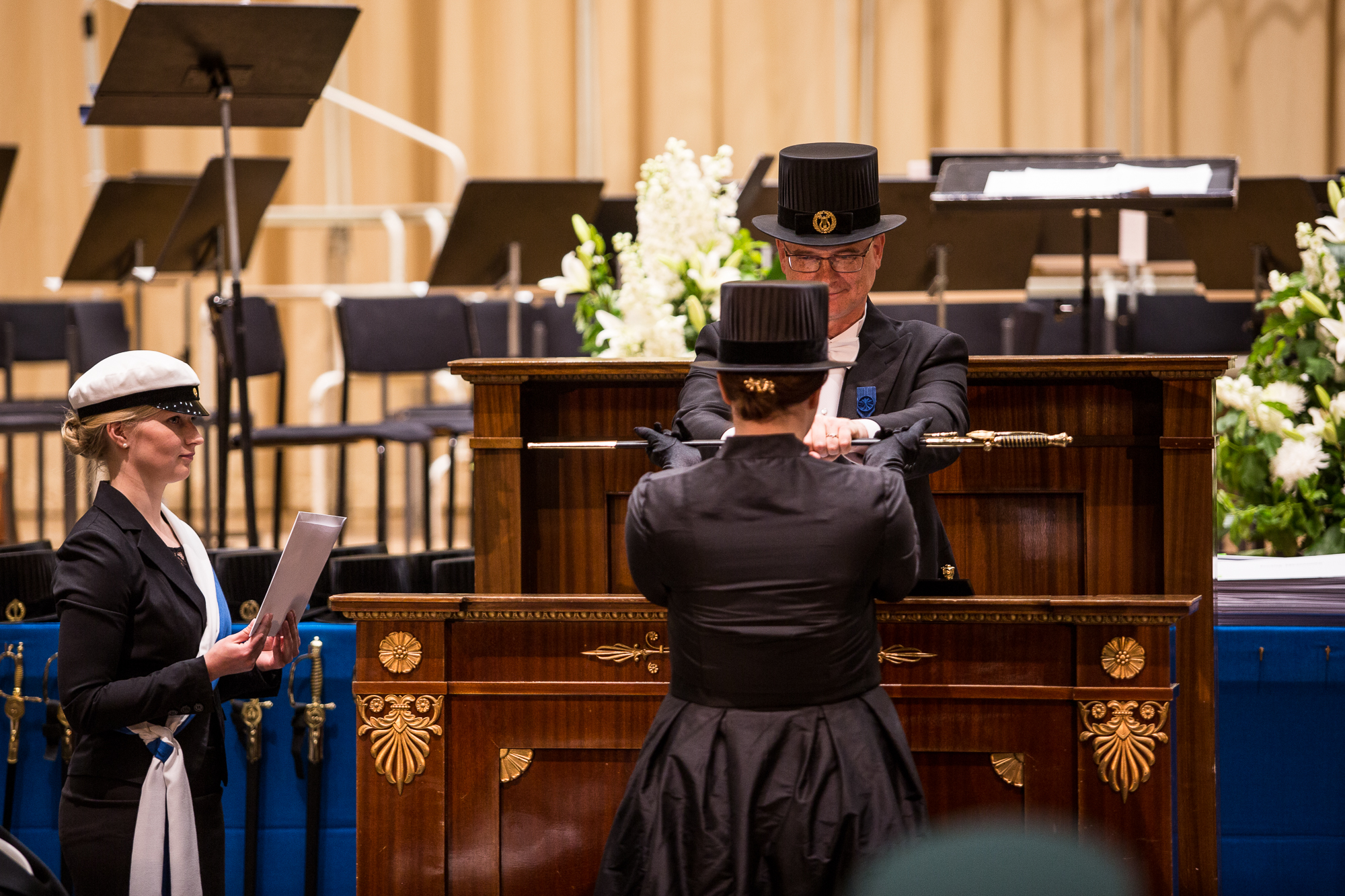
Mari-Liisa Varila receiving her sword.

On Friday noon we gathered to the Concert Hall, all in tailcoats or long black dresses. At quarter past twelve, the procession entered the hall. We sat down in the front of the room, waiting for our turn to receive the hat and sword. Each conferrer stepped up to the podium in their turn, delivering their trilingual speech – Finnish, English, and Latin. They pressed the hats on our heads and presented us with our swords and (Latin) diplomas. After the ceremony, our procession moved from the Concert Hall to the Cathedral where a bilingual service was held. Our day was made even more special by the beautiful singing of the Turku University Choir.

In the evening, we gathered to the Turku Castle. We were served a three-course dinner, interspersed with speeches and some more singing. I was honoured to have been asked to deliver the speech to the honorary doctors. We then moved to the VPK house for a polonaise and a waltz, with music provided by Sohon Torwet. Our evening ended, very appropriately, in a speech to the sun.

Text by Mari-Liisa Varila
Photos by Miikka Varila and Markku Hakala

Time flies when you have JAZZ!

The English Department makes traditional ‘City Hikes’ to Turku destinations. This time the goal was to be jazzed at the Wäinö Aaltonen Museum with their Tuesday concert series. The programme promised a treat by the duo of the jazz pianist Aki Rissanen and the Finnish jazz guitar genius Niklas Winter.

The (unexpected, unprogrammed) overture was Aki’s solo consisting of a piece from Medieval French composer Guillaume de Machaut (d. 1377), followed by a part of the Finnish composer Leevi Madetoja’s (1887–1947) Syksy (Autumn) series of songs. All in ‘jazz’. Niklas tried to enter the stage after Aki’s first number but was, convivially, only allowed to enter after the Madetoja piece.

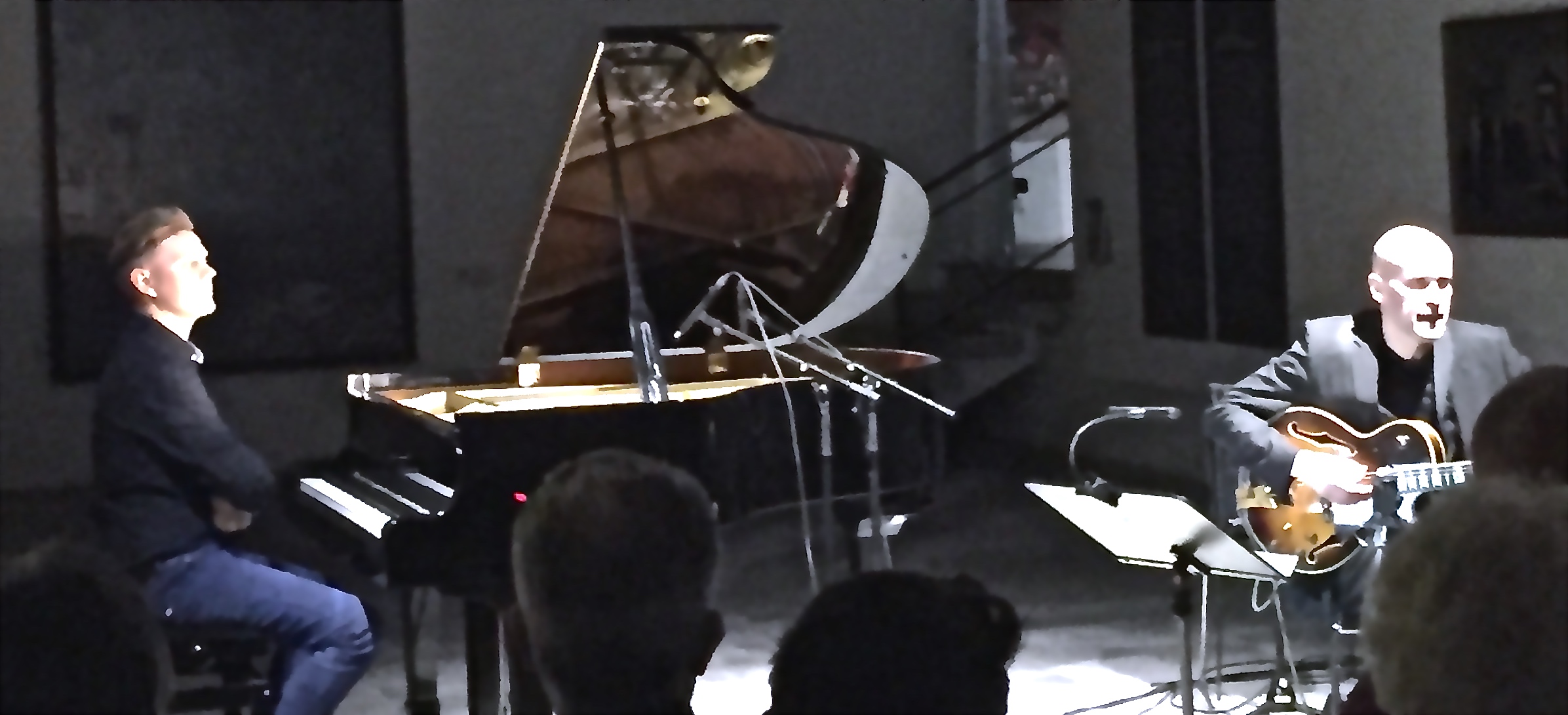
The programme consisted of many compositions by the duo, some of which were dedicated to memorable musicians (J. J. Cale, Charlie Parker, Billy Strayhorn). The guitar and the piano played well together, and created a timeless sound world.
jazz1

Aki Rissanen, piano, Niklas Winter, guitar. Photo: JK.

As to the etymological roots of jazz, then, it is a complex type of beast. With Western African origins, it can be said to have been brought to life and light in New Orleans (since the beginning of the 20th century). The ‘exact’ meaning is shrouded in innuendoes, ambiguities, and especially euphemisms. Subsequently, such an ambiance created a shrowd of unaccceptability (and also counterhegemonic prestige) for jazz for decades, some of which continues in its reception even in today’s (self-acclaimed) uninhibited musical sphere.

There are myriad forms of jazz – and even more of its derivatives and fusions. The most familiar ones are perhaps Bebop, Swing, Big Band, and (maybe only by reputation) Free Jazz. Even a short list of major names of jazz performers and composers (or my meagre list of favourites) itself exceeds the limits of this platform.

Intertextually, ‘jazz’ may bring into mind Tony Morrison’s (Chloe Anthony Wofford, born 1931–) historical 1992 novel Jazz, director Bob Fosse’s autobiographical movie All that Jazz (1979), Henri Matisse’s (1869–1954) art collage book Jazz (1947), or any number of other cultural artefacts. Be as it may, jazz is a state of mind.

jazz2
Henri Matisse, “The Clown” (1947)

Text and photo by Joel Kuortti

Beyond the ivory tower: Co-operation with a local upper secondary school

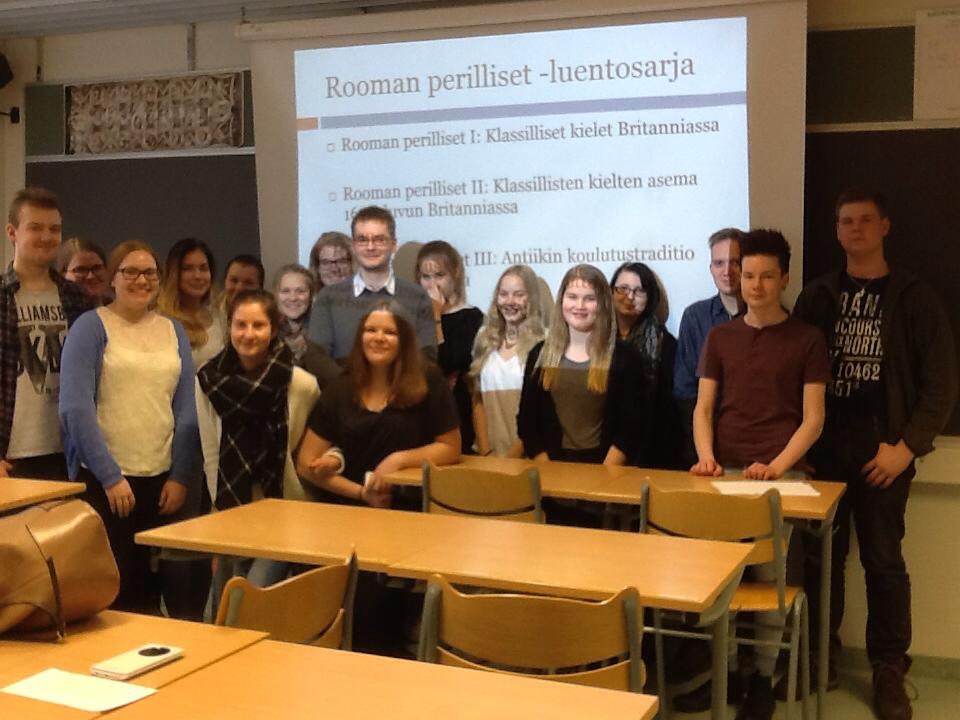
When I was in upper secondary school (‘lukio’ in Finnish), two of my teachers organized a “Rome Club” (‘Rooma-kerho’), which could be taken as an optional course. In order to receive credit for the course, we needed to take part in a variety of activities, one of which was attending guest lectures by researchers and PhD students. I always found the lectures fascinating, and I thought that it would be great if, at some point in my life, I could do something like that myself.

In the autumn of 2014 the thought became a reality when I began my lecture series titled “The heirs of Rome” at my old school, Turun klassillinen lukio, where the Rome Club was still going strong. To be sure, the initial idea was to offer a single lecture to the club, but partly due to the nature of my chosen topic and partly due to the enthusiasm of the pupils it became clear that a series of lectures was in order.

The idea behind the series was to show how Roman (and, more generally, classical) culture had been kept alive following the collapse of the Roman Empire. This topic is especially relevant for my ongoing PhD research since I am interested in the status of Latin and Greek in 17th century England. Accordingly, the main focus of the lecture series was on Britain. The titles of the individual lectures were:

1. “The Classical languages in Britain”
2. “The status of the Classical languages in 17th century Britain”
3. “Classical education in the early modern period”

The second lecture was given in conjunction with the school’s 135th anniversary celebration in November. The fourth and final lecture, which will take place at the beginning of May, elaborates on the theme of education with examples drawn from my dissertation material.

I have found the lecture series a refreshing experience, and it seems that the pupils have enjoyed it as well. Although my dissertation focusses on theoretical matters, it has been surprisingly easy to come up with suitable topics for the lectures. One easily forgets that what seems self-evident to oneself may be completely new information to almost everyone else. I have also found it an excellent exercise to try and explain my own research in as simple terms as possible, because this makes it a prerequisite that I actually understand what I am talking about.

Rooma-kerho 3
The Rome Club with their visiting teacher, Aleksi.

Text: Aleksi Mäkilähde
Photo: Reija Pentti-Tuomisto

Mixing and Switching

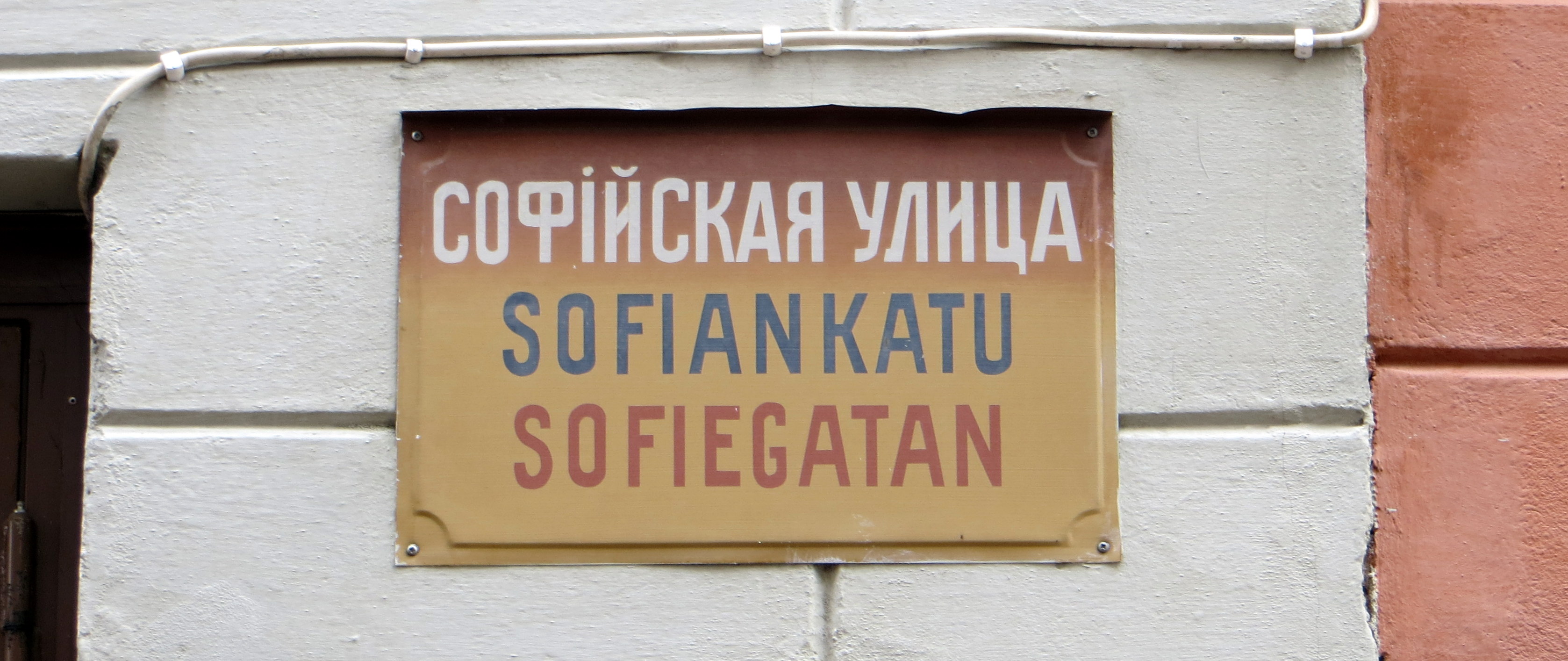
hel_sofiankatu

”Etkö voisi please auttaa tässä?”
”And then she was like, no ei se mitään.”

As language users – speakers, writers, listeners, readers – we are constantly surrounded by linguistic data, and some of the material we observe is bi- or multilingual. The examples above may not be authentic (as in ‘cited from a corpus of genuine conversation’), but they are certainly realistic (as in ‘I think I have heard something like this before, and not just once’). They exemplify code-switching, the use or two languages, dialects, language varieties or, more briefly, codes in a single communicative situation. People who know two or more languages are prone to code-switch on occasion.

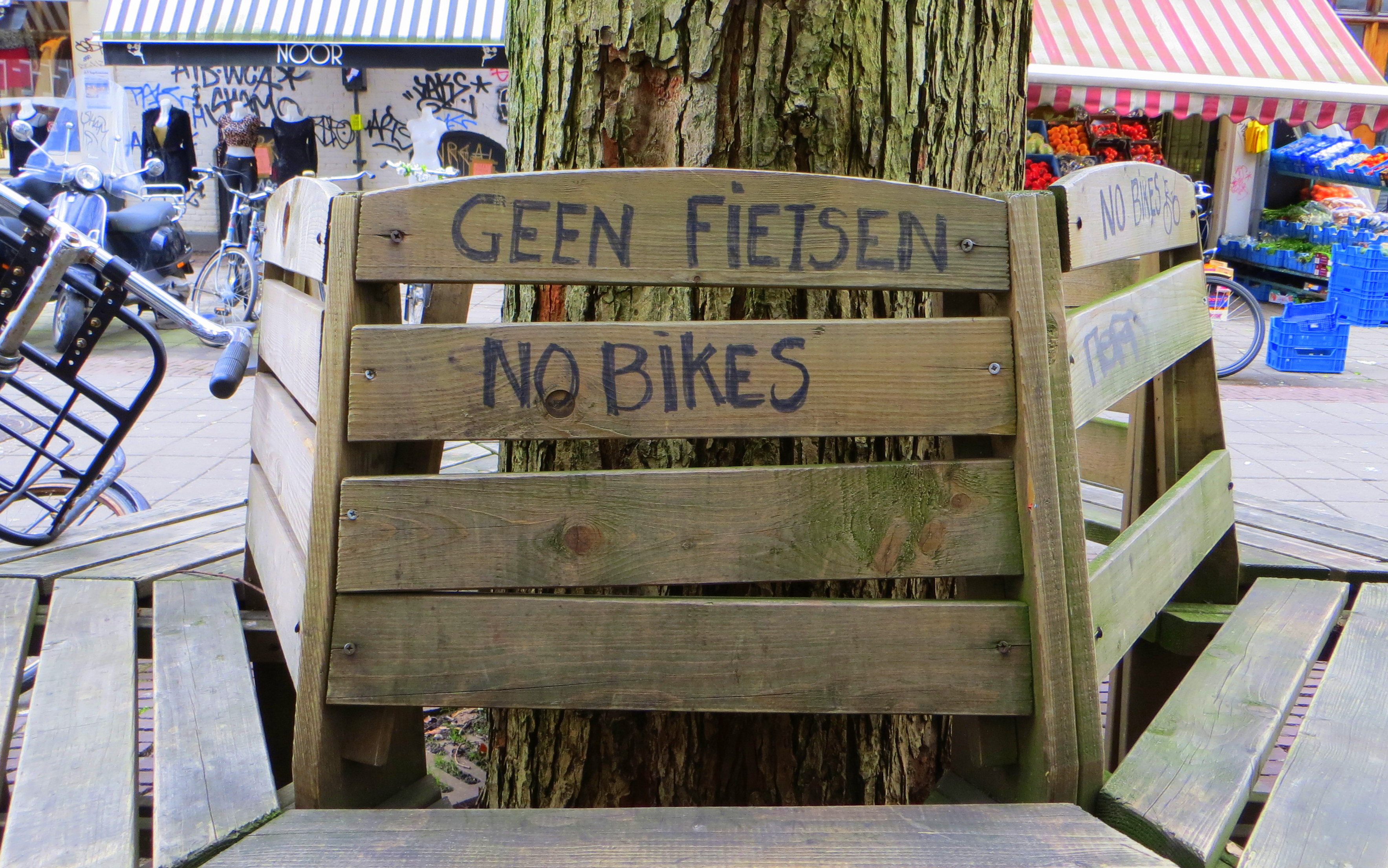
ams_nobikes

The English Department offered a team-taught optional course on code-switching in the second half of the autumn semester, a unique enterprise bringing together eight teachers and researchers from the five tracks of the department. This ensured that the students were offered multiple viewpoints and approaches, ranging from written code-switching in medieval materials to multilingual practices in the EU to translations of postcolonial literature. One of the surprises offered in the lectures was that the use of students’ first language alongside their second or foreign language in the classroom also counts as code-switching, and that there are language classes in the world where the use of the first language is strictly forbidden – a feature not easily grasped by those who have learned English and other languages at Finnish schools.

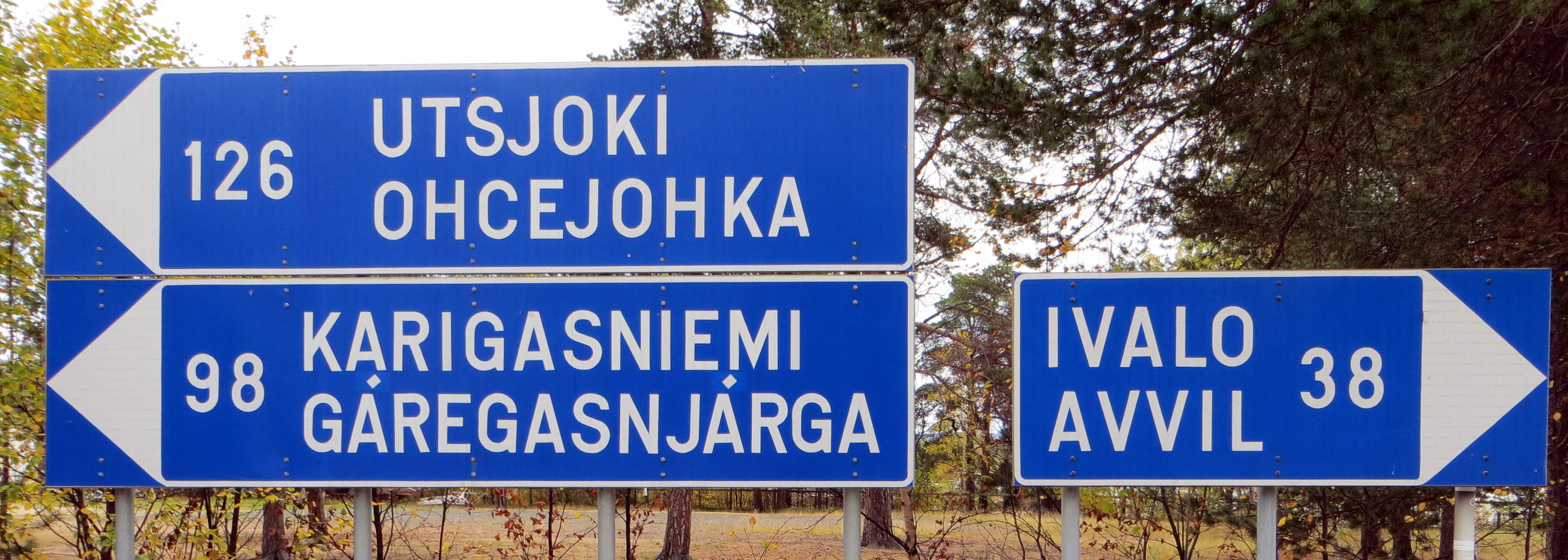
lap_ivaloavvil

The course was well received by the nearly forty students who attended the lecture series. The participants were asked to write a variety of short texts about code-switching during the course and also to report on their own multilingual communication and the language-mixing they observed around them. Many said that they had not realized until this semester that code-switching was so frequent and had so many functions, and that it was such a huge issue that the six weeks of teaching were not nearly enough for a thorough survey. Indeed, several students have already chosen code-switching topics for their BA projects to be able to carry on with koodinvaihto research.
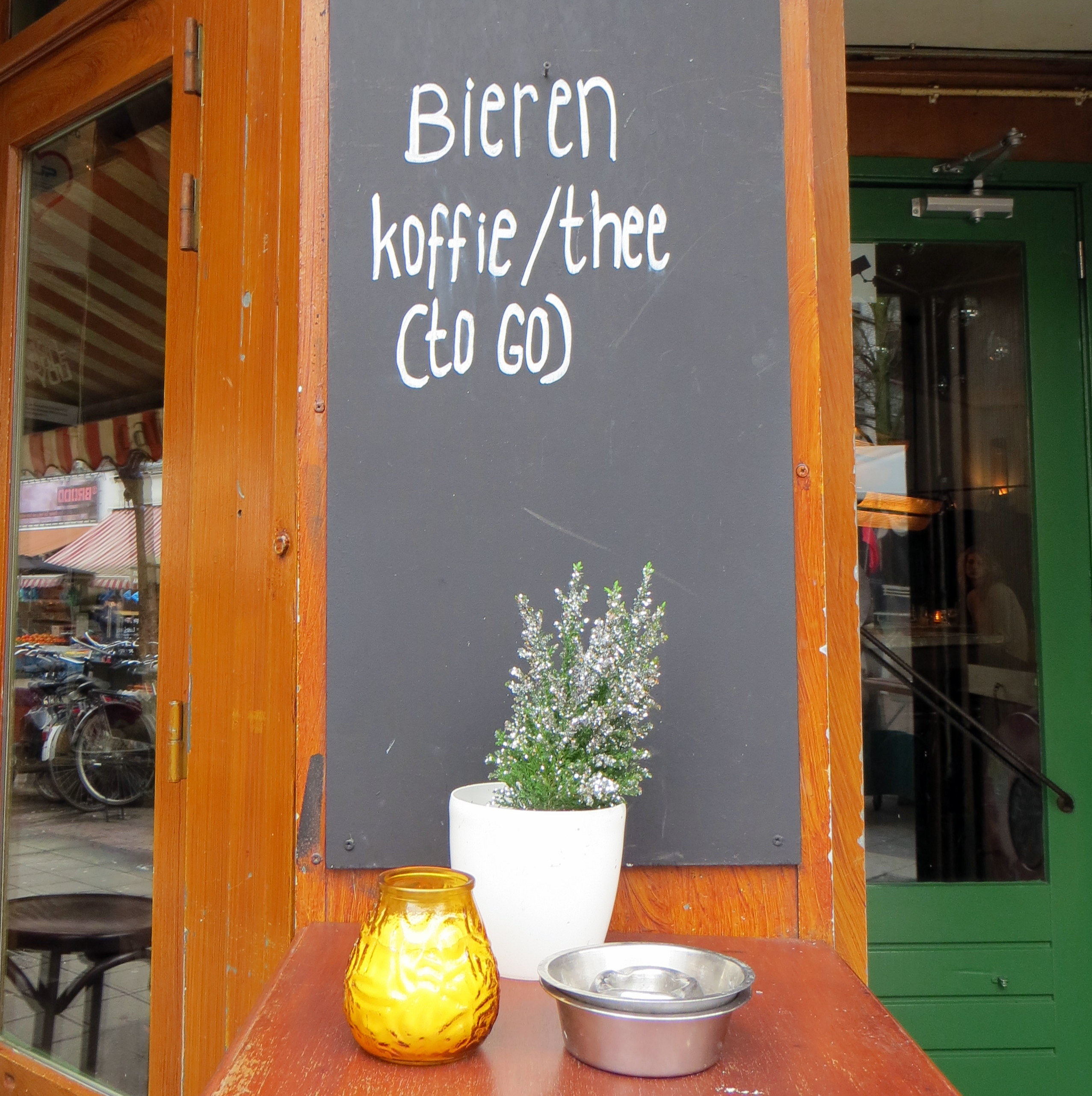
ams_koffietogo
Janne Skaffari