75 Years of the Joys of English

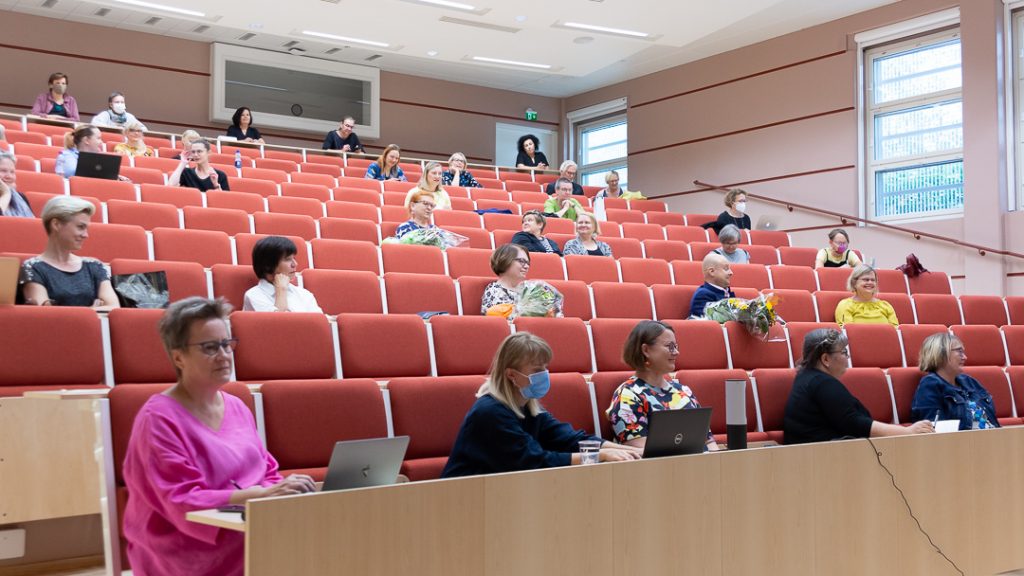
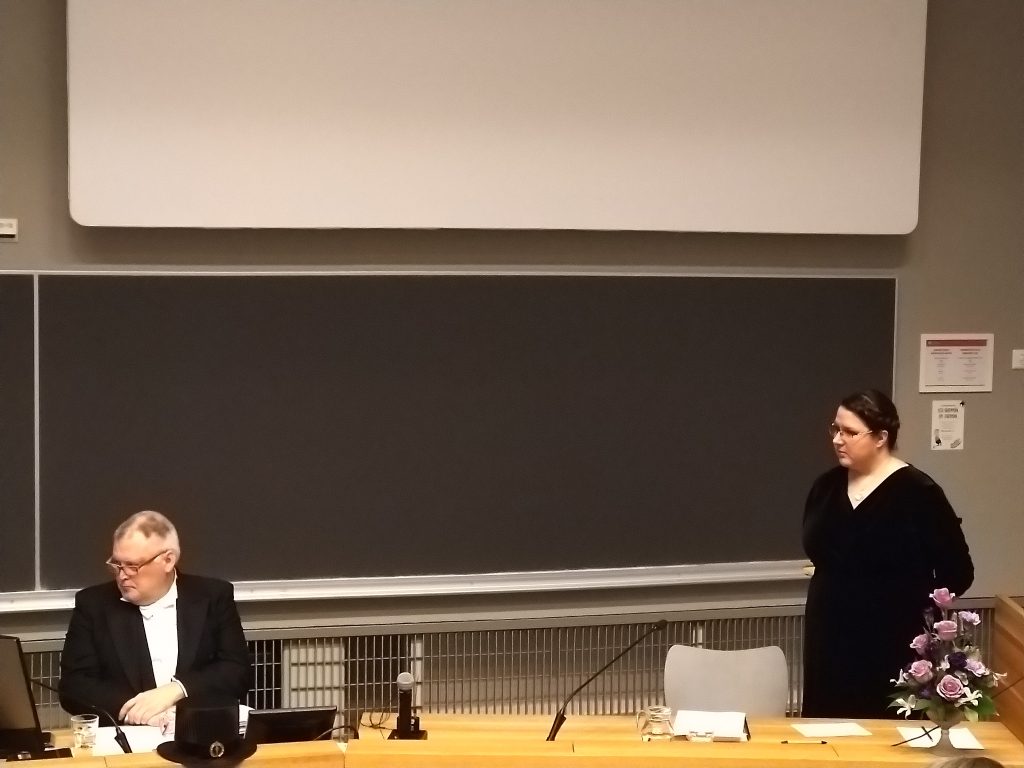
The Department of English became a subject department at the University of Turku 75 years ago in 1946. In 1980, translation studies were transferred from Language Institutes into the university, and were merged with the philology departments in 2010. We celebrated this anniversary on Tuesday 14 December 2021. The Corona epidemic had postponed the occasion but this did not defeat the festive spirit.
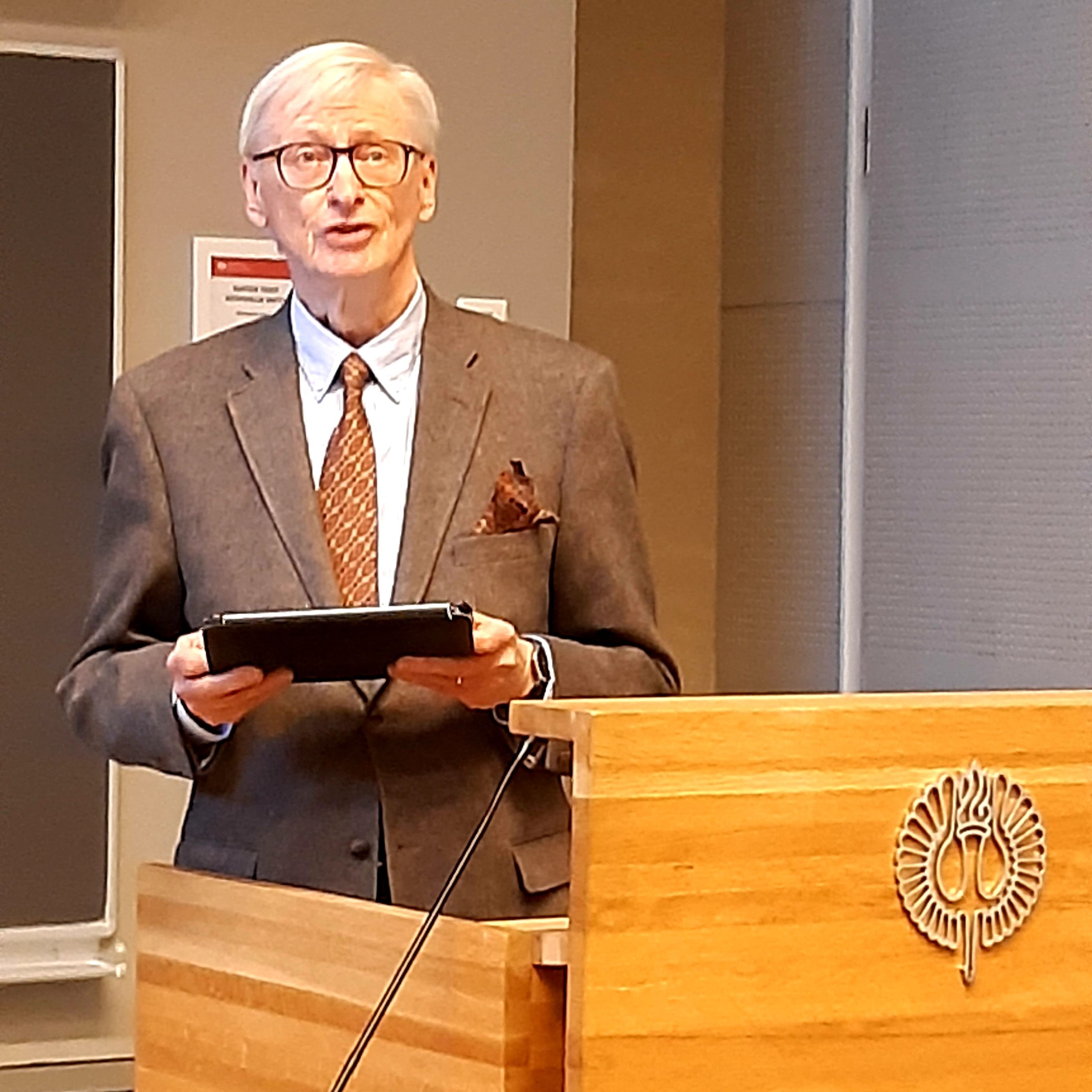
Professor Emeritus Risto Hiltunen chronicling the department’s 75-year history — and beyond.

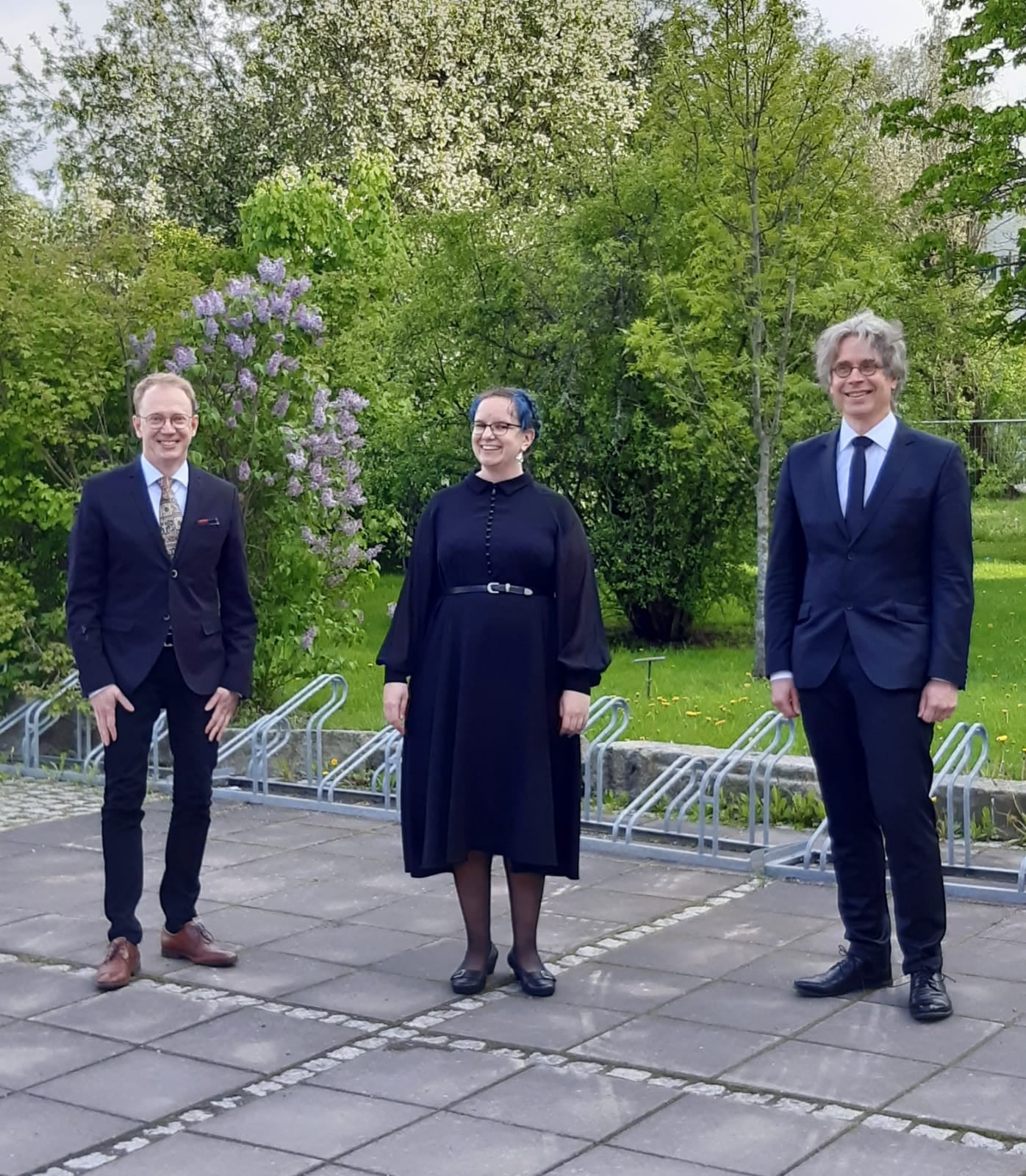
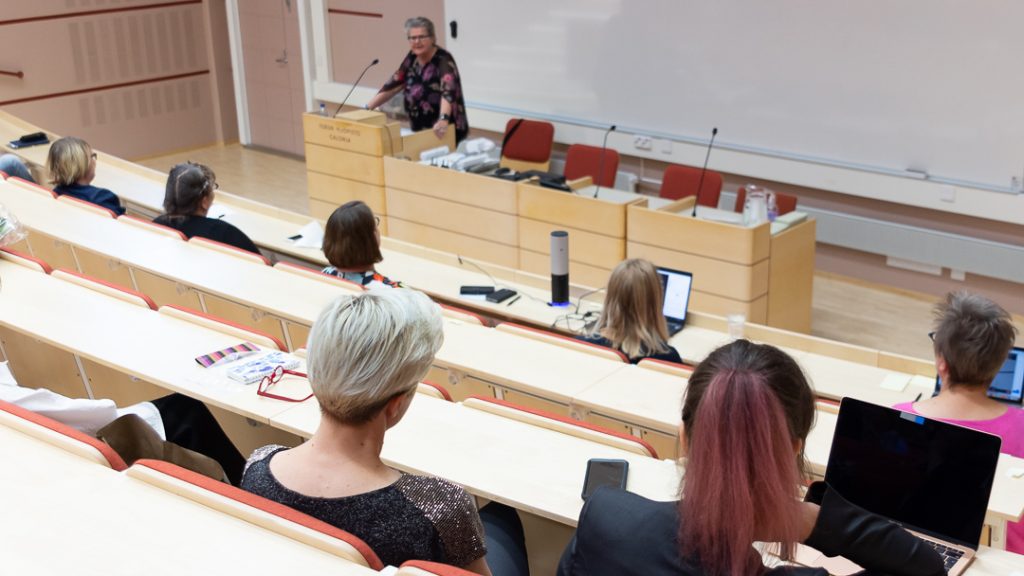
The programme of the seminar included an overview of the history of the department by Professor Emeritus Risto Hiltunen. He took us through the years from the first chair in English held by Yrjö M. Biese (and even earlier times) to the gradual expansion of the department, the merger of philology and translation departments and the introduction of the 2010 Universities Act that changed the juridical position of Finnish universities, until the present.
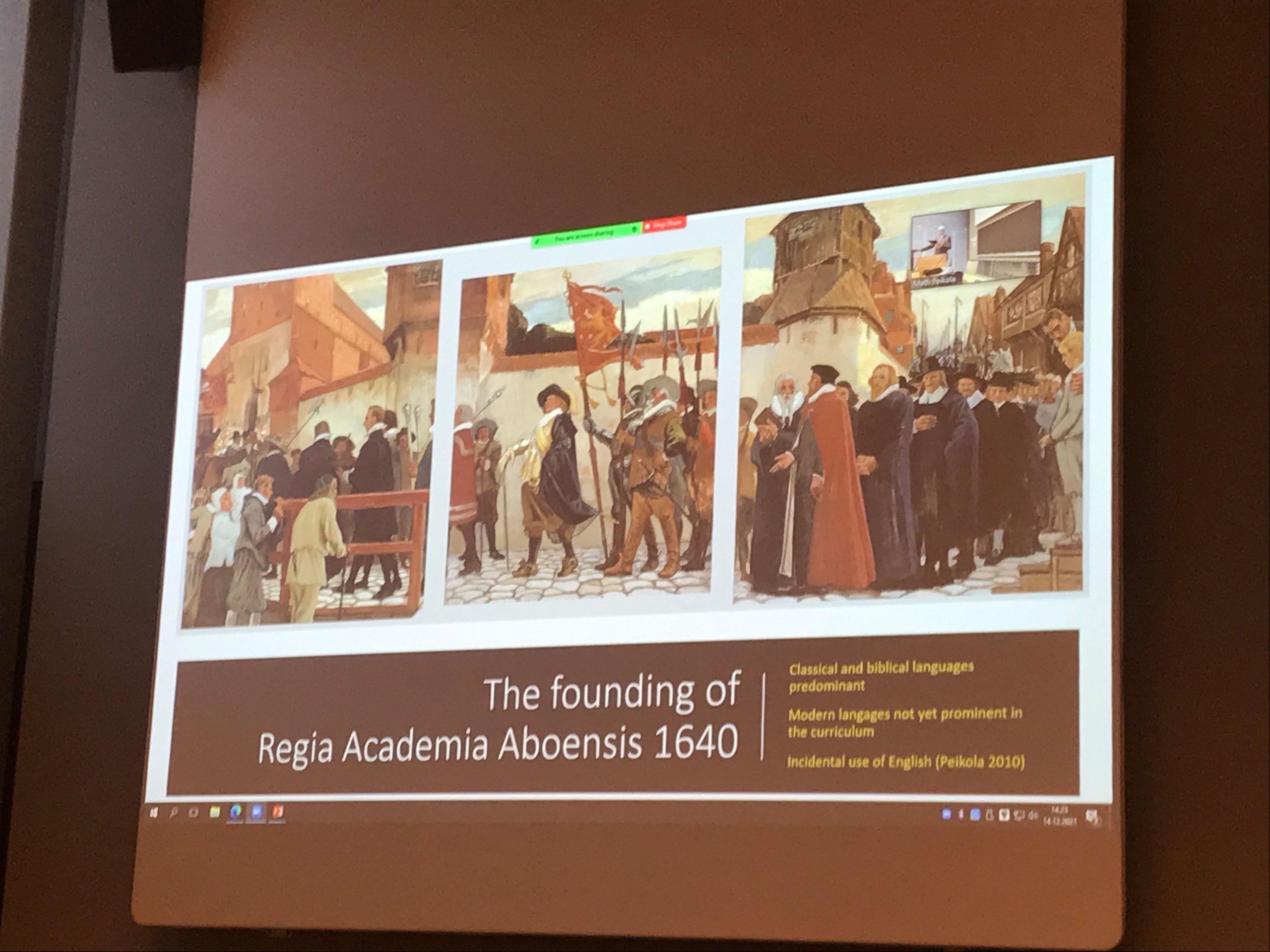
Risto’s speech reached all the way to the history of Academia Aboensis, the origin of university-level study of languages in Turku.

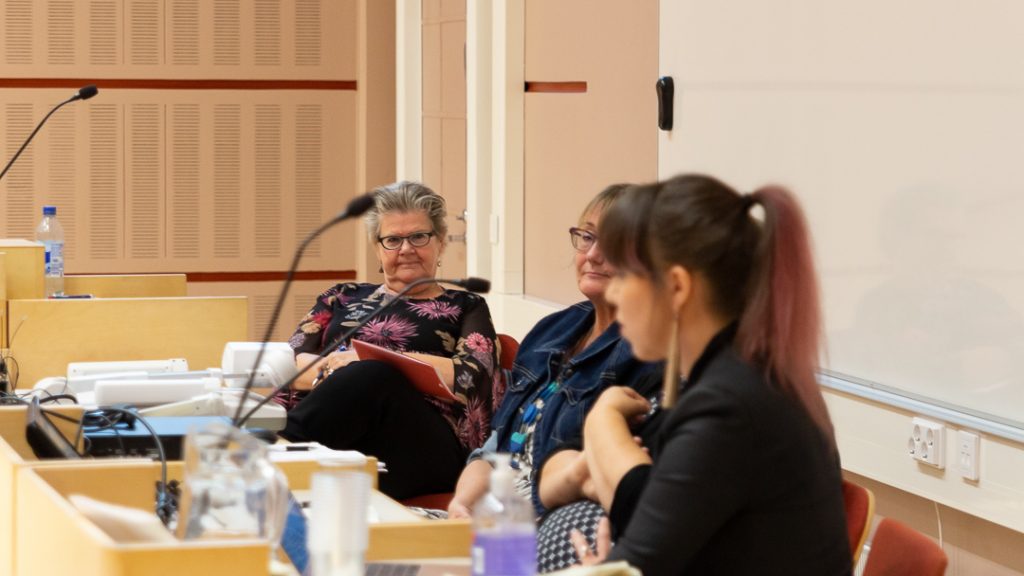
Risto’s presentation was followed by a panel discussion chaired by Professor Matti Peikola, representing our alumni and present students: Taru Savolainen, Miika Katajamäki, Maija S. Peltola, Sanna-Kaisa Tanskanen and Marianna Sunnari. All the panelists had started their studies in different decades, and have had different careers, and were thus a very good cross-section of the Department. The discussion was very lively and higlighted various sides of the Department’s history and the people who had worked and studied there.
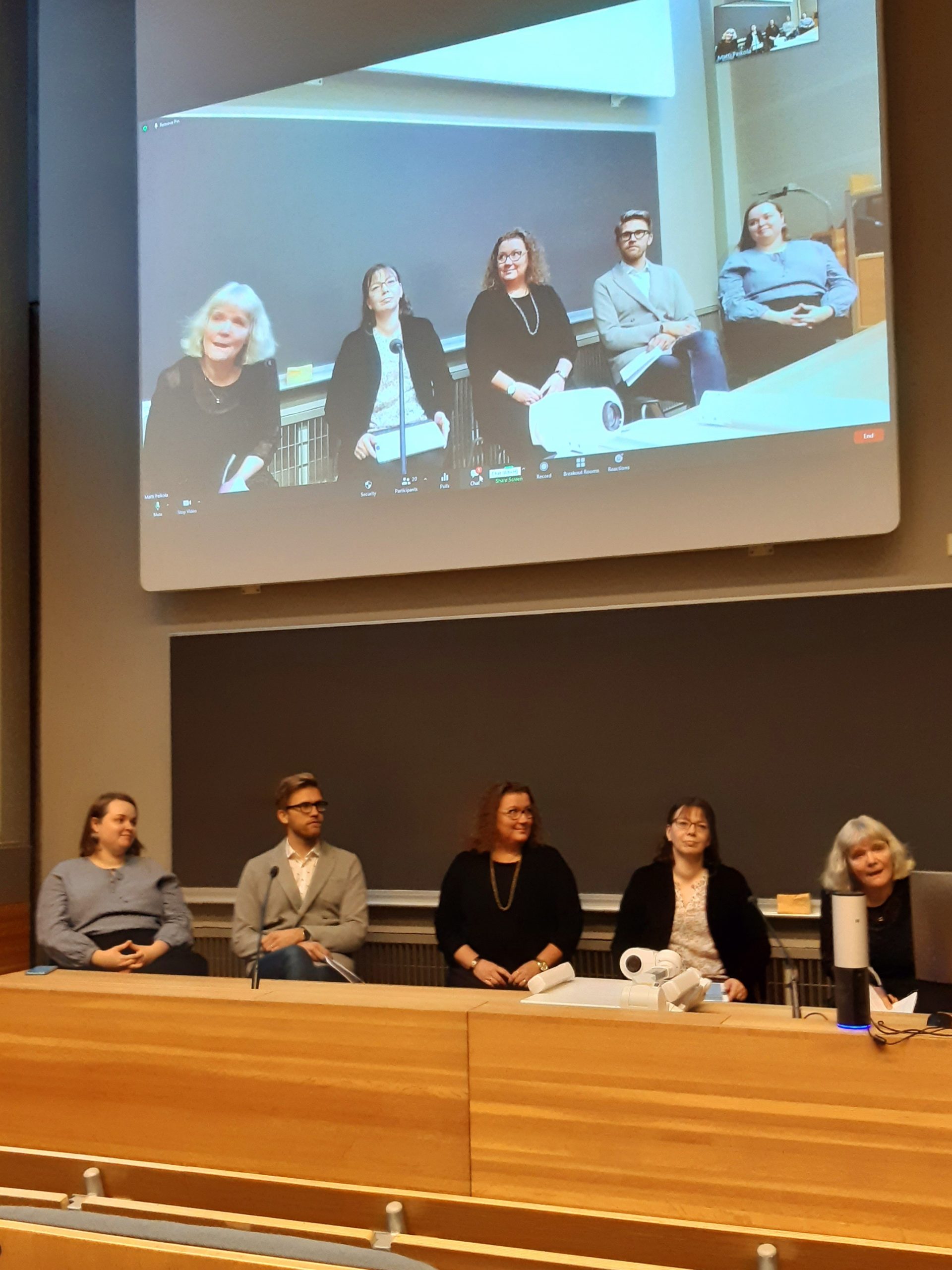
The alumni panel offered various views on studying English at Turku. All positive!

One of the highlights of the event was the presence of Professor Emerita Liisa Dahl. Liisa followed Inna Koskenniemi in the first English Assistant Professorship after Inna toook over Yrjö’s Professorship. Another delightful highlight was the tea and coffee service that we had at the end – provided by the ever so wonderful students of Anglica.

At the event, we also witnessed the publication of MM Examina: Two Thousand Theses from the Department of English, University of Turku 1950–2020 edited by Joel Kuortti. This volume, fresh from the printers, follows the former M Examina (edited by Janne Skaffari in 1995) by listing a thousand more theses and dissertations from the Department that have been completed after the 50th anniversary in 1995.

Current head of department, Professor Joel Kuortti, showcasing the new MM Examina bibliography. Professor Outi Paloposki (right) taking a photo in turn!

All in all, the event brought light and joy to a dark winter day in a time otherwise burdened with long-standing and widespread troubles and uncertainties. It gives great pleasure to celebrate with such a great bunch of people – past, present, and future!

Text by Joel Kuortti, Professor, Head of Department

Photos by Janne Skaffari and Elina Valovirta
Defending alchemy

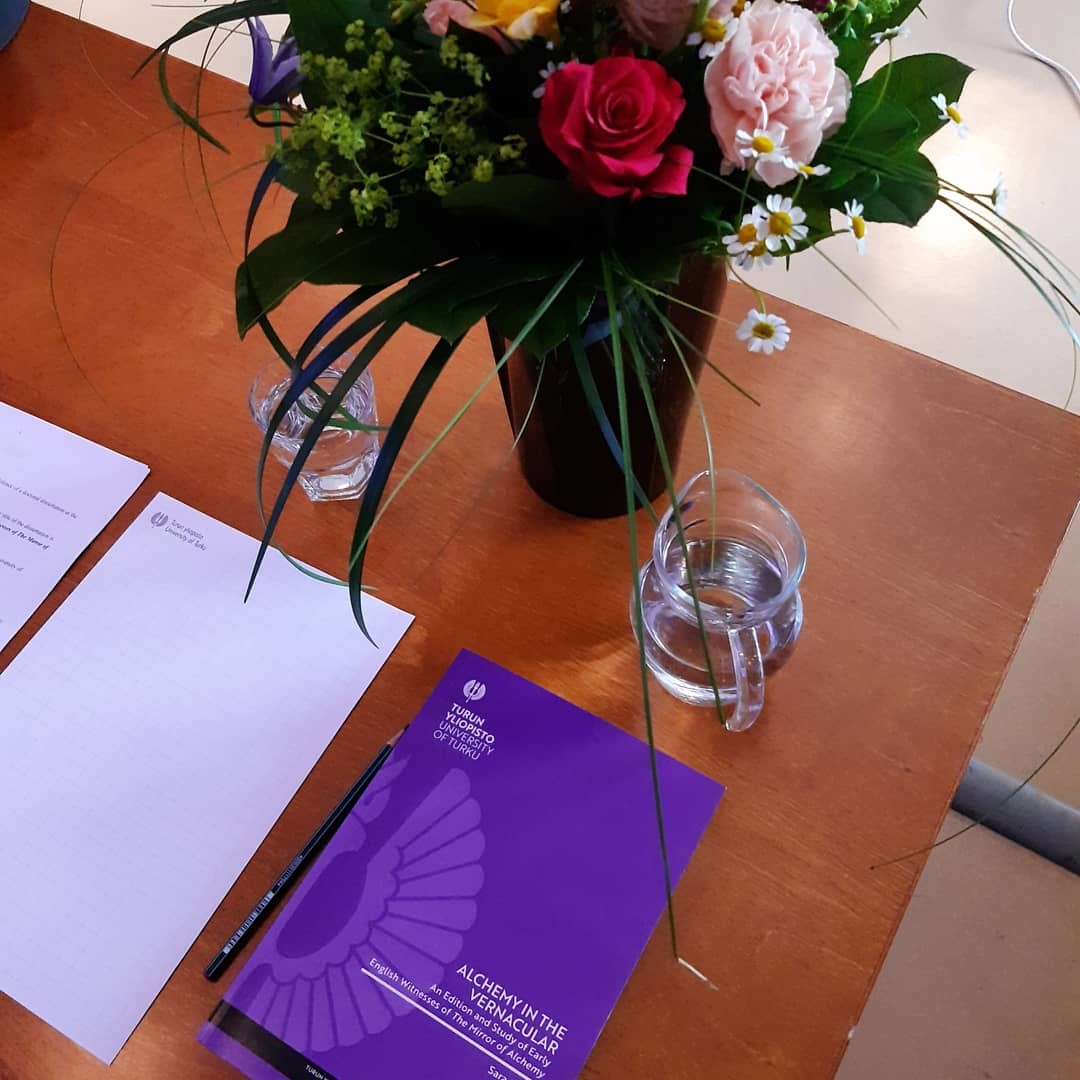
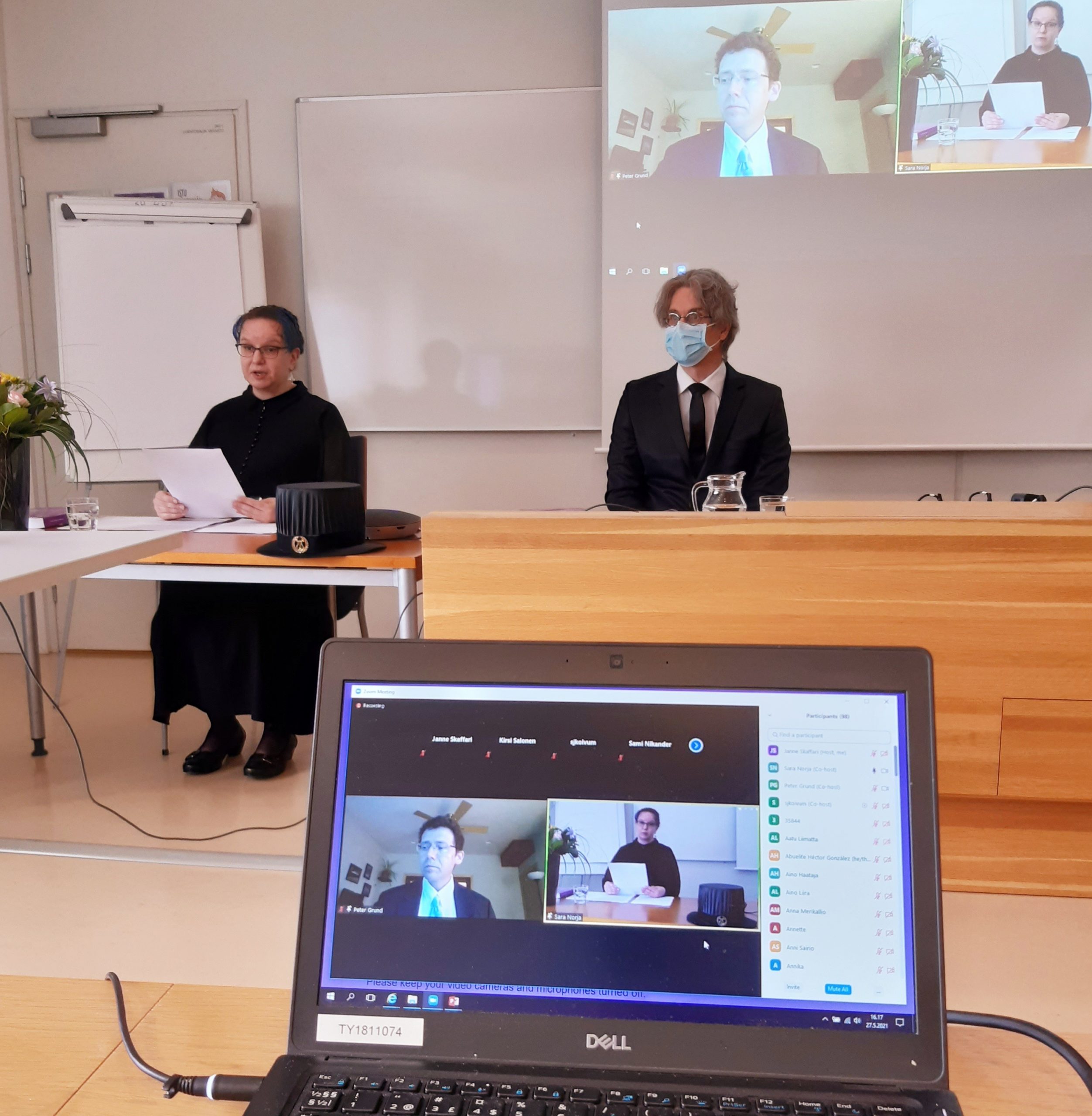
Doctor in spe Sara Norja defended her doctoral dissertation, Alchemy in the Vernacular: An Edition and Study of Early English Witnesses of The Mirror of Alchemy, on Thursday 27 May 2021. Here, she writes about the viva and the days leading up to it.

Due to the pandemic the viva was on Zoom, so the arrangements were a little different from usual. I wasn’t able to have a karonkka – the traditional academic afterparty following a viva. I can’t deny I would have loved to have one, but having fewer things to organise before the viva was also a relief, as the week of my defence was a busy one.

On Monday we had a Zoom rehearsal in the Educarium lecture hall where the viva would be broadcast from. Professor Matti Peikola and Dr Janne Skaffari (my PhD supervisors) were there with me in person, as Matti was the custos and Janne was the marshal (airut) in charge of Zoom proceedings during the viva. We had a short Zoom call with my opponent Professor Peter J. Grund (University of Kansas), and sorted out all the technical matters. It was a relief to see the room I would defend my dissertation in, and to make sure that the connections all worked!

On Thursday 27th, the day of the viva, the nerves hit me. It was good that the viva was as late as 16.00 (due to the time difference with Kansas), because despite the gnawing feeling in my belly, I even managed to eat lunch before it. However, once I was actually in Educarium and the viva was about to commence, I calmed down. The final minutes before turning on the video and sound on Zoom were the longest I’ve ever known, though!

The custos Professor Matti Peikola and I sat down in front of the camera, facing the lecture hall with six other people in it (our technical support Satu Koivumäki, Janne, and four of my family members). Quite different from the experience of sitting in front of a bigger live audience! However, I knew there were lots of people watching through Zoom, so the audience online was huge. I tried not to concentrate on that, though, but to focus on my opponent, who I could see on the screen set up opposite me.

I felt unreal – was this major event actually happening after seven years of working on my dissertation? But once the viva officially started with the customary opening words, and I began giving my lectio praecursoria (the traditional speech given by the PhD candidate at the start), everything started to flow. I gave my lectio, and asked Professor Grund to present his criticisms of my dissertation. He gave his opening statement, and then we proceeded into the questions.

I had been told previously that once the defence actually starts, it can be a delightful experience as well as a scary one. This was certainly true for me. Professor Grund asked some pretty tough questions, but I discovered that it was incredibly rewarding and fun to answer them and to discuss my dissertation with him. He was the best opponent I could have hoped for. By the time Professor Grund had given his concluding statement and the viva was over, I was fizzing with excitement and pent-up nerves. The defence was concluded by the custos, and we could proceed to congratulations.

Relieved smiles after the ordeal!

Even though the pandemic meant I couldn’t have a proper karonkka, we rounded off the evening with a lovely outdoors event with a small number of my colleagues from the Department. Some excellent traditions were upheld despite the pandemic, and overall the day will stand out as a landmark event in my life.

Text by Sara Norja

Photos by Janne Skaffari and Mari-Liisa Varila

A year of remote learning – and cats

What a year it has been! This could easily be a long blog post about the effects of the pandemic on teaching and learning and what pedagogical solutions have been implemented and experimented with at the department, but today we have more important things to discuss. We need to talk about cats.

This year has been extremely active for all our cat students and cat faculty members. They seem to thrive particularly in Zoom environments and have throughout the year been a mainstay for remote learners and teachers. Let’s hear from notable cat members of the English department community – and one dog. Email interviews have been facilitated by each cat’s staff.

Kiki via Vilma Lindroos:

Due to remote learning this year, I have seized the opportunity to constantly remind Vilma that the most important thing in her life are not her studies, but me. She reports that my ears perk up at the slightest sound of conversation, ready to disrupt yet another lecture that dares to take her attention from me even for a minute. Petting me in her lap does serve her as a great stress relief when she is tackling a particularly intimidating task, so I always win.

Behold as I conquer, says Kiki.

Alma, Hilja, Lohtu and Kulju via Elina Valovirta:

Elina works from an old renovated outbuilding at our country home. We use it as our Signum’s Kaffila or Rosetta’s coffee room. Whenever Elina heads to the outbuilding to work, we follow, eager to not help. A collective napping session might ensue; Alma the opera singer might decide to belt out an aria, or Hilja and Kulju decide a wrestling match is in order right in the middle of Elina’s lecture. Lohtu begs for treats on the work desk. We have done our very best in not helping at all, and what’s not to love about that?

I can haz treat?
I can haz treat? Says Lohtu.

Elo and Fox via Minna Hjort

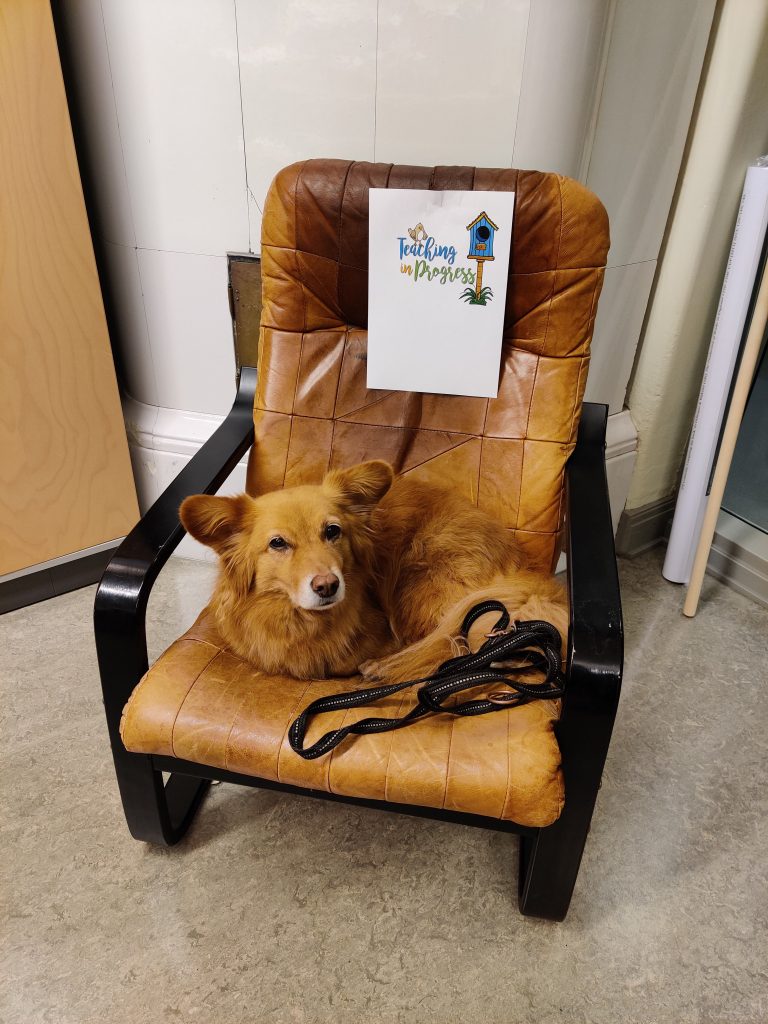
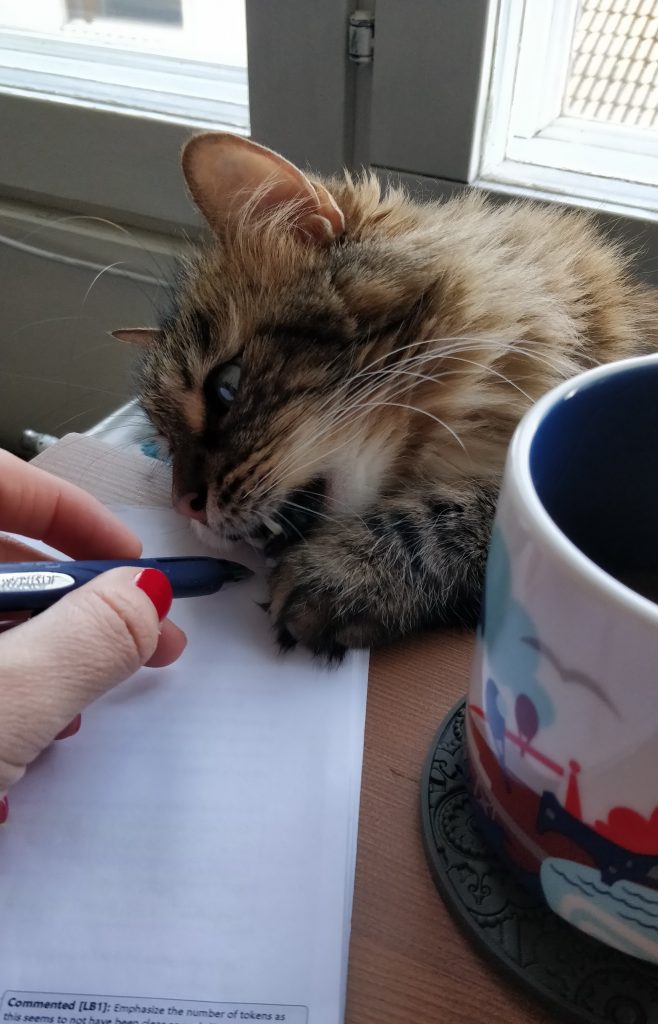
Fox has been an active co-teacher throughout the pandemic. He has not been afraid to speak his mind about a variety of topics, including the shocking fact that the department offers no classes on dog-human translation. Elo, the cat that she is, has been less interested. Although once she did find it necessary to position her butt right in front of the camera in the middle of a lesson. Occasionally she also assumes the role of reviewer 3 (see picture) and engages in document disposal management (shredding papers).

Teaching in progress. Don’t disturb me, says Fox.
I am destroyer of all papers.

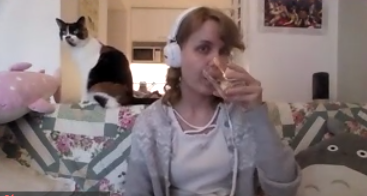
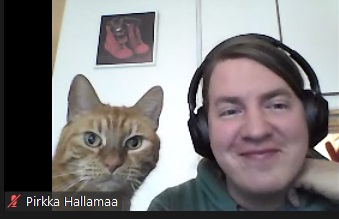
Finally, Pirkka Hallamaa, has found a way to look his best on camera: his photogenic cat provides the ultimate Zoom accessory: the cat filter.

Don’t hate me because I am beautiful.

Text by Elina Valovirta

Photos by staff and screen grab.

Two days to go: Upcoming defense on second language speech fluency

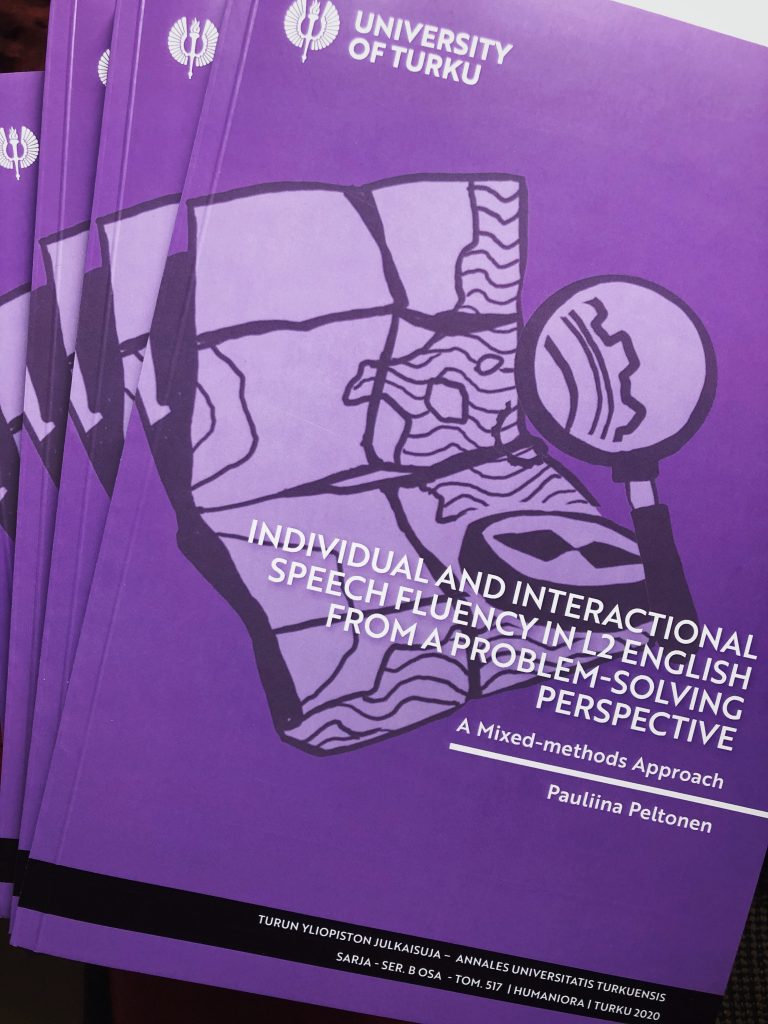
Doctoral candidate Pauliina Peltonen will defend her PhD dissertation entitled Individual and Interactional Speech Fluency in L2 English from a Problem-solving Perspective: A Mixed-methods Approach this week on September 11th, 2020. The audience will be able to follow the defense online via Zoom. Professor Judit Kormos from Lancaster University will be the opponent and Dr Pekka Lintunen will act as custos.

A doctoral defense is the final part of postgraduate studies: it is the end of one process, but also the beginning of another phase, postdoctoral studies. Defending your PhD is both exciting and nerve-wracking. You finally have the chance to talk about your research and what you have been working on for years. However, the opponent asks the questions, and the task is to react to those questions in the best way possible. Custos is the chair of the public examination of a dissertation and often the supervisor of the doctoral candidate. Normally the custos has to do three things: say one sentence to start the examination, another one to end it, and most importantly, sit quietly but stay awake during the examination—not always an easy task!

Pauliina’s dissertation addresses a central aspect of second language (L2) proficiency and speaking skills: fluency. In the dissertation, she examines L2 speech fluency and learners’ resources for maintaining it based on monologue and dialogue speech samples. Fluency is analyzed with a variety of traditional temporal measures (e.g., speech rate and silent pauses), but also from the perspective of so-called fluency resources that can help to maintain speech fluency (e.g., filled pauses, such as uh/um, and repetitions).

The findings show that L2 speech fluency is a multifaceted phenomenon. Fluency should be studied with a combination of quantitative and qualitative methods: the mixed-methods approach provides a more comprehensive picture of fluency than either approach alone. The study also shows that fluency can be viewed as a collaborative phenomenon, while traditionally, fluency has mostly been examined from an individual’s perspective based on monologue data. The study demonstrated that in interaction, learners maintain the flow of speech collaboratively across turns, for instance, by minimizing pause time.

The study provides new insights into L2 speech fluency—a topic that has become a key area of study in the Department of English in recent years. We also collaborate with other fluency researchers in the School of Languages and Translation Studies. Two fluency research projects have been launched just this autumn in the department: Fluency across Multilingual Speakers (MultiFluency; funded by the Swedish Cultural Foundation in Finland 2020–2021) and Fluency and Disfluency Features in L2 Speech (FDF2, funded by the Academy of Finland 2020–2024), both led by Dr Pekka Lintunen. So when one phase is soon over for Pauliina, the next phase will begin in these research projects. We are looking forward to continuing our collaboration and gaining more insights into L2 speech fluency in the near future!

Zoom link for the defense on Friday: https://utu.zoom.us/j/61267813839

Text by Pauliina Peltonen and Pekka Lintunen

Photo by Pauliina Peltonen

So long, Marianne: Professor Liljeström’s farewell lecture

There are (at least) three important lecture occasions in a professor’s career. First, there is the sample lecture testing the professorial candidates’ teaching abilities when the post is filled. After being appointed to their post, the new professor gives an inaugural lecture to demonstrate their newly verified professorial wisdom. Finally, at the end of their career, the farewell lecture delivers the professor’s goodbye to academia as they join the ranks of emeriti.

Many of our students at the English department are interested in topics of gender and sexuality in their papers and theses and choose Gender Studies as a minor subject. In the past, I was one of those students and now, I am an English scholar with questions of gender and sexuality at the centre of my research into Anglophone literature and culture. The farewell lecture of my former teacher, boss, viva custos, and mentor, Professor of Gender Studies, Marianne Liljeström, took place on August 25th, 2020 in the socially distanced lecture hall as well as online to celebrate her long career in building the now well-institutionalized discipline of gender studies in the Finnish, Nordic and international contexts.

Professor Liljeström lecturing from the podium one last time.

Social distancing in the lecture hall. Fifty people were invited but at least another fifty participated via Zoom.

In addition to the farewell keynote, in her true collective fashion, Professor Liljeström welcomed a panel of speakers to join her after her lecture. This is how I will remember Marianne as a scholar and educator, always encouraging others to join her endeavors and working in a collective fashion. By inviting three panelists to discuss the past and future of her discipline, Marianne once again showed her solidarity, as she put the focus from herself to the thoughts, ideas and theories surrounding the field and how best to continue building it.

Professor Liljeström listens in her typical inquisitive fashion as Salla Aldrin Salskov details her views on pressing questions regarding the field.

A historian by training, Liljeström began her lecture by placing the major points of her professional career on a timeline to chronicle how timing has been on her side throughout: thanks to the Finnish education system, she was able to study at no cost despite coming from a humble background. She was also able to study abroad (in Moscow, Berkeley, Birmingham and elsewhere), and her own academic training coincided with the development of Gender Studies as a discipline, which she then as a full-fledged scholar awas ble to help institutionalize.

One of the important key remarks that Marianne shared with us in the farewell lecture, was how history is never merely discursive and hence immaterial, but that the work of remembering begins with fleeting affective images and sensations, when we experience something as nostalgic, get teary eyed, giggly or even when we stay silent. Materiality is always embedded in remembering, which is affective (related to feelings) by its very nature. Marianne invites us to constantly question those assumptions we are taking for granted, as the conditions of determining “facts” such as what gender might mean varies by time and ideology. Universality pushes through, but it is at the same time constantly renegotiated for a more democratic future.

Professor Liljeström is shocked by the influx of flowers and bubbly filling the lectern as well-wishers pay their respects at the send-off.

As she passed on the torch for younger generations to change the world by thought and action alike, it is time to thank Professor Liljeström for the wonderful work she has done over the years. The event was cheerful in mood, but saying goodbye incites feelings of nostalgia and other emotions, so I assume I was not the only one finding it difficult to sum up one’s feelings at the end. Perhaps best leave it to the words of Leonard Cohen: “So long, Marianne/It’s time that we began to laugh/And cry and cry and laugh about it all again”. And that’s what we did. Here’s to happy retirement days full of fun and laughter!

A round of applause and heartfelt thanks from all of us in the community to the magnificient Marianne!

Text: Elina Valovirta
Photos: Tilda Junko

Translating multilingual texts

Another PhD defence in just under two months! A number of doctoral candidates of the English Department are now finishing their research projects. On 24 January, it was Laura Ekberg’s big day.

Laura’s research topic combines translation studies and literature and focuses on a phenomenon also studied in linguistics. As it happens, code-switching was at the heart of the previous viva as well. The title of her dissertation is Heterolingualism and Cultural integrity in Finnish Translations of Anglophone Caribbean Novels; it is available online. The members of Laura’s team of supervisors were Outi Paloposki, Elina Valovirta and Joel Kuortti – who acted as custos – and the opponent was Professor Simona Bertacco from the University of Louisville. The viva started with the important question of which field of research the dissertation belongs to (answer: translation studies). Overall, we witnessed a remarkably friendly discussion by two experts, which really is the best kind of viva. The opponent found the material examined in the dissertation sufficient and representative and was very happy with what Laura had discovered and the poise with which she brought in multiple perspectives.
Professor Simona Bertacco giving her assessment of Laura’s dissertation.

I attended the viva as Laura’s colleague, a former teacher of hers, and a linguist with a keen interest in different approaches to code-switching and, more broadly, multilingual practices. Colleagues attending doctoral defences are always excited for the candidate, hoping their support radiates from the audience to the front of the room. Having known Laura since she was a BA student, I was happy about the confidence with which she brought together language, literature and translation – the three main topics of the Department – and about the fact that the varied training showed in the research. As a code-switching researcher myself, I was particularly interested in the recent campaign for not italicising code-switches in Caribbean literature, which goes against the common practice of separating the ‘other’ language from the main language of the text by using italics. Not italicising suggests that multilingual language use is not an aberration but something ordinary; there is no need to draw the readers’ attention to it.

Custos and Doctor in spe listening to the Opponent’s addresss.

Laura said in the viva that she became interested in Caribbean literature in the MA thesis seminar. The things that catch your eye as a student may take you a long way.

A relieved smile at the karonkka-party.

Text by Janne Skaffari

Photos by Damon Tringham

Philology, pragmatics and code-switching: My first viva

I had never been to a doctoral defence also known as a viva before, so I was immediately interested when I heard there was one taking place with our very own Aleksi Mäkilähde on the hot seat. Aleksi’s doctoral dissertation is called The Philological-Pragmatic Approach: A Study of Language Choice and Code-Switching in Early Modern English School Performances and as the title suggests, it examines code-switching in plays and poems by school boys at the King’s School, Canterbury, in 1665–1684. Eager to learn more about the subject, I decided to attend the viva, which took place 5 December 2019.

This being my first viva, I wasn’t quite sure how I should dress. The event soon starting at the Quantum Auditorium, I hastily did a few Google searches and found out that as an audience member, one is not expected to wear anything too fancy. I didn’t want to go under-dressed, so I took off my hoodie, put on a smart shirt and off I went. As I arrived at Quantum, I saw the candidate himself pacing around in the hall. I grabbed a copy of the thesis and sat at the back of the room. I looked at the people around me and judged my choice of clothes to be fitting.

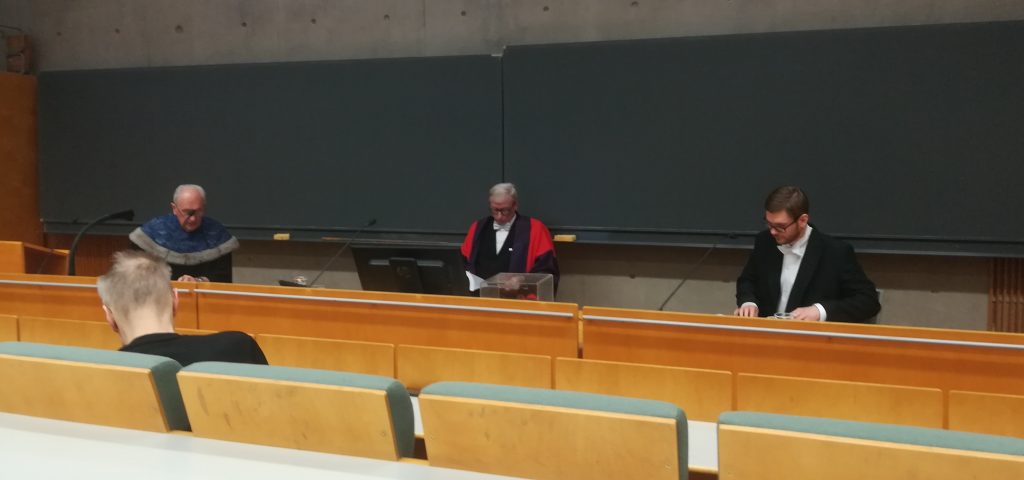
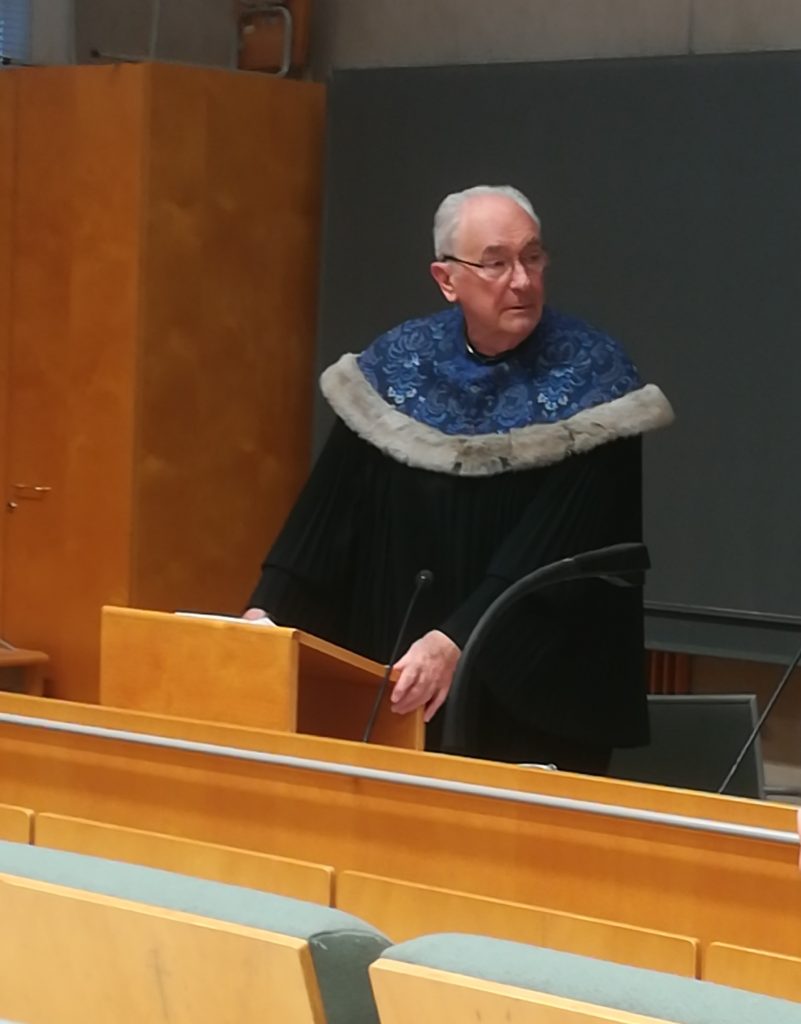
A few minutes passed. Suddenly everyone jumped up as the candidate walked in, followed by the custos, Professor Emeritus Risto Hiltunen, and the opponent, Professor Emeritus Herbert Schendl from the University of Vienna. The custos and the opponent were wearing colourful old-timey robes, which I assumed were customary, but later learned differ depending on the university.

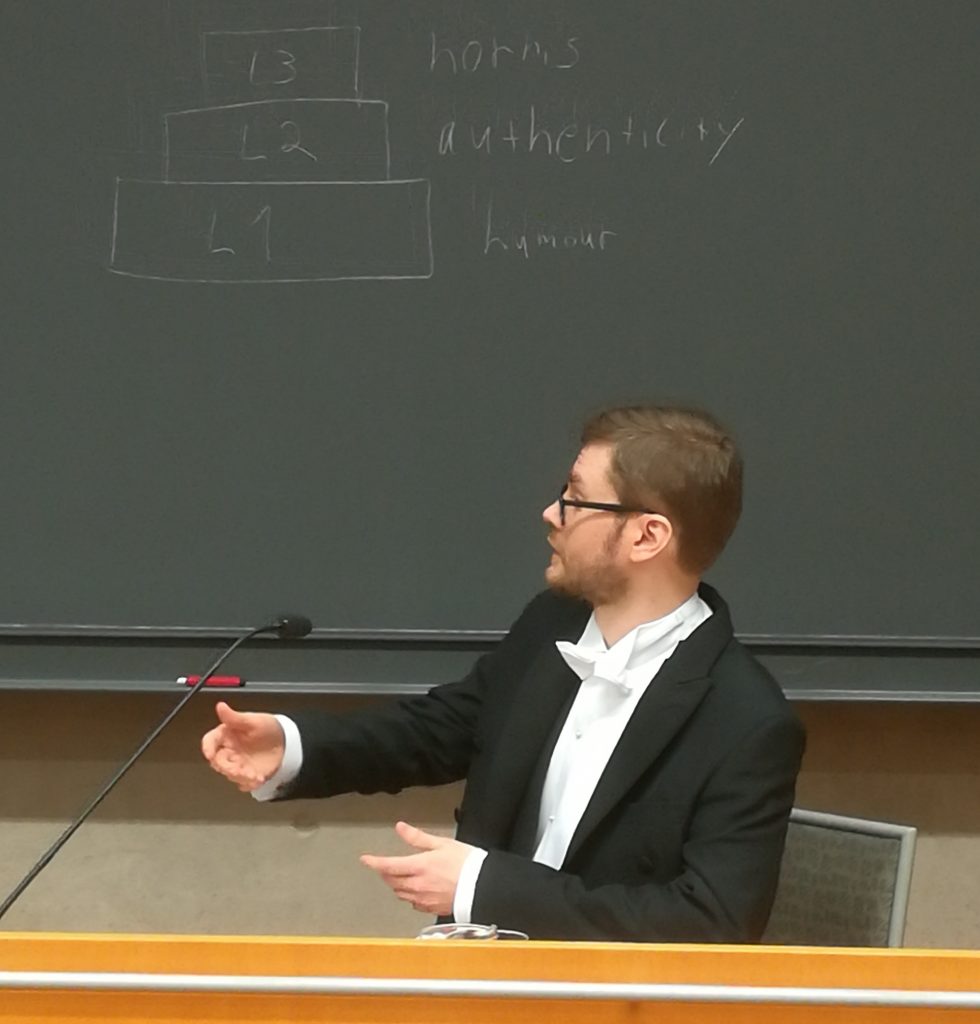
The custos spoke a few words, the candidate briefly presented his thesis in Finnish and then it was time for the opponent to ask his questions. The discussion was more informal and relaxed than I had anticipated. Some questions were more hard-hitting, but mostly it was a friendly discussion about the difference between a code-switch and a loanword, and what kind of consequences code-switching could have. I have to be honest; the discussion went quite deep into the nitty-gritty and at times, I had a hard time following. The highlight of the discussion was when Aleksi got up to the blackboard and drew something resembling a wedding cake to illustrate the complex nature of a play-within-a-play.

Some two hours after it began, the discussion ended, and the opponent gave his finishing statement. He commended the candidate’s hard work of developing a new philological-pragmatic approach and his detailed analysis of code-switching in the school plays. The custos, who had remained silent the whole time (which is customary) declared the viva to be over. Outside the auditorium, hands were shaken, gifts were given, and cake was had. To my disappointment, there was not a top hat nor sword in sight. I guess those were saved for later.

Gratulationes to Aleksi on his achievement and all the best in his future career!

Text by Otto Tarkka

Photos by Janne Skaffari

A month in northern England

The bleak midwinter is approaching, so isn’t a throwback to last spring a wonderful idea? At the end of April, I left Turku to spend a month in the north-east of England. I had visited Durham for two days in 2015, transcribing little bits of English surviving in some Latin manuscripts, and written in my notes: “I’d like to come back”. This became possible when I got a library fellowship from the Durham University Institute of Medieval and Early Modern Studies.

This was definitely an intense work trip, but I did have time to explore the city as well. Although Durham is small, with a population of about 50,000, it bears many similarities to a city the readers of this blog know well: there is a large medieval cathedral, a river and a castle, and a disproportionately large number of students. Durham is full of instagrammable spots, and getting to know the pathways and shortcuts particularly around Palace Green Library, located between the cathedral and the castle, was an absolute pleasure.

Durham University is one of the oldest in the UK and ranks among the top 100 universities in the world. It has about 18,000 students. Since it was Easter term – reserved for examinations – they seemed to spend most of their time reading in libraries. As I resided in college, I was able to make other observations about undergraduate life, too. It is quite different from Finland, particularly as college accommodation means you spend a lot more time together with the other students, starting with breakfast each morning. There was a pleasant sense of community, which I hope the students appreciated.

In addition to doing research and enjoying life in a beautiful old town, I was also able to make weekend trips to cities like Newcastle and Manchester and to smaller places such as Bishop Auckland and Tynemouth. A particular highlight was Hadrian’s Wall, which runs across the north of England. Having spent hours and hours examining 800-year-old manuscripts indoors, a bit of more ancient history out in the country towards the end of my trip was, quite literally, a breath of fresh air.

I would like to thank Durham University, IMEMS and the Library Fellowship for making this trip possible.

Text and photos by Janne Skaffari

More pictures on Instagram; look for captions mentioning a certain ‘Dr X’.

Trextuality – at the intersection of textual scholarship and translation studies

The XII annual colloquium of Variantti, the Finnish network of researchers working on textual scholarship and scholarly editing, was held on Friday, 4 October 2019, at the University of Turku to foster interdisciplinarity between textual scholarship and translation studies.The theme trextuality encompassed textuality, transmission and translation, concepts central in both fields. In translation studies, trextuality means going beyond the source-target text pair and in textual scholarships, it refers to observing the transmission of texts across languages. Some fifty attendees heard eleven talks addressing trextual issues.

Tanja Toropainen discussed the continuum of editions and translations behind Codex Westh and its Ars Morendi part, which is a translation from German – except that the The Bible quotations are translations from Swedish. Sara Norja pointed out that like many of early English texts, also The Mirror of Alchemy is a translation – the source language of the various versions (Latin or French) can be deduced from how the alchemy-related terminology is translated. Niko Huttunen & Tuomas Juntunen explained that the forthcoming Finnish translation of The Bible for mobile platforms will have vocabulary different from what the audience is accustomed to because the language is made understandable for 20-year-olds.

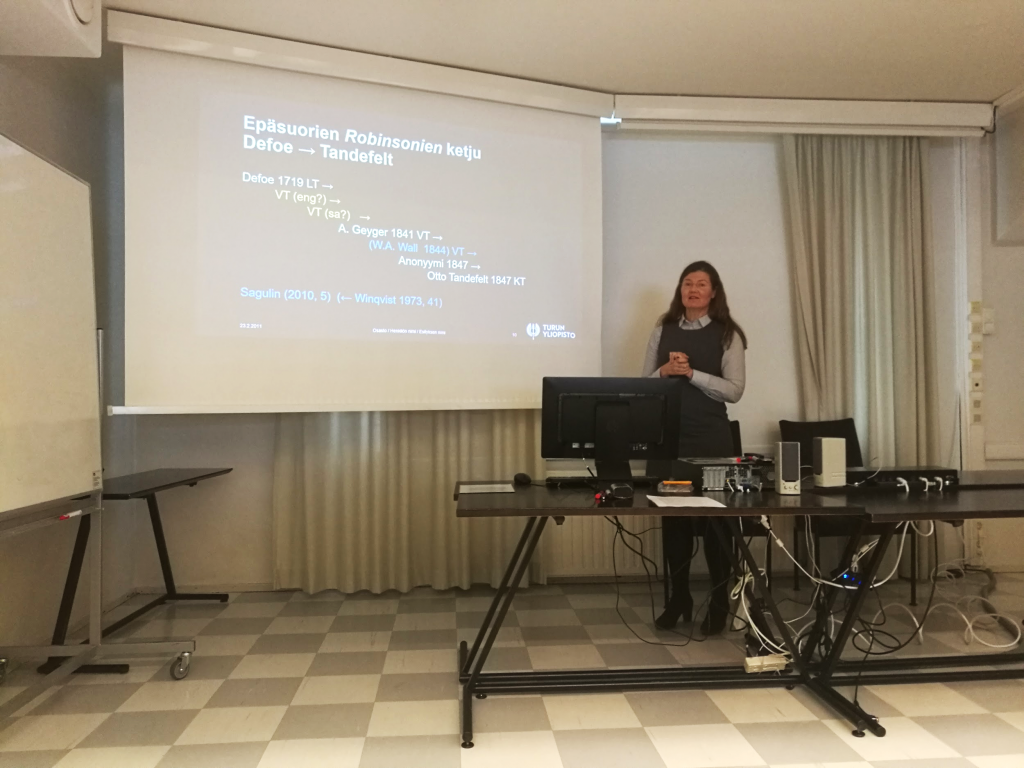
Kristiina Taivalkoski-Shilov talked about the long,
multilingual transmission history of Robinson Crusoe.

Leena Eilittä discussed intertextuality in Herman Broch’s works; for example, Broch changed the title of his poem into Hille Mitternacht (A clear midnight) after having translated Walt Whitman’s A clear midnight into German. Marja Sorvari addressed the intertwinedness writing, writing in a second language, and self-translation through the example of two translingual authors, Zinaida Lindén and Polina Kopylova.

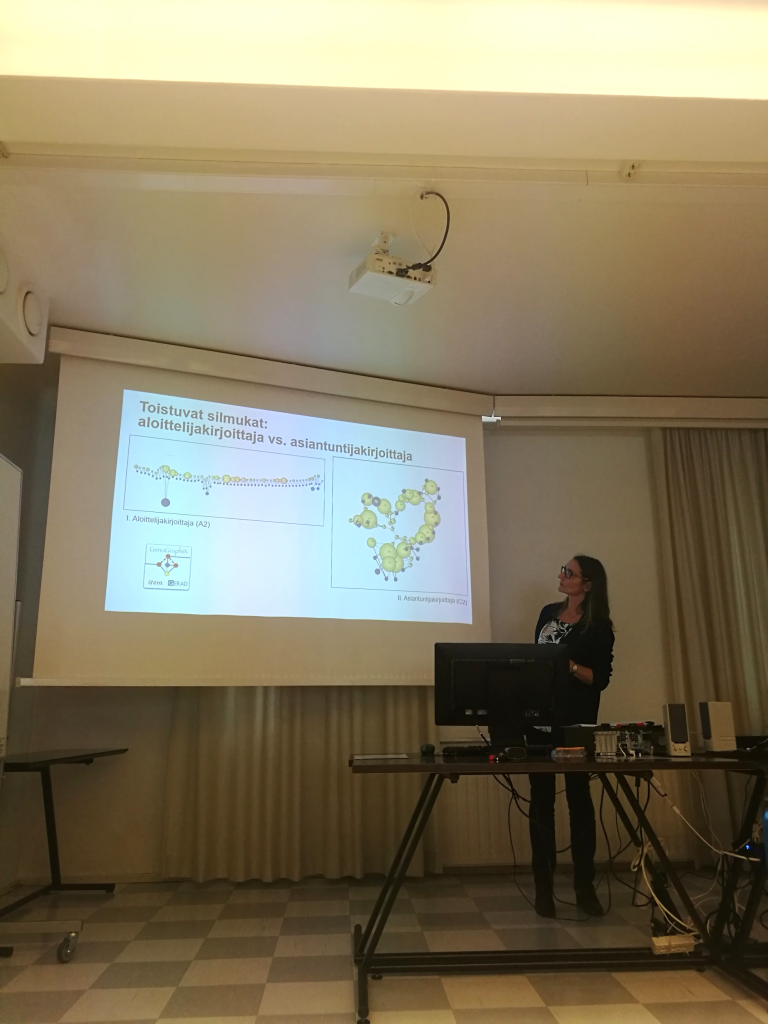
Instead of studying what changes in translation, Taivalkoski-Shilov showed how Friday’s way of talking remains unchanged in the Finnish Robinson Crusoe (re)translations even if translated indiretcly from English to German to Swedish to finally Finnish. Members of the Digilang project Christophe Leblay, Maarit Koponen, Maarit Mutta, Anna Salmela, Leena Salmi & Mikko Suhonen showed examples of text editing process visualizations using tools such as GenographiX: for example, A2-level writers proceed straightforwardly while C2-level producers make loops as they write and edit different parts of the text at different times.

Maarit Mutta showed how writing processes can be visualized.

Annamari Korhonen suggested that because something always changes when a text is translated, translating is creative even with pragmatic texts. Tuuli Ahonen demonstrated how a translator cannot translate the whole film if one of the modes – picture, dialogue, music, or sound effects – is missing because the subtitles are part of the polysemiotic whole that the modes together make.

Minna Seppänen & Outi Paloposki discussed how in the early 19th-century Ancient Greek literature was translated into Finnish more to show off one’s language skills than to produce beautiful Finnish translations. The day concluded with the perspective of a professional translator: Jaakko Kankaanpää shared his observations on the differences, such as replacing racist vocaublary with politically correct terminology, between various Finnish (re)translations of Agatha Christie’s novels, including his own ones.

Text and photos: Laura Ivaska

Visiting Poland and gaining international experience


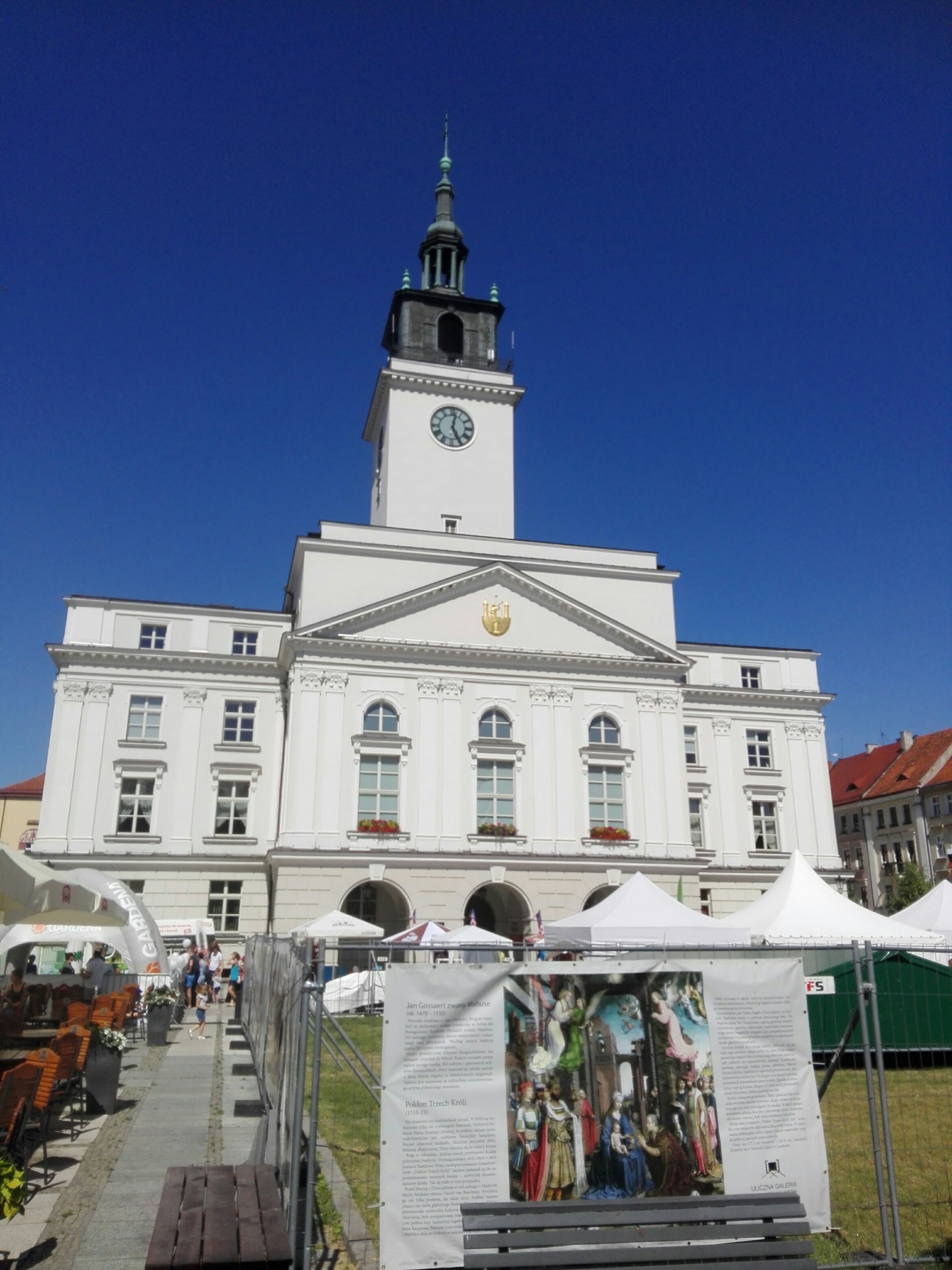
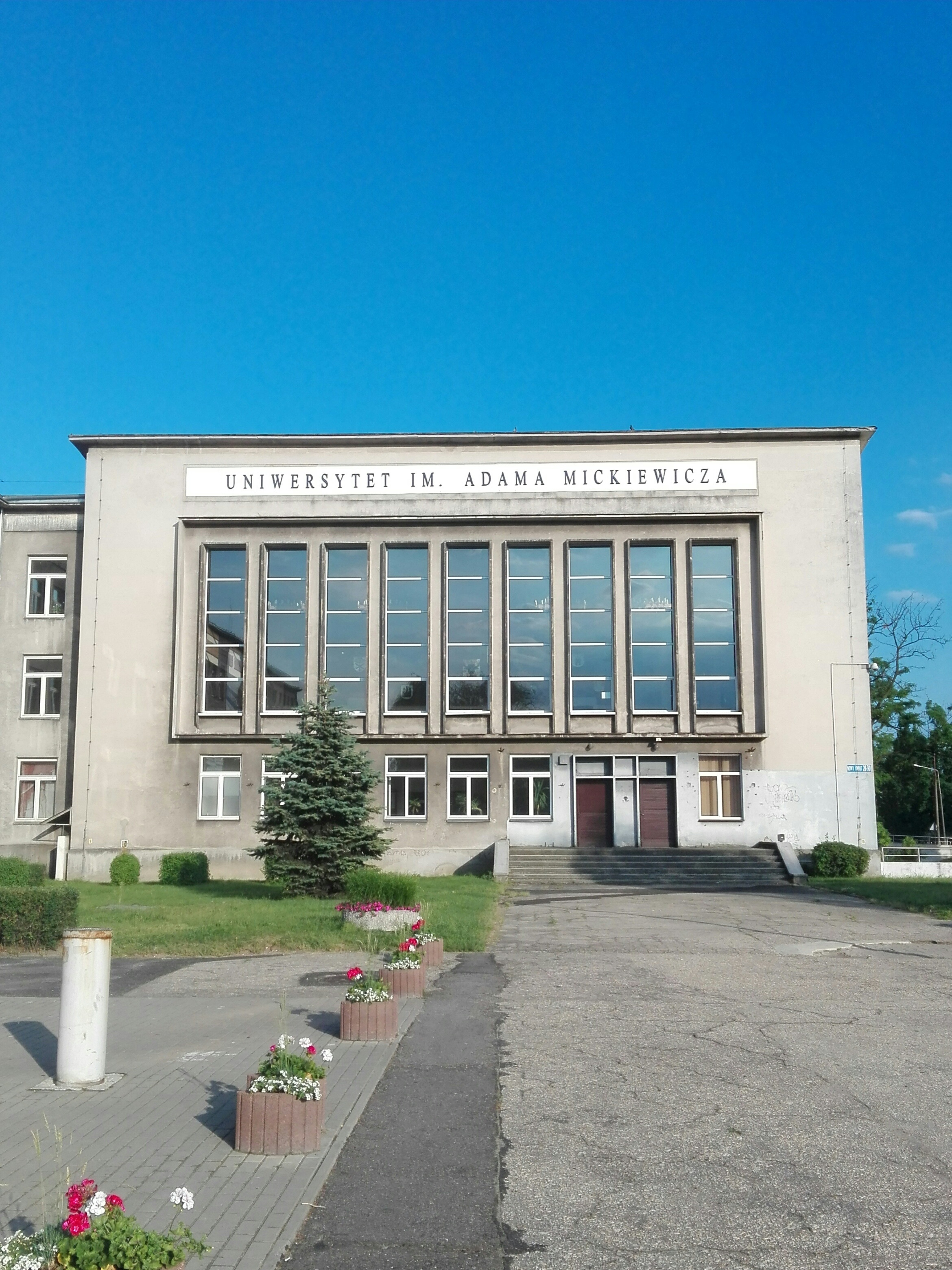
This spring has been very memorable, as I have had the pleasure of being a Visiting Professor in Kalisz, Poland. A visiting professor can refer to various kinds of things in the academic world. In this case, I was invited to the Faculty of Pedagogy and Fine Arts of the Adam Mickiewicz University in Poznań. This Faculty is located in Kalisz and educates, among others, students of English and pedagogy whose career goal is to become a teacher of English.

The fascinating thing about Kalisz is that it is considered the oldest city in Poland. Coming from the oldest city in Finland, this gave me a nice opening to all my meetings with the students. Due to my work responsibilities in Turku, I was not able to stay in Kalisz for longer periods at once. Instead, my teaching was intense: 6-8 hours of teaching while I was there. I led a workshop on Teaching and Learning Spoken English for third year students and a Workshop on Effective Learning for three first year groups of students. In addition, I met many members of staff for informal discussions on the Finnish education system and our shared research interests. I was lucky to visit Kalisz, as second language acquisition is a prominent research field at their Faculty.

My visit was part of their University of the Future programme that is funded by the EU. As part of this project, they invite international scholars to educate their students. Compared to Finnish students, the Polish students I met were mostly one step more shy and one step more insecure about their English skills, but fortunately I am familiar with both of these emotions. Much of my time was spent on convincing that making mistakes in a foreign language is ok and I thought that their English was very good. One first year student said that I was the first foreign person he had ever used English with (as they do not have native speakers as teachers). The students were very concerned with their grammar and pronunciation skills. Poznań is famous for their intense pronunciation teaching, as they spend two years on pronunciation skills. It was interesting that the materials they use are mostly the same as we have used at our university.

Towards the end, the students started to feel more relaxed with me. During our final meeting, when students presented their own projects, they even tested my pronunciation skills. I had to pronounce, for instance, trzy, wszystkiego, źdźbło and Szczebrzeszyn – and I did! I also got to discuss Kimi Räikkönen’s career, Finnish heavy metal music scene, and the lyrics to “Ievan polkka” (one student had learnt to sing it in Finnish earlier but did not understand what it meant). The most difficult question in my final exam was “Describe why you are a good learner of English”. Local teachers told me that traditionally Polish people like to focus more on what they do not know – another thing that I understand well coming from the Finnish setting. I look back on my time in Poland with fond memories.

Text and photos by Pekka Lintunen