”Once upon a Time There Was University: Yliopistoon! To the University!”

Yliopistoon

In the summer of 2005, I happened to read a Finnish detective novel by Matti Hälli, titled Sopimatonta kuolla yliopistolla (1943) [It Is Unbecoming to Die at the University]. The text intrigued me so much that I wrote a short piece on it to the University Employee Unions’ magazine, Acatiimi. What was then just an occasional piece has become a long series of texts – still continuing. After 50 articles, it was time to collect the pieces together – with some new material. The result is now a book called Yliopistoon! Kaunokirjallisia kuvauksia akateemisesta maailmasta (Gaudeamus 2013) [To the University! Fictional Accounts of the Academia]. Basically, I deal with novels and poems from the 14th century until the present day in which university, academic environment, and/or student life is in some way represented, lived out.
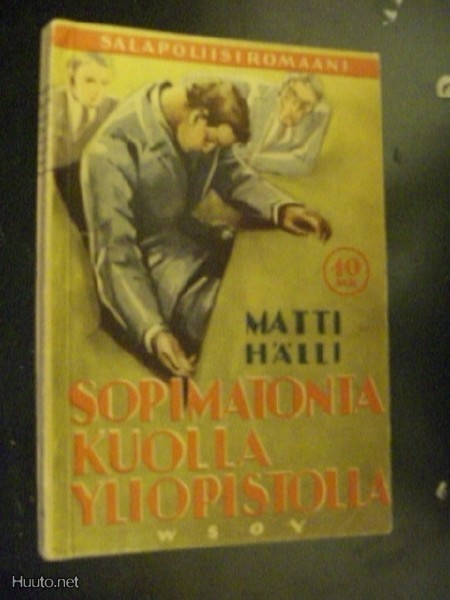
Halli

What I find most interesting in my explorations into the stories about and around Finnish universities (and a couple of detours into Nordic academic life) is that university life has not changed that much during the centuries. Sure, the physical environment has changed tremendously but the basic need to gain knowledge, the epistemological drive, as well as the requirement to educate students for the purposes of public life, has remained so recognizable throughout the ages.

In literary representations of university life, there is no end to murders, love stories, tragedies, parties, money troubles – or even studies. As an example, we can take for example the young writer and dramatist Emma Puikkonen who in her debut novel Turkulainen näytelmä (2001) [A Drama in Turku] combines contemporary student life with a story set in the Turku of 1590s. The protagonist, Nadia, takes part in a play by the Turku Student Theatre: Josef Julius Wecksell’s Daniel Hjort (1862). Nadia calls it the first Finnish tragedy, a Turku version of Hamlet. It is a story of Daniel Hjort and his beloved Sigrid Stålarmintytär, played by Nadia.
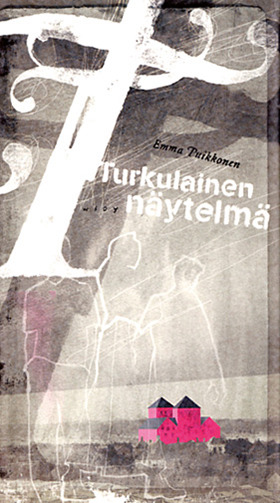
Puikkonen

Nadia’s story is about identity crisis, about a Hamlet-type of person (not Ophelia) who is uncertain. She dreams of meeting one of the innumerable young, talented, dark-eyed, and anxious poetry boys Turku teems with. Her aimlessness is amply illustrated in her ride on the föri ferry as she goes back and forth without alighting. She watches the Art Academy students on the other side of the Aura river heading for the old rope factory, and the students of the (then three) universities on the other side cycling up “to the lecture halls and paper smell, the recluse research chambers which breed love for Sartre, bylaws or quantum mechanics” (p. 106).

Nadia’s and Sigrid’s lives get intertwined in the course of the novel in an interesting way. Nadia is not content with the director’s (or the script’s) version of Sigrid as the fragile angel on a pedestal. Nadia and Sigrid know that in the patriarchal world, the young woman always dies, all the more certain the more there is concealed passion. They want to be written differently, to write their own lives.

See also the blog, Café Pour Les Idiots, for a feature on the book in Finnish.
Text and Images: Joel Kuortti
A Tale of Two Departments

IMG_0410

The two English Departments in Turku, Åbo Akademi and Turun Yliopisto, congregated, as has been the custom over the years, for a joint retreat, this time on the island of Seili in the Turku archipelago. Seili, of course, is the island historically (in)famous for its leper colony and later its mental institution. For the last 50 years, the Archipelago Research Institute has had its base on Seili.

IMG_0409

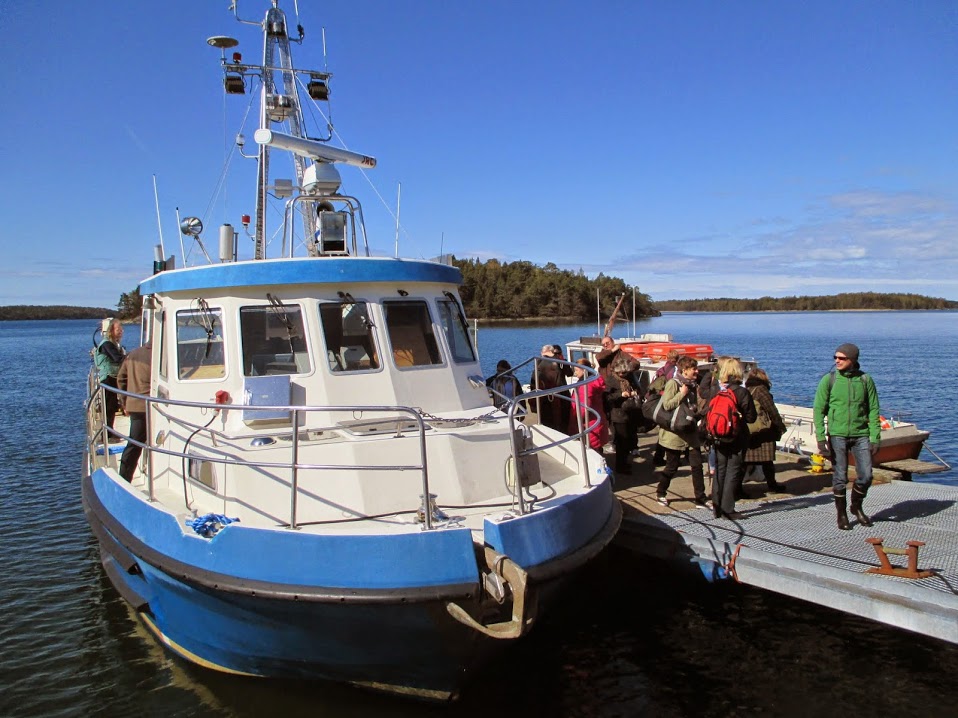
The retreat started from the River Aura, where the boat Aurelia picked us up on the two-hour sea voyage to Seili in sunny but cold spring weather. After settling in to our sleeping quarters and having lunch, it was time for official business. We started with a round of introductions, as despite a history of joint retreats, not everyone knew each other in advance. Informality characterises the retreats, and this one was no exception. Synergy cannot be achieved through official structures, but rather through interaction, spontaneity, and relaxed atmosphere. The retreats are ideal for that, as going away from your usual environment can foster new ideas.

Professor Anthony Johnson and PhD Candidate Aleksi Mäkilähde gave a presentation on their joint project on the Orationes, a collection of school plays from the late 17th century. Their excellent presentation was followed by Signe-Anita Lindgrén & Pekka Lintunen’s presentation on various learner corpora, as they chronicled the challenges involved in corpus-building, ranging from practical problems to comparability, but both also stressed that corpus-building is in fact lots of fun!

IMG_0439

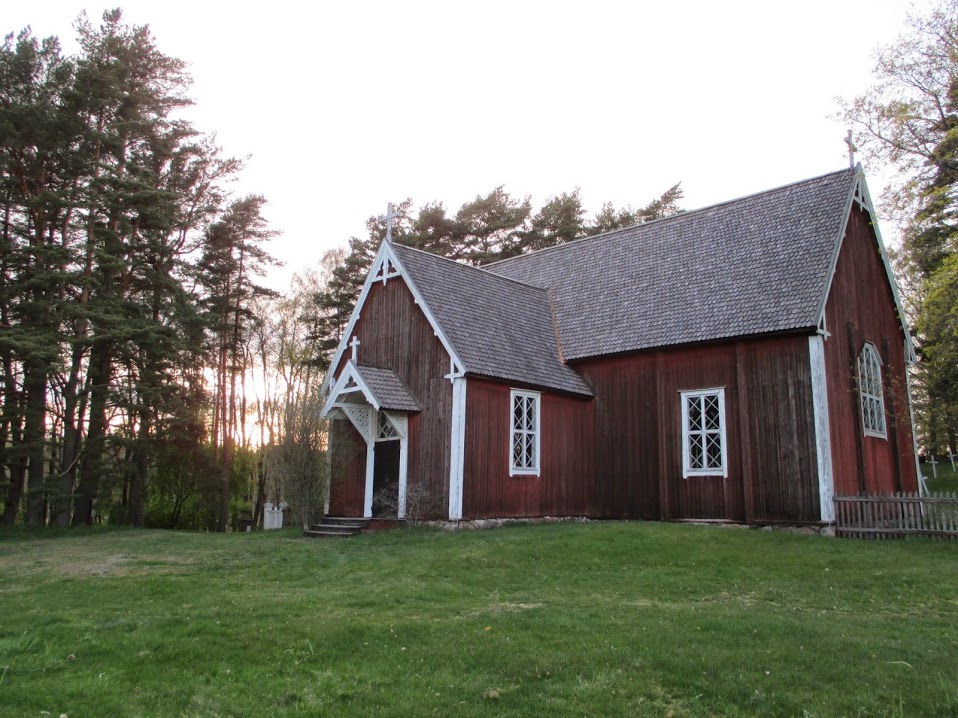
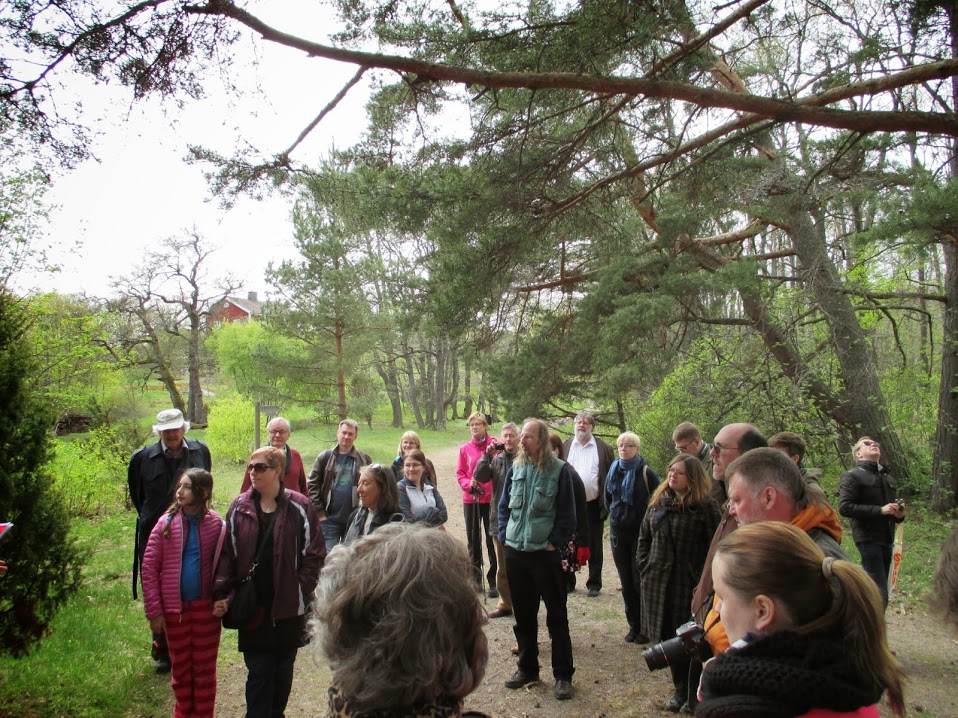
After the two joint presentations we were treated to an English-language guided walking tour of the island, on which we got to visit, for example, the island’s church which had a special section for those residents who had leprosy and thus were not allowed to sit with the other church goers back in the 18th century.

IMG_0419

In the afternoon, the two Fulbright scholars, one past and another present, Chris LaLonde (SUNY Oswego) and Casie Hermansson (Pittsburg State University, Kansas) had a discussion about the Fulbright experience as a member of both English departments in Turku. For both Casie and Chris, the Fulbright period far exceeded their expectations, an evidence of which is the fact that this was Chris’s fourth time back in Finland since his Fulbright year 1997-1998. Taking the time to discuss the Fulbright’s benefits perhaps also served as reinforcement for the two departments’ ongoing commitment to keep the scheme going. After all, the Fulbright scholar is a teacher to whom students stick, as remarked by Professor Emeritus of ÅA’s English Department, Roger Sell.

After the Fulbright discussion, Casie and family were gifted with Åboriginal t-shirts, followed by the ÅA faculty’s moving and laughter-inducing tribute to Professor Risto Hiltunen, who is about to retire. They likened Risto to the current James Bond, Daniel Craig, and reminded him about his skill in cultivating friendships the same way that he accidentally cultivated mold in an old coffee cup back in the eighties.

The day was concluded by sauna and dip in the cold sea, followed by sausage-grilling, refreshments, enjoying the beautiful sea view, and continued conversation about the day’s topics.

IMG_0442

The next morning, before leaving the island, we had a future-oriented workshop led by Risto, who reminded us about the twinship of the two departments, and encouraged the small groups to come up with practical suggestions about joint activities. The fruits this productive session will bear are to be seen, so both departments — including our students – will have lots to look forward to in the future!

Text: Elina Valovirta
Photos: Adam Borch