Tracing the Complicities of Colonial Violence

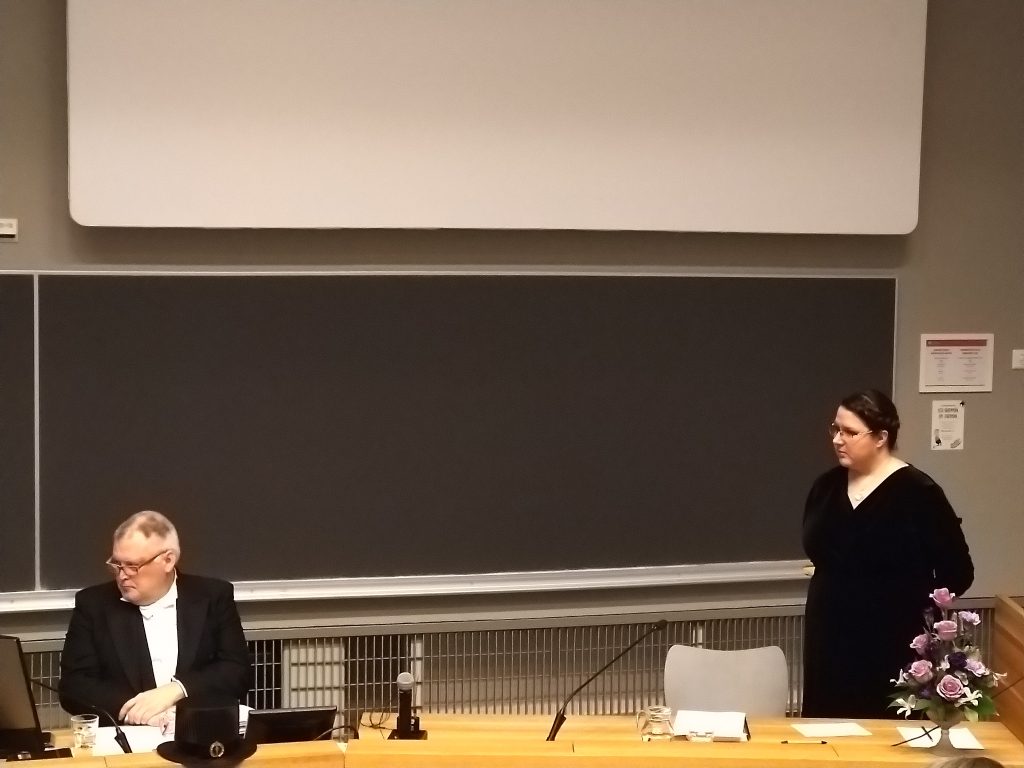
On a warm Saturday morning, on 24 August 2024, a small audience gathered to celebrate Amin Beiranvand as he defended his doctoral dissertation Gendered Sexual Violence and Complicity: A Postcolonial Study of Selected Works by J. M. Coetzee. Professor Joel Kuortti acted as custos and adjunct professor John Stotesbury from the University of Eastern Finland as the opponent.

The viva began with Amin’s lectio praecursoria, in which he outlined the historical and cultural context and the main research questions of his dissertation. He ambitiously investigates the fiction of the critically acclaimed Noble Prize winning Coetzee, whose fiction has dealt with, among other themes, the legacy of colonialism and its violent power relations in human and animal encounters. This underlies also Amin’s research, in which he focuses on Coetzee’s portrayals of gender-based violence against racially and ethnically marginalised women in three novels, Dusklands (1974), Waiting for the Barbarians (1980) and Disgrace (1999).

All’s well that ends well. The opponent accepts the PhD dissertation.

The opponent presented his questions and criticisms in an approachable and captivating way. The questions began with a lengthy discussion on the dissertation title and specifically the many implications of the word complicity. The effects of colonial violence and its legacy are more far-reaching than those confined into the pages of Coetzee’s novels. This inspired the opponent to ask about Amin’s choice of the term “gender-based” when discussing violence in a setting where it springs as much from the colonial power structures and the racial hierarchies portrayed in the fiction.

The rest of the viva dealt with each novel individually and focused specifically on themes of violence, imagination, history, anger and the effects of silences that deny the voice of the oppressed. On this point, the opponent created an immersive experience for everyone in the room by staying silent for a disturbingly long time. Overall, the atmosphere of the viva was relaxed and the opponent told many entertaining anecdotes from his own career, for example being invited to dinner at Coetzee’s house and the introverted author then failing to show up.

The successful viva resulted in an accepted doctoral dissertation and we congratulate the new Doctor of Philosophy, Amin Beiranvand.

Text by Ira Hansen & Suvi Seppälä

Photo by Damon Tringham

Translating multilingual texts

Another PhD defence in just under two months! A number of doctoral candidates of the English Department are now finishing their research projects. On 24 January, it was Laura Ekberg’s big day.

Laura’s research topic combines translation studies and literature and focuses on a phenomenon also studied in linguistics. As it happens, code-switching was at the heart of the previous viva as well. The title of her dissertation is Heterolingualism and Cultural integrity in Finnish Translations of Anglophone Caribbean Novels; it is available online. The members of Laura’s team of supervisors were Outi Paloposki, Elina Valovirta and Joel Kuortti – who acted as custos – and the opponent was Professor Simona Bertacco from the University of Louisville. The viva started with the important question of which field of research the dissertation belongs to (answer: translation studies). Overall, we witnessed a remarkably friendly discussion by two experts, which really is the best kind of viva. The opponent found the material examined in the dissertation sufficient and representative and was very happy with what Laura had discovered and the poise with which she brought in multiple perspectives.

Professor Simona Bertacco giving her assessment of Laura’s dissertation.

I attended the viva as Laura’s colleague, a former teacher of hers, and a linguist with a keen interest in different approaches to code-switching and, more broadly, multilingual practices. Colleagues attending doctoral defences are always excited for the candidate, hoping their support radiates from the audience to the front of the room. Having known Laura since she was a BA student, I was happy about the confidence with which she brought together language, literature and translation – the three main topics of the Department – and about the fact that the varied training showed in the research. As a code-switching researcher myself, I was particularly interested in the recent campaign for not italicising code-switches in Caribbean literature, which goes against the common practice of separating the ‘other’ language from the main language of the text by using italics. Not italicising suggests that multilingual language use is not an aberration but something ordinary; there is no need to draw the readers’ attention to it.

Custos and Doctor in spe listening to the Opponent’s addresss.

Laura said in the viva that she became interested in Caribbean literature in the MA thesis seminar. The things that catch your eye as a student may take you a long way.

A relieved smile at the karonkka-party.

Text by Janne Skaffari

Photos by Damon Tringham

A Poetry Researcher’s Field Day

One might assume that literature research would not necessitate fieldwork, but sometimes it is useful to those of us working with such esoteric topics as contemporary US poetry as well. In early May, I visited the State University of New York at Buffalo, and particularly their library’s Poetry Collection, in search of more materials for my research project, Difficult Relations: Reading for Emotion in Recent American Experimental Poetry.

SUNY-Buffalo, or UB as the locals like to call it, hosts the Poetry Collection, “the library of record for 20th- and 21st-century poetry in English”. The collection, started by Charles Abbott in 1937, is hidden away from the public in closed stacks, so visitors desiring to peruse books have to give a list to the staff, and they will pull it out for use in the library’s reading room. Like in many archives and special collections, use of the materials requires care, and only computers or pencils can be used for note-taking. Photographs are not allowed without special permission.

The reading room is a large hall, guarded over by a portrait of James Joyce. Incidentally, the UB Poetry Collection is also home to the world’s largest collection of Joyce-related materials, like first editions, correspondence, notebooks and photographs. Oscar Silverman, who worked at UB, had visited a Joyce exhibition in Paris in 1949 and got the idea to bring the collection to UB. Joyce is a pervasive presence in the Poetry Collection reading room, watching over it all like a grandfather of modern English literature that he is.

My 10 day visit to Buffalo was a handy one-stop method for browsing through many important works published in the last 15 years or so. Many of these were published in limited editions or are otherwise difficult to find from overseas. While I order what I can from online stores, it was very useful to have it all at my disposal at once. It also allowed me to observe the sheer materiality of recent poetry works, viewing as I did items ranging from large anthologies and collections to thin and plain chapbooks and even little cards on which poems had been printed. In a tangible way, it brought the liveliness of contemporary poetry culture into view.

UB is also home to a fairly substantial population of Canada geese, one of which is pictured here.

Text and photo by Elina Siltanen

Soup with Paul Auster


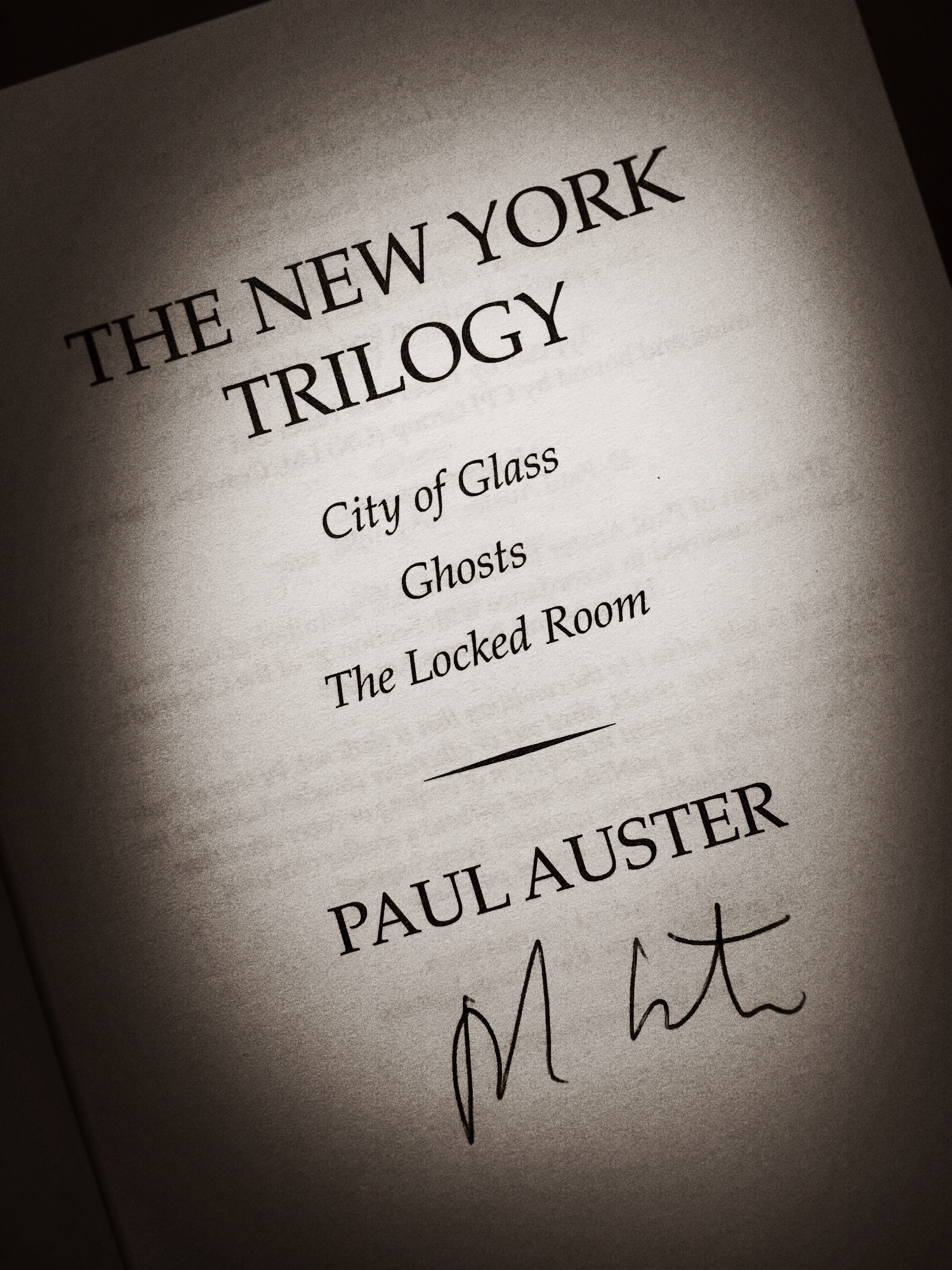
There is something surreal about eating the same soup as Paul Auster. All of a sudden, the intangible, enigmatic, almost disembodied author, whose books I read, whose films I watch and whose activities I follow in the media, is scooping mashed potatoes (and soup) on his plate (not the one that had the soup) at the “grubby little place” (his words, not mine) next to the House of the Estates in Helsinki and ranting enthusiastically about Beckett. Such encounters are, of course, one of the somewhat nerve-racking benefits of studying a living author.

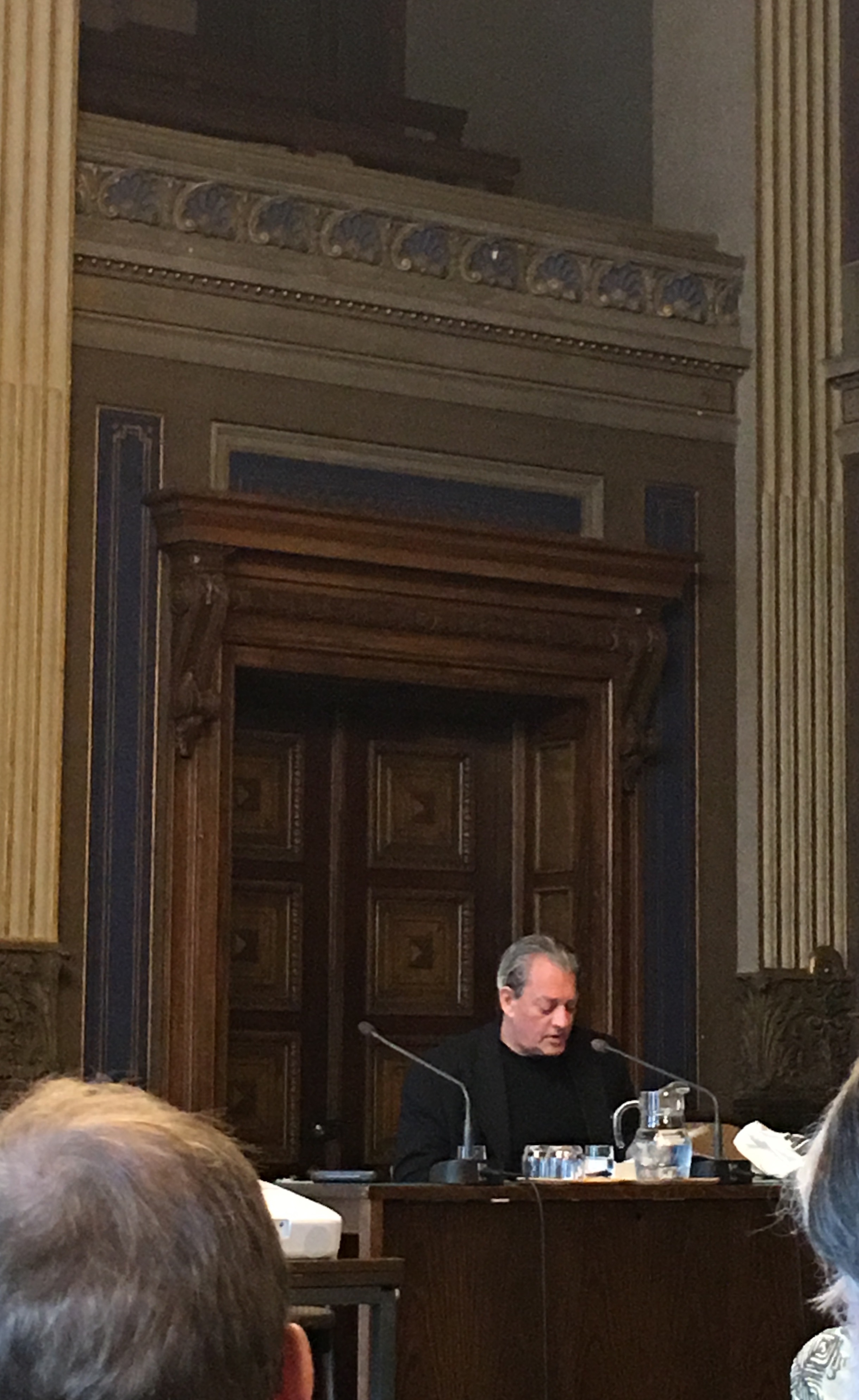
At the turn of August and September 2017, the Finnish Society of Sciences and Letters organized a two-day seminar in honour of Finland’s centenary, titled Open Windows: Democracy, Censorship, Literature. As an avid defender of freedom of expression, a former Vice President of PEN America (2005-2007) and a member of its Board of Trustees (2004-2009), Paul Auster was a most suitable guest of honour.

The seminar begun with Professor Bo Pettersson interviewing Auster on, among other things, his latest novel 4 3 2 1. What struck me the most was the calm yet enthusiastic way Auster approached every question, the passion with which he engaged his work and life in general, the way his speech flowed as eloquently as his writing. I hadn’t really thought what he would be like, but in hindsight, he could not have been more Paul Auster.

The seminar continued with Auster reading passages from 4 3 2 1, but unfortunately he could not stay for the rest of the first day’s presentations. The five or so days he spent in Finland were packed with interviews and other engagements, and he further claimed that the one-month-nine-countries tour would be his last of the kind.


Auster did, however, return on the second day for a panel with the Finnish author Sirpa Kähkönen, pictured above with Auster. Towards the end of the discussion, Auster remarked along these lines:

      Writing a novel is a political act, even if the writer is not conscious of it. Novels are about ordinary lives; authors get to enter the lives of the most ordinary people in the most intimate ways. Literature and writing are, therefore, democratic acts, because even the smallest of lives matter. Literature is a defence against tyranny; in connecting the reader with those who are not yourself, literature creates and teaches empathy. Novels are democracy in action.

This manifesto was accompanied by applause, and I’m sure I witnessed a few in the audience discreetly dab tears from the corners of their eyes.

Text and photos by Ira Hansen

Shakespeare 400 revisited

The Shakespeare 400 course was organised jointly by the University of Turku and Åbo Akademi University in autumn 2016.

After the first lecture on the history of English and the early printing history of Shakespeare’s works, the students delved deeper into other topics in Shakespeare studies. Aino Mäkikalli discussed Shakespeare’s sonnets, situating them in their historical and ideological context. Anthony Johnson highlighted the influence of early modern school curricula on Shakespeare’s plays.

The Finnish translations of Shakespeare’s plays and sonnets were introduced by Outi Paloposki. For example, in an early translation of the Scottish play, one of the characters is called Pirjo. Intrigued? Read the play here.

Tom Linkinen and Hannu Salmi approached Shakespeare from the point of view of cultural history. Linkinen discussed the ways in which genders and sexualities are performed in Shakespeare’s plays. Salmi, in turn, started from a mnemohistorical point of view, showing the audience examples of how Shakespeare has been interpreted on the silver screen. The last lecture by Joel Kuortti focused on the postcolonial rewritings of The Tempest.

The students also engaged in small group work. One of the tasks was to translate into Finnish Benedick’s troubled rant from Much Ado About Nothing (V.ii.35-41). It works quite nicely in the Turku dialect, too!

    En sunka mää ny mittä riimei ossa. Kyl mää niimpal yriti, mut ei mul mittä muut tullu miäle ku ”flikoi” ja ”sikoi”. Kuka ny simmossi puhu! Eikä koulun kans men mikkä muu, ku joulu. Mittä järke… Ei munt kyl ol tarkotettu mittä runoi värkkämä, eikä nättei puhuma muutenka!
    (Translation: Tuula Viitanen)

Text by Mari-Liisa Varila

Greetings from Gorgeous Galway

irelandview

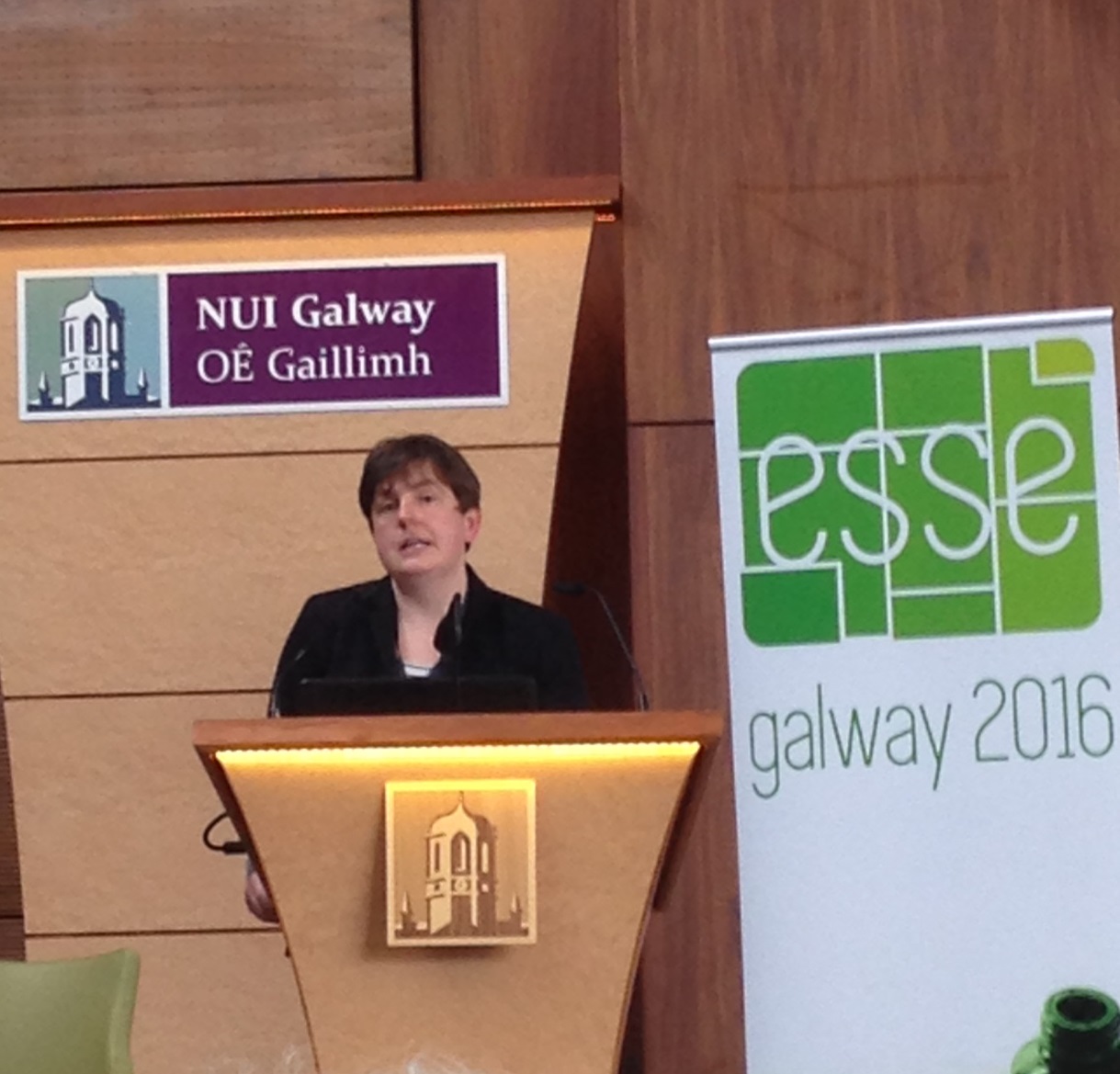
While our historical linguists were enjoying the heatwave in Essen, another delegation from the English department went on a similar mission to a place with just one letter’s difference: ESSE – the European Society for the Study of English biannual conference in gorgeous Galway, Ireland. Our research project funded by the Academy of Finland, Out of the Ordinary: Challenging Commonplace Concepts in Anglophone Literature, hosted a round table debate on the topic of competition for research funding in Europe and its consequences for English Studies. Visions were similar from all over Europe: competition for research funding is fierce, resources are diminishing, but everybody is making it work one way or another. Cautiously optimistic could perhaps be seen as the general attitude in the end of the discussion: after all, we have platforms like ESSE in and from which to push the English Studies agenda further. Besides the round table, the five-day conference with over seven hundred participants held numerous highlights, both intra- and extracurricular.

The conference began and ended with prestigious keynote lectures, the first by Emma Smith, Professor of Shakespeare Studies at Oxford. Her discussion on the changes, annotations, and scribbles made by previous owners to copies of Shakespeare’s First Folio denotes the very material quality of books as writing — they are not just stories but also stories about people who have owned or handled them. Smith is further known for her pedagogical efforts, not least of which is the Approaching Shakespeare podcast series, a very accessible way to get to know the Bard of Avon.
emmasmith

The conference ended on another high note, when Professor and author Colm Tóibín in his keynote, titled “As Things Fall Apart: The Response to Violence in the work of W.B. Yeats and James Joyce”, discussed Irish political history and literary analysis hand in hand, with a plot and detailed characterization as only a novelist/scholar could tell it. Thrilling treat, indeed!

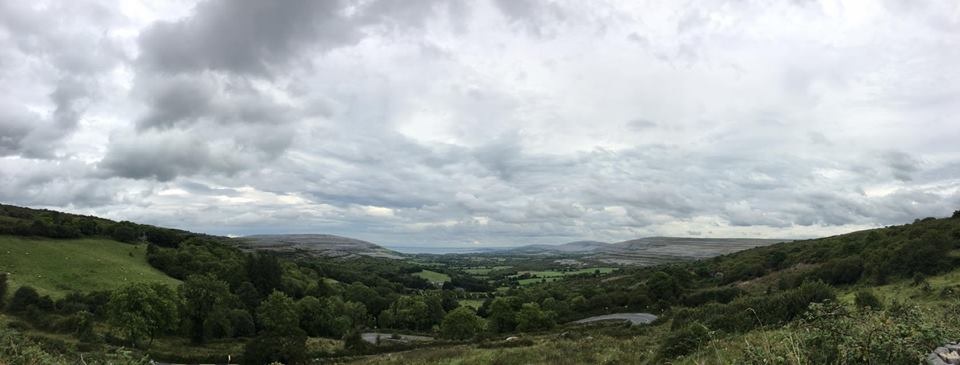
With storytellers like Tóibín hailing from Ireland, it is no wonder that Galway will be the European Capital of Culture in 2020. The beautiful Atlantic scenery, seafood, music, culture, grazing sheep, ponies, and cattle in the green valleys make it an ideal destination for anyone looking to fall in love with places like the historical Kylemore Abbey pictured below. The Gothic castle and Victorian walled garden are now home to the Benedictine community, who welcome visitors to take in the peaceful atmosphere by the lake, which can only be described in the words of the Irish poet, Patrick Kavanagh: “Tranquillity walk with me/And no care/O, the quiet ecstasy/Like a prayer”.
kylemore

Text by Elina Valovirta
Photos by Ira Hansen and Elina Valovirta.

p.s. The next ESSE conference will be held in Brno, Czech Republic, in 2018. For more photos about ESSE, see the ESSE website and for another conference report from a participant in the very successful panel on children’s literature, see here.

Postmodern feminist challenging of dominant discourses: Mehdi Ghasemi’s doctoral defence

The second one of the two doctoral defences at the Department of English in the spring 2016 was Mehdi Ghasemi’s “Quest/ion of Identities in African American Feminist Postmodern Drama: A Study of Selected Plays by Suzan-Lori Parks”. The public examination of the dissertation took place at the University of Turku on 10 June, 2016. The candidate’s performance in the defence was eloquent and he was able to justify his choices and elaborate on the points that he was requested to clarify. Despite it being a Friday afternoon in June, the defence was attended by more than thirty people – and it was conducted in an orderly fashion.
mehdi
Mehdi Ghasemi’s doctoral dissertation is a study of three plays by Parks from the standpoints of postmodern drama and African American feminism with a focus on the terrains that reflect the quest and question of identities for African Americans, especially African American women. The study is a reading of three plays by Suzan Lori-Parks – The Death of the Last Black Man in the Whole Entire World (1990), Venus (1996) and Fucking A (2000). Ghasemi’s interpretetations of the three plays offer valuable insights on this understudied playwright and genre. Ghasemi argues that “Parks in these plays uses postmodern drama and African American feminism to encourage reflections on intersectionality in order to reveal the concerns of African Americans, particularly African American women“ (p. i).

The opponent was Professor Jopi Nyman from the University of Eastern Finland, and Professor Joel Kuortti acted as custos. Professor Nyman posed demanding questions on the theoretical issues involved as well as on the particular analyses of the three plays. Mr. Ghasemi replied confidently, resulting in an engaging discussion that – judging from their reactions – was also appreciated by the audience. Finally, the opponent gave his final statement. There were no questions from the floor.

Mehdi Ghasemi is from Tehran, Iran and completed his MA on “Walt Whitman’s Loud Voice of Democracy and Individuality” at the Islamic Azad University of Karaj. The dissertation is published electronically in the Annales Universitatis Turkuensis B419.

Text by Professor Joel Kuortti, custos

Shakespeare 400 in Turku

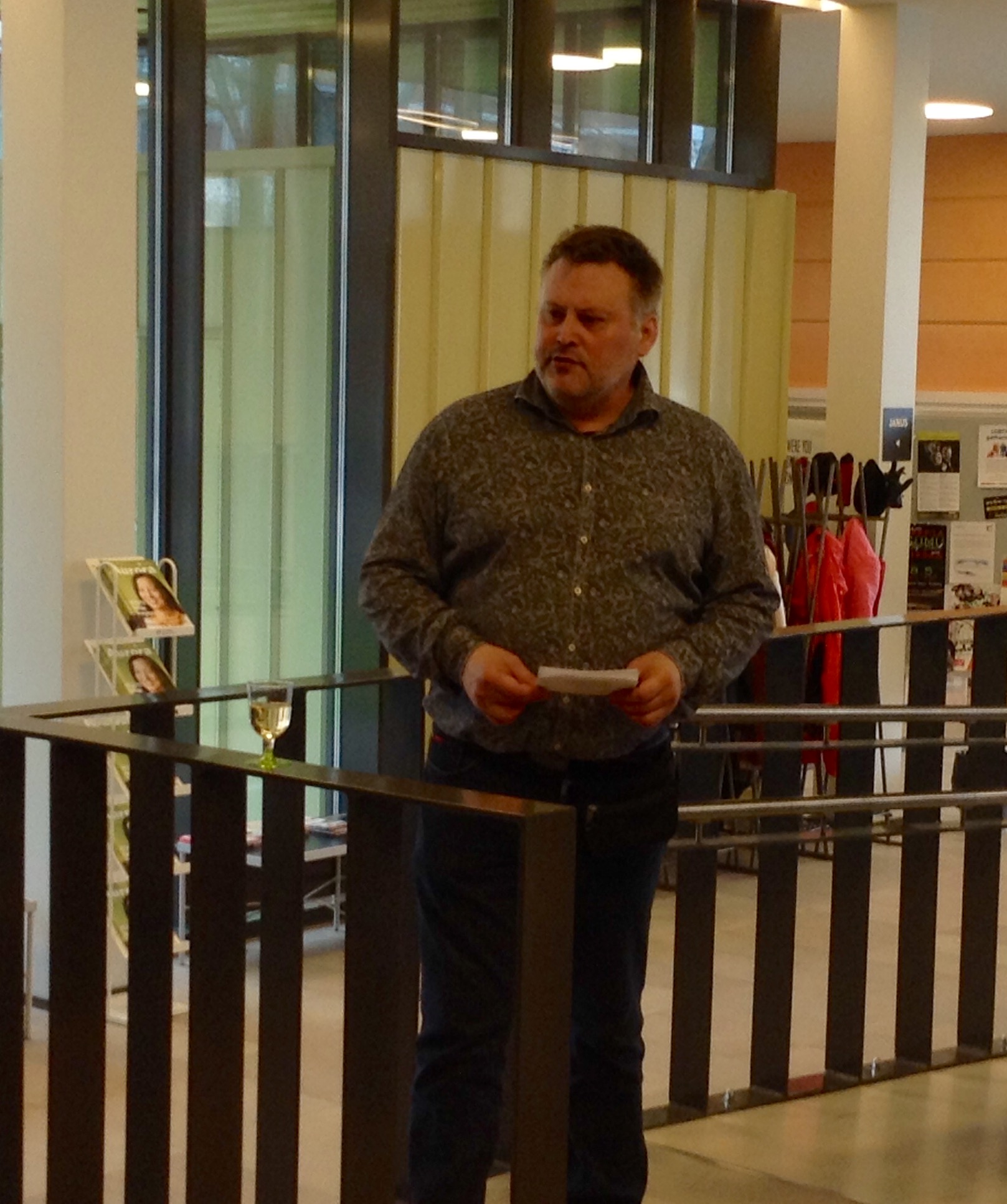
Last week, our department – along with the rest of the world – celebrated Shakespeare as Saturday April 23rd marked the 400th anniversary of the Bard of Avon’s death. Why death, you ask? Well, because we do not know his exact day of birth, and in order to celebrate, we need a date! So, a date with Shakespeare it was on Friday, when the department celebrated with toasts and a jubilee lecture. The merriment began with a toast and a speech by Professor Joel Kuortti, who chronicled some ways in which Shakespeare has figured in his life, culminating in the words of Macbeth: “I drink to the general joy o’ the whole table”.

joelshakespeare

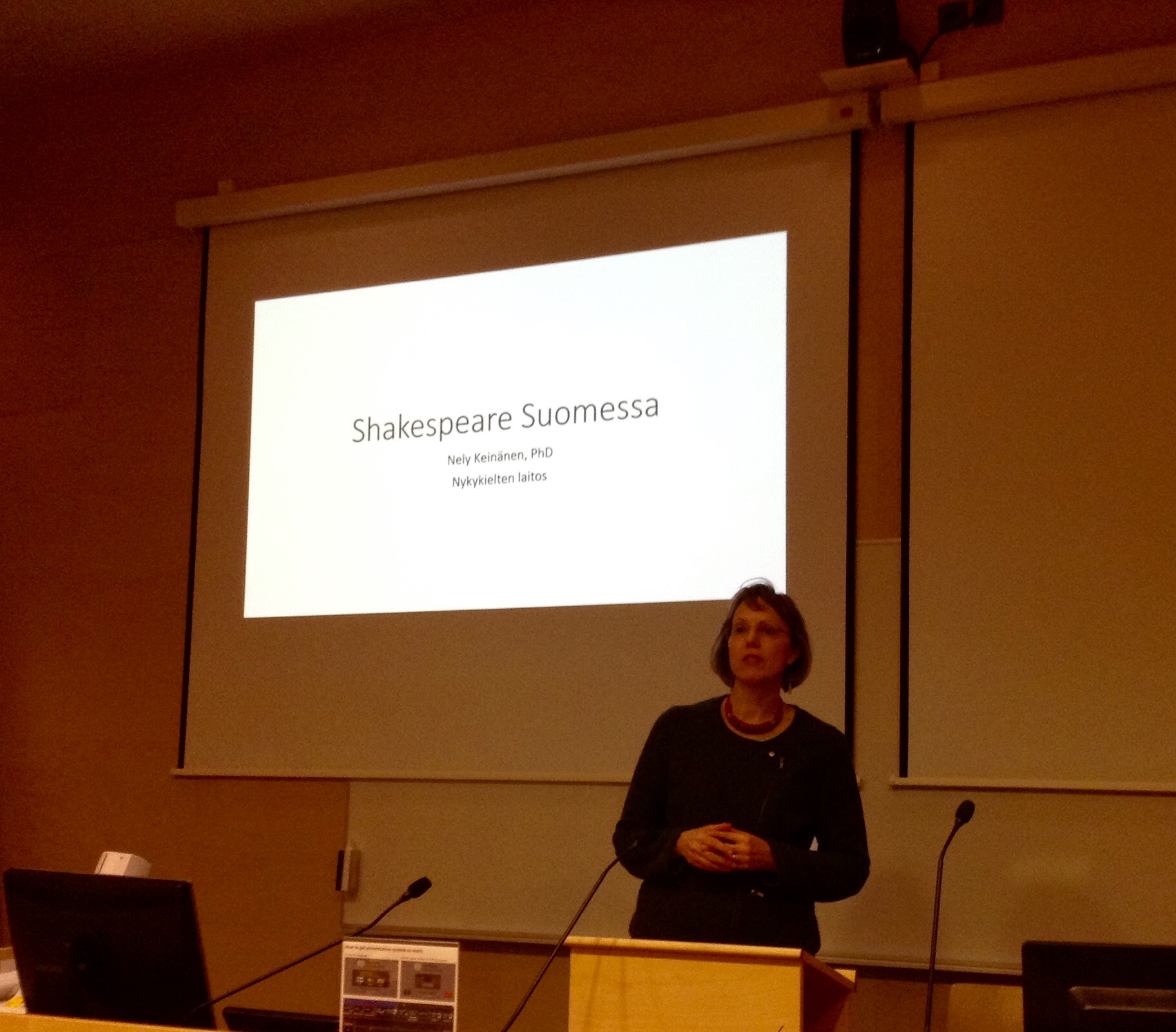
Followed by the toasts, the guest speaker, Helsinki University’s Senior Lecturer, Nely Keinänen gave a fascinating lecture on how Shakespeare’s plays were translated into Finnish and performed in Finland from the 19th century to the present day. We learned about the rich tradition of performing Shakespeare in Finland which interestingly coincided with and helped develop Finnish as a literary language. Translating Shakespeare into Finnish was seen as a great national victory for Finns, who now saw their own language take its place as a proper European language of culture. Shakespeare translations were and are yet another way for us Finns to prove ourselves that we are “most worthy friends” of English, French, and the rest.

nely
Shakespeare, then, was crucial to making Finnish a language of sophistication, culture, and the arts, and our little gathering helped celebrate that fact among others. For a celebration of death, it was a very jolly occasion indeed, marking 400 years of the Bard’s “charmed life”.

Text and photos by Elina Valovirta
Quotes from Macbeth

p.s. Stay tuned for more information on the Faculty of Humanities’ joint Shakespeare 400 lecture course in Q2 next academic year. For more info on Shakespeare festivities in England, go to www.shakespeare400.org.

Seven Wonders of the Frankfurt Book Fair

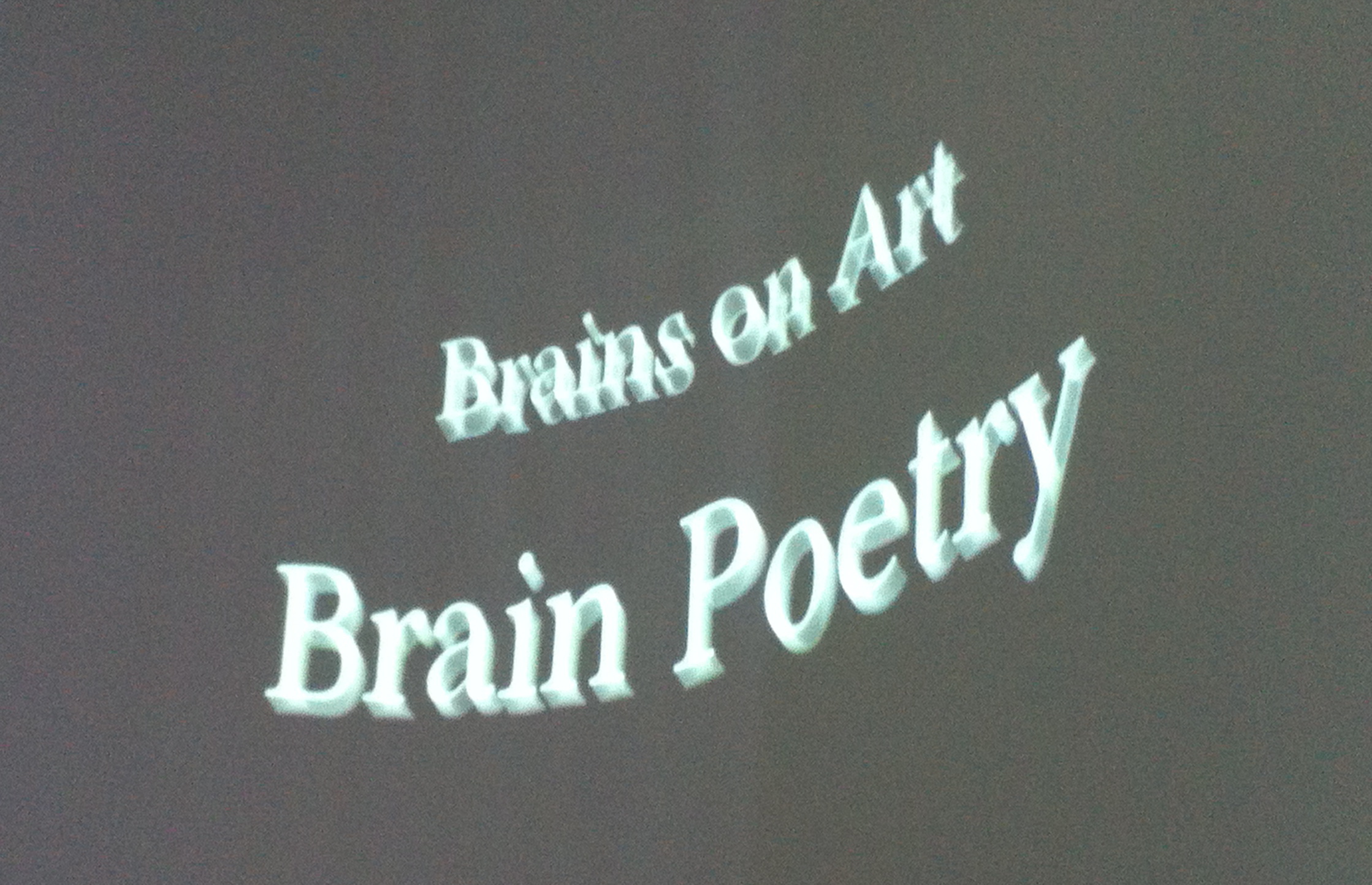
Have you ever considered how brain waves can be transferred into poetry? Don’t worry. The Helsinki-based Brains on Art collective has solved the problem for us. With the help of a tinfoil hat – i.e. a sensor helmet – and computer magic, brain waves create poems. This is first of the wonders I found in the Frankfurt Book Fair 2014 where Finland was the Guest of Honour.
brainpoetry
As I strolled the numerous halls and miles upon miles of corridors, I tried to locate the allure of this world’s greatest book event. The sheer size is the second wonder – 270 000 visitors during five days. There were mini-buses and modern cycle rickshaws to transport you from hall to hall.

Thirdly, I could mention a feature that was very welcome after dragging your feet around for hours. At least in two places there were massage points where you could get a 15-minute neck and shoulder rub for a negotiable fee. Body and soul indeed.

The fourth point is quite unbelievable. I did not buy even one book during my three days in the fair ground. Not due to abstinence but because the event is basically a trade exhibition with very little actual book selling. Business is done between publishers, agents and other book industry representatives.

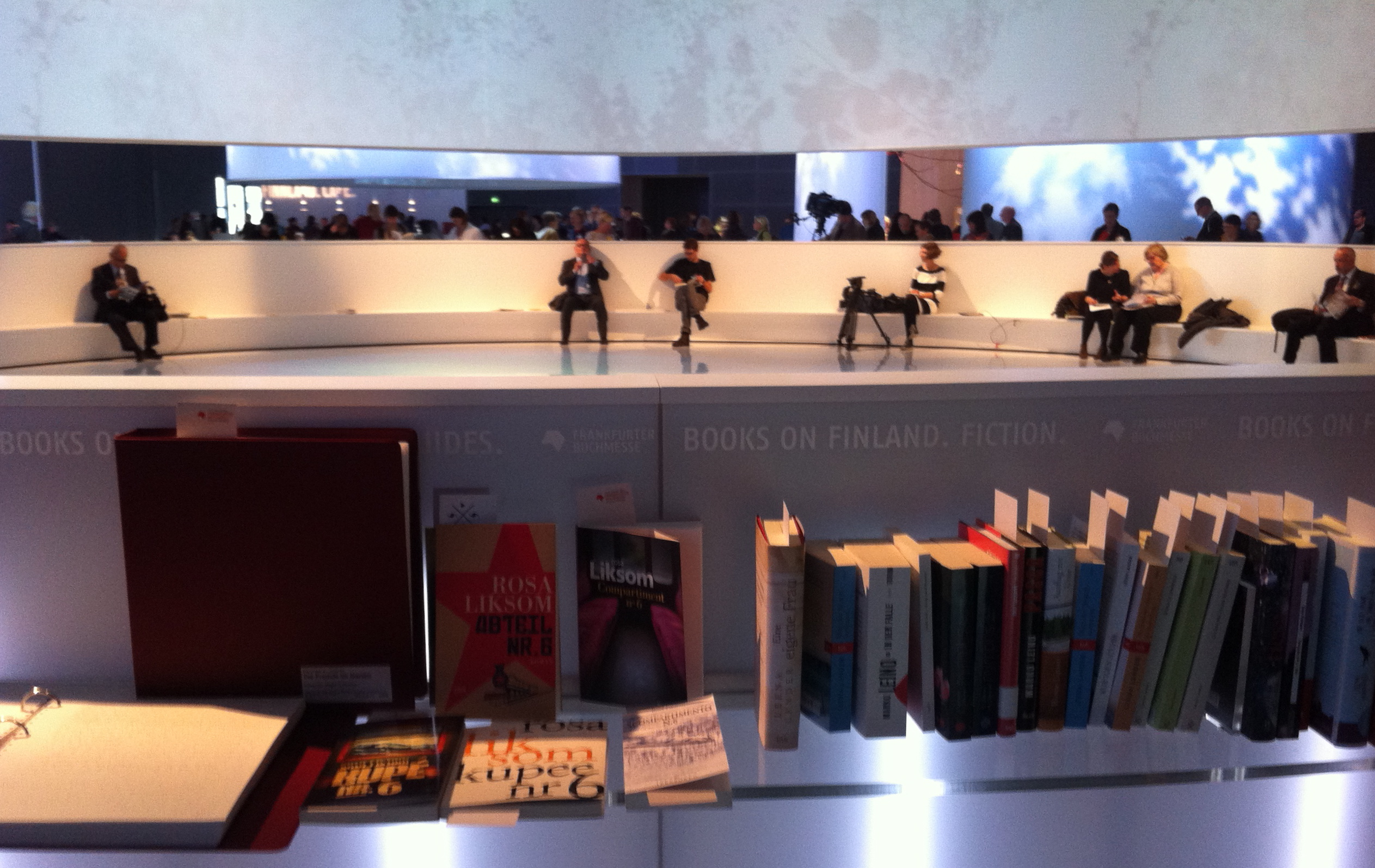
As the fifth wonder, I must mention the extent to which translators and translations were present. This could be seen everywhere but particularly in the Finnland.Cool (yes, that was the motto) Pavilion where the centre sphere displayed nearly a thousand books on Finland and translations of Finnish literature.

frankfurt
As the sixth point, I was very pleased to see that the Helsinki City Library had driven their Mobile Children’s Library bus Skidi to Frankfurt. How cool is that!

The seventh wonder is no doubt book itself. With all the talk about the demise of the traditional format, book seems to be stronger than ever. Evidence to this could be seen in the stalls from all over the world, in any number of languages, in whatever genre, with whichever type of layout.

Oh, and if you want to know how my EEG translated into poetry, here’s the result:

I am waiting weeping watching for Thee
I have not forgotten it thou’lt do me
I have no name
I could lie down like a tired child

(Obviously, the computer cheats, so can you crack this and recognize the original poets/poems?)

Text and photos: Joel Kuortti

”Once upon a Time There Was University: Yliopistoon! To the University!”

Yliopistoon

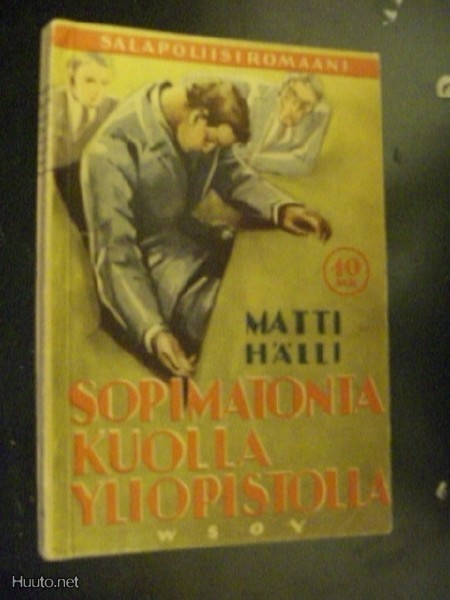
In the summer of 2005, I happened to read a Finnish detective novel by Matti Hälli, titled Sopimatonta kuolla yliopistolla (1943) [It Is Unbecoming to Die at the University]. The text intrigued me so much that I wrote a short piece on it to the University Employee Unions’ magazine, Acatiimi. What was then just an occasional piece has become a long series of texts – still continuing. After 50 articles, it was time to collect the pieces together – with some new material. The result is now a book called Yliopistoon! Kaunokirjallisia kuvauksia akateemisesta maailmasta (Gaudeamus 2013) [To the University! Fictional Accounts of the Academia]. Basically, I deal with novels and poems from the 14th century until the present day in which university, academic environment, and/or student life is in some way represented, lived out.

Halli

What I find most interesting in my explorations into the stories about and around Finnish universities (and a couple of detours into Nordic academic life) is that university life has not changed that much during the centuries. Sure, the physical environment has changed tremendously but the basic need to gain knowledge, the epistemological drive, as well as the requirement to educate students for the purposes of public life, has remained so recognizable throughout the ages.

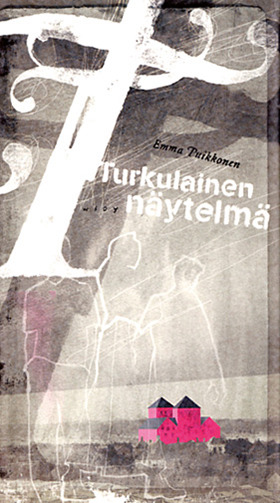
In literary representations of university life, there is no end to murders, love stories, tragedies, parties, money troubles – or even studies. As an example, we can take for example the young writer and dramatist Emma Puikkonen who in her debut novel Turkulainen näytelmä (2001) [A Drama in Turku] combines contemporary student life with a story set in the Turku of 1590s. The protagonist, Nadia, takes part in a play by the Turku Student Theatre: Josef Julius Wecksell’s Daniel Hjort (1862). Nadia calls it the first Finnish tragedy, a Turku version of Hamlet. It is a story of Daniel Hjort and his beloved Sigrid Stålarmintytär, played by Nadia.

Puikkonen

Nadia’s story is about identity crisis, about a Hamlet-type of person (not Ophelia) who is uncertain. She dreams of meeting one of the innumerable young, talented, dark-eyed, and anxious poetry boys Turku teems with. Her aimlessness is amply illustrated in her ride on the föri ferry as she goes back and forth without alighting. She watches the Art Academy students on the other side of the Aura river heading for the old rope factory, and the students of the (then three) universities on the other side cycling up “to the lecture halls and paper smell, the recluse research chambers which breed love for Sartre, bylaws or quantum mechanics” (p. 106).

Nadia’s and Sigrid’s lives get intertwined in the course of the novel in an interesting way. Nadia is not content with the director’s (or the script’s) version of Sigrid as the fragile angel on a pedestal. Nadia and Sigrid know that in the patriarchal world, the young woman always dies, all the more certain the more there is concealed passion. They want to be written differently, to write their own lives.

See also the blog, Café Pour Les Idiots, for a feature on the book in Finnish.
Text and Images: Joel Kuortti