Making sense of historical multiliteracy

On 26 March, the Department of English celebrated over coffee and cake the latest publication of the Early Modern Graphic Literacies (EModGraL) research project: an edited peer-reviewed volume entitled Graphic Practices and Literacies in the History of English. The 350-page book is published by the Belgium-based international academic publisher Brepols and edited by Matti Peikola, Jukka Tyrkkö and Mari-Liisa Varila. The chapter authors come from Estonia, Finland, the Netherlands, Norway, Spain, Sweden, Switzerland, UK and USA. They include Aino Liira, Matti Peikola, Janne Skaffari, Hanna Salmi and Mari-Liisa Varila from the Department of English at the University of Turku.  
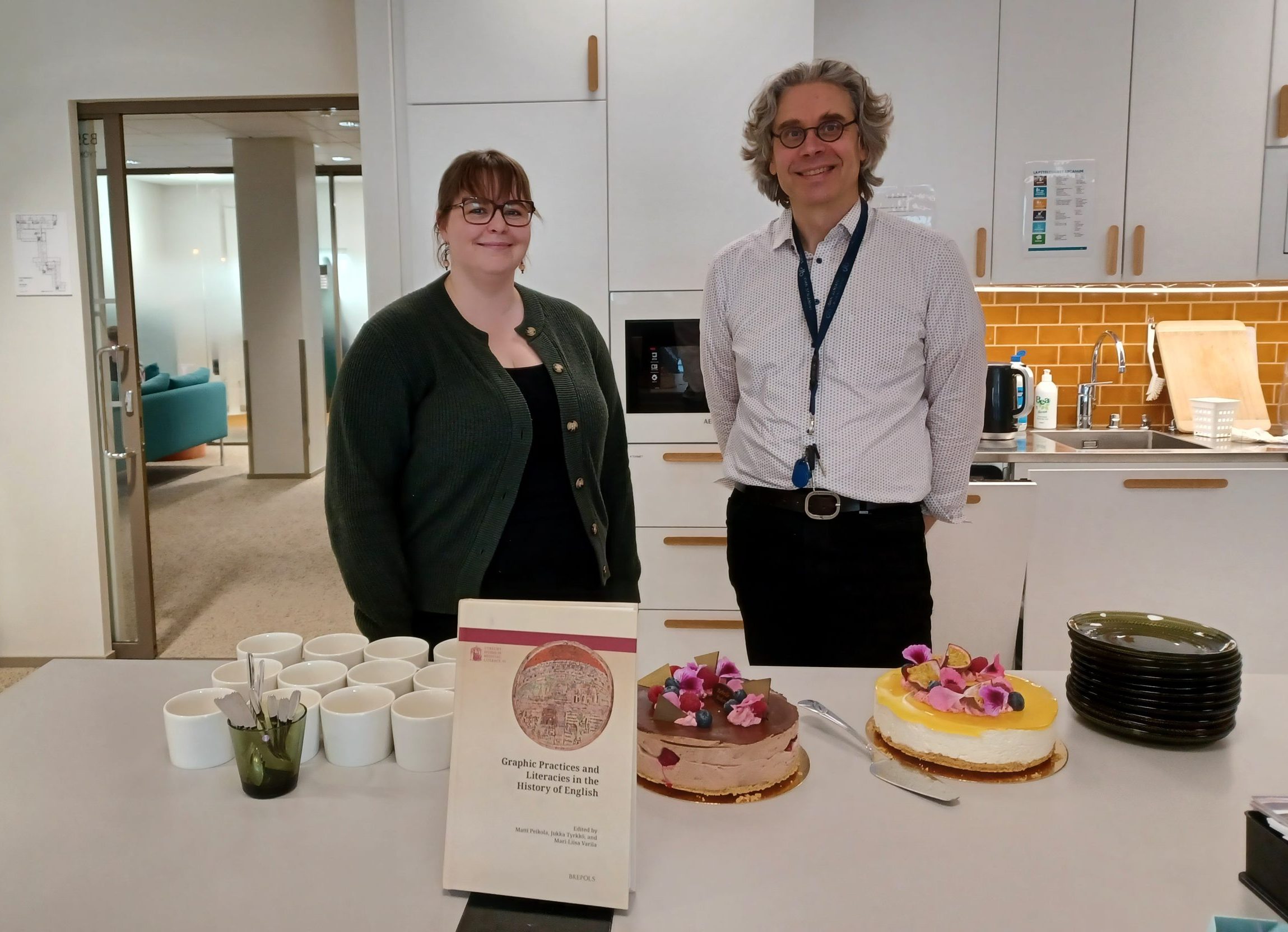
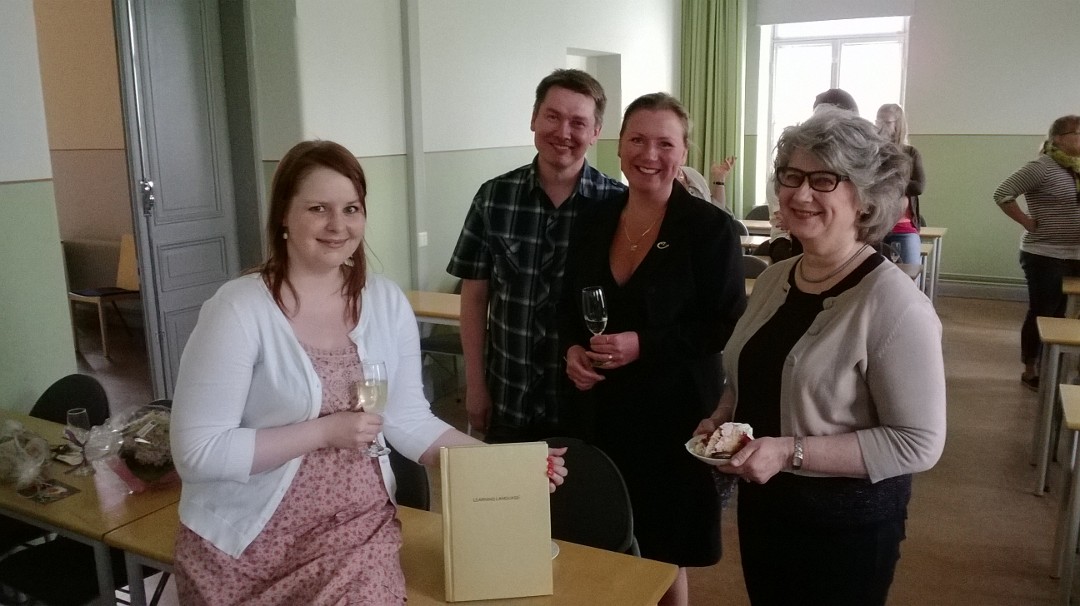
Editors Mari-Liisa Varila and Matti Peikola celebrated the publication of their new book, ‘Graphic Practices and Literacies in the History of English’, over coffee and cake.

Work towards the book started already in 2021 with the workshop ‘Graphic literacy in the history of English’ that we organised in the 21st International Conference on English Historical Linguistics (ICEHL) in Leiden – or, more precisely, in a virtual conference space provided by the University of Leiden during the COVID-19 restrictions. At the time of the conference, EModGraL had not yet started, but we had already received the great news about our four-year funding from the Research Council of Finland. This allowed us to plan the book thematically as a project publication from the start. 

A potential reader who comes across the book in the Utrecht Studies in Medieval Literacy series (vol. 61) might think that it focuses on the Middle Ages. The chronological range of the contributions, however, spans from the fourteenth to the eighteenth century. In addition to Middle English, also Early and Late Modern English materials are discussed in the volume with regard to their graphic practices and literacies. It was important for us to find a publishing series that would allow us to foreground themes that run across the chapters without requiring us to confine ourselves to a specific historical period or a specific medium like manuscript or print. We are grateful to Professor Marco Mostert for providing us with a place in his renowned Utrecht series. 

Like the whole EModGraL project, also the new book starts from the premise that graphic features of communication (such as tables or diagrams) require literacy skills and competencies that differ from the reading of ‘monomodal’ verbal text. In the context of the project and the book, we are particularly interested in finding out how and for what purposes graphic features of communication were historically used in texts targeted at English-language readers. We also want to see how readers were instructed in these graphic practices and in the acquisition of the literacy skills they entail. In addition to finding out more about the history of multimodal communication in English, our research also targets the early history of data visualisation in a vernacular context. At the same time, we also learn more about how various graphic practices were instrumental in the transmission of information and the construction of knowledge in late medieval and early modern English books. 

The new volume may be placed under the broad umbrella of historical pragmatics, a developing and expanding multidisciplinary field. The book has two main parts plus an introductory chapter by the editors and an afterword by Professor Emeritus Jeremy J. Smith (University of Glasgow). Part I (five chapters) addresses graphic features of text that in various ways contribute to the construction of meaning and the organisation of information on the page, such as layout, colour, punctuation and abbreviations. Part II (six chapters) focuses on the use of specific graphic devices like tables, diagrams and representative images. Overall, the chapters examine an impressive range of primary sources of different domains: medical texts, history writing, instructive and didactic texts, administrative accounts and letter-writing.  

Those interested in the topic area of this book are warmly welcome to attend the Reading Visual Devices in Early Books conference organised by the EModGraL project on 22–24 May 2025 in Turku. For further information about the programme and registration, please see https://blogit.utu.fi/emodgral/events/. 

Text by Matti Peikola 

Photo by Teppo Jakonen 
Soup with Paul Auster


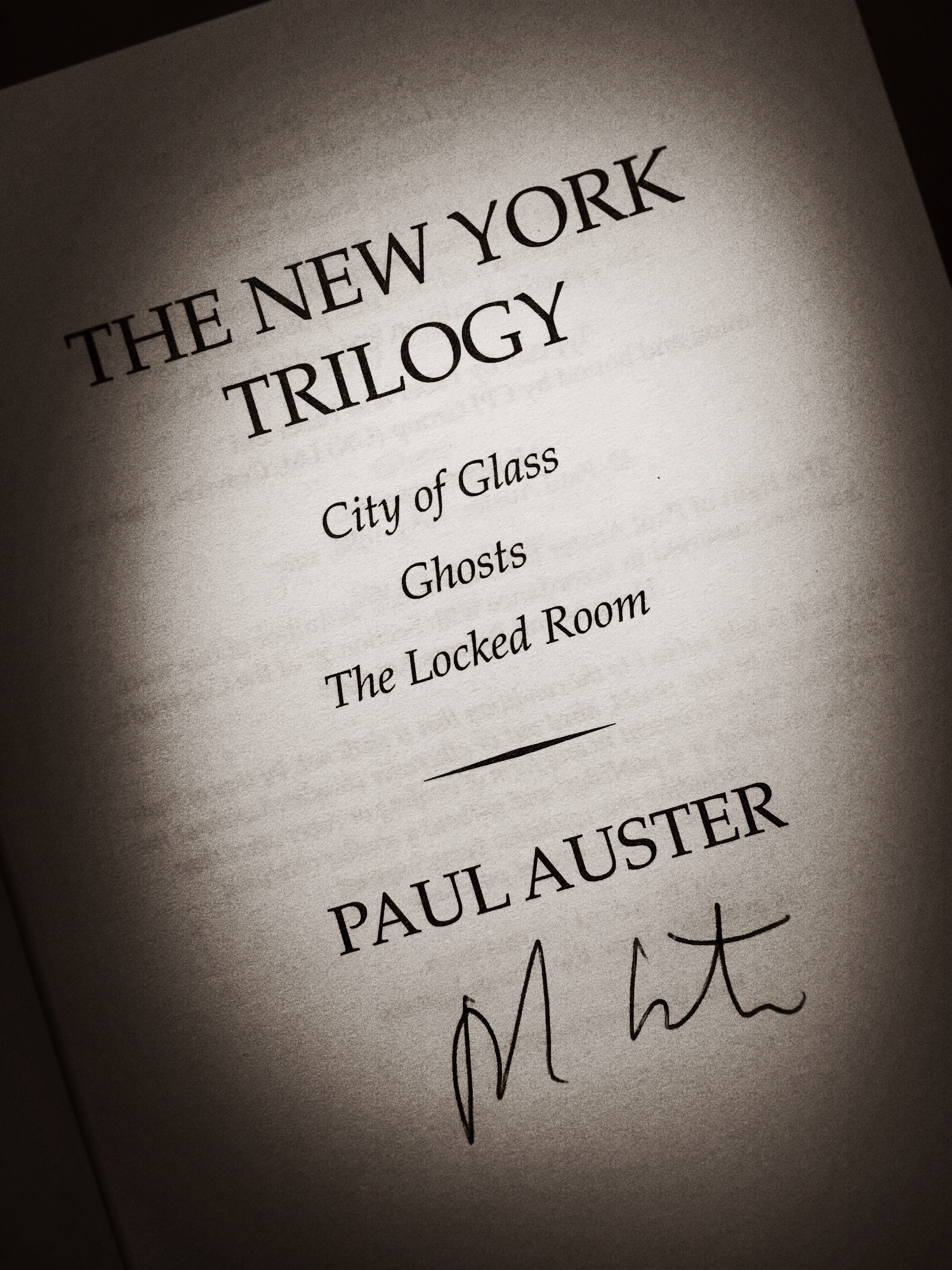
There is something surreal about eating the same soup as Paul Auster. All of a sudden, the intangible, enigmatic, almost disembodied author, whose books I read, whose films I watch and whose activities I follow in the media, is scooping mashed potatoes (and soup) on his plate (not the one that had the soup) at the “grubby little place” (his words, not mine) next to the House of the Estates in Helsinki and ranting enthusiastically about Beckett. Such encounters are, of course, one of the somewhat nerve-racking benefits of studying a living author.

At the turn of August and September 2017, the Finnish Society of Sciences and Letters organized a two-day seminar in honour of Finland’s centenary, titled Open Windows: Democracy, Censorship, Literature. As an avid defender of freedom of expression, a former Vice President of PEN America (2005-2007) and a member of its Board of Trustees (2004-2009), Paul Auster was a most suitable guest of honour.

The seminar begun with Professor Bo Pettersson interviewing Auster on, among other things, his latest novel 4 3 2 1. What struck me the most was the calm yet enthusiastic way Auster approached every question, the passion with which he engaged his work and life in general, the way his speech flowed as eloquently as his writing. I hadn’t really thought what he would be like, but in hindsight, he could not have been more Paul Auster.

The seminar continued with Auster reading passages from 4 3 2 1, but unfortunately he could not stay for the rest of the first day’s presentations. The five or so days he spent in Finland were packed with interviews and other engagements, and he further claimed that the one-month-nine-countries tour would be his last of the kind.


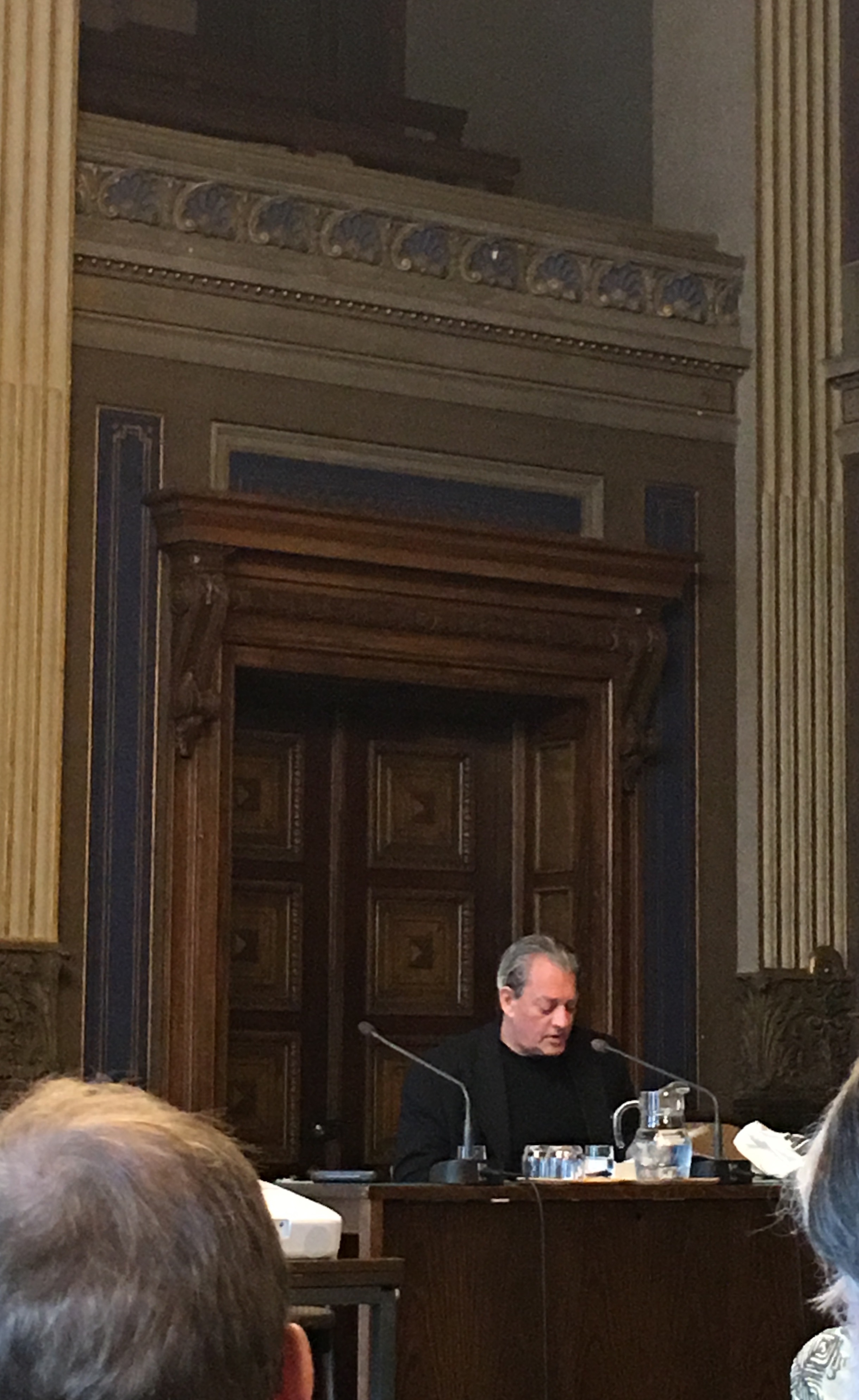
Auster did, however, return on the second day for a panel with the Finnish author Sirpa Kähkönen, pictured above with Auster. Towards the end of the discussion, Auster remarked along these lines:

      Writing a novel is a political act, even if the writer is not conscious of it. Novels are about ordinary lives; authors get to enter the lives of the most ordinary people in the most intimate ways. Literature and writing are, therefore, democratic acts, because even the smallest of lives matter. Literature is a defence against tyranny; in connecting the reader with those who are not yourself, literature creates and teaches empathy. Novels are democracy in action.

This manifesto was accompanied by applause, and I’m sure I witnessed a few in the audience discreetly dab tears from the corners of their eyes.

Text and photos by Ira Hansen

How languages are learnt

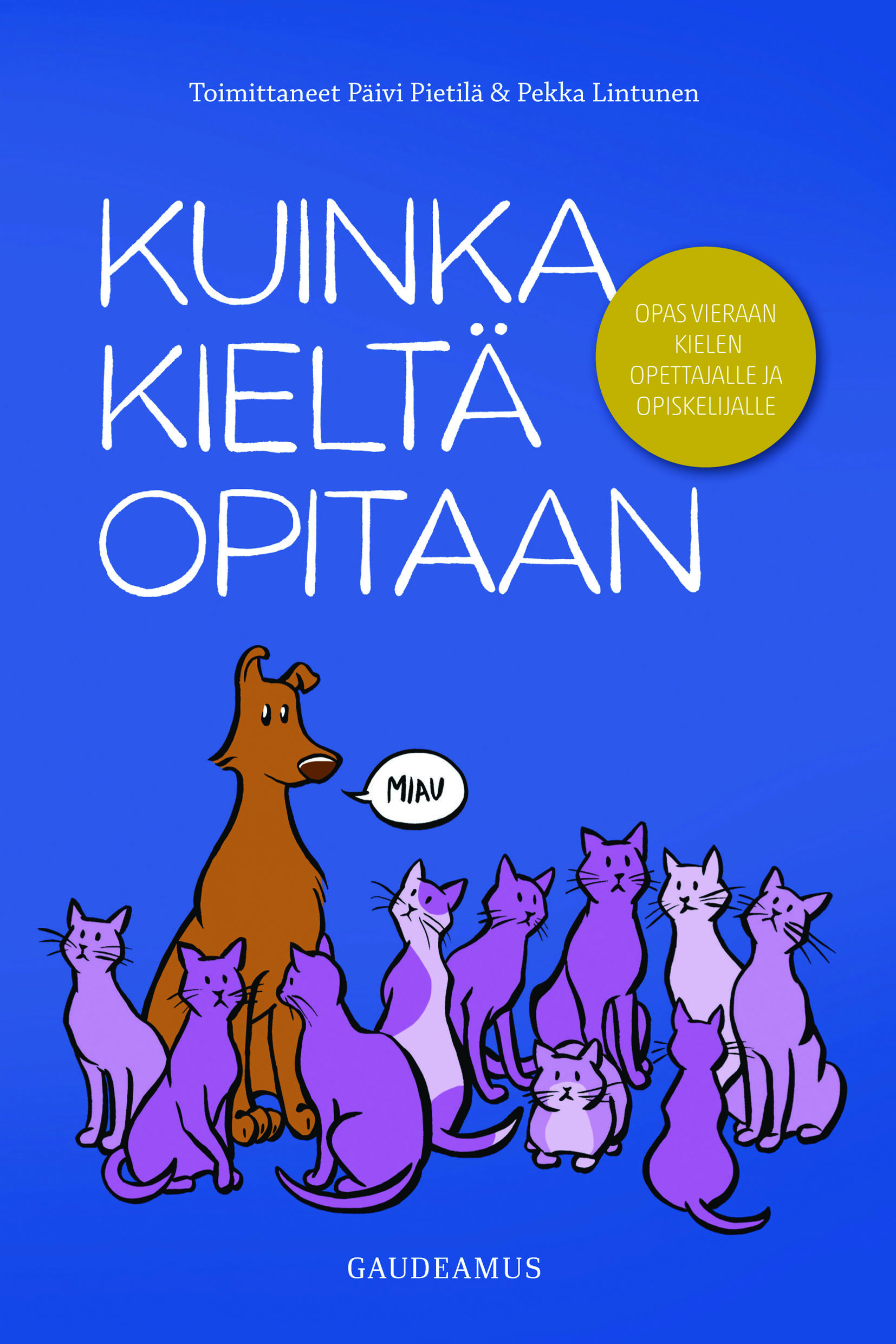
It’s Christmas in September for anyone interested in language learning and teaching! A few years ago, the Department of English was actively involved in a popular course Language Teaching and Learning, which was a team-taught course for language and education majors. We are happy to announce that the contents of this course have now been published as an up-to-date book textbook. This is a textbook in Finnish with a target audience of teachers, students considering a teaching career and anyone generally interested in language learning and teaching.
KKO
The new book Kuinka kieltä opitaan: opas vieraan kielen opettajalle ja opiskelijalle (published by Gaudeamus) was edited by Päivi Pietilä and Pekka Lintunen. The authors come from the University of Turku and Helsinki and represent didactics and different language departments.

The chapters discuss the nature of language skills, learners’ individual differences, theories of language learning and methods of language teaching. There are separate chapters on the teaching and learning of grammar, vocabulary and pronunciation of a foreign language. The book also includes a chapter on the role of culture in language teaching and, as a final chapter, an introduction to language assessment.

Turku University and the Department of English have always been active in teacher education and language learning research. Nowadays researchers are also encouraged to publish in Finnish and with a wide target audience in mind. After all, societal interaction is, in addition to research and teaching, a key function of a Finnish university. The new publication is a way to distribute the latest theories and research findings in a reader-friendly format.

The book includes reflective tasks after each chapter to help the readers in their own learning process and a lengthy list of references for the more research-oriented readers. And if September is too early for you, you can always add the book into your Christmas wish list.

Text by Pekka Lintunen
Editors’ photo by Outi Kitti/Gaudeamus.Kielenopettajat_Kuva_Gaudeamus_RGB
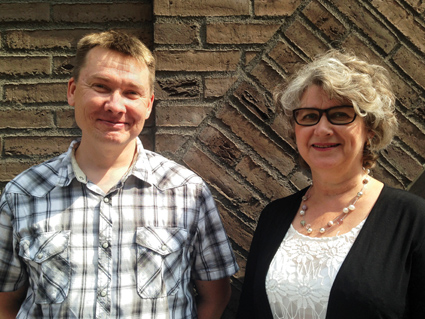
The book’s co-editors, Pekka Lintunen and Päivi Pietilä.

Festschrifts and academic festivities

One catch-phrase nowadays is that universities are dynamic. Indeed, there are many changes going on during each academic year. But there are also traditions that are valued by the academic community. For instance, the academic year has the opening ceremony in September and the graduation ceremony, publiikki, in June where new MAs are celebrated. In addition, professors give inaugural lectures when they are appointed. They also give a valedictory address when they retire as we have seen this spring with our Professor Risto Hiltunen (see earlier post)

.

Another academic tradition that the English department is following this year is that of a Festschrift. Festschrifts are commonly collections of articles published to honour a professor’s (or another academic’s) birthday or retirement. You can often recognise these when the name of a book says, for example, “essays in honour of”. When Festschrifts are published as books, they usually contain articles by the closest colleagues, collaborators and former doctoral students of the honouree. It is also common that the books are thematic and related to the honouree’s research interests. They may also include a biographical note and a tabula gratulatoria, which is a list of academic friends and colleagues who wish to congratulate the honouree.


A large part of universities’ funding is based on the publications we produce. After all, university teaching is based on research, and professors and lecturers are also active researchers. For funding reasons, it is better to publish articles in refereed journals. This means that many Festschrifts have also changed into a different format. Journals and publishers sometimes allow Festschrifts to be published in their series.

This year, we have the pleasure to publish another Festschrift, this time to honour Professor Päivi Pietilä. The theme is language learning, which is approached from many perspectives in the ten articles in the collection. The collection is a special issue in the AFinLA-e publication series and available for free here. Importantly, the Festschrift is a surprise gift to the honouree, so if you sense an air of secrecy and whispers along the corridors, chances are there is a Festschrift in the works. This time, the secret was luckily preserved until the end; to celebrate Päivi’s milestone in life, the editors gave her the manuscript as a bound golden thesis. With this publication, we want to congratulate Päivi and offer those interested in language learning many inspiring new studies to read.

V__570A
The editors of the journal special issue, Pekka Lintunen, Maija S. Peltola & Mari-Liisa Varila with Professor Päivi Pietilä, the Festschrift honouree.

Text: Pekka Lintunen
Photo: Janne Skaffari

”Once upon a Time There Was University: Yliopistoon! To the University!”

Yliopistoon

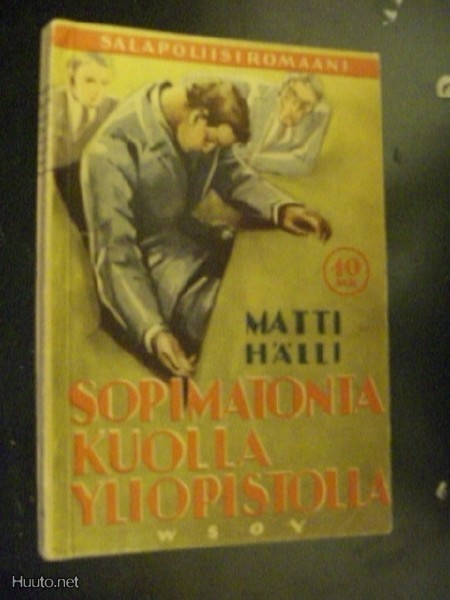
In the summer of 2005, I happened to read a Finnish detective novel by Matti Hälli, titled Sopimatonta kuolla yliopistolla (1943) [It Is Unbecoming to Die at the University]. The text intrigued me so much that I wrote a short piece on it to the University Employee Unions’ magazine, Acatiimi. What was then just an occasional piece has become a long series of texts – still continuing. After 50 articles, it was time to collect the pieces together – with some new material. The result is now a book called Yliopistoon! Kaunokirjallisia kuvauksia akateemisesta maailmasta (Gaudeamus 2013) [To the University! Fictional Accounts of the Academia]. Basically, I deal with novels and poems from the 14th century until the present day in which university, academic environment, and/or student life is in some way represented, lived out.

Halli

What I find most interesting in my explorations into the stories about and around Finnish universities (and a couple of detours into Nordic academic life) is that university life has not changed that much during the centuries. Sure, the physical environment has changed tremendously but the basic need to gain knowledge, the epistemological drive, as well as the requirement to educate students for the purposes of public life, has remained so recognizable throughout the ages.

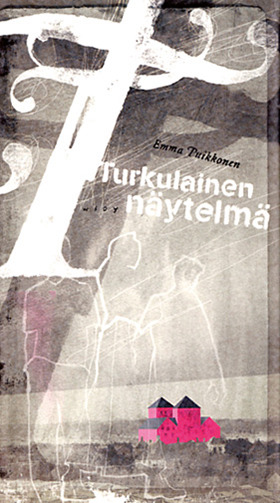
In literary representations of university life, there is no end to murders, love stories, tragedies, parties, money troubles – or even studies. As an example, we can take for example the young writer and dramatist Emma Puikkonen who in her debut novel Turkulainen näytelmä (2001) [A Drama in Turku] combines contemporary student life with a story set in the Turku of 1590s. The protagonist, Nadia, takes part in a play by the Turku Student Theatre: Josef Julius Wecksell’s Daniel Hjort (1862). Nadia calls it the first Finnish tragedy, a Turku version of Hamlet. It is a story of Daniel Hjort and his beloved Sigrid Stålarmintytär, played by Nadia.

Puikkonen

Nadia’s story is about identity crisis, about a Hamlet-type of person (not Ophelia) who is uncertain. She dreams of meeting one of the innumerable young, talented, dark-eyed, and anxious poetry boys Turku teems with. Her aimlessness is amply illustrated in her ride on the föri ferry as she goes back and forth without alighting. She watches the Art Academy students on the other side of the Aura river heading for the old rope factory, and the students of the (then three) universities on the other side cycling up “to the lecture halls and paper smell, the recluse research chambers which breed love for Sartre, bylaws or quantum mechanics” (p. 106).

Nadia’s and Sigrid’s lives get intertwined in the course of the novel in an interesting way. Nadia is not content with the director’s (or the script’s) version of Sigrid as the fragile angel on a pedestal. Nadia and Sigrid know that in the patriarchal world, the young woman always dies, all the more certain the more there is concealed passion. They want to be written differently, to write their own lives.

See also the blog, Café Pour Les Idiots, for a feature on the book in Finnish.
Text and Images: Joel Kuortti