Soup with Paul Auster


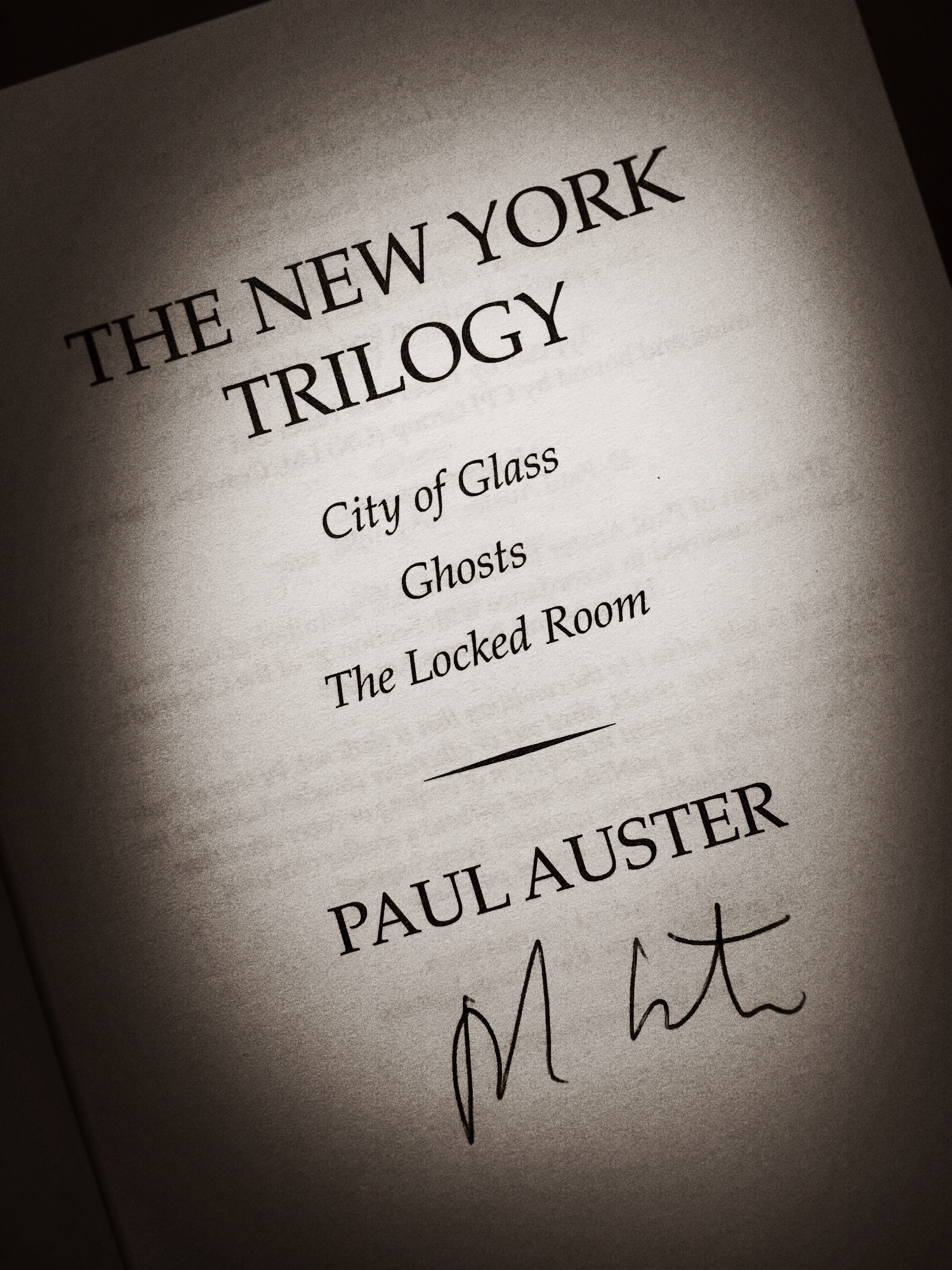
There is something surreal about eating the same soup as Paul Auster. All of a sudden, the intangible, enigmatic, almost disembodied author, whose books I read, whose films I watch and whose activities I follow in the media, is scooping mashed potatoes (and soup) on his plate (not the one that had the soup) at the “grubby little place” (his words, not mine) next to the House of the Estates in Helsinki and ranting enthusiastically about Beckett. Such encounters are, of course, one of the somewhat nerve-racking benefits of studying a living author.

At the turn of August and September 2017, the Finnish Society of Sciences and Letters organized a two-day seminar in honour of Finland’s centenary, titled Open Windows: Democracy, Censorship, Literature. As an avid defender of freedom of expression, a former Vice President of PEN America (2005-2007) and a member of its Board of Trustees (2004-2009), Paul Auster was a most suitable guest of honour.
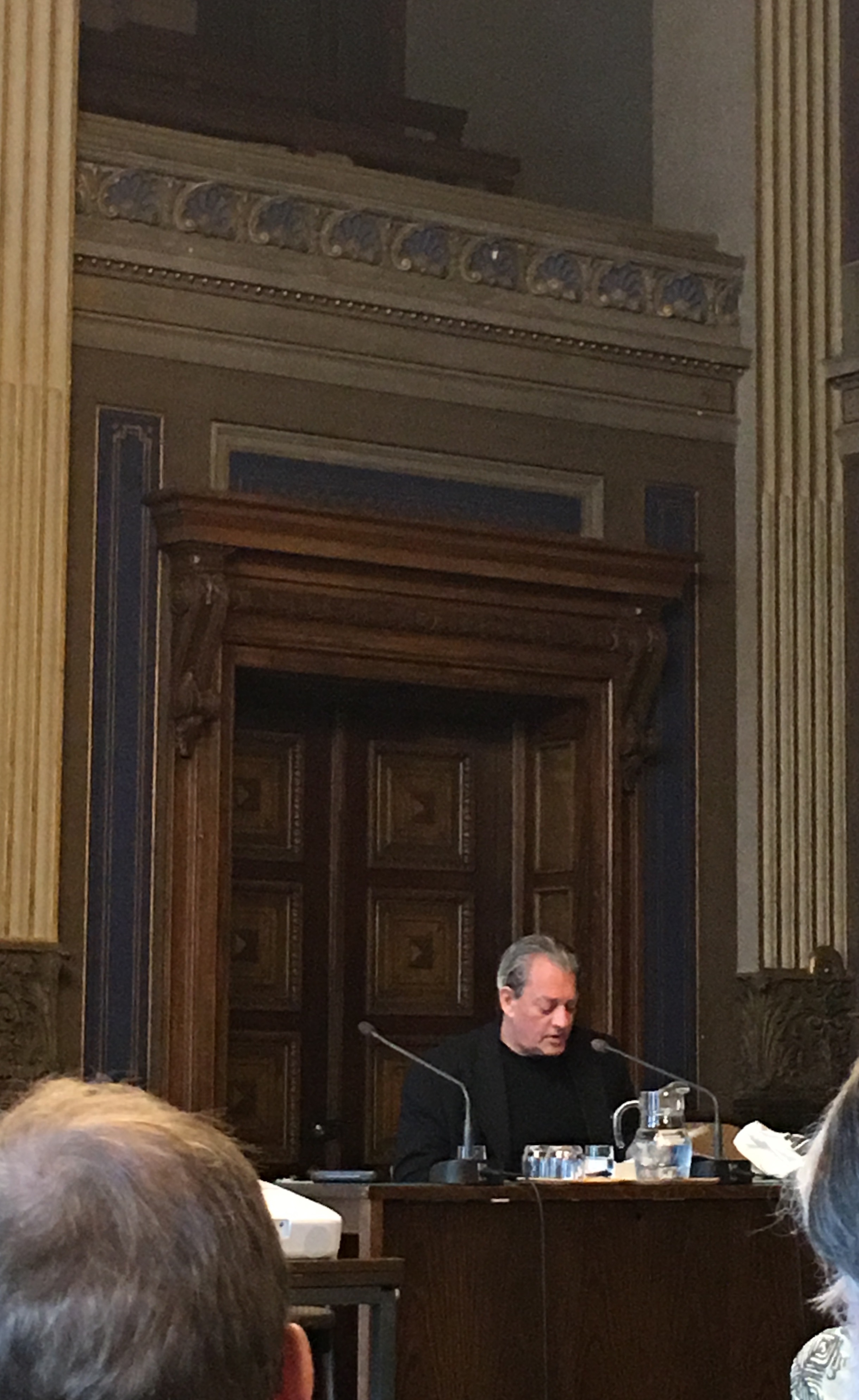
The seminar begun with Professor Bo Pettersson interviewing Auster on, among other things, his latest novel 4 3 2 1. What struck me the most was the calm yet enthusiastic way Auster approached every question, the passion with which he engaged his work and life in general, the way his speech flowed as eloquently as his writing. I hadn’t really thought what he would be like, but in hindsight, he could not have been more Paul Auster.

The seminar continued with Auster reading passages from 4 3 2 1, but unfortunately he could not stay for the rest of the first day’s presentations. The five or so days he spent in Finland were packed with interviews and other engagements, and he further claimed that the one-month-nine-countries tour would be his last of the kind.


Auster did, however, return on the second day for a panel with the Finnish author Sirpa Kähkönen, pictured above with Auster. Towards the end of the discussion, Auster remarked along these lines:

      Writing a novel is a political act, even if the writer is not conscious of it. Novels are about ordinary lives; authors get to enter the lives of the most ordinary people in the most intimate ways. Literature and writing are, therefore, democratic acts, because even the smallest of lives matter. Literature is a defence against tyranny; in connecting the reader with those who are not yourself, literature creates and teaches empathy. Novels are democracy in action.

This manifesto was accompanied by applause, and I’m sure I witnessed a few in the audience discreetly dab tears from the corners of their eyes.

Text and photos by Ira Hansen
Bridging North America: Inauguration of the John Morton Center

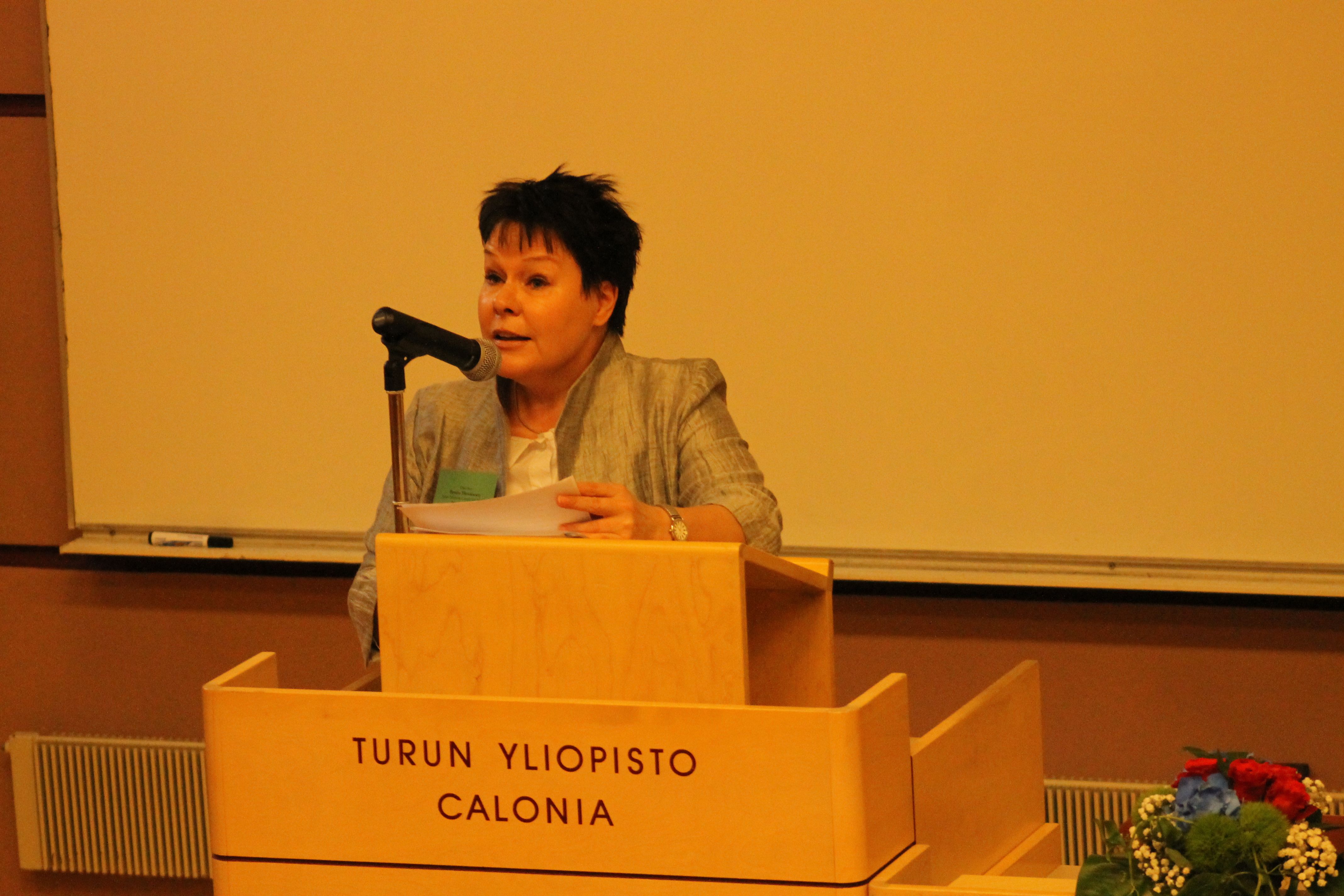
The recently launched John Morton Center for North American Studies held its inaugural event on Tuesday, April 29, in the University of Turku’s Calonia building. The Center’s new director and powerhouse Benita Heiskanen did not rest on her laurels in starting the center’s activities: in the past three months she has already, with the help of Co-ordinator Johanna Leinonen and Intern Malla Lehtonen, launched the center’s series of Current Events seminars, website, blog, expert directory, and announced an international conference to take place in August this year. The inaugural event followed suit the center’s dynamic start, as present at the event were everyone from the university’s past and present Rectors, Keijo Virtanen and Kalervo Väänänen, Turku city representatives, to notable members of the public sector. Video greetings were given by all embassies related to the field of study (United States, Canada, and Mexico). Bruce Oreck’s speech was shot in the US embassy’s John Morton room in honour of the center’s namesake.

heiskanen

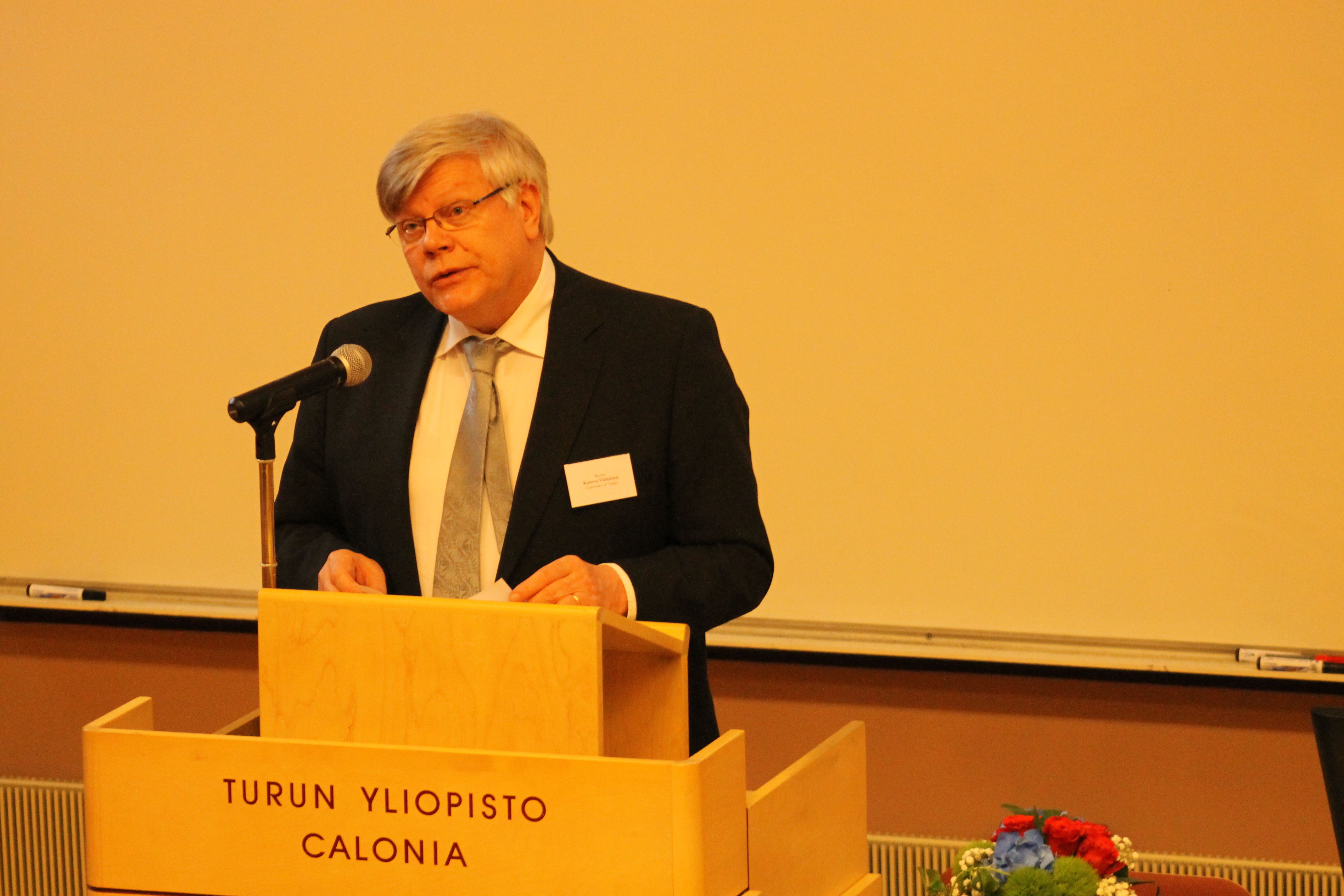
In his opening words Rector Kalervo Väänänen stressed the importance of understanding foreign languages, cultures, and societies, and extended his warmest wishes for the center’s success and thanked its founders, in particular, the Rector Emeritus, Keijo Virtanen, for their efforts in establishing the center. Virtanen continued with a brief history of JMC’s coming into being, chronicling the need and desire for a center dedicated to the promotion of North American Studies with intricate links to the public sector. Chairman Jukka Valtasaari of the League of Finnish-American Societies thanked the university for securing initial funding for the center, and further elaborated on the “founding fathers'” effort to start the center.

rector

The North American Connections panel was chaired by the Head of School, Professor Henri Vogt, where, first, Professor Katri Sieberg discussed economic reasons for some of the structural differences and similarities between US and Finnish societies, using her project on analyzing drug crime from an economics perspective as an example. Furthermore, Dr Sarri Vuorisalo-Tiitinen gave her take on cultural connections between Mexico, USA, and Canada, and stressed culture as a process rather than an essence. The panel was concluded by Professor Markku Henriksson, who reminded the audience of the cross- and multidisciplinary nature of North American Studies and called for a generalist’s knowledge and methodological multitalent as well as awareness of current events (like milk price!) as important facets of a scholar’s competence. Finally, he compared JMC to a flower, where its petals represent all the different individuals and institutions brought together by the centre itself. The flower, now budding, needs to be watered and cultivated with care in order to flourish.

guthrie
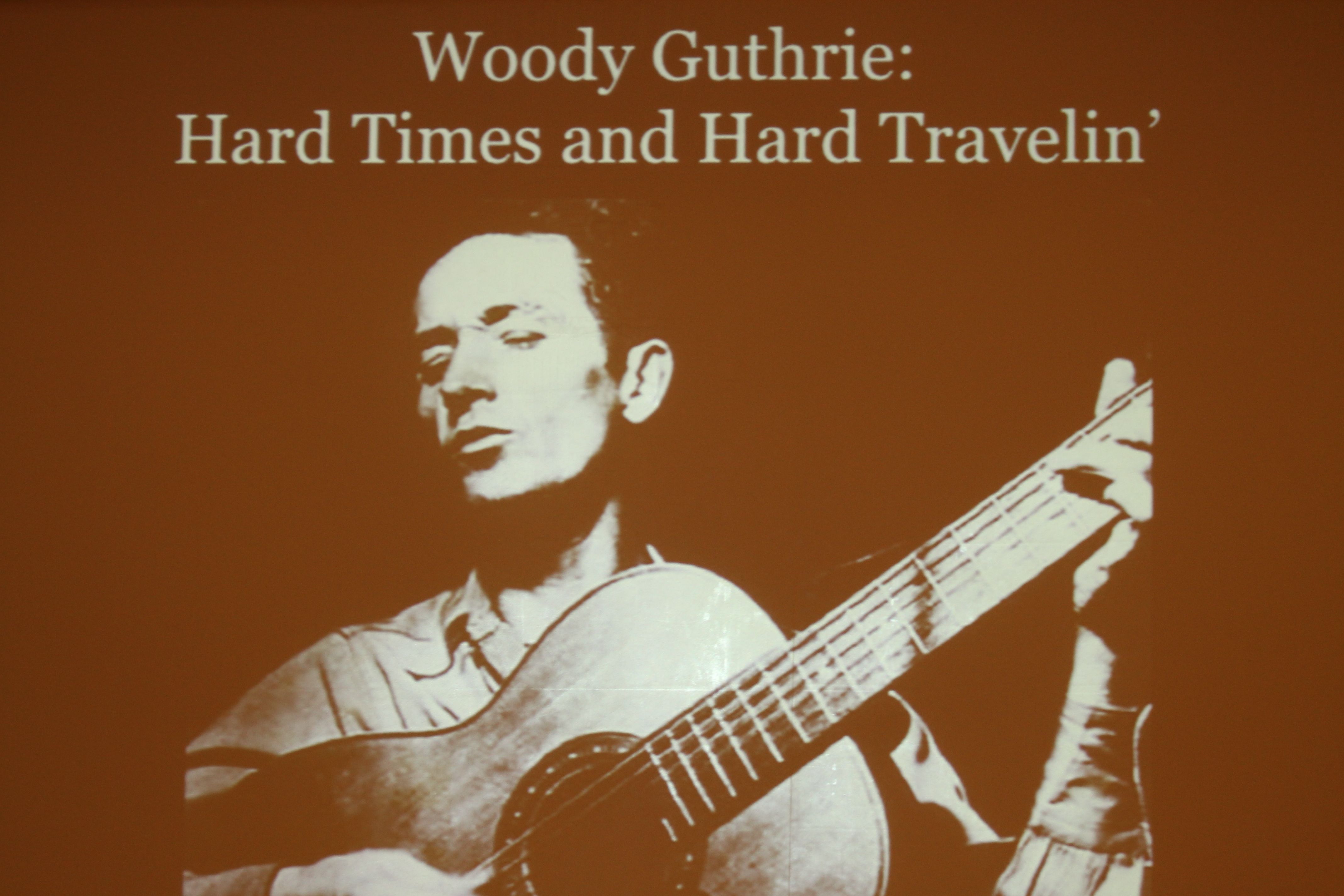
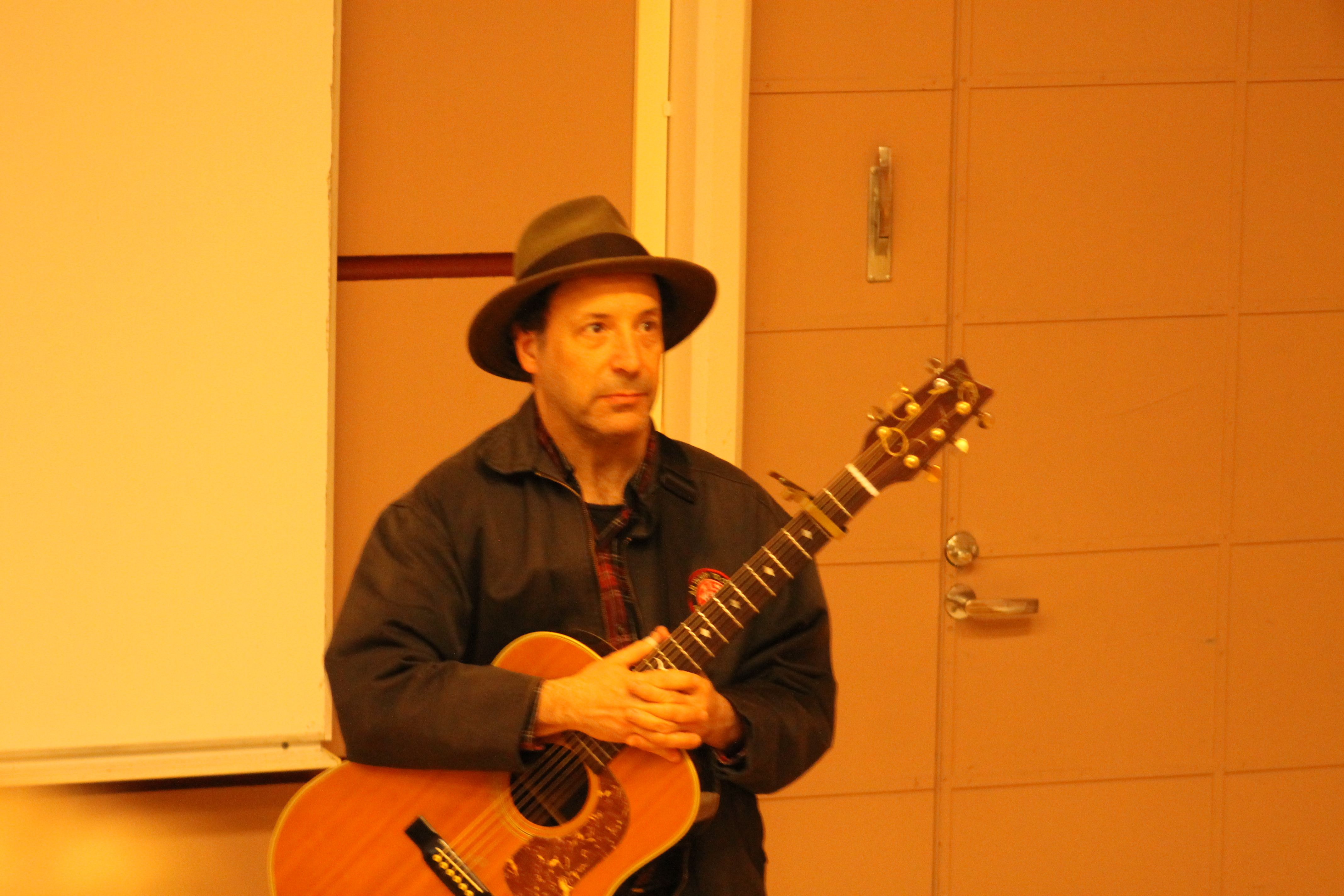
The day’s cultural highlight was the live documentary show on the legendary American singer, Woody Guthrie, presented by Professor Will Kaufman of the University of Central Lancashire, England. The singer and activist, Guthrie, drew some of his song topics from the 1930s depression and dustbowl migration to California, and the tent camps which he visited frequently played a part in making him a social activist. Kaufman’s storytelling captivated, while his renditions of Guthrie’s iconic songs moved as well as entertained. The show ended with Guthrie’s most famous song, This Land Is Your Land, which in Kaufman’s magnificent version highlighted the disillusioned, anti-capitalist message of the now classic American singalong song.

kaufman

The evening was concluded by a drinks reception on campus followed by the inaugural dinner at Samppalinna restaurant, where attendees continued to celebrate the future and continued success of the JMC.

Text: Elina Valovirta
Photos: Joel Kuortti