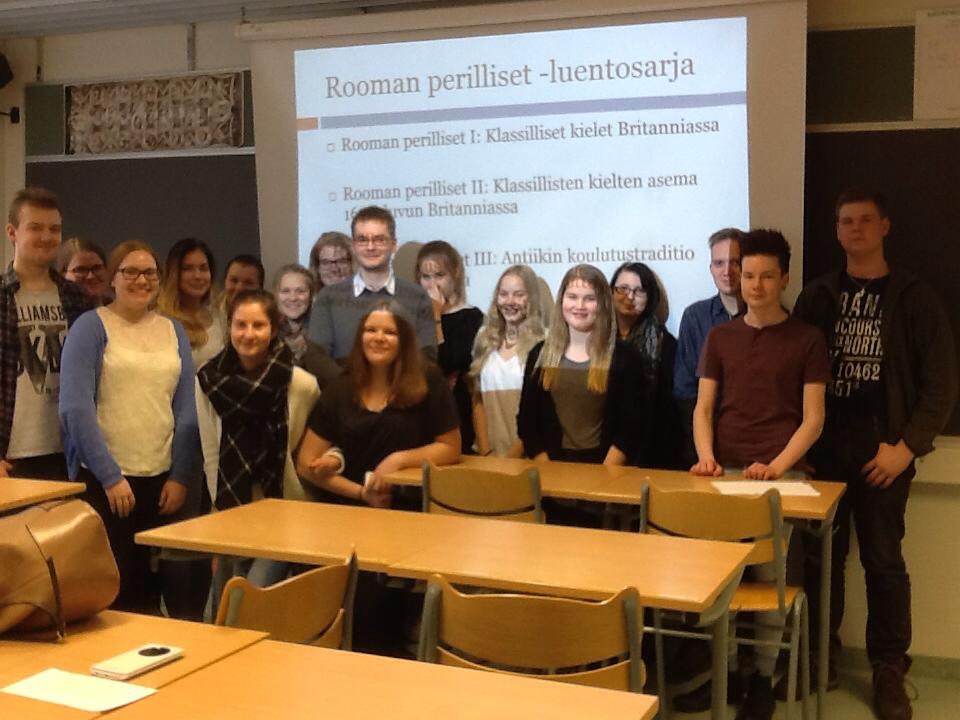
During the academic year of 2022-2023, the English Department and the Centre for Language Learning Research (Leala) have had the pleasure of hosting a national in-service teacher training module for second or foreign language (L2) teachers in Finland. We named this module SuSuKi, which stands for Sujuvuutta suulliseen kielitaitoon (roughly translated as “making oral language skills more fluent”), and we focused on the learning, teaching and assessment of oral language skills. The module has been funded by the Finnish National Agency for Education, and the training has been led by Professor Pekka Lintunen. Throughout the module, Project Researcher Venla Eirola has taken care of the practical matters related to the organization of the training.
Lectures, workshops and new perspectives
The module was inspired by our strong tradition in spoken language research and also by earlier in-service teacher training modules organized within Leala. We approached second language oral proficiency from different perspectives during the module. The module consisted of five meetings from September to April, which were introduced during hybrid-mode lectures on Friday, and a smaller group of teachers also participated in an on-site workshop on the topic on Saturday. In the first meeting, Pekka Lintunen, Pauliina Peltonen and Elina Lehtilä opened the whole module with lectures on speech fluency. The workshops focused on topics such as fluency-building exercises and fluency assessment. In the second meeting, Elina Tergujeff and Henna Heinonen from the University of Jyväskylä lectured on the teaching and assessment of pronunciation, and language-specific workshops were led by Heinonen for Swedish, Janne Korkka for English, Maarit Mutta for French, and Sanna Pelttari for Spanish.
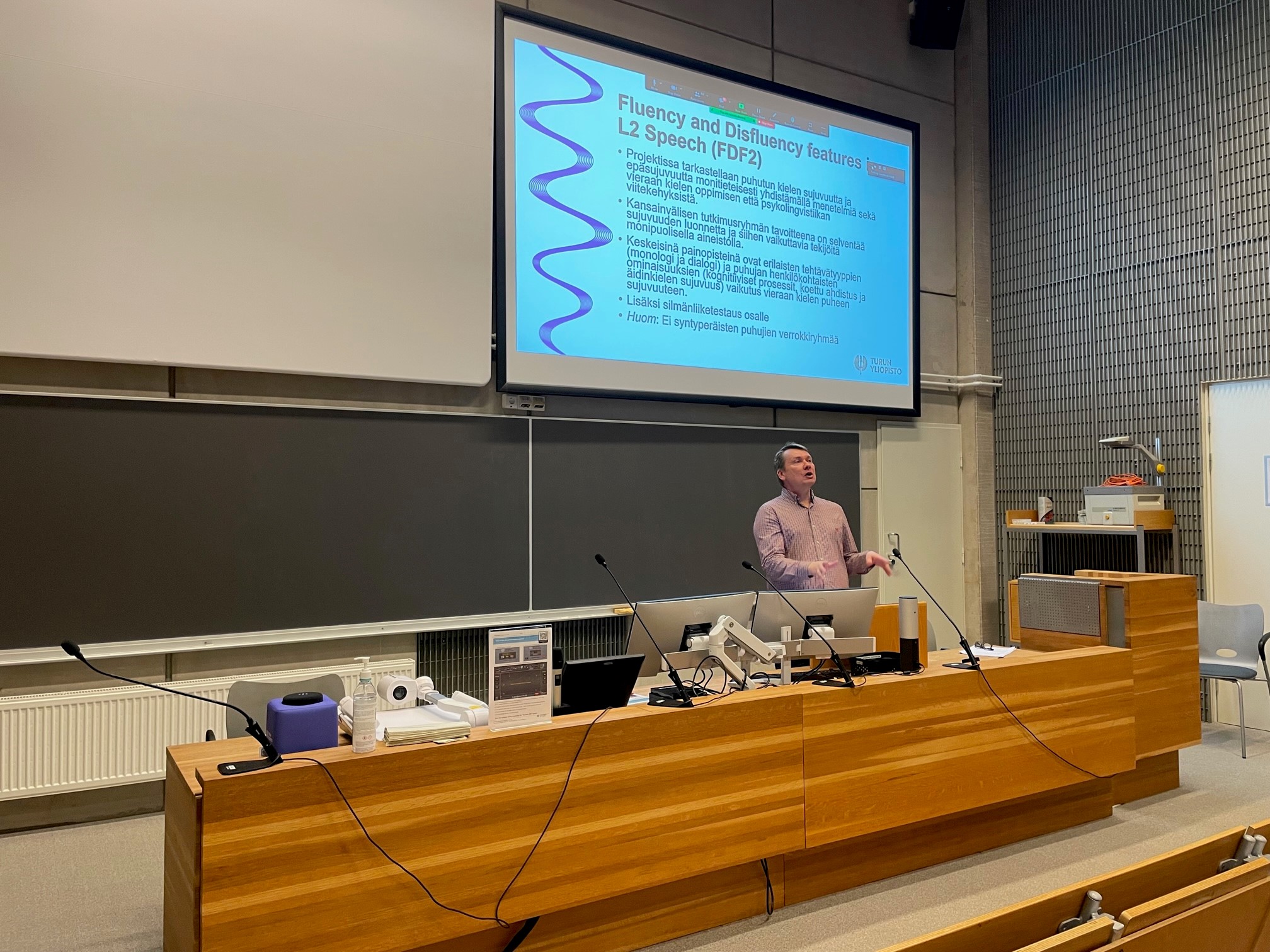
Pekka Lintunen during the opening lecture on speech fluency in September
In the spring semester, the training continued with a meeting on digitalization and interaction in spoken language teaching by Sanna Pelttari, Outi Veivo and Teppo Jakonen. A workshop led by Liisa Peura and Hilla-Marja Honkalammi explored the use of social robots in spoken language teaching. The last two meetings focused on individual differences: for example, Outi Veivo and Sanna Olkkonen lectured on the importance of the learner’s cognitive processes, and Magdalena Szyszka discussed oral language learning from the perspective of emotions and learning strategies.
On the whole, the module has been very successful. More than 100 teachers around Finland attended the Friday lectures, and about 20-25 teachers also participated in the workshops. This was far more than we had anticipated! We also received much positive feedback from the teachers for what we had organized.
Inspiring interaction with the teachers
Universities are considered to have three main tasks: conduct research, provide teaching based on research, and interact with the society that surrounds it. A module such as this has been very much fun to plan and organize, and it is also very rewarding from the organizer’s perspective. We get to provide teaching based on our latest research findings, some not even published yet, and have a direct impact on teachers and how L2 teaching is conducted at Finnish schools. This kind of societal interaction is highly important with L2 learning research and a prime example of what researchers dream about: a fast transfer of knowledge. Dialogue with schools and teachers is at the core of what we do. We provide examples of what could work according to the latest research findings, and teachers provide us feedback on what our ideas sound like from their perspectives. In addition, we also get plenty of new research ideas when we hear concrete questions and problems that language teachers tackle with in their everyday work.
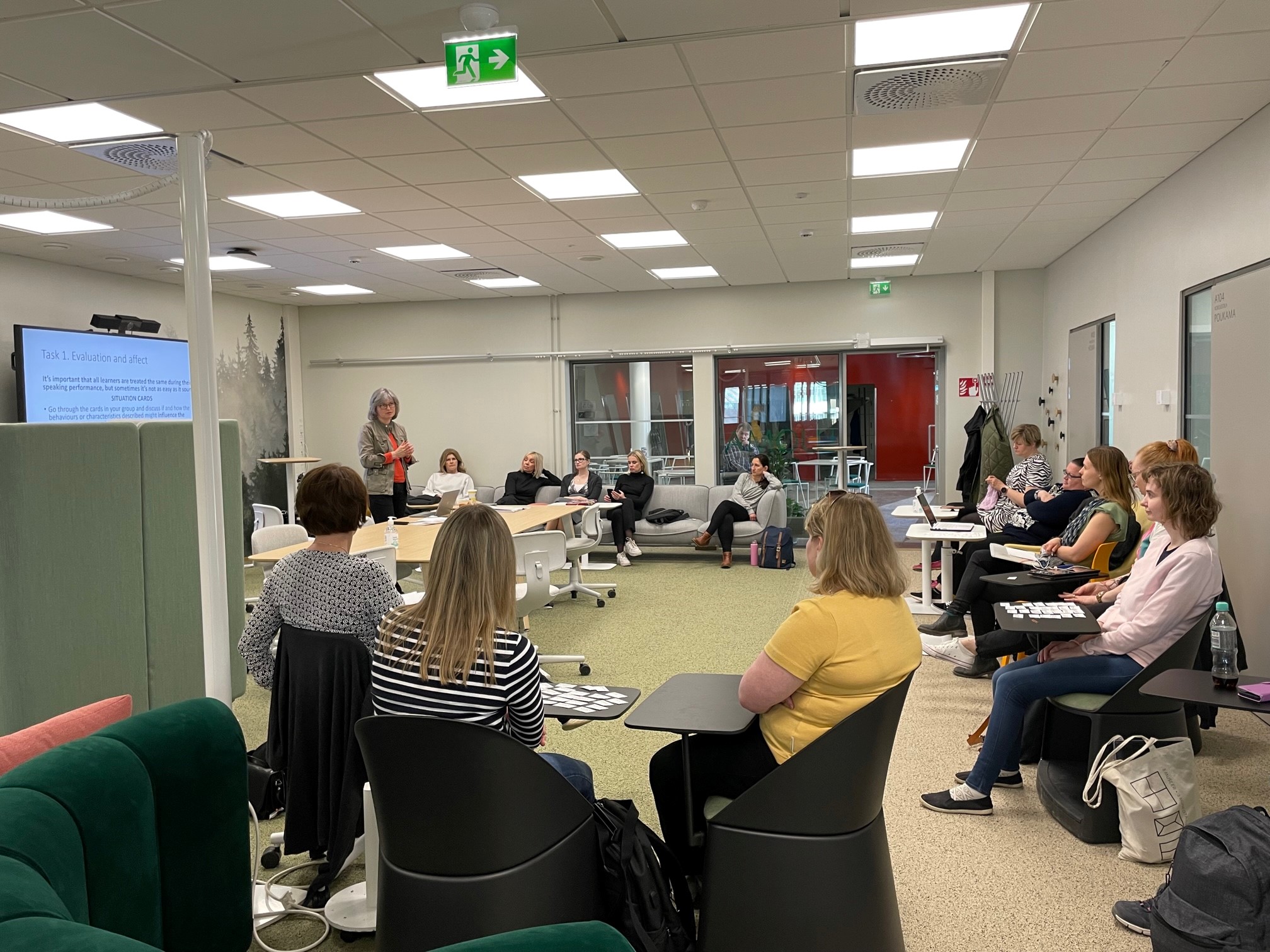
Magdalena Szyszka giving a workshop on emotions in language learning in April
Online workshops in the autumn 2023
At the end of this module, there is even some sadness in the air as we need to say goodbye to the project when the academic year ends. However, last week we received the great news that the Finnish National Agency for Education allows us to organize three extra training sessions in the autumn term as well. This is excellent news and extends this training module to new audiences. In the autumn, we will organize everything as purely online meetings so that teachers from all over Finland can participate. We will discuss speech fluency in September, pronunciation in October, and individual learner differences in November. Stay tuned for these extra sessions!
Text: Pekka Lintunen & Venla Eirola
Photos: Venla Eirola