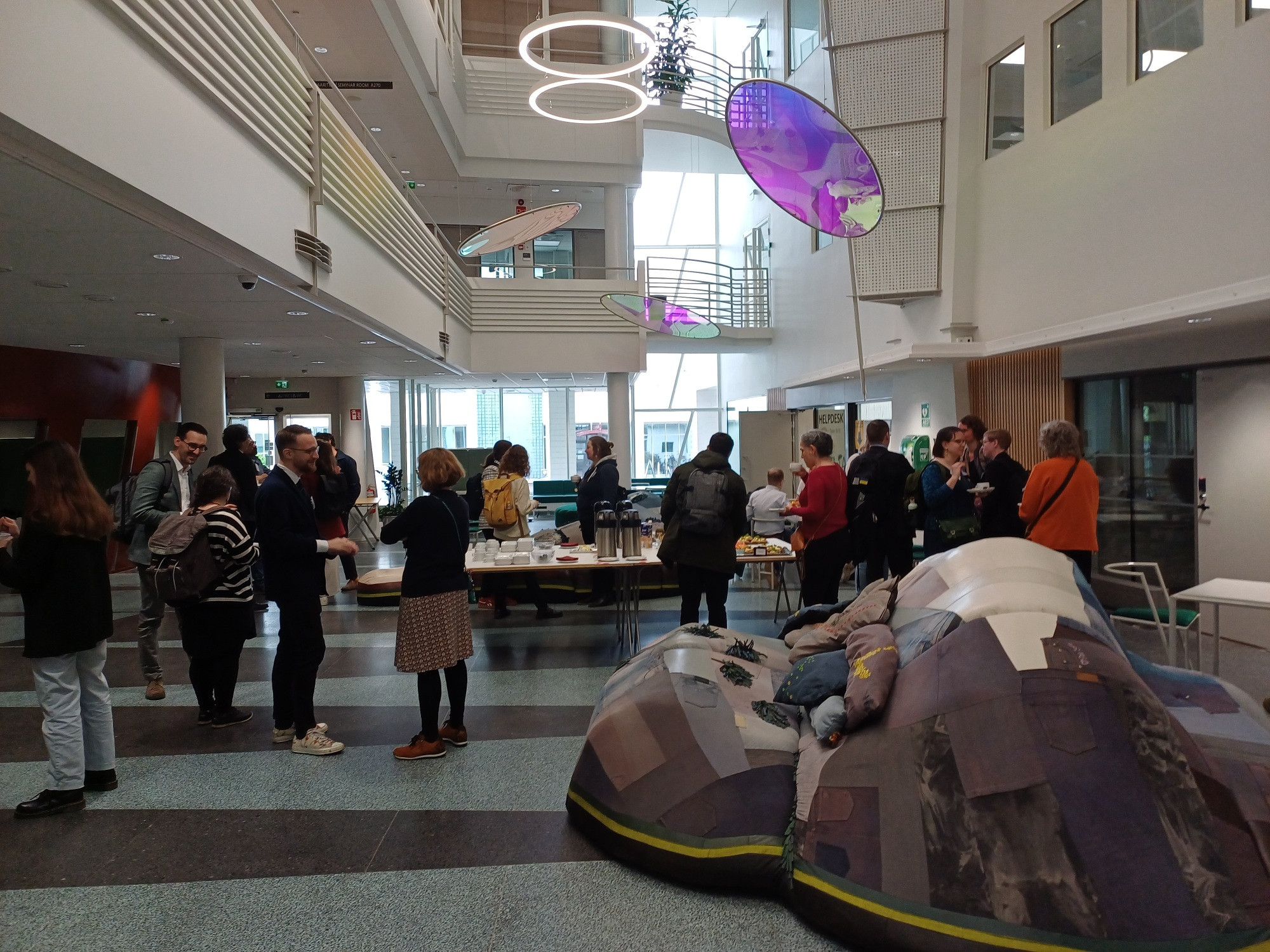
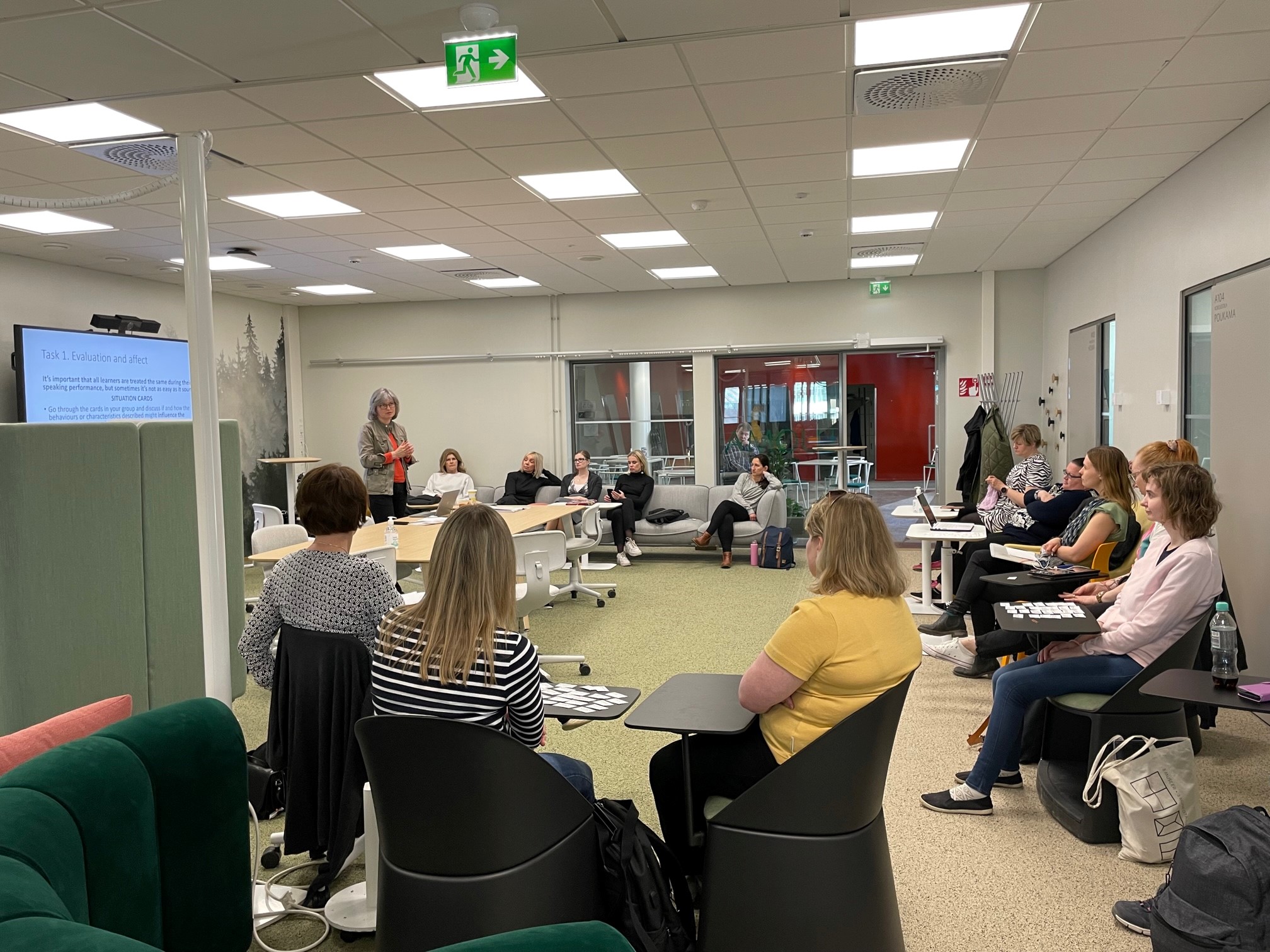
On 22 May, the foyer of Arcanum buzzed with anticipation as attendees gathered for the Reading Visual Devices conference organized by the Early Modern Graphic Literacies (EModGraL) project. The event began with a warm welcome from Marjo Kaartinen, Rector of the University of Turku and a member of the EModGraL project. Rector Kaartinen highlighted the city’s rich late medieval and early modern heritage, noting that there could hardly be a more fitting location for a conference focused on early modern graphic devices. She concluded her opening remarks by expressing the university’s pride in the project.
Attendees enjoying coffee and conversations between sessions in the lobby of Arcanum
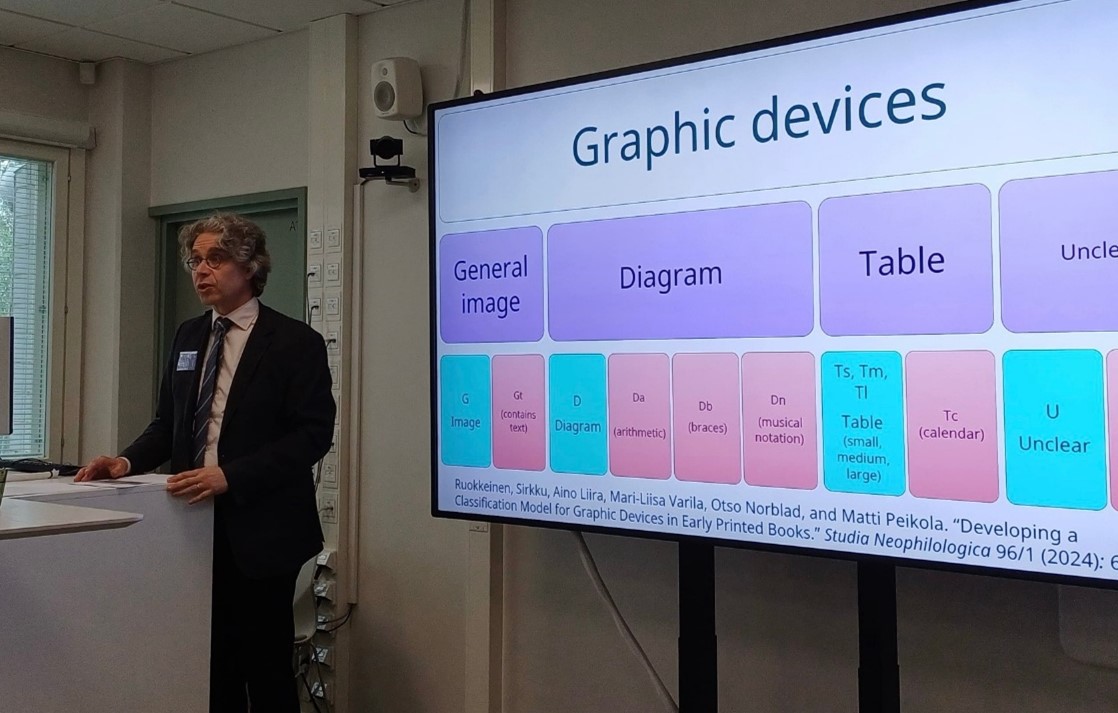
Next to take the stage was Professor Matti Peikola, the principal investigator of the EModGraL project. He extended thanks to the project’s primary funders – the Research Council of Finland and the City of Turku. As the four-year project draws to a close this summer, the conference marked a significant milestone in its final phase. In attendance were two of the project’s key collaborators: Professor Wendy Scase (University of Birmingham) and Dr Carla Suhr (University of Helsinki), both of whom gave keynote speeches. A third keynote was presented by Professor Andrew Riggsby (University of Texas).
The multidisciplinary conference brought together researchers interested in late medieval and early modern visual devices such as images, diagrams, charts, and tables that convey information alongside text. Over the course of three days, the programme featured three keynote lectures and 25 paper presentations, covering topics ranging from diagrams in early modern grammar textbooks to witchcraft pamphlets and medical manuscripts. Together, the papers offered insight into how graphic devices were used, understood, and employed to visualise knowledge in the late medieval and early modern periods.
Professor Matti Peikola presenting findings from the EModGraL project
The international conference drew approximately 40 attendees from a range of academic disciplines. As a student assistant, it was inspiring to observe professionals in action – presenting their findings and exchanging ideas. For me personally, the most rewarding aspect was witnessing the academic community that the project has built over the years.
Finally, on behalf of all the student assistants, I would like to thank Dr Sirkku Ruokkeinen, whose support and guidance helped ensure the smooth organisation of the event. Reading Visual Devices was a successful three-day conference, hosted by what Rector Kaartinen described as a “particularly fabulous project.” As heard in the discussion following Dr Mari-Liisa Varila’s paper on the first conference day, one cannot help but wonder: what’s next? Perhaps, a well-earned holiday for the EModGraL team.
The TiTaRa: Between Science and Magic Symposium was a great success! The symposium was held on 10–11 October here in Turku together with the Finnish Network of Magic Studies to explore topics such as Western esotericism, magic, witchcraft and early sciences bordering them (such as alchemy and astrology). Participants arrived from around the world, and the topics varied from medieval England all the way to Finland in the 19th century and everything in between.
There were three of us assistants, and in addition to assisting at the symposium, there was a variety of things to do both before and after the event: checking the symposium’s emails, designing and setting up signposts and nameplates, compiling a book of abstracts of all the presentations and making social media posts… Some of these sounded a little intimidating at first for someone with no prior experience on such things but it turned out to not be too difficult after all because we had such a great team. Help was always available, and it was easy to divide some of the work between the three of us. During the symposium, our main responsibilities were working at the reception and assisting with the technology (thankfully no issues arose with the computer!).
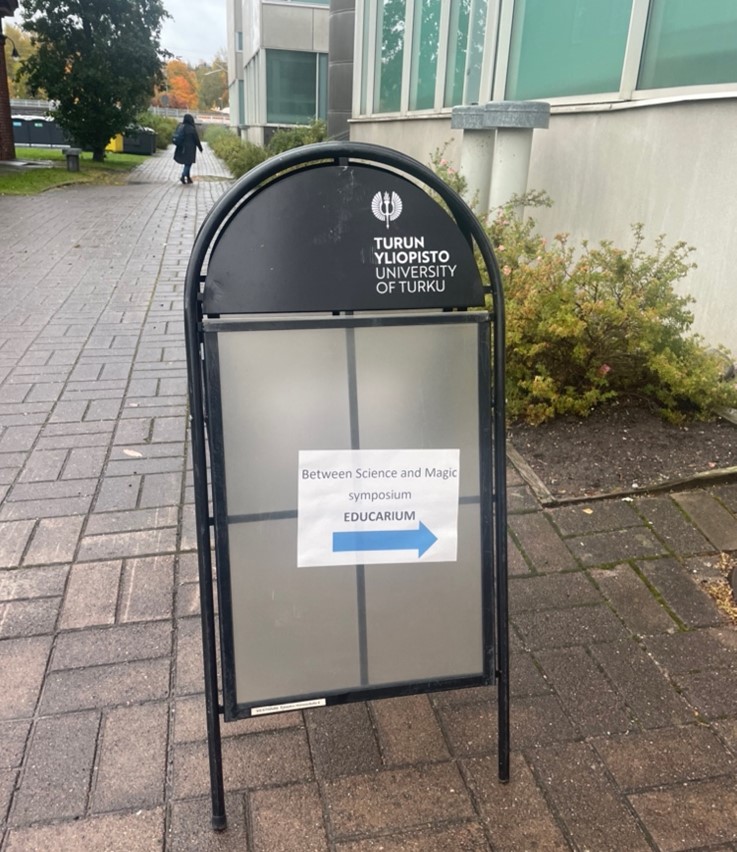
The signpost guiding our guests in
Day 1 of the symposium started bright and early on a rainy October morning for us assistants and other organizers of the event. The first things to do were putting up signs outside so that all of our guests could find their way in and making sure the presentations of the day were set up and ready to go. Attendees started arriving a bit before 9 a.m., and our job was to welcome everyone at the reception and hand out nameplates. At 9:15 it was time to officially start the symposium! The first presentation was one of our two keynote speakers, Professor Egil Asprem from Stockholm University. The presentation was about Romani magic and the sexism & racism involved in it with most fortune tellers at the time being women, as well as the stereotypes surrounding it being fraud.
After the first presentation, we had a quick coffee break and then continued with two more presentations before lunch. As assistants, we divided the work so that one or two of us stayed at the reception and the other(s) helped with setting up the presentations (and had the perk of listening to them!). Hearing many of the presentations was honestly one of the best parts about being an assistant at a symposium with such an interesting theme! After lunch, there were three more presentations, and then it was time for coffee once more, followed later in the evening by a City of Turku reception and a dinner at Brewery Restaurant Koulu. After the coffee, we made sure everything was in order for the second day. The first day went by very quickly and left me more excited.
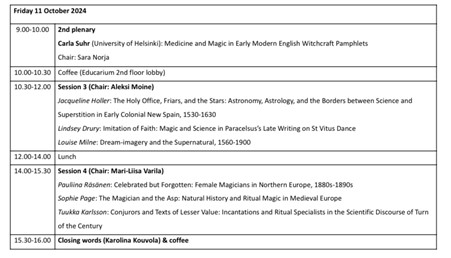
Day 2 started quite similarly for us as the first day. Friday’s first presentation was another one of our keynote speakers, Carla Suhr from the University of Helsinki, whose topic was witchcraft and medicine in early modern English witchcraft pamphlets. The presentation focused on the visual features of the pamphlets, advertisements of proprietary medicines and how they were presented to the audience. The second day passed by just as quickly as the first, with a total of six presentations in addition to Carla Suhr’s presentation. There was so much to learn, and everyone’s presentation added new perspectives to the theme of the symposium; I learned about the role of magic (and science) in astronomy & astrology, dance, dreams & nightmares and so much more! In a flash, the second day was finished too. Everything went even better than I had anticipated; we had no major issues and everyone seemed to enjoy themselves.
The schedule of day 2
It was a great experience to learn about all that goes into organizing an event like this, and it felt inspiring to see how passionate everyone seemed to be about their own presentations, and all the discussion each presentation sparked among the attendees. During coffee breaks, it was nice to hear bits and pieces of conversations the attendees were having, often inspired by the previous presentations. I would recommend an assistant internship like this to everyone! It was such an interesting way to meet new people and to learn how academic events are organized. The topics were interesting, everyone was extremely kind, and it hardly felt like work at all. A big thank you to everyone who was part of the symposium!
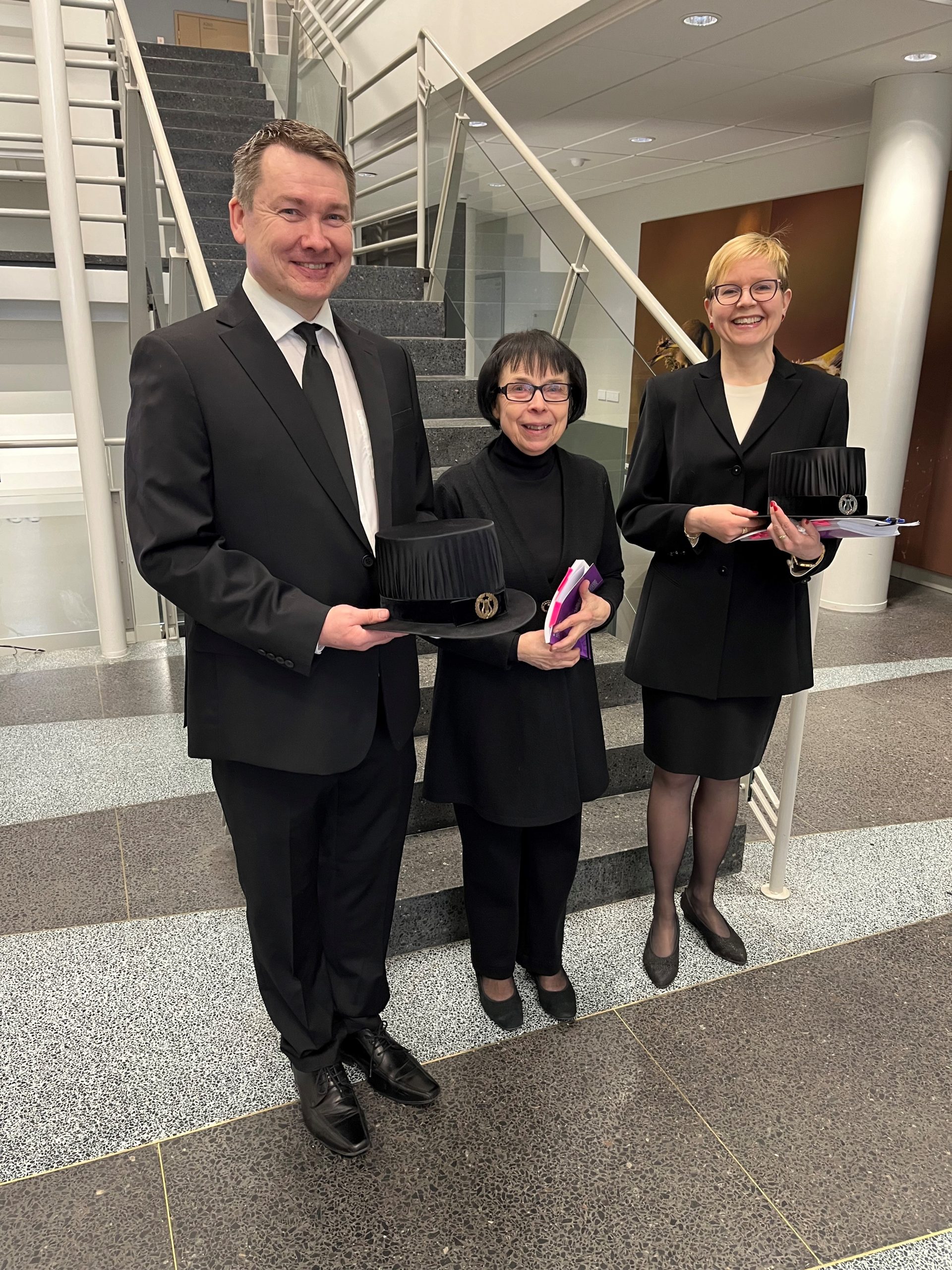
On a warm Saturday morning, on 24 August 2024, a small audience gathered to celebrate Amin Beiranvand as he defended his doctoral dissertation Gendered Sexual Violence and Complicity: A Postcolonial Study of Selected Works by J. M. Coetzee. Professor Joel Kuortti acted as custos and adjunct professor John Stotesbury from the University of Eastern Finland as the opponent.
The viva began with Amin’s lectio praecursoria, in which he outlined the historical and cultural context and the main research questions of his dissertation. He ambitiously investigates the fiction of the critically acclaimed Noble Prize winning Coetzee, whose fiction has dealt with, among other themes, the legacy of colonialism and its violent power relations in human and animal encounters. This underlies also Amin’s research, in which he focuses on Coetzee’s portrayals of gender-based violence against racially and ethnically marginalised women in three novels, Dusklands (1974), Waiting for the Barbarians (1980) and Disgrace (1999).
All’s well that ends well. The opponent accepts the PhD dissertation.
The opponent presented his questions and criticisms in an approachable and captivating way. The questions began with a lengthy discussion on the dissertation title and specifically the many implications of the word complicity. The effects of colonial violence and its legacy are more far-reaching than those confined into the pages of Coetzee’s novels. This inspired the opponent to ask about Amin’s choice of the term “gender-based” when discussing violence in a setting where it springs as much from the colonial power structures and the racial hierarchies portrayed in the fiction.
The rest of the viva dealt with each novel individually and focused specifically on themes of violence, imagination, history, anger and the effects of silences that deny the voice of the oppressed. On this point, the opponent created an immersive experience for everyone in the room by staying silent for a disturbingly long time. Overall, the atmosphere of the viva was relaxed and the opponent told many entertaining anecdotes from his own career, for example being invited to dinner at Coetzee’s house and the introverted author then failing to show up.
The successful viva resulted in an accepted doctoral dissertation and we congratulate the new Doctor of Philosophy, Amin Beiranvand.
FINSSE, the Finnish Society for the Study of English, was founded in 1998 “to advance university-level research and teaching in Finland of the English language, literatures in English and cultures of English-speaking peoples”. Biennially, a FINSSE conference is organised “to bring together university teachers, scholars and advanced students from all fields of English studies.” This year’s conference was held in Helsinki 13‒14 June, with the theme “Sustainability in English Studies”.
When I read the Call for Papers in February, I was very happy to see that the theme of this year’s conference would be sustainability. The CFP started by defining sustainability as comprising environmental, social and economic sustainability and asking what it has to do with language and literature. The role of language was seen as a tool through which the viability of communities is sustained and sustainability goals are negotiated, and literature as one through which alternative and more sustainable worlds can be explored. Also, the question of ensuring that research practices in English studies are sustainable was addressed. In addition to the general introduction to the theme, there were topic suggestions related to for example language resources, language policy, ELF, language teaching, translation, equality, identity, health, ecolinguistics, environmental humanities and several approaches to literature.
Besides being excited about the theme in general, I was curious to see how it would be approached in the presentations; which perspectives of sustainability would be discussed, and maybe most importantly, who would be considered being part of the group that the sustaining is done for—humans only, or sentient beings in general. Typically, the current (mainstream) definitions of sustainability exclude sentient beings other than humans as having moral value, but there has been an increasing call for defining sustainability as including non-human animals as ends in themselves. However, there was no mention of them in the CFP, and the United Nations’ Sustainability Development Goals, which were mentioned briefly in the CFP, are extremely anthropocentric. In the SDGs, non-human animals are treated as either resources for human consumption or, at the species level, as worth conserving in order to keep providing humans with ecosystem services.
In total, the conference program included one plenary presentation, 30 individual presentations, four poster presentations and a panel discussion during the two conference days. In addition, a meeting for doctoral students was arranged the day before the actual conference. I attended 13 presentations and the panel discussion. Using the abstracts as my guide, I aimed to see all those presentations that in one way or the other were connected to sustainability. When there were no such options available, I made my choice based on other reasons, such as my personal interests or the expected relevance to my own research.
I found all the presentations I heard interesting and having scientific, social or practical significance, and the panel discussion on the future of English studies teaching was excellent—both content- and entertainment-wise. Sustainability itself, however, was discussed relatively rarely—and sometimes the term seemed to be used more as a buzzword than in connection with the actual concept—but there were some thought-provoking exceptions. Those presentations were related to the sustainability of language resources; connections between the global environmental crisis and trains in literature and film; researchers’ more sustainable travelling practices; the consequences and possibilities of Caribbean romance literature for environmental and cultural sustainability; and the cost of sustainability in Margaret Atwood’s MaddAddam. All in all, while there were several interesting connections made to sustainability, the question of non-human animals mentioned above was left to be addressed.
After the conference, I would say that FINSSE-11 was definitely worth attending. The atmosphere was very warm and welcoming, and the program was varied. The next FINSSE conference will be organised in two years, and I warmly encourage everybody working in the field of English studies at any English department in Finland to participate. And if you are not yet a member of FINSSE, or just want to know more about the society, click here!
Anna Runsio
The author is a doctoral researcher at the Department of English, University of Turku. Her doctoral dissertation deals with the linguistic representation of research animals’ agency in historical materials. She is particularly interested in combining linguistics with historical critical animal studies, i.e. using linguistic methods for investigating the exploitation of non-human animals in the past and its consequences today.
Serving as a conference assistant and project intern is an excellent decision. Please, let me tell you why!
The info desk of the Trextuality conference, occupied by two conference assistants (taken by the Trextuality social media team)
I attended the Trextuality conference as an assistant and project intern. The conference was aimed at scholars working in translation studies and textual criticism, as well as neighbouring disciplines, such as literary studies and book history. The conference was held 7–9 September 2023 at the University of Turku in the recently renovated Arcanum building and in Educarium. The presenters’ topics were very varied, so you were bound to find something interesting. Personally, I was most interested in seeing how a conference would be organised. In addition, there were several presentation topics that intrigued me. For example, reference module 2B in the image below.
The afternoon schedule of the second day of the conference
Now that you’ve had a glance at just one of the days of the conference, you’ll probably see why I wholeheartedly recommend grabbing the next opportunity to be a conference assistant! Should you not have the time to dedicate to an internship of three or five study points, you get to participate in the lectures held by the attendees for free. If even that somehow fails to entice you to join, let it also be mentioned the food was very good and very free. I will reiterate, there is no need for a commitment to a project internship. You can just be a conference assistant with no strings attached, and these regular assistants were the majority of our numbers. Should you have the time and inclination for an internship, keep reading. If not, keep reading anyway.
So, you want study points for your efforts. You can get a project internship and three study points for your efforts if you put in around 81 hours of work. You get five study points if you put in 135 hours of work, as with regular courses. The 80-hour mark is pretty easy to achieve, whereas the 135-hour mark will require some special arrangements with your supervisor.
There are usually several different ways to help around, be it before, during, or after the conference. I will mostly be talking with this conference in mind, but much of this applies to project internships done as a part of other types of events as well. For instance, before the conference there were signposts to be set up and the lecture rooms had to be rearranged to suit the conference’s needs. Some of us were a part of the photography and social media teams that created content about the conference during the event. I was a part of the shift list team. Our planning made sure every room and the help desk were always occupied by at least one assistant.
During the conference, the social media team and help desk and lecture room assistant duties offered a chance to pitch in. In addition, simply attending the presentations held by the attendees counted towards the hour threshold. Due to sick calls, I had to go a little light on attending presentations. I spent most of the conference manning the information desk, ready to help conference guests with whatever questions or needs they might have.
After the conference, there is the option of writing about your experiences for publications, which is exactly what I’m doing right now! These publications can be magazines read by linguists or blogs, such as the one you’re reading this text on.
We, the assistants, were called the T-rex team. The working spirit of the T-rex team impressed me. There were quite a few cases of illness that popped up during the conference among the assistants. Despite this, our line held, and we fulfilled our duties.
A group photo of some of the conference assistants (taken by the Trextuality social media team)
Our supervisors, the actual organisers of the conference, were the masterminds behind the whole operation, pulling it off like the true academics they are. Many occasions needed quick solutions and creative problem-solving that only the organisers had the authority to do. Say, helping with luggage forgotten by the attendees. Whenever we, the assistants, were at our wits’ end, asking our supervisors didn’t leave us on the rocks. We, the helping hands, were in good hands ourselves.
What for me personally made the entire conference was how kind and patient the guests were. If they needed help with something, they were polite, and if we had to find something out for our guests, they waited calmly, without rushing us. Their demeanour was professional and pleasant all around. We also received a great deal of kind words from the attendees in the form of emails sent to the organisers after the conference, which I personally found very heart-warming to hear.
To summarise, if interested, the next time you get an email saying that conference organisers are looking for assistants, grab a friend and volunteer. Do it for the study points, the experience, just to help out if nothing else. The worst that can happen is getting free food and a chance to meet fun people. Doesn’t sound like a bad deal to me.
Earlier this spring, I had the opportunity to attend an eye-opening event on the “complexities of competence”, namely, Marja-Leena Niitemaa’s doctoral defense on Complexities of Competence: A Study on Finnish Upper-secondary Lexical Development and Use of L2 English. I had no idea what to expect, other than it was a formal event, and, I imagined, a very nerve-racking one, at least for the doctoral candidate.
The viva voce is the ultimate climax of years of hard work, i.e., blood, sweat and tears for many. Finally, the day has arrived when you can present to the public the cornucopia of knowledge you have acquired along your PhD journey. The grace and dignity of the event was humbling.
Marja-Leena’s viva began with an introduction by the Custos, Professor Pekka Lintunen. Senior Lecturer Katja Mäntylä of the University of Jyväskylä was Marja-Leena’s Opponent (thesis examiner). Marja-Leena’s lucid lectio praecursoria captured the audience’s interest from the start because the topic of her dissertation is perhaps something many people can relate to, i.e., acquiring and applying foreign language skills through digital means. The complexities Marja-Leena spoke of refer to the multifarious and interweaving ways in which young people acquire English today. Learning English is no longer limited to the classroom only; rather, students draw upon the resources their environment offers, e.g., internet and television.
Marja-Leena Niitemaa together with Custos Professor Pekka Lintunen and Opponent Senior Lecturer Katja Mäntylä
The event was indeed a learning experience, having struggled with my own complexities along my PhD journey. For example, how do you navigate around unexpected results, results that controvert decades of previous research? This can really multiply your symptoms of imposter syndrome! How do you get your head around statistics when your brain has not been wired for such things—let alone interpreting them! How do you balance work and tend to your PhD brainchild? How can you tell procrastination to go pound sand? The answers to these questions are, of course, different for everyone. Perseverance and determination certainly help, keeping your eye on your target and thinking back to why you began your PhD journey in the first place also help.
For me, experiencing Marja-Leena’s viva helped me to garner the much-needed faith I needed to invest in myself. I was able to witness first-hand the culmination of hard work, determination and learning processes that go into writing a dissertation. This, if anything, gave me a nudge to keep working towards the goal I set so many years ago. So, if you are contemplating about getting a PhD or struggling to finish one, go to a viva—you’ll get all the inspiration you need!
As part of my postdoctoral research period in the Research Council of Finland funded project Fluency and Disfluency Features in L2 Speech (FDF2; 2020–2024, PI Pekka Lintunen), I spent six months as a visiting researcher at Philipps University Marburg in Germany during January–June 2023. The main purpose of this research visit was to facilitate collaboration with a member of the project’s international advisory board, Professor Sandra Götz.
It’s all about collaboration
My six months in Germany ended up, indeed, facilitating the collaboration with Prof. Götz in various ways. I appreciated the opportunity to discuss various research-related and other matters with her in our weekly meetings. Working in adjacent offices also allowed us to deepen and extend our existing collaboration, notably on a study addressing the speaking style and task mode effects on L2 speech fluency. I am also grateful to Prof. Götz and the Department of English and American Studies for making it possible to invite one of our collaborators, Dr. Loulou Kosmala from Université Paris Nanterre, for a short visit to Marburg. Her visit greatly facilitated the progress of our collaborative work on the links between fluency and gesture, which is based on the interactional data collected in the FDF2 project. Our pilot study has been published as part of the DiSS workshop 2023 proceedings. My research stay in Marburg, therefore, not only facilitated the collaboration with German colleagues, but also brought me closer to my other central European colleagues, including Dr. Kosmala.
Happy hosts (me and Prof. Götz on the left) and our visitor, Dr. Kosmala (on the right)
Getting to know the department
While working at the Department of English and American Studies, I had the privilege to get to know the department’s wonderful staff. I familiarized myself with the research done in the department by participating in their Linguistics colloquium research meetings and got to present our FDF2 project to the group. During lunches and other casual meetings, I learned that one of my colleagues, Aoife Holmes-Rein, hosts a podcast called Grandiose Grammar, including 45 episodes (and counting!) on various aspects of English Grammar.
During my stay in Marburg, I also got to witness the beginning of a great new practice facilitating casual encounters among the department’s students and staff, namely the Language lovers’ lunch club (3LC), launched by Holmes-Rein, Kathrin Kircili and Prof. Götz. The department has an Instagram account (@iaa_marburg) where they post about the lunch meetings and other activities at the department.
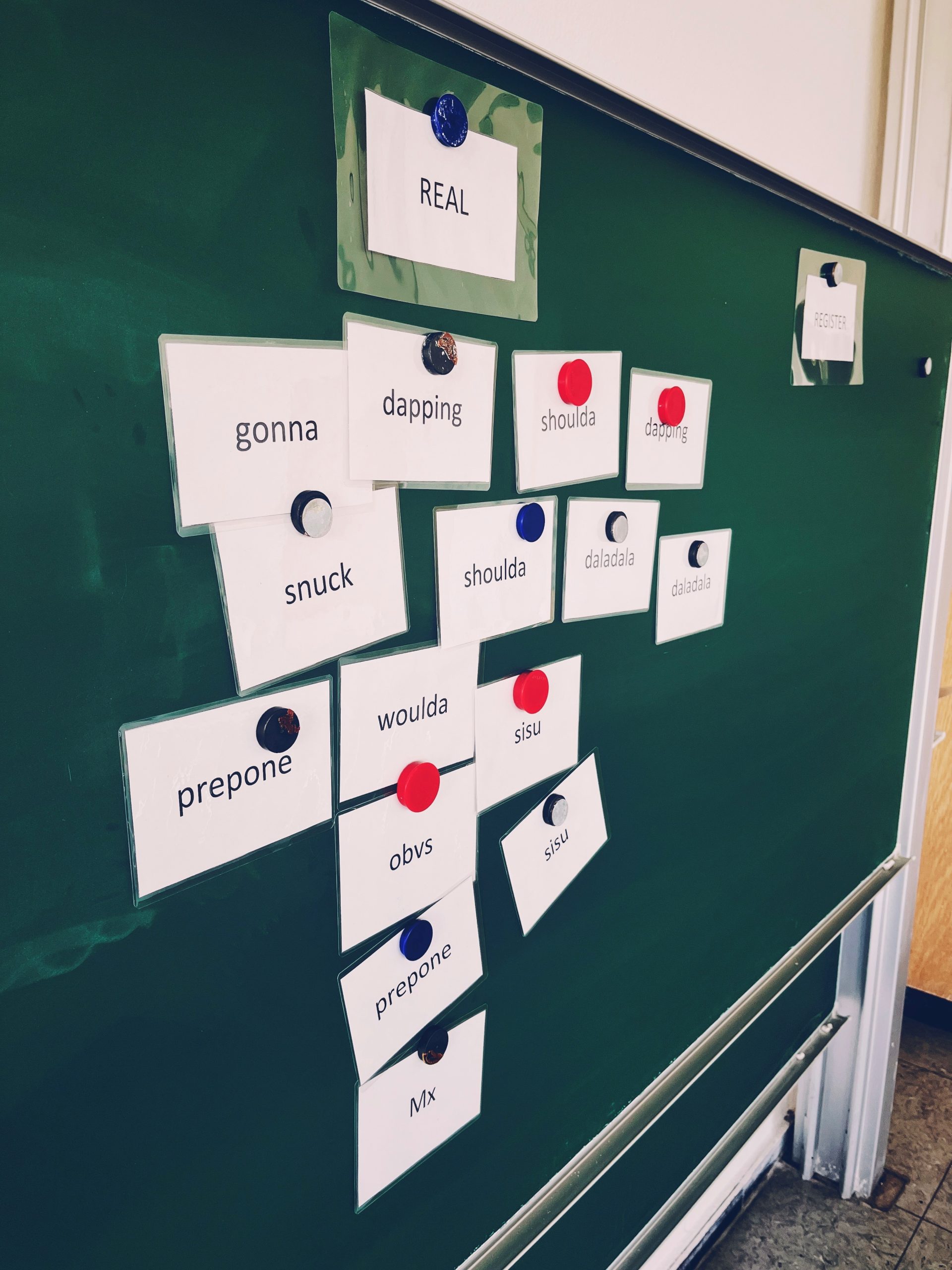
In the first 3LC meeting, the topic was language change and lexical innovation. Finnish “sisu” mentioned!
Teaching benefits research
While my visit was focused on research, I was happy to get the chance to give some guest lectures as well. I talked about social approaches to language learning on a course focusing on linguistic theory and the history of linguistic ideas. In addition, I gave fluency-themed talks on two different courses: one focused on spoken English and another focused on English as a foreign language. The participants on the latter course were future teachers of English, so we focused especially on the teaching of speech fluency. Getting to reflect on these topics with various groups of students gave a lot of food for thought also for my own research. I am grateful to all students in Marburg who attended these classes and to Prof. Götz and my dear “roommate” at Marburg, Kathrin Kircili, who kindly gave me the chance to join their courses as a visiting lecturer.
Other activities
A lot of my spare time during the visit was spent exploring my hometown, Marburg, as well as the cities nearby. To make the most of the central European rail network, I travelled both within Germany (for instance to Cologne, Hamburg, and Berlin) and to neighboring countries (France). In addition to these non-work-related trips, I also travelled outside Europe during my stay to participate in the annual conference for the American Association for Applied Linguisticsin Portland, Oregon. At the conference, I presented preliminary findings on the effects of L1 speaking style and task mode on L2 fluency and got to meet colleagues especially from outside Europe.
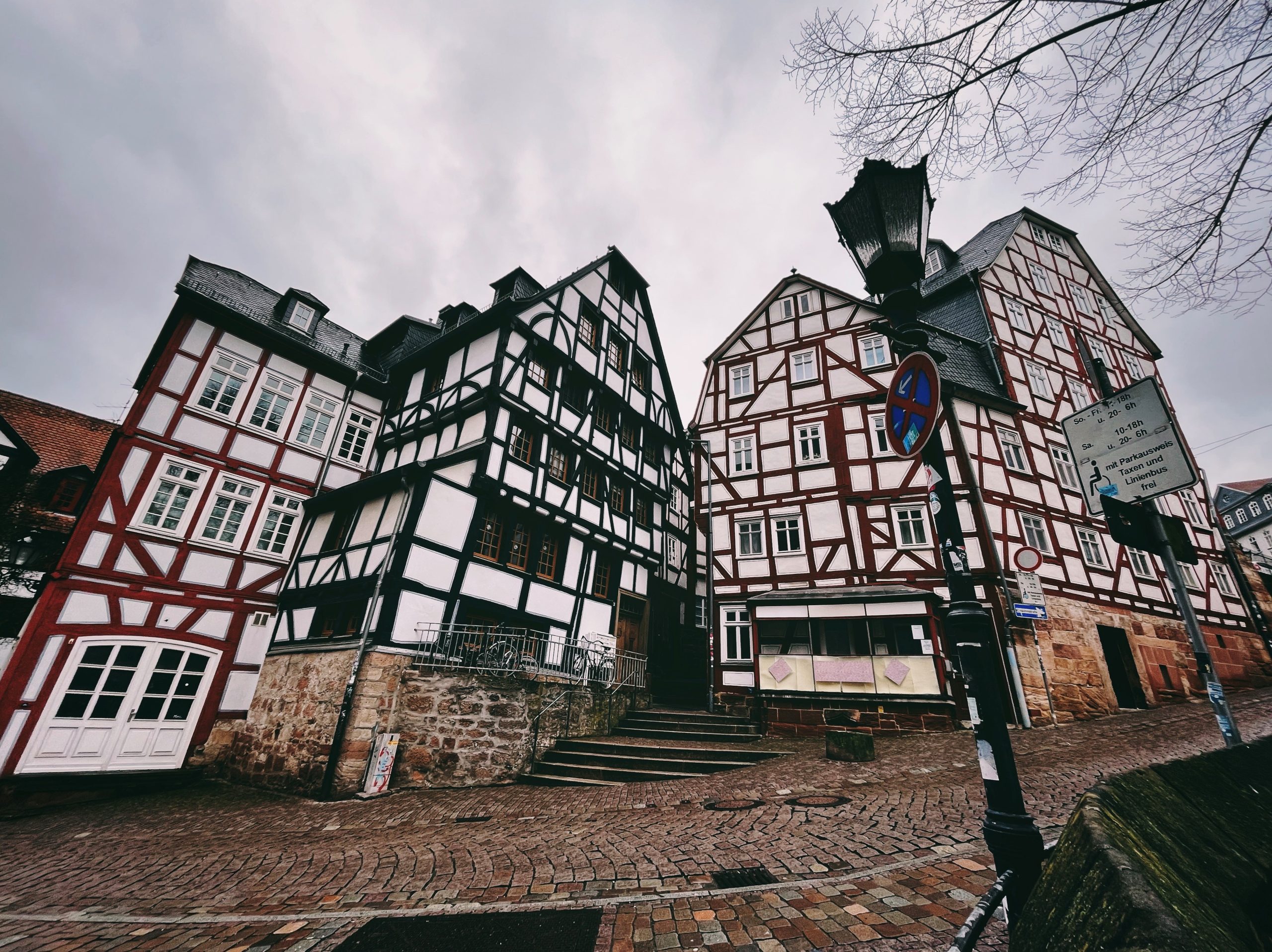
The Old Town of Marburg.
All in all, the six months I spent in Marburg were really enjoyable and rewarding, both from personal and professional perspectives. I learned a lot during my stay. I know that our collaboration will continue at least remotely, but I hope I can return to Marburg for another visit sometime in the future.
Thank you to Prof. Sandra Götz, the Department of English and American Studies at Philipps University Marburg and the Research Council of Finland for making this visit possible.
Text by Pauliina Peltonen
First photo by Sandra Götz, second and third photos by Pauliina Peltonen
During the academic year of 2022-2023, the English Department and the Centre for Language Learning Research (Leala) have had the pleasure of hosting a national in-service teacher training module for second or foreign language (L2) teachers in Finland. We named this module SuSuKi, which stands for Sujuvuutta suulliseen kielitaitoon (roughly translated as “making oral language skills more fluent”), and we focused on the learning, teaching and assessment of oral language skills. The module has been funded by the Finnish National Agency for Education, and the training has been led by Professor Pekka Lintunen. Throughout the module, Project Researcher Venla Eirola has taken care of the practical matters related to the organization of the training.
Lectures, workshops and new perspectives
The module was inspired by our strong tradition in spoken language research and also by earlier in-service teacher training modules organized within Leala. We approached second language oral proficiency from different perspectives during the module. The module consisted of five meetings from September to April, which were introduced during hybrid-mode lectures on Friday, and a smaller group of teachers also participated in an on-site workshop on the topic on Saturday. In the first meeting, Pekka Lintunen, Pauliina Peltonen and Elina Lehtilä opened the whole module with lectures on speech fluency. The workshops focused on topics such as fluency-building exercises and fluency assessment. In the second meeting, Elina Tergujeff and Henna Heinonen from the University of Jyväskylä lectured on the teaching and assessment of pronunciation, and language-specific workshops were led by Heinonen for Swedish, Janne Korkka for English, Maarit Mutta for French, and Sanna Pelttari for Spanish.
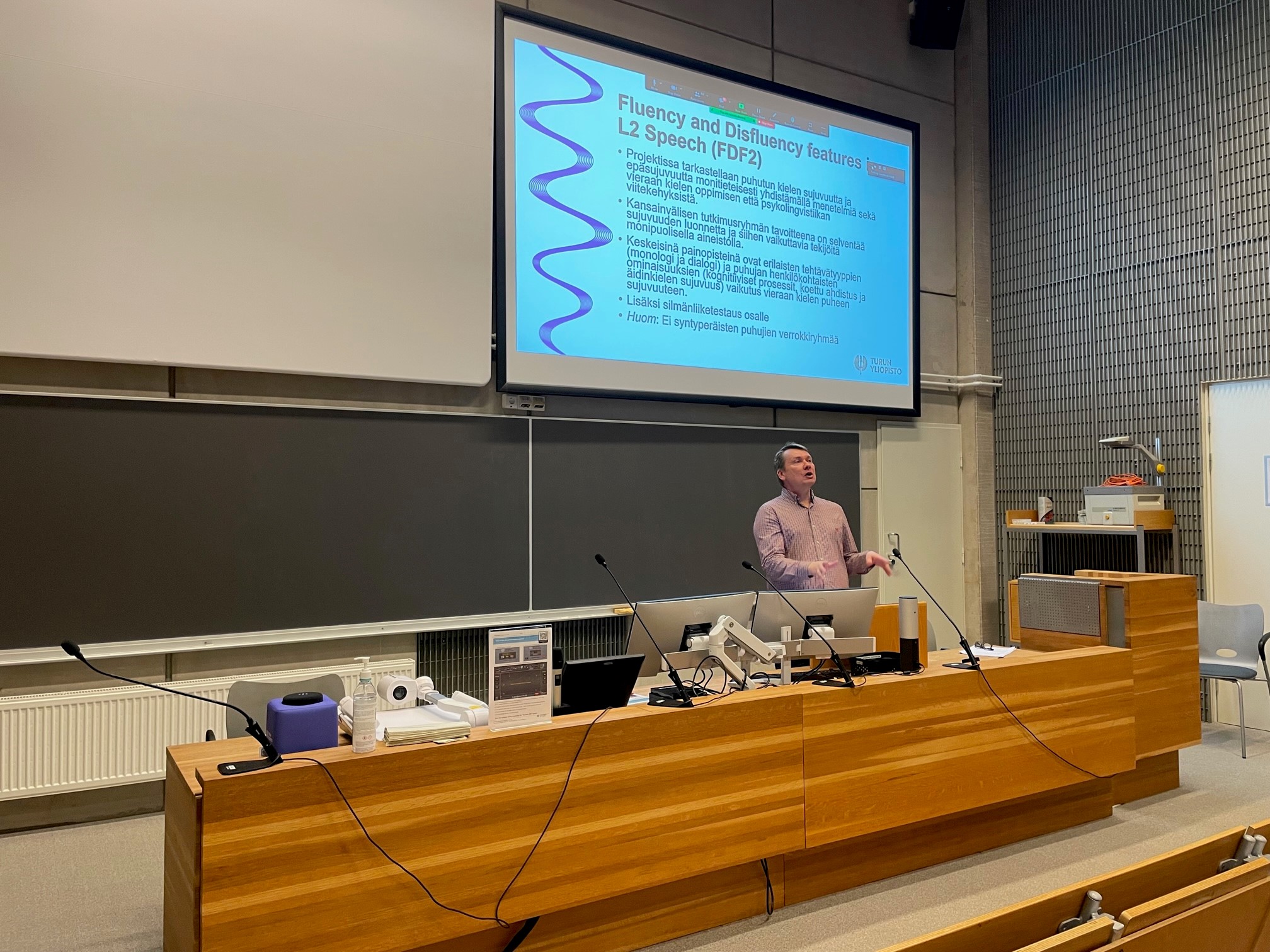
Pekka Lintunen during the opening lecture on speech fluency in September
In the spring semester, the training continued with a meeting on digitalization and interaction in spoken language teaching by Sanna Pelttari, Outi Veivo and Teppo Jakonen. A workshop led by Liisa Peura and Hilla-Marja Honkalammi explored the use of social robots in spoken language teaching. The last two meetings focused on individual differences: for example, Outi Veivo and Sanna Olkkonen lectured on the importance of the learner’s cognitive processes, and Magdalena Szyszka discussed oral language learning from the perspective of emotions and learning strategies.
On the whole, the module has been very successful. More than 100 teachers around Finland attended the Friday lectures, and about 20-25 teachers also participated in the workshops. This was far more than we had anticipated! We also received much positive feedback from the teachers for what we had organized.
Inspiring interaction with the teachers
Universities are considered to have three main tasks: conduct research, provide teaching based on research, and interact with the society that surrounds it. A module such as this has been very much fun to plan and organize, and it is also very rewarding from the organizer’s perspective. We get to provide teaching based on our latest research findings, some not even published yet, and have a direct impact on teachers and how L2 teaching is conducted at Finnish schools. This kind of societal interaction is highly important with L2 learning research and a prime example of what researchers dream about: a fast transfer of knowledge. Dialogue with schools and teachers is at the core of what we do. We provide examples of what could work according to the latest research findings, and teachers provide us feedback on what our ideas sound like from their perspectives. In addition, we also get plenty of new research ideas when we hear concrete questions and problems that language teachers tackle with in their everyday work.
Magdalena Szyszka giving a workshop on emotions in language learning in April
Online workshops in the autumn 2023
At the end of this module, there is even some sadness in the air as we need to say goodbye to the project when the academic year ends. However, last week we received the great news that the Finnish National Agency for Education allows us to organize three extra training sessions in the autumn term as well. This is excellent news and extends this training module to new audiences. In the autumn, we will organize everything as purely online meetings so that teachers from all over Finland can participate. We will discuss speech fluency in September, pronunciation in October, and individual learner differences in November. Stay tuned for these extra sessions!
Switzerland. The home of cheese, chocolate, the Alps… and a bustling English Department at the University of Zurich with an overwhelmingly well-stocked library that I could have lived in for the entirety of my four-week stay and I still wouldn’t have even scratched the surface, and a staff that welcomed me with open arms?
As it turned out, yes.
After two years of part-time PhD work, the stars finally aligned and as funding was secured, the distant dream of a research visit to the home Department of one of my supervisors came to fruition. I arrived in Zurich in late April and was immediately met with extreme kindness and willingness to help with anything and everything from everyone I met at my host Department.
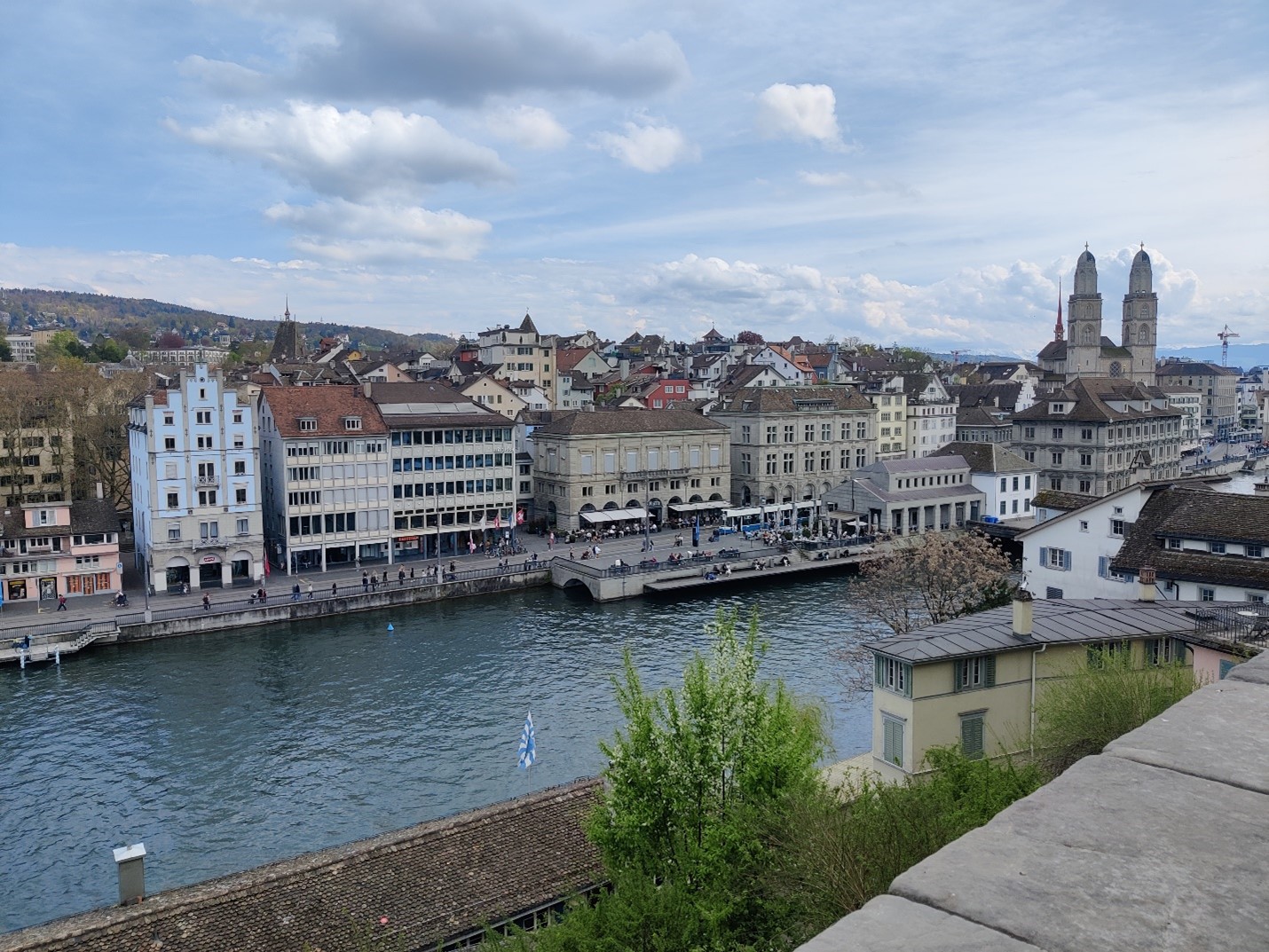
A view of the Limmat river from Lindenhof, the former site of a Roman fort and, later, Charlemagne’s grandson’s palace.
My weeks were spent with my nose firmly planted in both primary and secondary sources of my dissertation as well as discussing my research with my supervisor and getting to know some of the rest of the staff more closely. I also had a chance to present my research at one of the Department’s Lunch Talks, where the audience enjoys their lunch while listening to presentations.
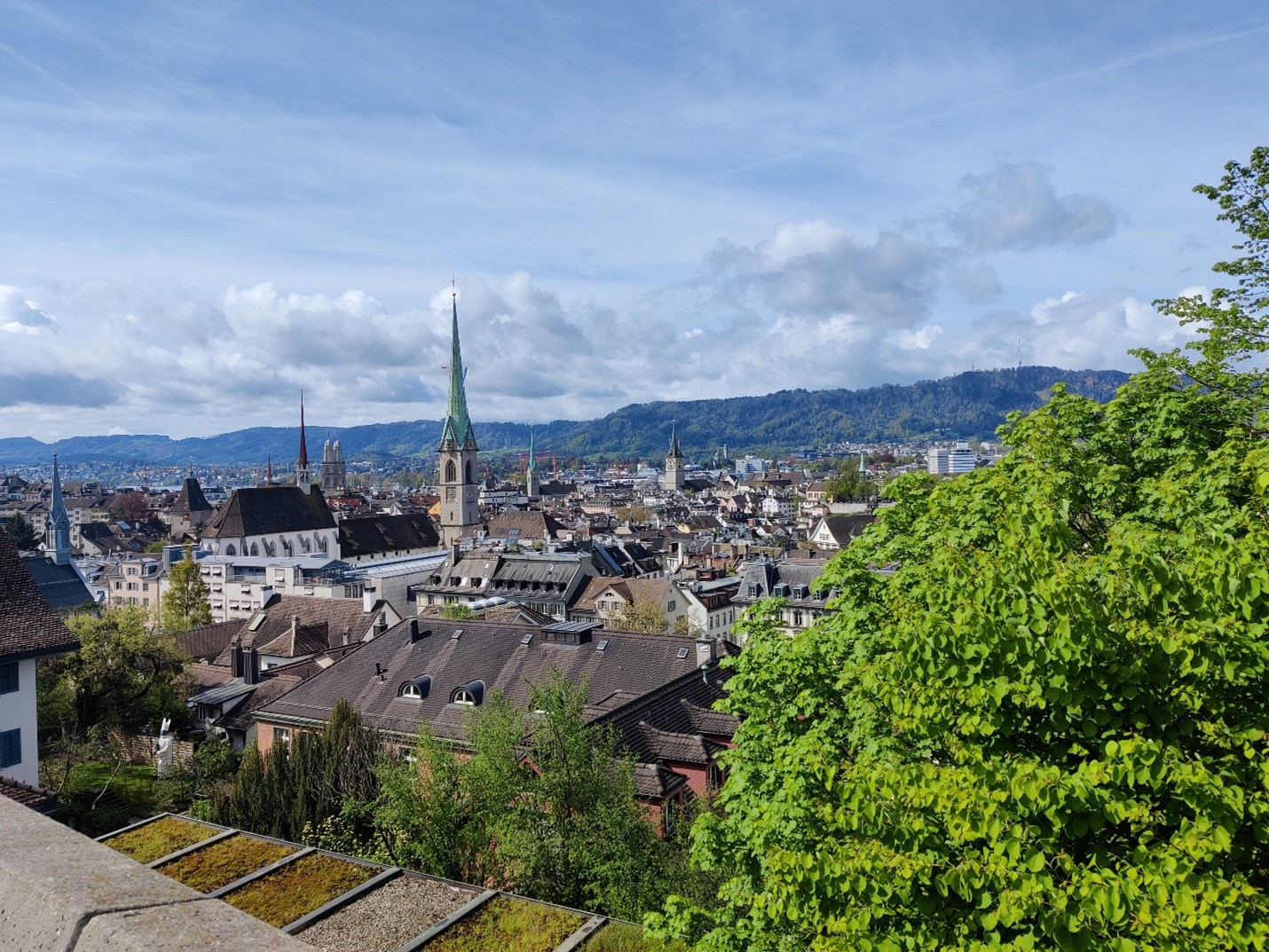
The rooftops and church towers of Zurich.
The weekends were for exploring. I wandered the streets of the medieval Altstadt (Old Town) and visited its various churches, including the Fraumünster, the founding charter of which is from 853 and on display in the church’s crypt (not going to lie, this was maybe the most exciting single thing I encountered). I explored the National Museum, the Kunsthaus (art museum), and paleontological and archeological museums, as well as the local zoo. Venturing south, I visited the town of Rapperswil to get a better view of the Alps. Fun fact: Rapperswil is home to the longest wooden bridge in Switzerland!
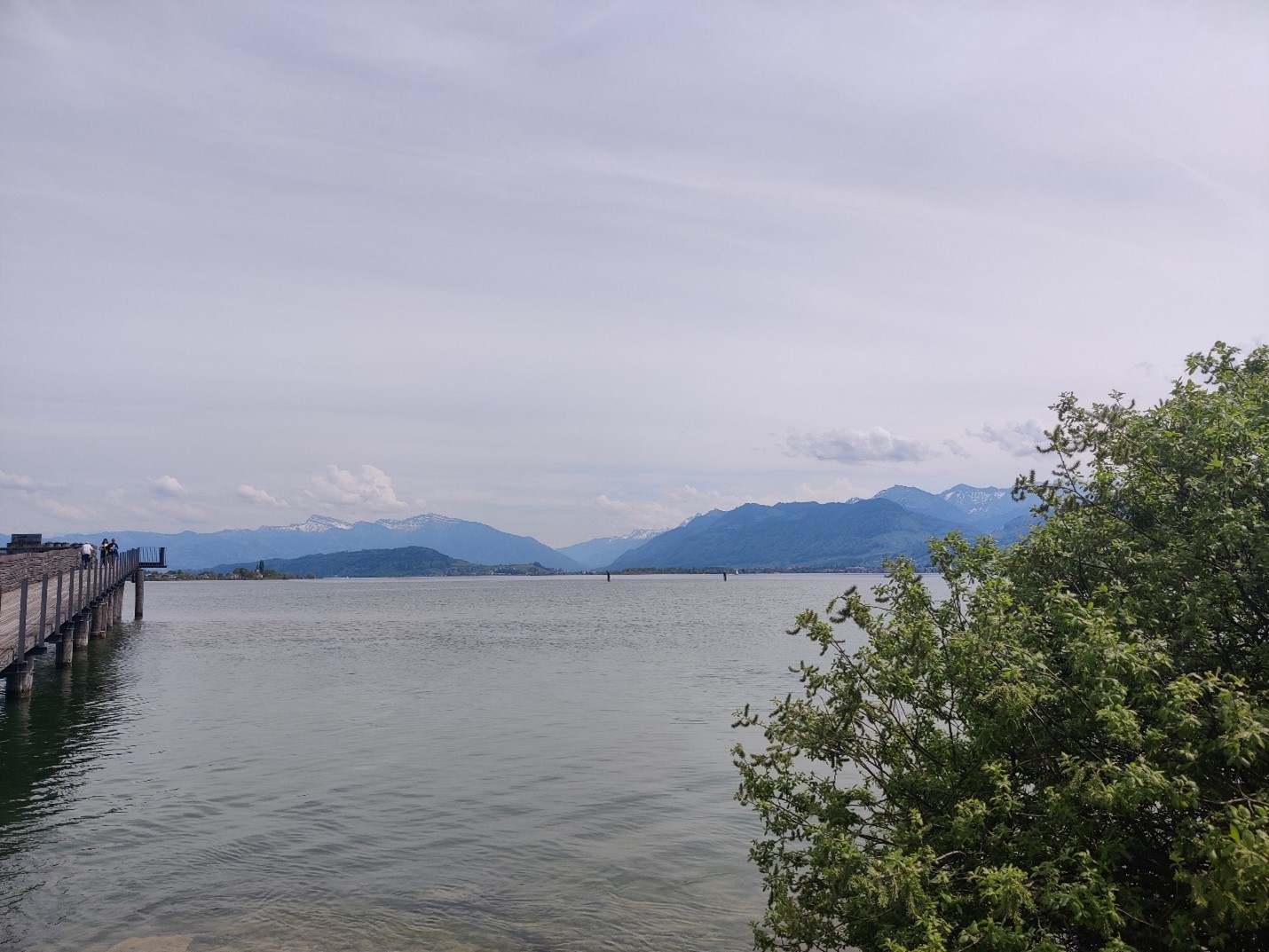
Lake Zürich, the Rapperswil-Hurden wooden bridge, and the Alps in the distance.
Another fun fact: If you decide to cross Lake Zürich via said bridge and take the train back to Zurich from the other side, once the wooden bridge ends after 841 meters, you are actually nowhere near the closest train station and you might find yourself walking for 5 kilometers in 23 degree heat, growing increasingly desperate and losing hope of ever reaching your destination with each step.
Against all odds, I survived to tell the tale.
All in all, I enjoyed my visit immensely. In addition to achieving all of my academic goals, I became a huge fan of Swiss bakery culture and the efficiency of public transport, expanded my knowledge of Swiss chocolate brands, and discovered that melted cheese, mashed potatoes and pickled onions make a delicious combination.
I would like to thank the English Department of the University of Zurich and the Kone Foundation for making this visit possible.
When the staff of the English Department have just moved into their brand-new premises in the newly renovated Arcanum building on the University’s lower campus at the beginning of 2023, this may be a convenient moment to take a brief look at the previous oases on the itinerary of the departmental caravan from its beginnings to the present day. There have been altogether five stops on the way to Arcanum.
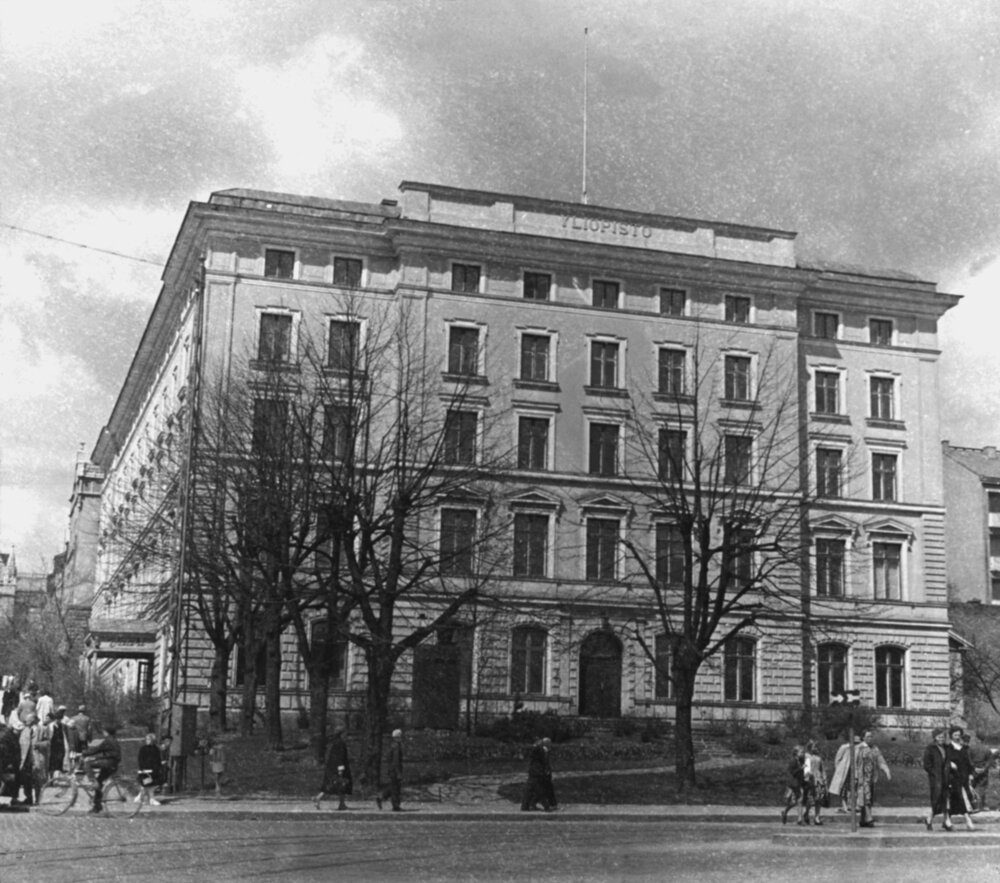
Taking the founding of the chair for English Philology in 1945 as the date of the founding of the Department, it was first located, together with the entire academic community of the new Finnish-speaking university of Turku, in the premises of the old Hotel Phoenix, a colossal late nineteenth-century building on the market square. Phoenix itself no longer exists, for it was demolished 1959.
The building Phoenix in springtime in mid-1950s (photo from the Central Archives of the University of Turku)
Any available space for the departments in the building, originally designed for an entirely different purpose, must have been very limited, for the many functions of the new establishment, including teaching, administration and library, were housed under the same roof. As a result, there was a pressing need for expansion.
In the next phase, the University makes a move closer to the location of the old Academia Aboensis (1640) around the Cathedral. The oldest of the modern buildings on the current University hill date back to the 1950s. The Library was completed 1954 and the Main building 1958. From the mid-fifties until the mid-seventies, the English Department had its own library in three of the seminar rooms on the top floor of the Library building, within the space of present Feeniks library. In addition, there may have been some temporary space available for office hours, and the like, on the second floor of the Main building until the early 1960s.
Along with the increasing numbers of students and staff in the English Department during the 1960s, there was an acute need for more office space. At this point in the mid-1960s, the premises in Hämeenkatu 1, previously occupied by the Department of Dentistry, became available when a new building for dentistry was completed in Lemminkäisenkatu 2 in 1965.
The premises in Hämeenkatu 1 consisted of one long corridor with a number of rather small rooms on either side, originally designed for the needs of dental practices. The rooms were shared between several humanities departments, including history and philosophy. English had four rooms. One of them was the department office, and another was reserved for a visiting Fulbright professor. The other two were mostly used for office hours and consultation. Working at (and from) home was very much the norm for the staff at the time, and any joint meetings of staff and students were held elsewhere on campus.
Many of the long-standing problems of inadequate facilities and insufficient working and teaching space were resolved when a whole new building was constructed for the Humanities in Henrikinkatu 2 in 1975. The H-shaped building was originally called Humaniora II, Humaniora I having been Fennicum in Henrikinkatu 3, completed 1969. Humaniora II was renamed Juslenia, and it became a home for the Department until 2012. For the first time, most of the Indo-European language departments came to be in the same building, together with several other humanities subjects from archaeology and history to literature and cultural studies.
Having individual offices for the members of staff was one of the highly appreciated innovations of Juslenia. Also, having several teaching rooms close by in the same corridor was another welcome novelty we had not experienced earlier. Similarly, there was an easy access to the seminar library on the same floor as the Department. Yet another big change was the much-needed social space for the staff in the form of a coffee-room. With its iconic round table, this new facility had a lasting and enormously important positive impact on our social and academic interaction.
Over the years, with our initial enthusiasm gradually waning, we became more and more aware of the shortcomings of the building. Many of these had their origin in the stark contrast between the original design of the building and its practical realisation. As a result of an economic setback coinciding with the building project, the University was unable to carry out the construction, as originally envisaged. Among other things, one entire floor, containing a cafeteria/restaurant, had to be deleted from the plan altogether. Also, the surface area of each of the remaining floors had to be drastically reduced. Consequences of such dysfunctional adjustments could not pass unnoticed. They would be apparent, for example, in an awkward organization of the space, just as well as the crudish design of the interior and the limitations of available facilities. In the end, the pros for tearing down the entire building outweighed the cons for repairing it.
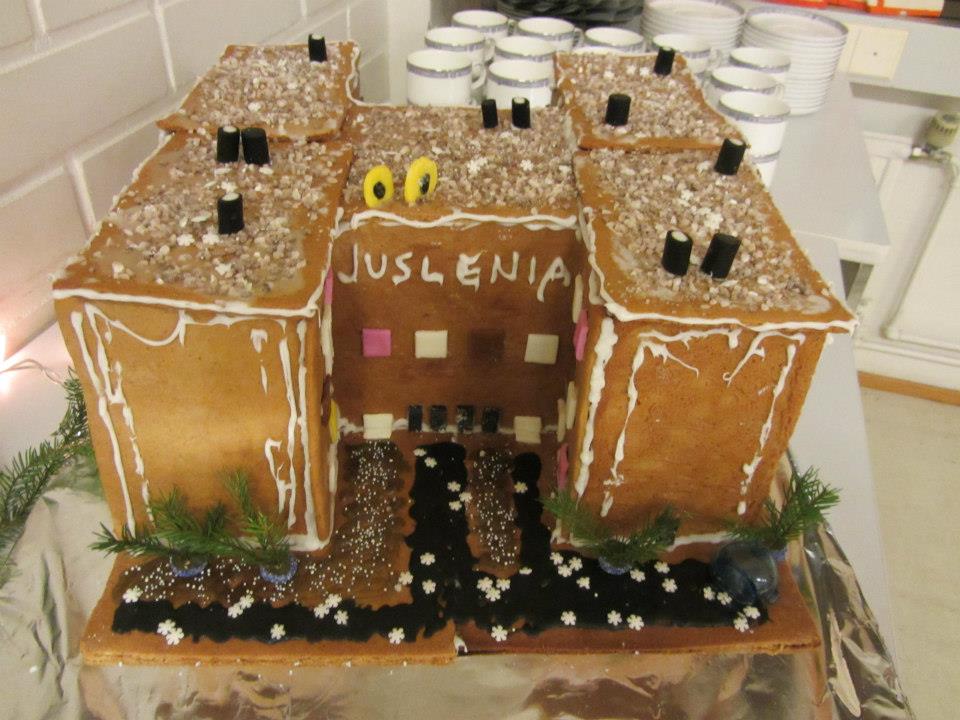
Still, in spite of its unevenness and roughness, Juslenia always brings to mind happy and pleasant memories, probably because we stayed there for such a long time, close to forty years. The final fall of Juslenia was complete in 2019, but in the Department, we had already lived through the upcoming loss by ceremonially cutting a gingerbread replica of the building into pieces of cookies at a Christmas party before leaving the building.
Gingerbread Juslenia (photo by Mari-Liisa Varila)
Our penultimate stop before Arcanum takes us to Rosetta and its sister-building Signum, both charming old buildings from the turn of the twentieth century. After the property had become part of the University, it was renovated on several occasions for different purposes, most recently for housing the departments of English, French and German translation. Both buildings had offices and teaching rooms, and a joint library of the translation departments in Signum. After the merger of the translation departments with the respective philologies in 2010, the latter, with English among them, moved into Rosetta/Signum a couple of years after. All departments moved out of these premises by the end of 2022.
There are many positive things to be said about Rosetta/Signum as a workplace. First and foremost, there was an atmosphere of a handsome old building about them, which was very nice. The staff rooms varied in size, but were on the whole quite comfortable, and much the same can be said about the teaching rooms. There was also a joint common room for those working in the building. My impression is that colleagues were generally quite pleased with the place and what it had to offer.
One aspect of the Rosetta building that was sometimes criticised had to do with the interior of its architecture, especially the number of doors everywhere. With the offices aligned along both sides of the numerous corridors with separating doors at both ends made the building a bit like a labyrinth, where students and visitors might have had difficulties finding their way around.
Aerial view of Rosetta and Signum (behind). Photo by Hanna Oksanen, copyright University of Turku Communications
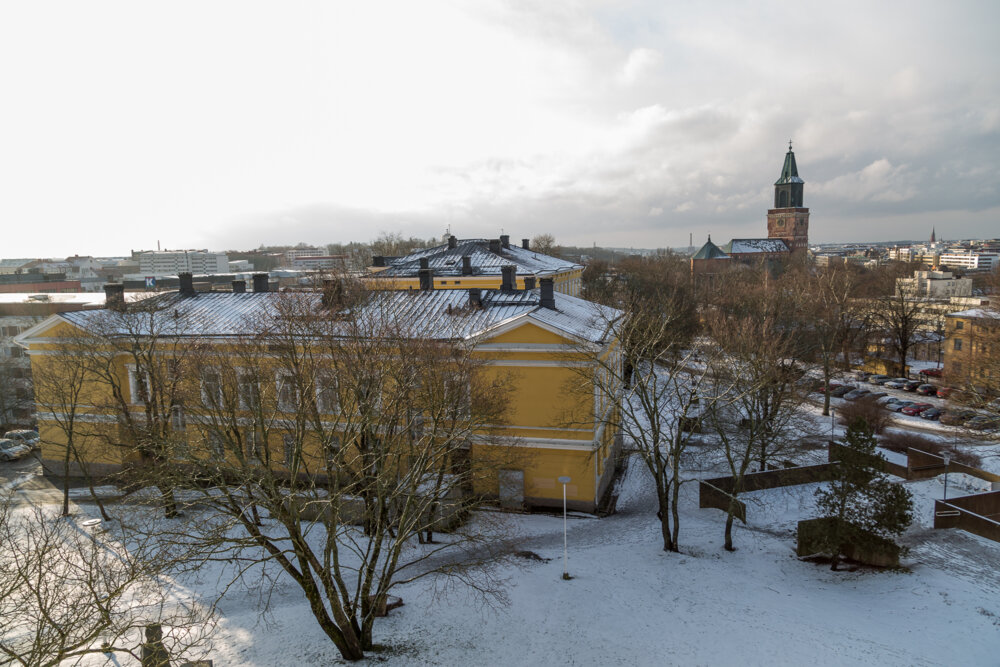
Finally, we’ll get to Arcanum. From what I have seen so far, the building is superior to all the earlier ones in a number of ways. It is not only a modern building to begin with, but one that has been very recently renovated and refurbished completely for the needs of its users. Everything is conveniently accessible and close at hand. The teaching rooms are pleasant and spacious with excellent, up-to-date facilities. Another truly great improvement is the fact that all departments of the current Faculty of Humanities are for the first time in the very same building. This is a tremendous asset for the spirit of cross-disciplinary interaction and cooperation and will, no doubt, amply prove its worth in the years to come.
Arcanum in winter. Photo by Suvi Harvisalo, copyright University of Turku Communications
It has sometimes been said that the walls are less important in Academia; it’s more important what goes on within the walls. This is true, of course, but only up to a point. The splendid premises of Arcanum rather indicate a very close interaction between the outside and inside. When the walls are constructed in harmony with the wishes, efforts and needs of the people inside, they connect rather than separate. It is a great joy to see that our long journey from Phoenix has been brought to such a happy close in Arcanum.
P.S. I am grateful to Teppo Jakonen and Janne Skaffari for their help in the preparation of this contribution. Teppo very kindly assisted in finding the photographic illustrations.