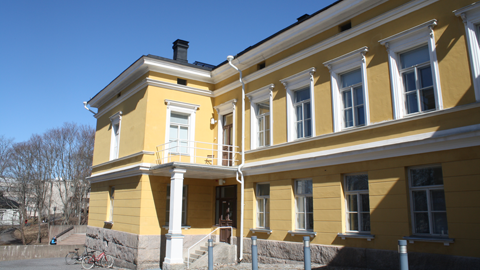
To new beginnings!

A new term is beginning – for the new arrivals as well as for the returning students and staff. New acquaintances will be made, new faces will become familiar, and old faces will gain new features. There are many new teachers in the staff, who will inevitably bring new ideas with them. We look forward to that, too.

New courses will start, and new types of collaboration between departments will grow during the term. This is instigated especially by the introduction of a new type of syllabus in the Master’s studies, consisting of four study paths: Language Learning and Teaching Path, Translation and Interpreting Path, Language Specialist Path and Researcher Path (see the blog text of 7 March 2014). Nobody knows for sure what lies in future but I am confident that the result is something good and beneficial, worth all the while that was spent in creating the system.

With all these new aspects and people, at least one thing remains the same. That is the warm, lackadaisical yet academic atmosphere of the English Department. While we aim high in teaching and research, we do not forget the light side of life. And that is brought on board by all of you.

“It’s a very good thing, really. I’ll be seeing lots of new things, a lot of new creatures.” (Kurt Vonnegut, The Sirens of Titan, 1959)

Joel Kuortti
Professor, Head of English Department
Head of School of Languages and Translation studies
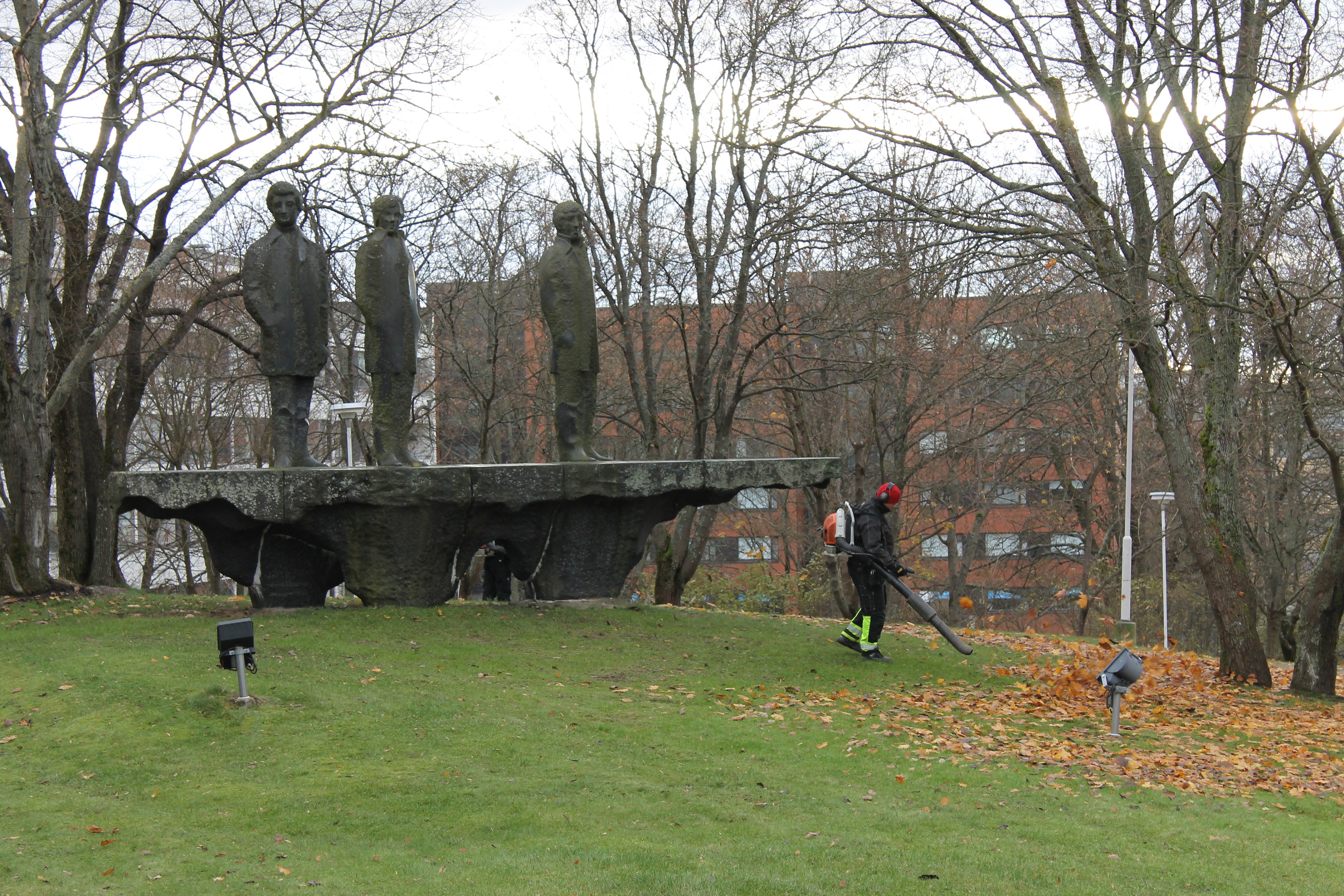
humanists2
Turku humanists.
Photo by Joel Kuortti
Festschrifts and academic festivities

One catch-phrase nowadays is that universities are dynamic. Indeed, there are many changes going on during each academic year. But there are also traditions that are valued by the academic community. For instance, the academic year has the opening ceremony in September and the graduation ceremony, publiikki, in June where new MAs are celebrated. In addition, professors give inaugural lectures when they are appointed. They also give a valedictory address when they retire as we have seen this spring with our Professor Risto Hiltunen (see earlier post)

.

Another academic tradition that the English department is following this year is that of a Festschrift. Festschrifts are commonly collections of articles published to honour a professor’s (or another academic’s) birthday or retirement. You can often recognise these when the name of a book says, for example, “essays in honour of”. When Festschrifts are published as books, they usually contain articles by the closest colleagues, collaborators and former doctoral students of the honouree. It is also common that the books are thematic and related to the honouree’s research interests. They may also include a biographical note and a tabula gratulatoria, which is a list of academic friends and colleagues who wish to congratulate the honouree.


A large part of universities’ funding is based on the publications we produce. After all, university teaching is based on research, and professors and lecturers are also active researchers. For funding reasons, it is better to publish articles in refereed journals. This means that many Festschrifts have also changed into a different format. Journals and publishers sometimes allow Festschrifts to be published in their series.

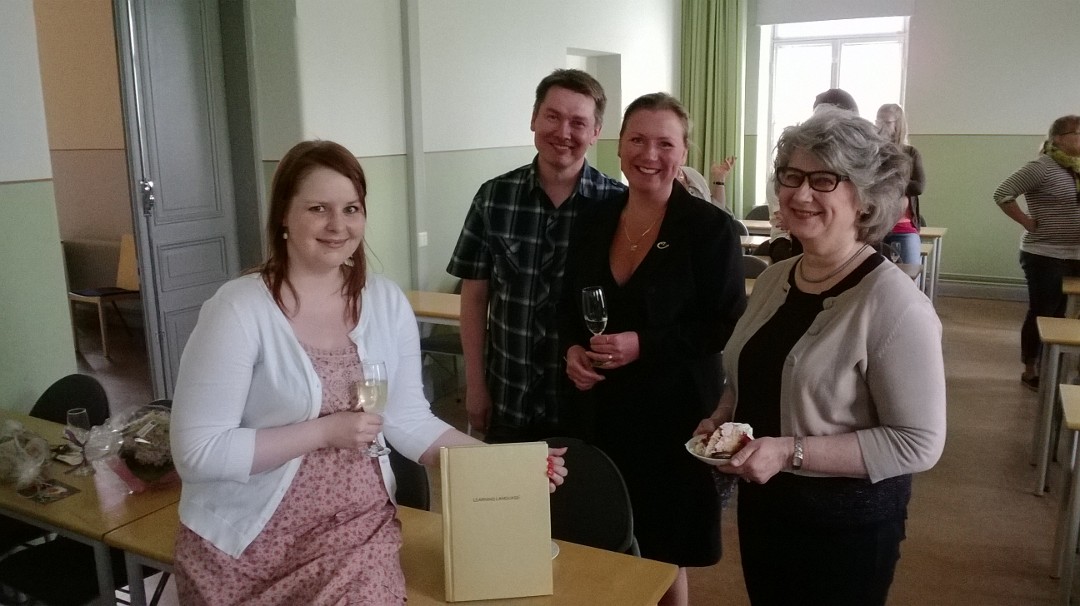
This year, we have the pleasure to publish another Festschrift, this time to honour Professor Päivi Pietilä. The theme is language learning, which is approached from many perspectives in the ten articles in the collection. The collection is a special issue in the AFinLA-e publication series and available for free here. Importantly, the Festschrift is a surprise gift to the honouree, so if you sense an air of secrecy and whispers along the corridors, chances are there is a Festschrift in the works. This time, the secret was luckily preserved until the end; to celebrate Päivi’s milestone in life, the editors gave her the manuscript as a bound golden thesis. With this publication, we want to congratulate Päivi and offer those interested in language learning many inspiring new studies to read.

V__570A
The editors of the journal special issue, Pekka Lintunen, Maija S. Peltola & Mari-Liisa Varila with Professor Päivi Pietilä, the Festschrift honouree.

Text: Pekka Lintunen
Photo: Janne Skaffari

A Day to Remember

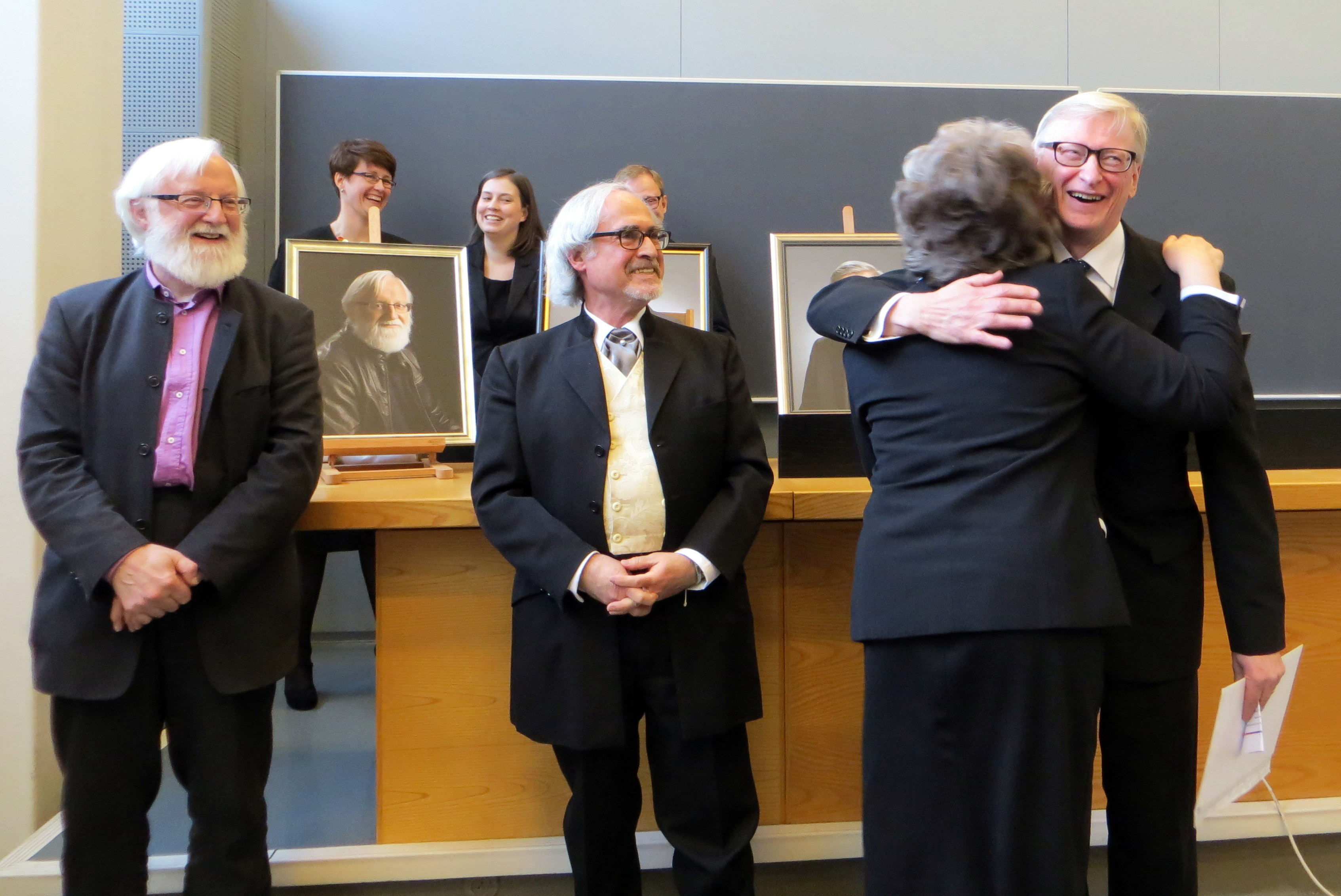
What happens when three professors of the School of Languages and Translation Studies retire at the same and give their valedictory addresses in the same room?
rh_muotokuvat

rh_halaus

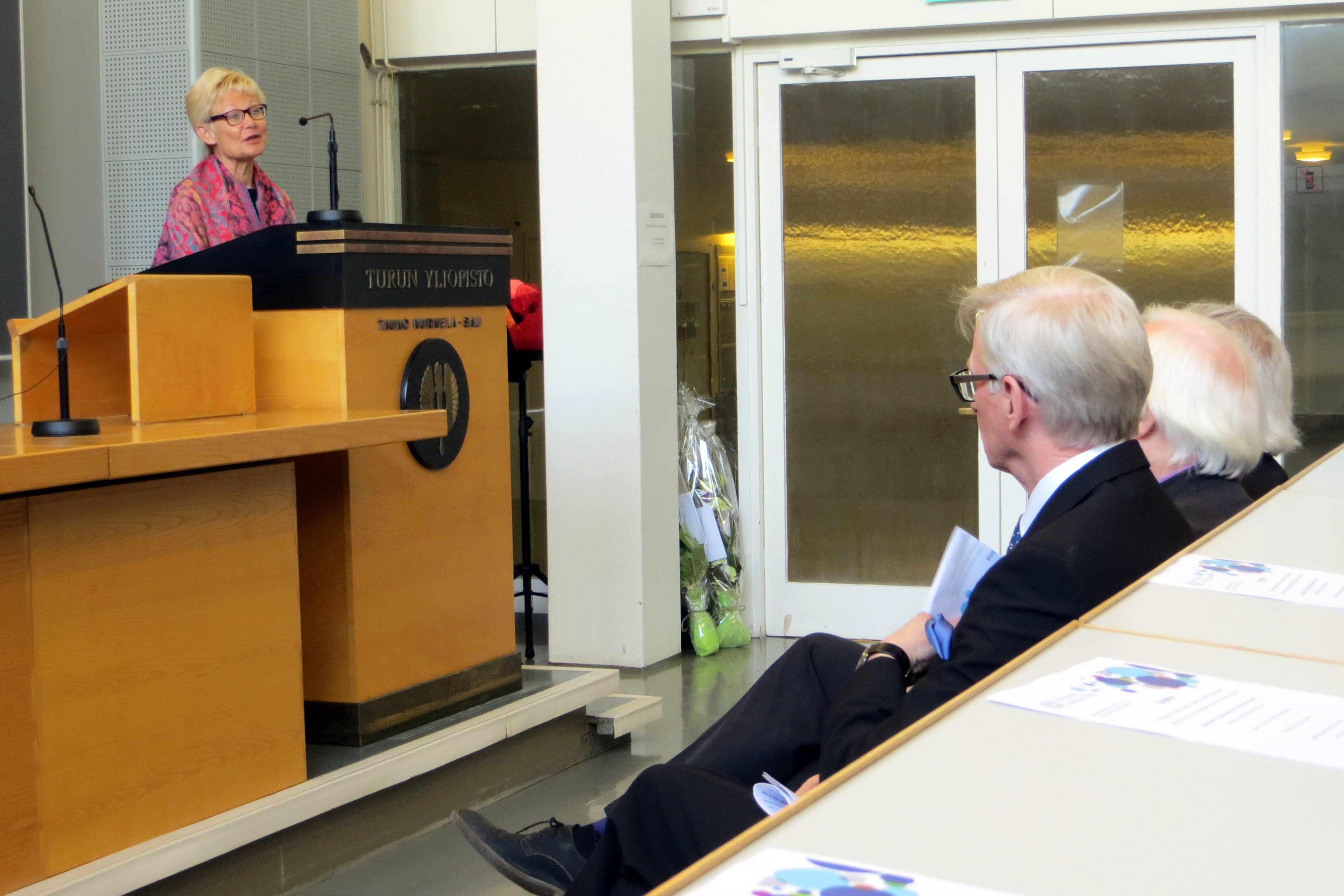
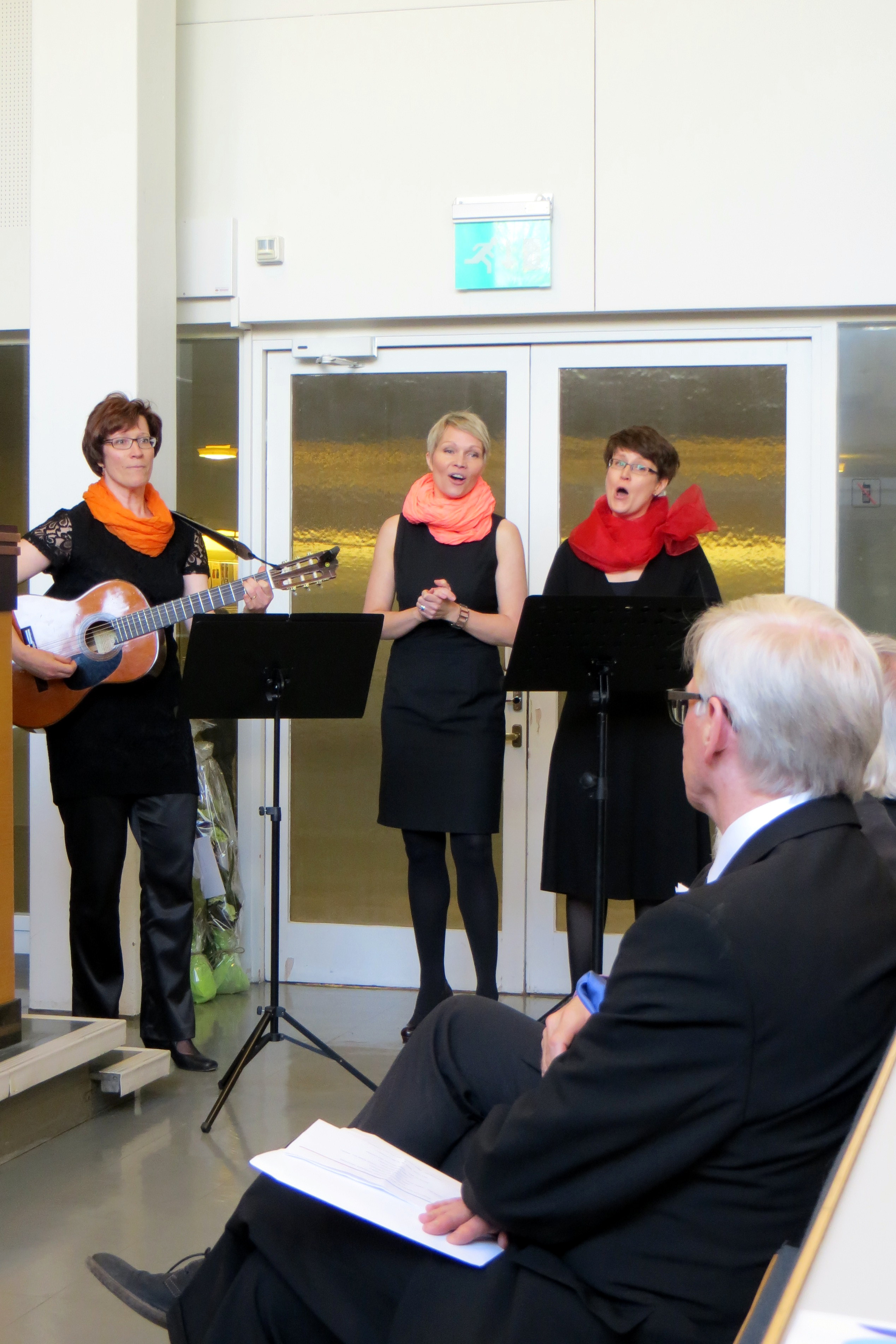
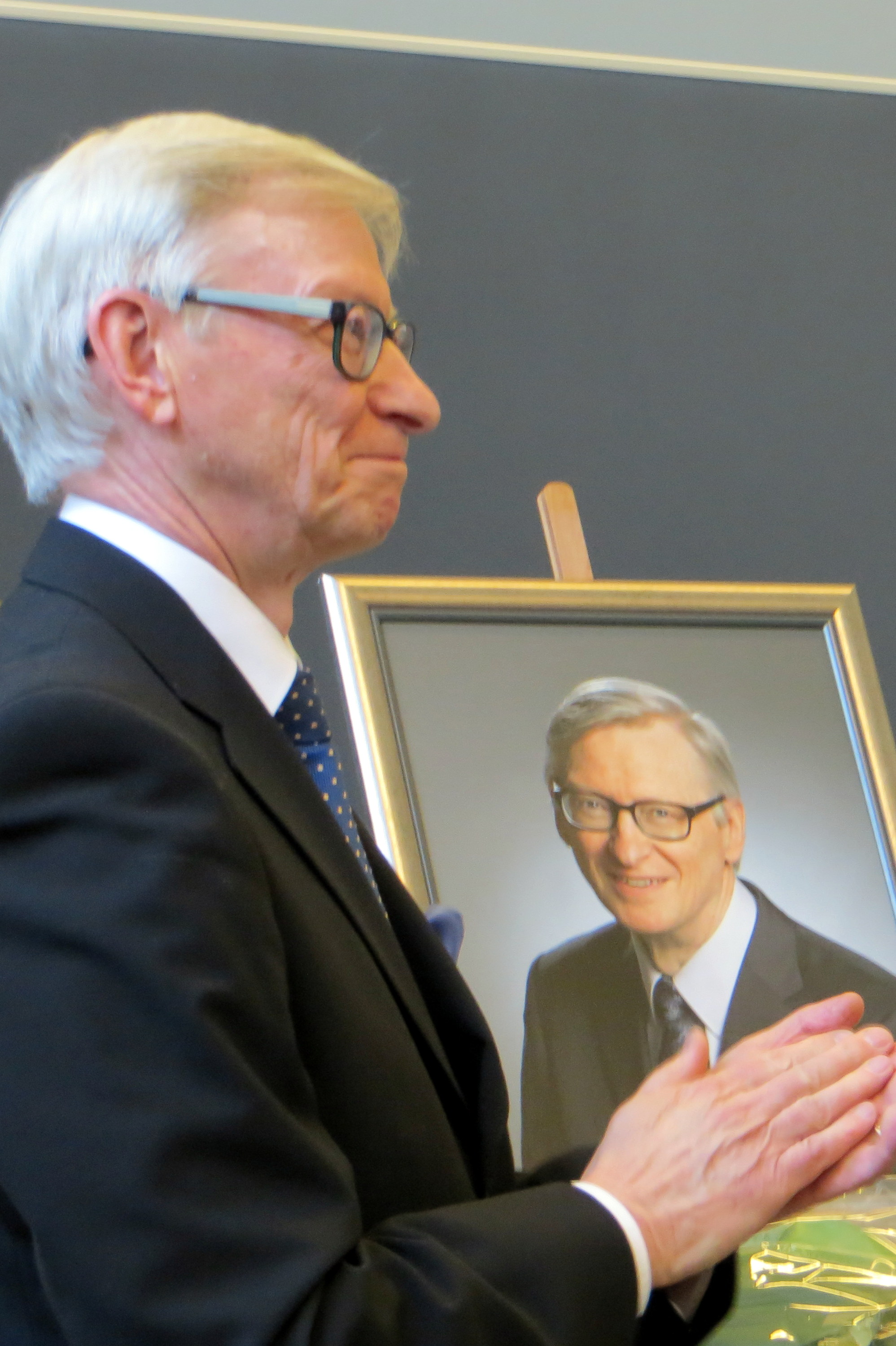
There is of course a full house, with colleagues, collaborators, students, friends and family in attendance. The addresses are full of memories from the professors’ long careers, both personal recollections and accounts of the many changes in their respective fields of research and in university life in general.

rh_yleisoa

And then there is the question of code choice: what should the language of the ceremonies be? We do not have to hypothesize about this, however, as we already know what happened when Professors Risto Hiltunen, Yves Gambier and Luigi de Anna gave their valedictory addresses in Room I in the University Main Building on 14 May, 2014. In spite of their different mother tongues and departmental working languages, all three professors gave their addresses in English, which was the dominant language of the festivities: most of the other speeches that afternoon were either English or multilingual. This interesting case of code-selection clearly reflects the role of English in academia, including our own School.
rh_eija

rh_laulua

The multilingual (but dominantly English) festivities were by no means over once the speeches had been given in the afternoon. To celebrate Risto’s successful career and express our gratitude for having had such an excellent boss for 26 years, we threw him a surprise party in the evening – in Turku Castle, no less. Risto was fetched from his home, driven around the city blindfolded and eventually dropped off at the Castle. Upon entering, he was met by his jubilant colleagues, dressed to the nines (which in a Finnish academic context means not only formal dress but top hats and swords), after which he and his wife were invited to slip into medieval attire. The whole party were then taken on a guided tour of the Castle, the highlight of which was Risto being knighted in festive ceremony. What followed was a medieval banquet in the Queen’s Chamber, with an assortment of dishes served on rye bread instead of plates, several speeches and some musical entertainment. As the dinner ended and we left the Castle at eleven, we were greeted outdoors in the May night by the full moon and blackbirds singing – a wonderful way to finish a memorable day of celebrations.
rh_kaksi

Text & Photos: Janne Skaffari

Welcoming words by Professor Risto Hiltunen

Dear readers,

According to the OED, blog as a noun has the meaning

A frequently updated web site consisting of personal observations, excerpts from other sources, etc., typically run by a single person, and usually with hyperlinks to other sites; an online journal or diary.

As a verb, the word means

To write or maintain a weblog. Also: to read or browse through weblogs, esp. habitually.

It follows from these definitions that the agent noun blogger refers to ‘the author of a weblog’. In all instances, the first occurrence of the word is dated to 1999.
As usual, the OED says it all. The idea of setting up an English Department Blog as a forum for discussing and debating questions related to our profession and the contexts we are working in – whether local, global, or in-between – is a delightful new opening. I very much hope it will become an attractive site for bloggers and blog-readers alike and thereby further contribute to our common good.
Risto Hiltunen

rosettarosetta4

(photo credits: Klaus Kurki & Joel Kuortti)