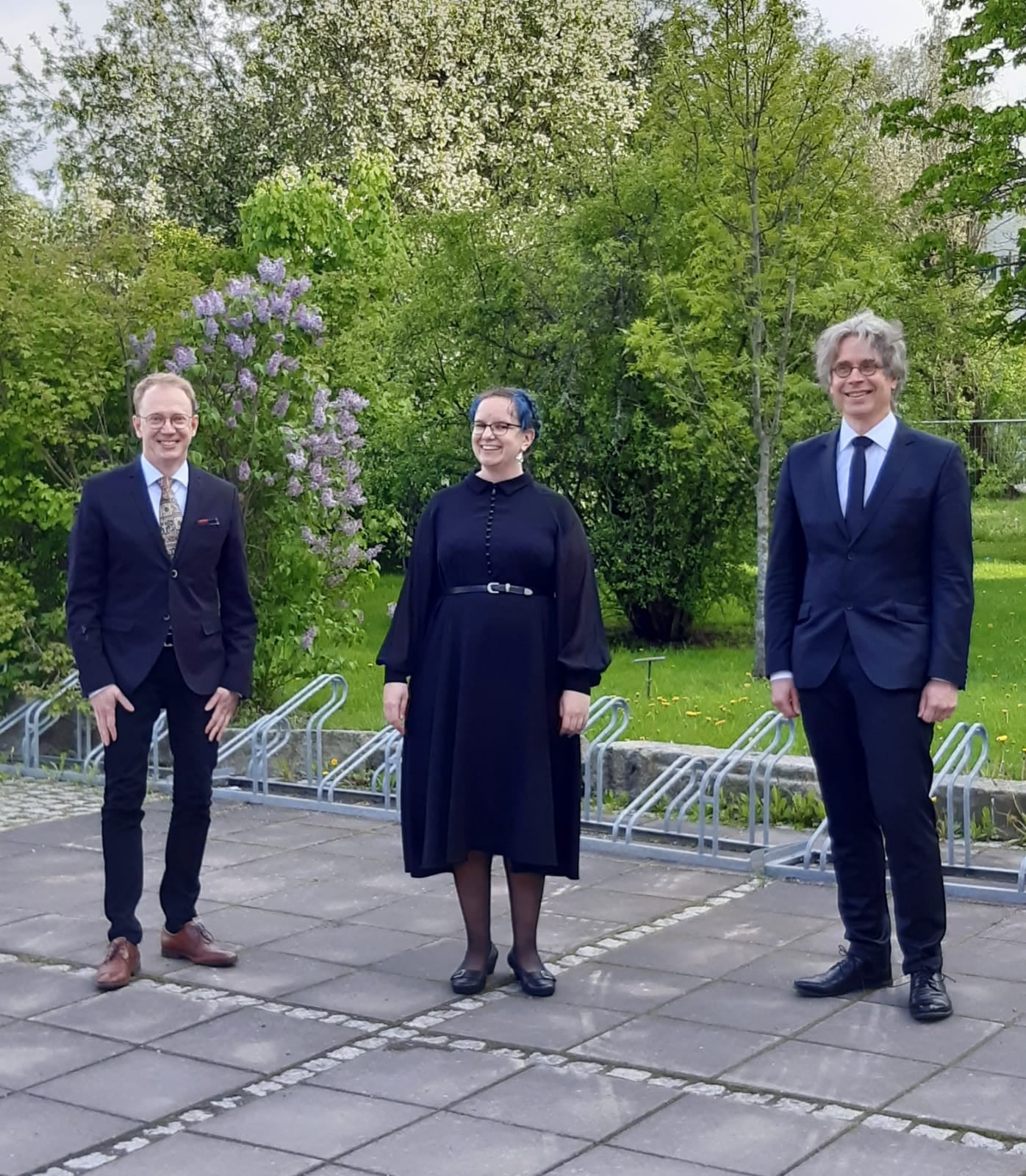
Finding the Right Answers in Fiction

Nana Arjopalo gave an outstanding performance defending her doctoral dissertation Narrating Deliverance: The Literary Double in the Writing of Chitra Banerjee Divakaruni, Jhumpa Lahiri, and Bharati Mukherjee on Friday, February 24, 2023. The viva was a true celebration of literature and the impact it has on humanity.
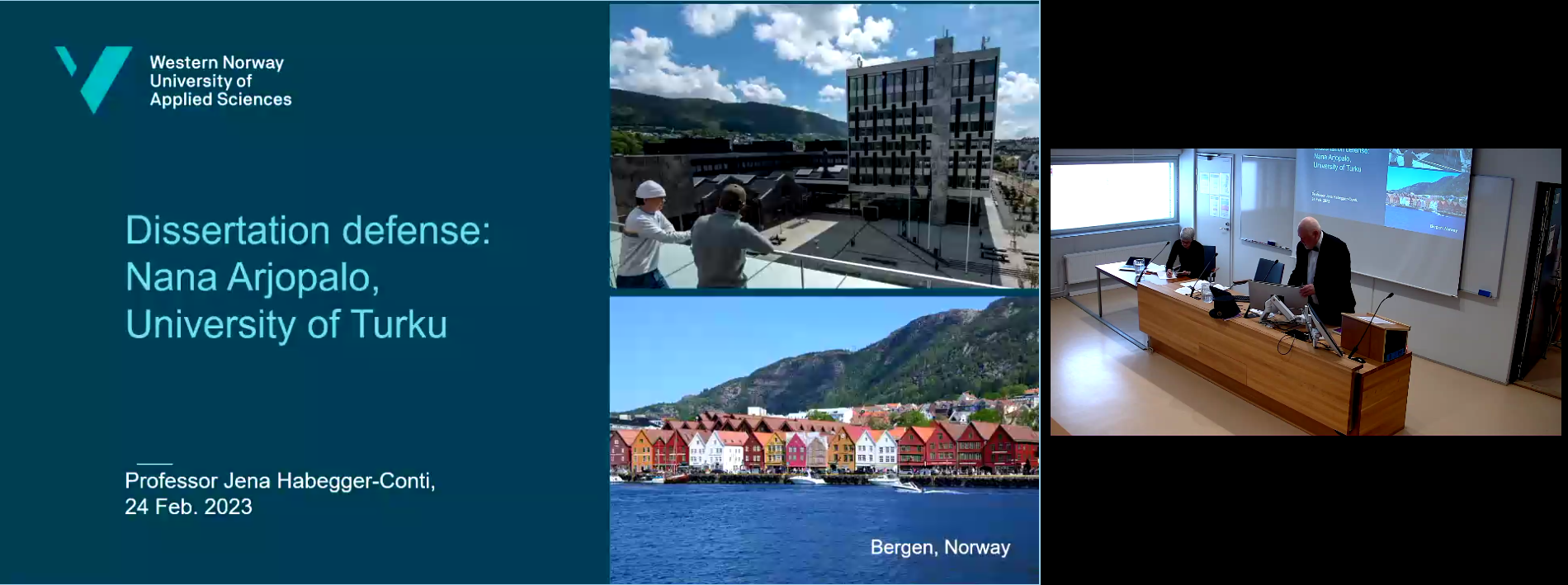
Professor Joel Kuortti testing the connection, picture and sound. Screenshot by Olga Harrison

The event was kindly streamed online via Echo360, the connection allowing remote viewers such as I to watch and listen to it closely. The broadcast began around 30 minutes before the actual event, and the early viewers had a chance to follow final preparations of the ceremony. The defense itself began at 12:15 with Nana Arjopalo proceeding to her microphone, followed by Professor Joel Kuortti acting as custos and Professor Jena Lee Habegger-Conti as the opponent.
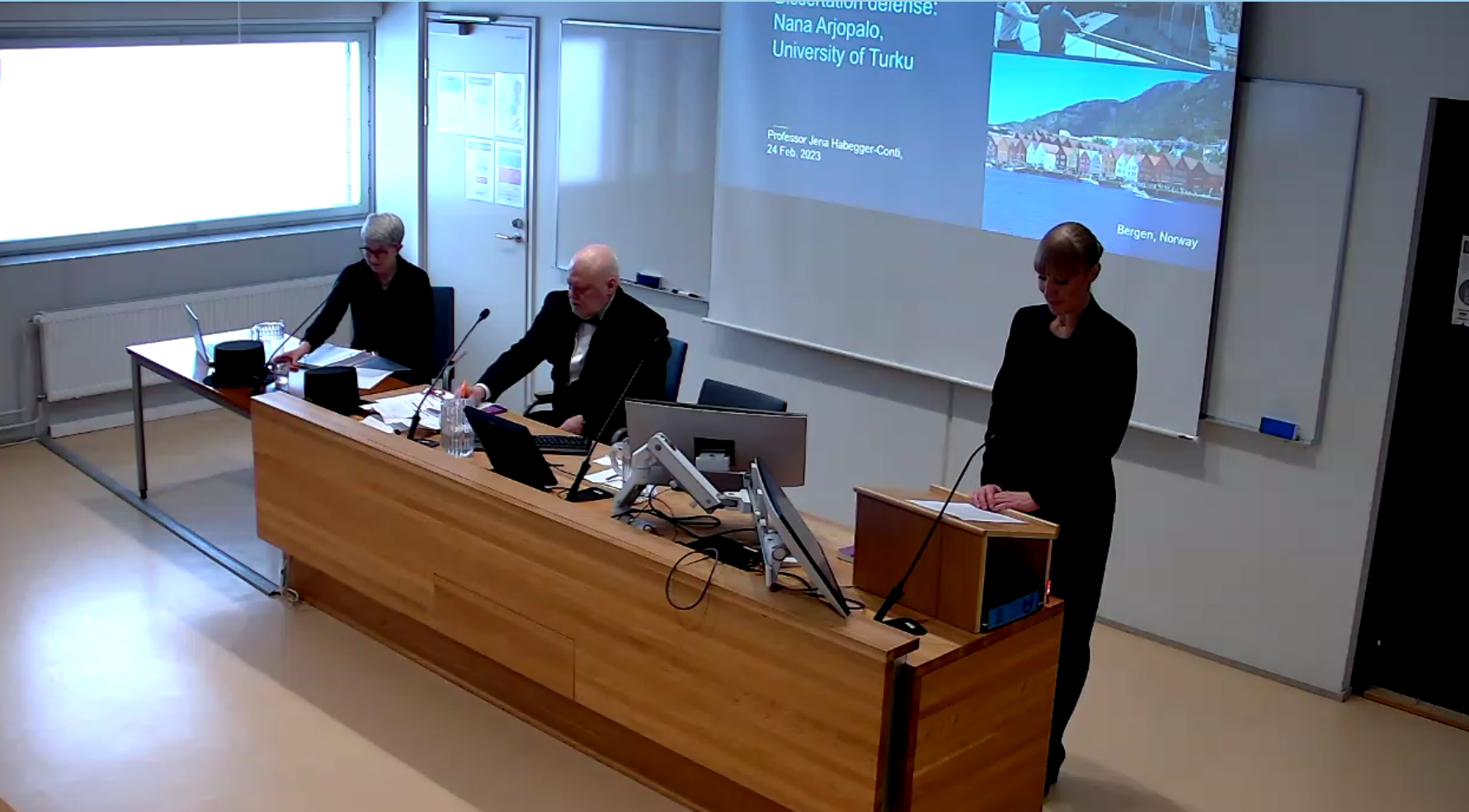
Doctoral Candidate Nana Arjopalo giving her lectio praecursoria. Screenshot by Olga Harrison

Arjopalo gave the lectio praecursoria in Finnish, covering both personal and theoretical aspects of her dissertation. Arjopalo has been an avid reader ever since discovering the fascinating world of fairy tales in her childhood. In her speech she emphasized the significance of literature to humanity. The viewers learned how fiction may offer a space to process life even better than biographical literature, as it helps one to work on personal and collective trauma, and offers a connection to others, even if one is physically away from a community. Arjopalo concluded that the right answers emerge when one asks the right questions.

The questions followed, in English, as the opponent presented her assessment and critique of the dissertation. Professor Habegger-Conti was interested in an array of subjects from the positioning to critical regionalism. Despite the range of the issues covered, the conversation flowed smoothly. There was a great deal of agreement between the opponent and the doctoral candidate, and even some terminology discrepancies were resolved without a major dispute. In her concluding words, Arjopalo stated that the discussion was reflective of the work that she had done, and that she had succeeded in making the reader draw specific conclusions from her dissertation.
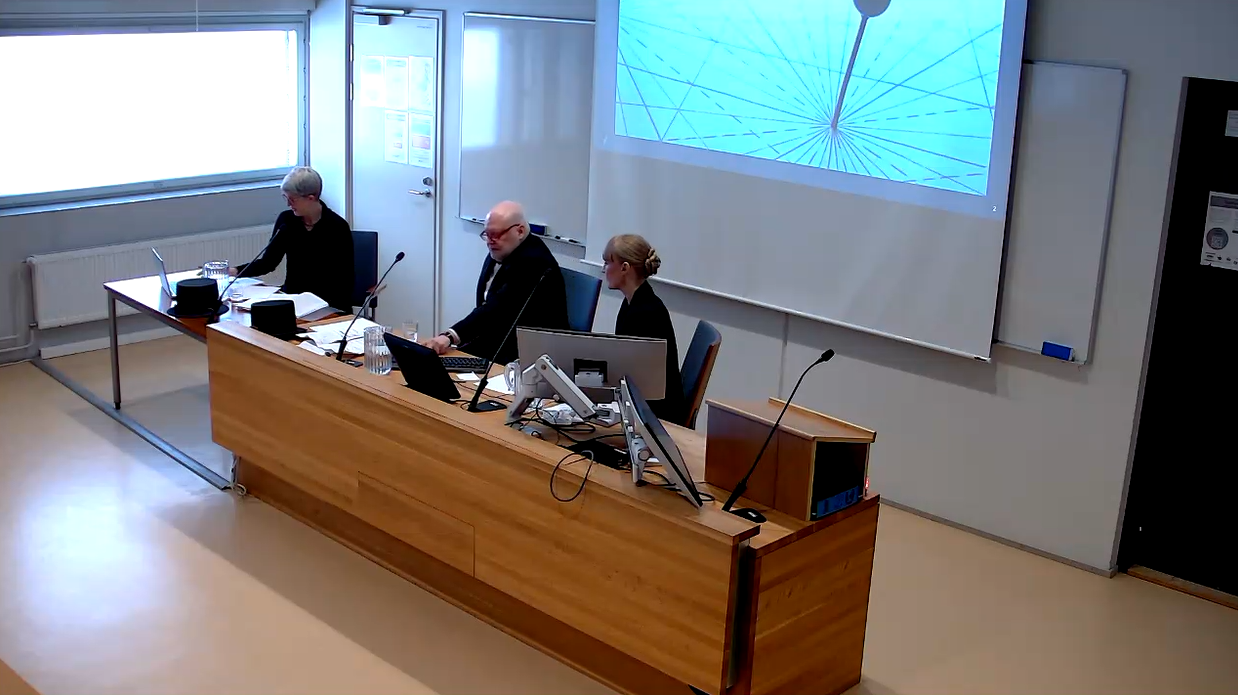
Professor Jena Lee Habegger-Conti discussing Positioning. Screenshot by Teppo Jakonen

Professor Habegger-Conti was evidently pleased to read and discuss the thesis, and ultimately recommended the faculty to accept the doctoral dissertation. As there were no questions from the audience to add to an hour-and-a-half long discussion, Professor Kuortti declared the event concluded. The newly-proclaimed Doctor of Philosophy Nana Arjopalo received congratulations from the numerous audience members on-site, and invited everyone present to further celebrate outside the lecture hall, where Echo360, unfortunately, did not follow.

That set aside, it was, indeed, a pleasure to follow the doctoral defense in literature and to be reminded about the importance of asking the right questions. Congratulations to Nana Arjopalo, Ph.D., and best wishes for her future endeavors!

Text by Olga Harrison

A DOCTORATE will be given for the completion and defense of a dissertation

Susanna Mäkinen defended her doctoral dissertation, Stability and variation in the genre of runaway slave notices in American newspapers 1704-1865, on Friday 20 May 2022. While the never-tiring doctoral researchers of the English department have produced quite a few dissertation and vivas to accompany them in the recent years, Susanna was the first one to enjoy the full traditional experience of a doctoral defense, complete with the opponent actually present in the same room and a karonkka (held at the iconic Turku Castle, an excellent choice of location by the way), since the beginning of the pandemic.

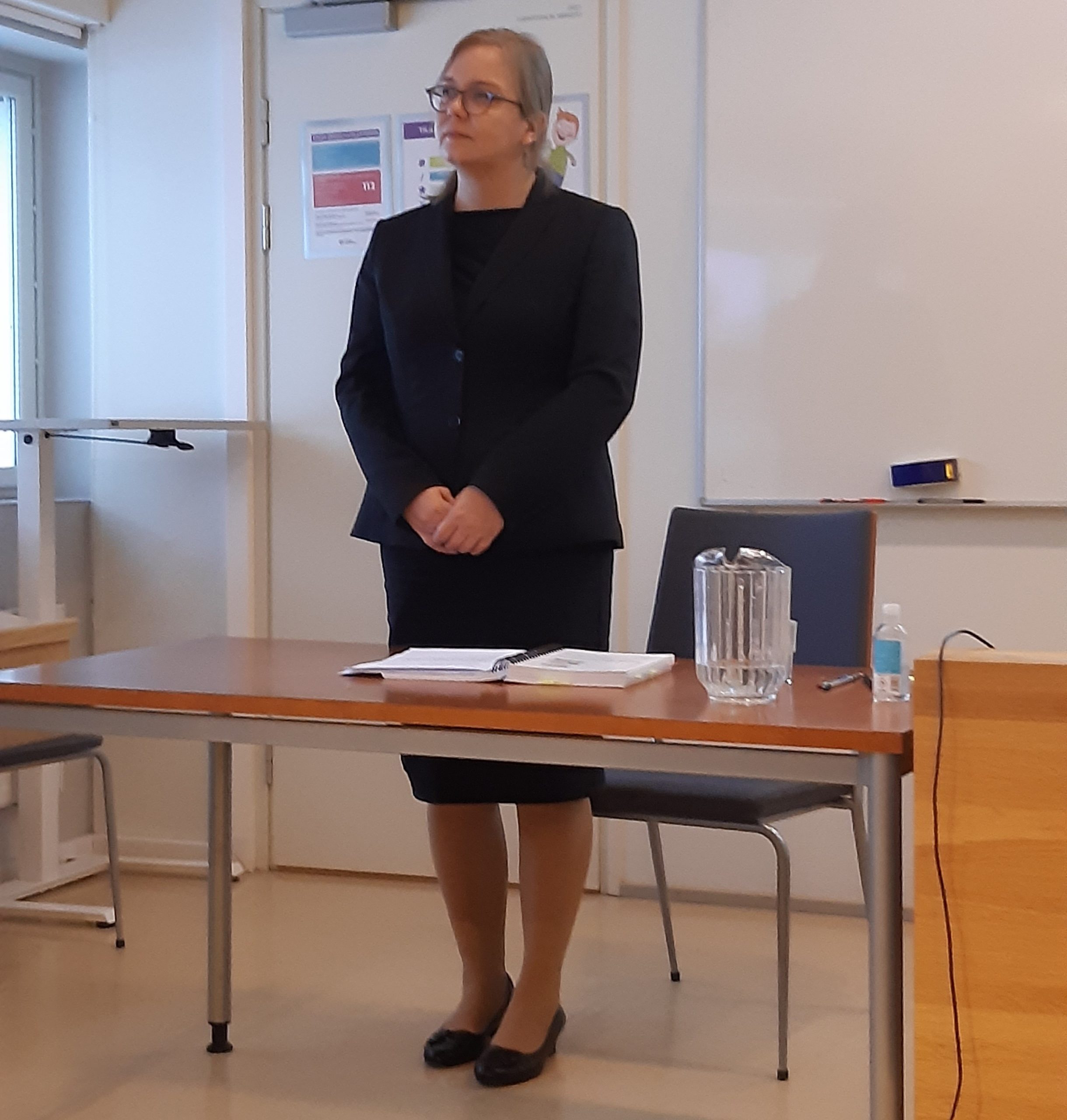
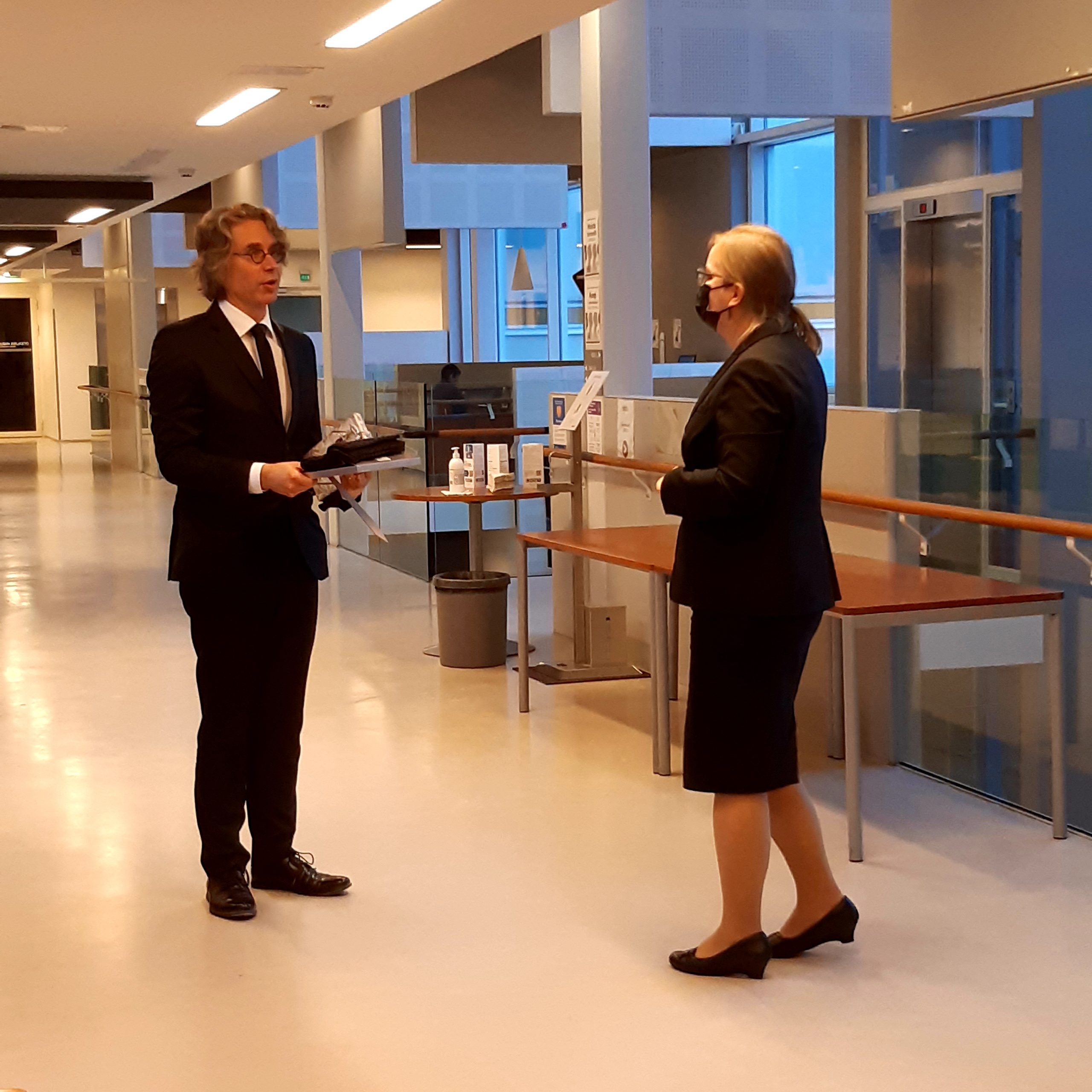
The opponent, custos, and candidate

The viva took place in the Tauno Nurmela hall and drew in quite a crowd. The viva was also streamed on Echo for those unable to attend in person. The viva started right on time at 12.15, with Professor Matti Peikola as custos, even though the arrival of the opponent Professor Terry Walker (Mittuniversitetet, Sweden) had been slightly delayed (if nothing goes wrong, did the event even happen?).

With everyone present and accounted for, Professor Peikola welcomed everyone to the viva. Susanna delivered the lectio praecursoria, a short oral presentation of the research and its significance. Susanna and Professor Walker then proceeded to have a lively discussion on the dissertation. The discussion ranged from the terms used in the dissertation to the choice of a chapter title and the reasoning behind choices made regarding the material (which includes 2603 runaway slave notices), methods and analysis. While Professor Walker presented Susanna with several tough questions, Susanna handled them beautifully. The discussion was relaxed throughout the defense and both the opponent and the doctoral candidate seemed to truly enjoy themselves, which was a joy to watch. The discussion took about an hour and a half, but the time seemed to fly by (at least for yours truly, whether the candidate agrees is unclear at this time).

Defending your dissertation is fun!

The viva marks the end of an often long and significant period in a researcher’s life. Years of work has been poured into the dissertation, which is then publicly defended. When asked what she would do differently now that she has gone through those years of labor, Susanna lamented on her apparently less than ideal note-taking, but noted that when it comes to the dissertation itself, “I’m pretty happy with what I’ve done.”

What more could a researcher at their doctoral defense ask for than a dissertation they are happy with? Not much comes to mind.

Congratulations to Susanna on this amazing achievement and the best of luck in your future endeavors! 

Text by Ida Meerto

Photos by Timo Savela

Defenses during Covid: Traditions and pandemics

Sirkku Ruokkeinen defended her doctoral dissertation, Historical appraisal analysis: evaluation of the book in sixteenth-century England, on Saturday 4 December 2021. The defense is a culmination of years of work, and as such, often a stressful event. While the dissertation itself is naturally the focus of the years prior, the event itself has its own traditions and challenges, especially during covid. Below, Sirkku Ruokkeinen writes about defenses, traditions, and her experiences thereof.

My defense in December 2021 was the sixth the University of Turku English department has had during covid times. The pandemic influences any events at the university, and the defenses are no exception, so there were some minor changes to the defense to follow the University Covid guidelines.

Preceding the defense, there is a long list of practical matters to tend to. The candidate must have the dissertation printed and distributed. The press releases are written by the candidate and delivered to the university communication services. The electronics and connections in the space reserved for the defense have to be checked. There is also some limited communication between the candidate and the opponent – in this case Prof. Claudia Claridge of Universität Augsburg – about the practicalities such as setting up the defense practice Zoom event and the defense Zoom event itself. The opponent also needs to be informed of any changes to the dissertation made based on the pre-examiner comments, so that they know how the issues pointed out have been resolved, and may address them further in the defense with the full knowledge of what the candidate has said on the topic.

The defense itself took place through Zoom, but also had open admittance for a live audience. This two-media aspect brought its own challenges. For example, the traditional formulae of the lectio praecursoria and defense invitations had to be well thought out, with special consideration given to who is being addressed: the audience in the room, the audience at home, or the opponent in zoom. Issues of digital and technical nature had to be considered in advance, so as to be prepared to fix any issues as quickly as possible. I was fortunate to have knowledge and experience on my side, as the custos and marshal (Prof. Matti Peikola and Dr Janne Skaffari) had participated in several pre- and post-covid defenses and could advise me on best practices.

The defense is a rather formal affair, which I always felt was a quite sharp contrast to the generally laid-back atmosphere in the Finnish universities. This, of course, reflects the importance of the event as the threshold to the highest available academic degree. The customs are largely dictated by the university. For example, the presence of a custos, who acts as the master of ceremonies, is degreed by the University guidelines. Other customs are more specific to the department or school, such as agreements about the dress code and the setup of the auditorium.

There are some traditions for the evening party as well. The karonkka – a party thrown by the candidate in celebration of the opponent – is traditional in all Finnish universities. Unfortunately, my opponent could not be present, and hence no karonkka in her honor could be arranged. Instead, I enjoyed some bubbly after the defense with my closest colleagues and friends. Although the karonkka could not be arranged due to the present situation, I was able to enjoy the English department traditions. Firstly, I received a most magnificent new cover design for my dissertation from the department. The new design is made with one goal in mind: to joke around with the doctor in spe under the guise of popularizing the research. The alternative covers have been prepared for all new doctors within the department since 1983 – a tradition that began with Professor Emeritus Risto Hiltunen’s cover. I also got to enjoy Historical Appraisal Analysis: THE MOVIE, prepared by the Philological Colloquium. This tradition, particular to the philologists of the department, involves the preparation of a play or other new rendition of materials found within the dissertation.

All in all, although the pandemic offered some complications to the arrangements, the event itself went well, the celebration afterwards was lovely. Most importantly, the evaluation committee recommended that the dissertation be awarded the grade “pass”, and I could begin my Christmas holidays.

Text by Sirkku Ruokkeinen

Photos by Janne Skaffari

Defending alchemy

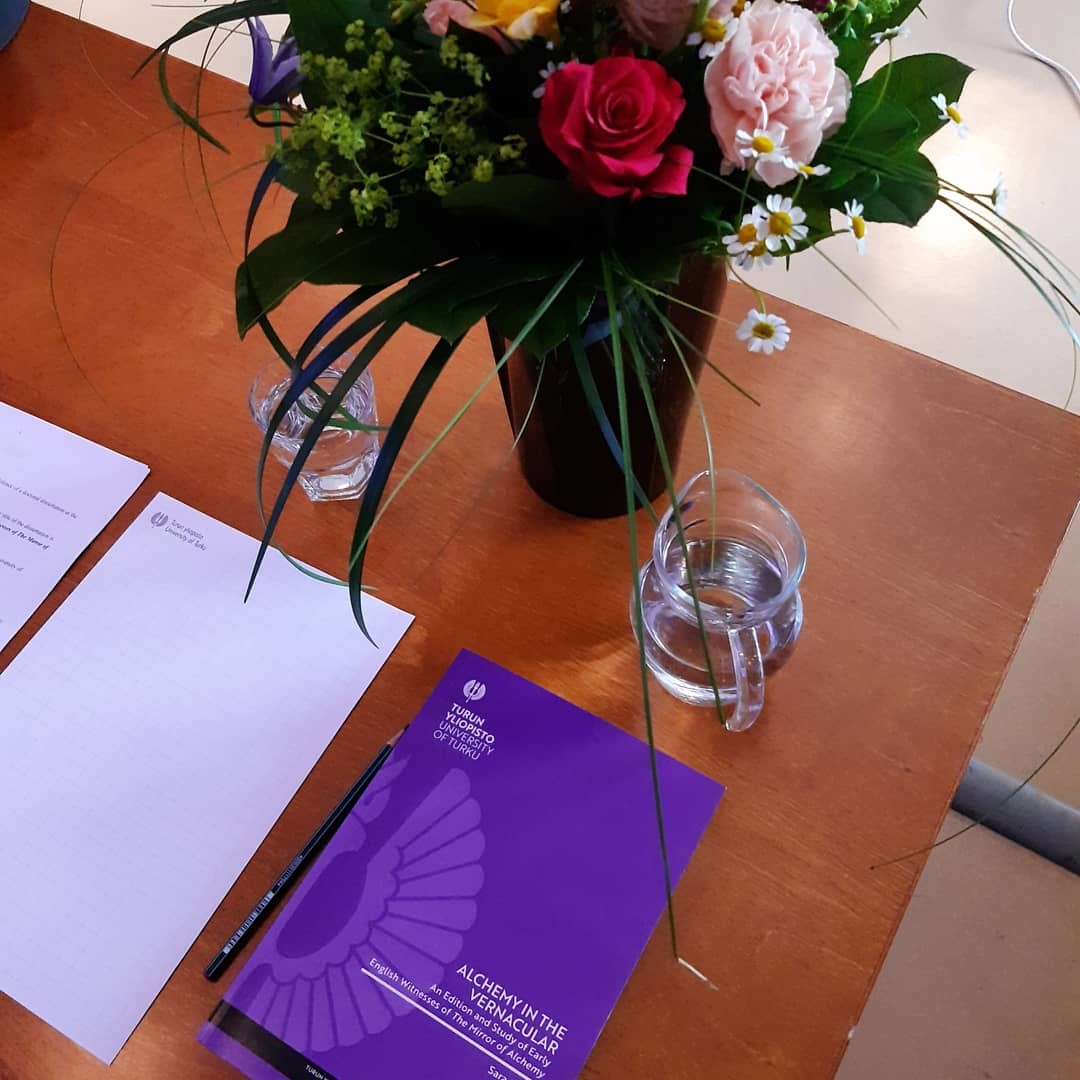
Doctor in spe Sara Norja defended her doctoral dissertation, Alchemy in the Vernacular: An Edition and Study of Early English Witnesses of The Mirror of Alchemy, on Thursday 27 May 2021. Here, she writes about the viva and the days leading up to it.

Due to the pandemic the viva was on Zoom, so the arrangements were a little different from usual. I wasn’t able to have a karonkka – the traditional academic afterparty following a viva. I can’t deny I would have loved to have one, but having fewer things to organise before the viva was also a relief, as the week of my defence was a busy one.

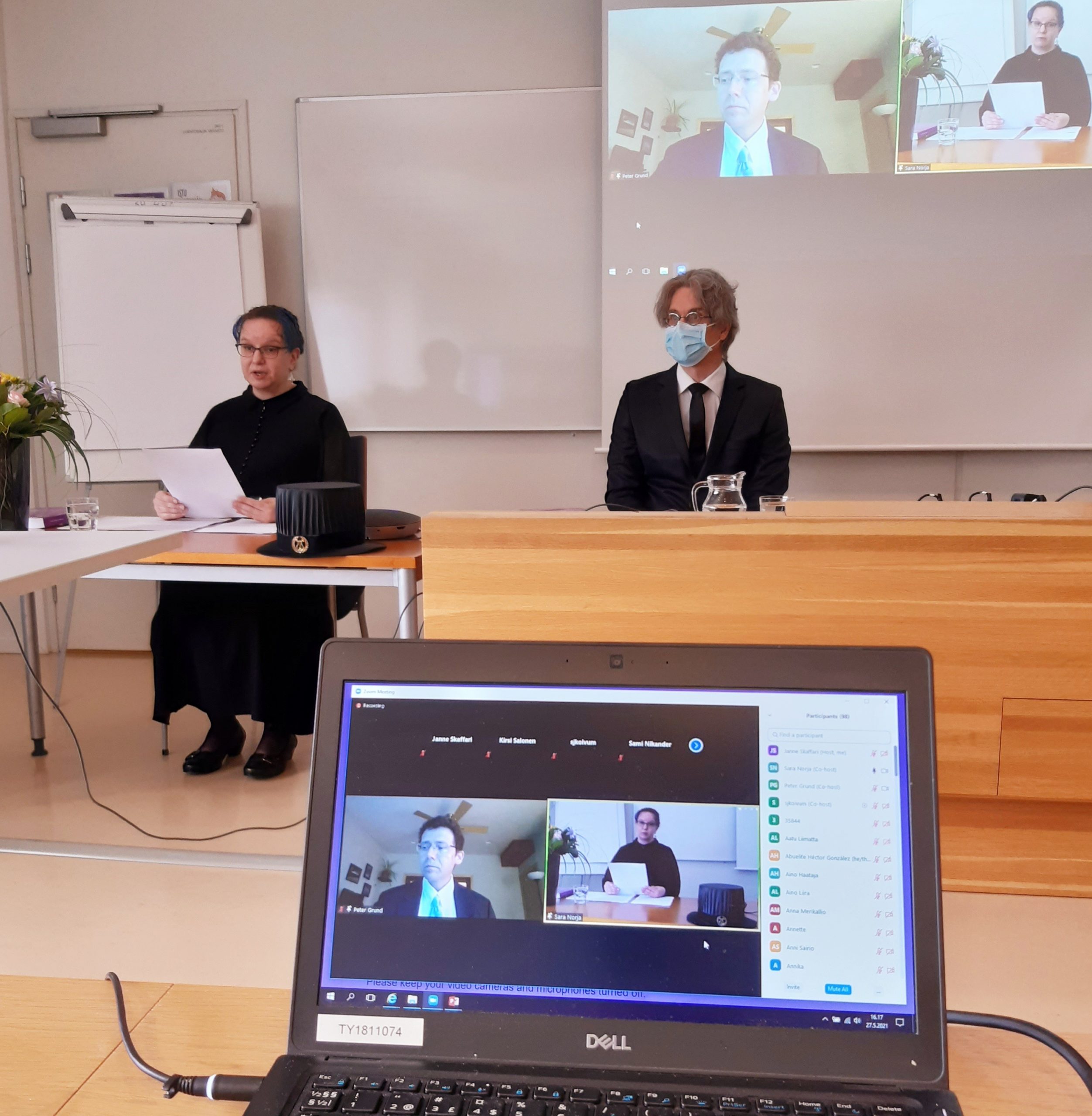
On Monday we had a Zoom rehearsal in the Educarium lecture hall where the viva would be broadcast from. Professor Matti Peikola and Dr Janne Skaffari (my PhD supervisors) were there with me in person, as Matti was the custos and Janne was the marshal (airut) in charge of Zoom proceedings during the viva. We had a short Zoom call with my opponent Professor Peter J. Grund (University of Kansas), and sorted out all the technical matters. It was a relief to see the room I would defend my dissertation in, and to make sure that the connections all worked!

On Thursday 27th, the day of the viva, the nerves hit me. It was good that the viva was as late as 16.00 (due to the time difference with Kansas), because despite the gnawing feeling in my belly, I even managed to eat lunch before it. However, once I was actually in Educarium and the viva was about to commence, I calmed down. The final minutes before turning on the video and sound on Zoom were the longest I’ve ever known, though!

The custos Professor Matti Peikola and I sat down in front of the camera, facing the lecture hall with six other people in it (our technical support Satu Koivumäki, Janne, and four of my family members). Quite different from the experience of sitting in front of a bigger live audience! However, I knew there were lots of people watching through Zoom, so the audience online was huge. I tried not to concentrate on that, though, but to focus on my opponent, who I could see on the screen set up opposite me.

I felt unreal – was this major event actually happening after seven years of working on my dissertation? But once the viva officially started with the customary opening words, and I began giving my lectio praecursoria (the traditional speech given by the PhD candidate at the start), everything started to flow. I gave my lectio, and asked Professor Grund to present his criticisms of my dissertation. He gave his opening statement, and then we proceeded into the questions.

I had been told previously that once the defence actually starts, it can be a delightful experience as well as a scary one. This was certainly true for me. Professor Grund asked some pretty tough questions, but I discovered that it was incredibly rewarding and fun to answer them and to discuss my dissertation with him. He was the best opponent I could have hoped for. By the time Professor Grund had given his concluding statement and the viva was over, I was fizzing with excitement and pent-up nerves. The defence was concluded by the custos, and we could proceed to congratulations.

Relieved smiles after the ordeal!

Even though the pandemic meant I couldn’t have a proper karonkka, we rounded off the evening with a lovely outdoors event with a small number of my colleagues from the Department. Some excellent traditions were upheld despite the pandemic, and overall the day will stand out as a landmark event in my life.

Text by Sara Norja

Photos by Janne Skaffari and Mari-Liisa Varila

Two days to go: Upcoming defense on second language speech fluency

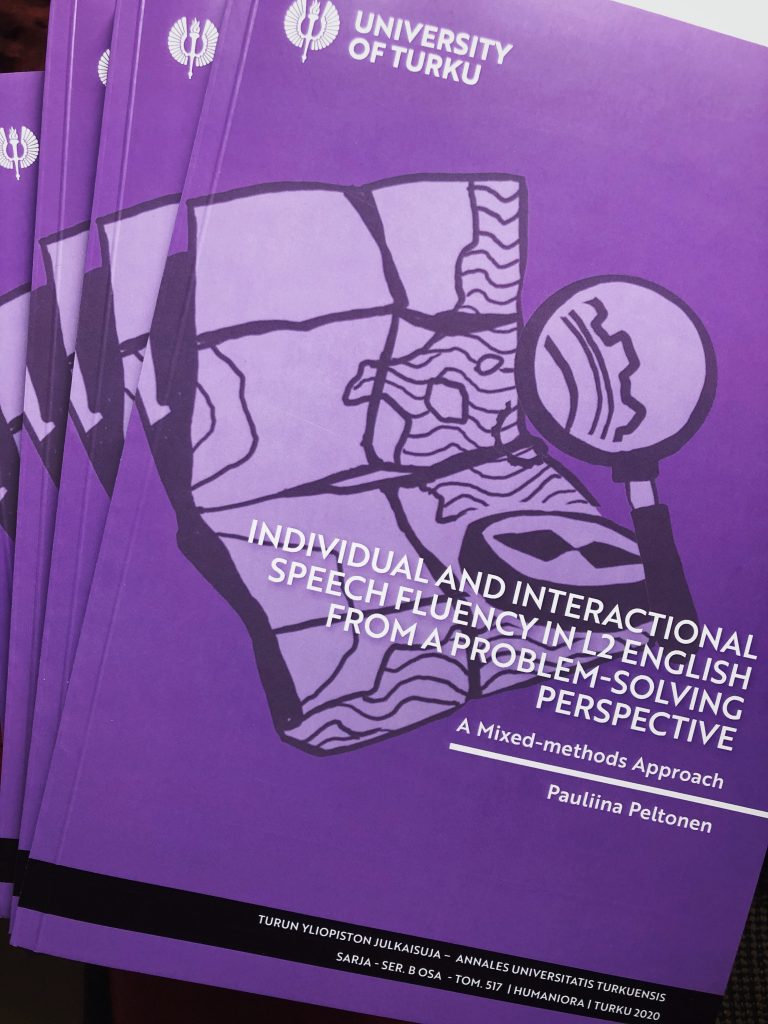
Doctoral candidate Pauliina Peltonen will defend her PhD dissertation entitled Individual and Interactional Speech Fluency in L2 English from a Problem-solving Perspective: A Mixed-methods Approach this week on September 11th, 2020. The audience will be able to follow the defense online via Zoom. Professor Judit Kormos from Lancaster University will be the opponent and Dr Pekka Lintunen will act as custos.

A doctoral defense is the final part of postgraduate studies: it is the end of one process, but also the beginning of another phase, postdoctoral studies. Defending your PhD is both exciting and nerve-wracking. You finally have the chance to talk about your research and what you have been working on for years. However, the opponent asks the questions, and the task is to react to those questions in the best way possible. Custos is the chair of the public examination of a dissertation and often the supervisor of the doctoral candidate. Normally the custos has to do three things: say one sentence to start the examination, another one to end it, and most importantly, sit quietly but stay awake during the examination—not always an easy task!

Pauliina’s dissertation addresses a central aspect of second language (L2) proficiency and speaking skills: fluency. In the dissertation, she examines L2 speech fluency and learners’ resources for maintaining it based on monologue and dialogue speech samples. Fluency is analyzed with a variety of traditional temporal measures (e.g., speech rate and silent pauses), but also from the perspective of so-called fluency resources that can help to maintain speech fluency (e.g., filled pauses, such as uh/um, and repetitions).

The findings show that L2 speech fluency is a multifaceted phenomenon. Fluency should be studied with a combination of quantitative and qualitative methods: the mixed-methods approach provides a more comprehensive picture of fluency than either approach alone. The study also shows that fluency can be viewed as a collaborative phenomenon, while traditionally, fluency has mostly been examined from an individual’s perspective based on monologue data. The study demonstrated that in interaction, learners maintain the flow of speech collaboratively across turns, for instance, by minimizing pause time.

The study provides new insights into L2 speech fluency—a topic that has become a key area of study in the Department of English in recent years. We also collaborate with other fluency researchers in the School of Languages and Translation Studies. Two fluency research projects have been launched just this autumn in the department: Fluency across Multilingual Speakers (MultiFluency; funded by the Swedish Cultural Foundation in Finland 2020–2021) and Fluency and Disfluency Features in L2 Speech (FDF2, funded by the Academy of Finland 2020–2024), both led by Dr Pekka Lintunen. So when one phase is soon over for Pauliina, the next phase will begin in these research projects. We are looking forward to continuing our collaboration and gaining more insights into L2 speech fluency in the near future!

Zoom link for the defense on Friday: https://utu.zoom.us/j/61267813839

Text by Pauliina Peltonen and Pekka Lintunen

Photo by Pauliina Peltonen