The Department by the River

As mentioned earlier in the Tale of Two Departments, there are two Departments of English here in Turku. Situated as we are on the University Hill, our department is known as the Department Up the Hill, while our Åbo Akademi sister department (right at the brink of the river Aura) is known as the Department by the River.

This year we have been determined to increase cooperation between the two units. Among other things, this means that we encourage our students to complete optional studies in the other department, allowing this way a wider selection of special fields.

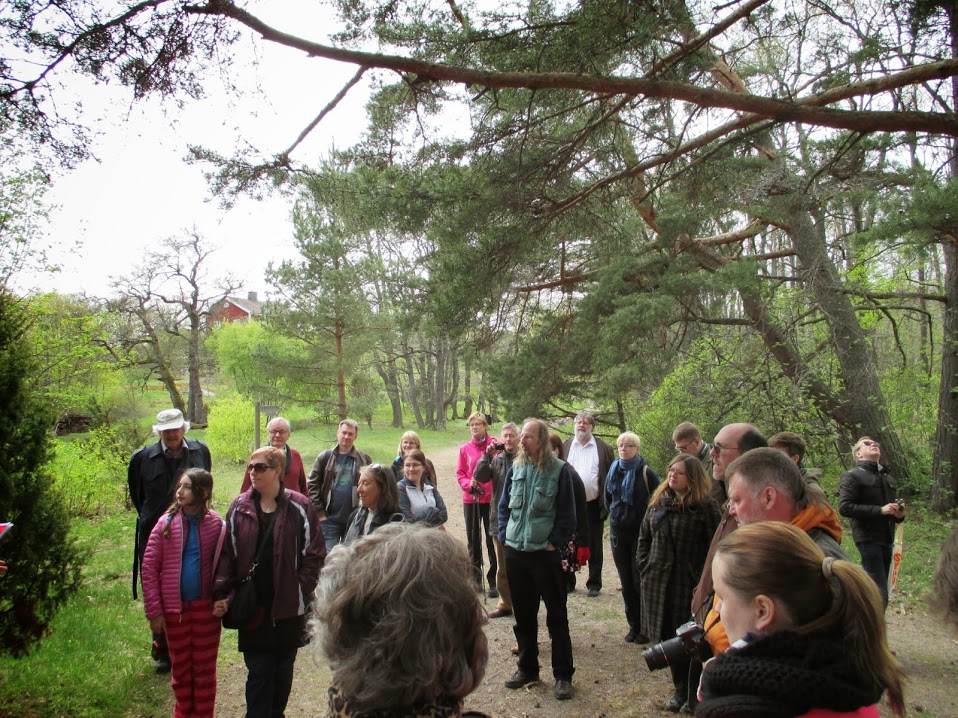
On Halloween in October, we hosted a guided tour of the TY campus to the ÅA students and staff. On an exceptionally sunny and bright December afternoon, it was finally our turn to make a counter visit to the Åbo Akademi campus.
SAMSUNG
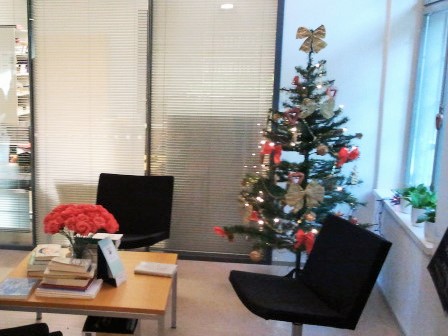
It’s Christmas time at the English Department by the River.

The ÅA Department’s intern Annette Byskata and doctoral student Adam Borch greeted us at the entrance hall of the Arken building, where most of the ÅA Humanities’ units are located. They directed us first to the second floor of the building and into the ÅA English Department’s corridor. We got to see where the Department office is located, but also learned that it will be moved soon because of changes in the admin staff. Also, we saw the Department’s three main lecture rooms (Helikon, Kramer and Donner), and sat down at the Kramer hall to meet the staff, hear about their teaching and to learn how to browse the ÅA website.

SAMSUNG
Our guide, Annette Byskata, at the Arken lobby.

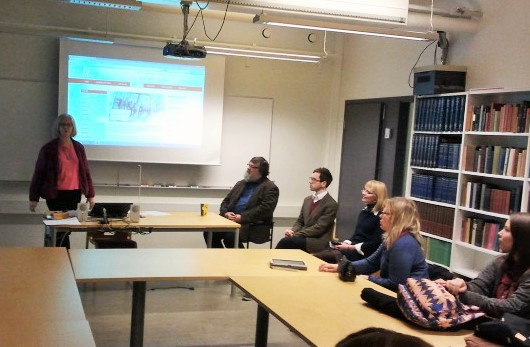
The Head of the Department, Brita Wårvik, welcomed us to the tour and introduced us to the ÅA syllabus. Anthony Johnson, Jason Finch, and Stuart McWilliams gave us more detailed info on the Department’s literature courses. Signe-Anita Lindgrén, the SLA expert of the department, talked about the teacher track of the Department, while Martin Gill discussed the Department’s culture-oriented teaching. Finally, Brita introduced the discourse studies related courses available. During the Q&A with the staff, we discovered practical facts: e.g. that the ÅA term is divided into quarters differently from TY (something to consider when taking their courses!). Also, many of their courses last only one quarter, where as our courses typically last two quarters. These kind of differences may allow flexibility for TY students wanting to complete courses in a schedule different to ours.
SAMSUNG
The ÅA staff introducing their curriculum.

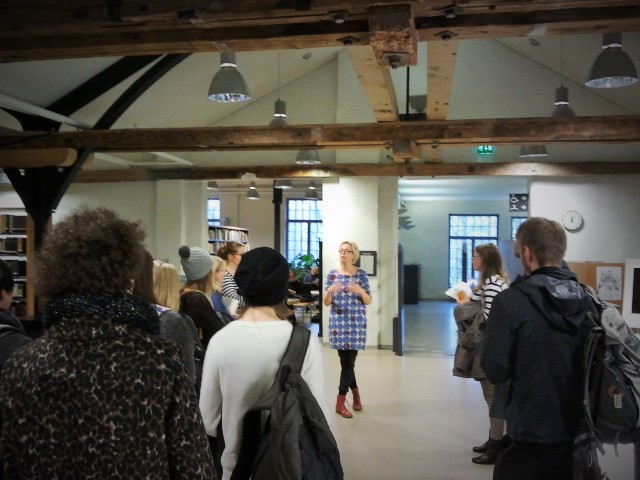
After meeting the staff, we were ready to continue with our tour. The next pit-stop was the Humanities library on the first floor of Arken. The librarian Maria Lassén-Seger greeted us at the library entrance and talked to us about the library customs and about the history of the building, which was originally a factory. In fact, the first Finnish tractor was built there! Maria took us to see the linguistics and English sections of the library’s collections before sending us off to the next stop of our tour, the Asa building.
SAMSUNG
Maria Lassén-Seger urges the TY students to use the ÅA libraries, too.

In the Asa building, Annette and Adam first guided us to the IT centre of ÅA on the first floor, humorously named “the Oracle”. Rumour has it that occasionally the helpdesk’s instructions are as ambiguous as the oracle’s advice in a well-written Greek comedy. Finally, we stopped by the course book library in the Asa building, where the students had the possibility to activate their TY library cards for ÅA use.

Warm thanks again to the staff of the Department by the River for inviting us and for organising such a fun and educational tour for us!

Text by Anna Kalpio
Photos by Anna Kalpio & Adam Borch

abo1
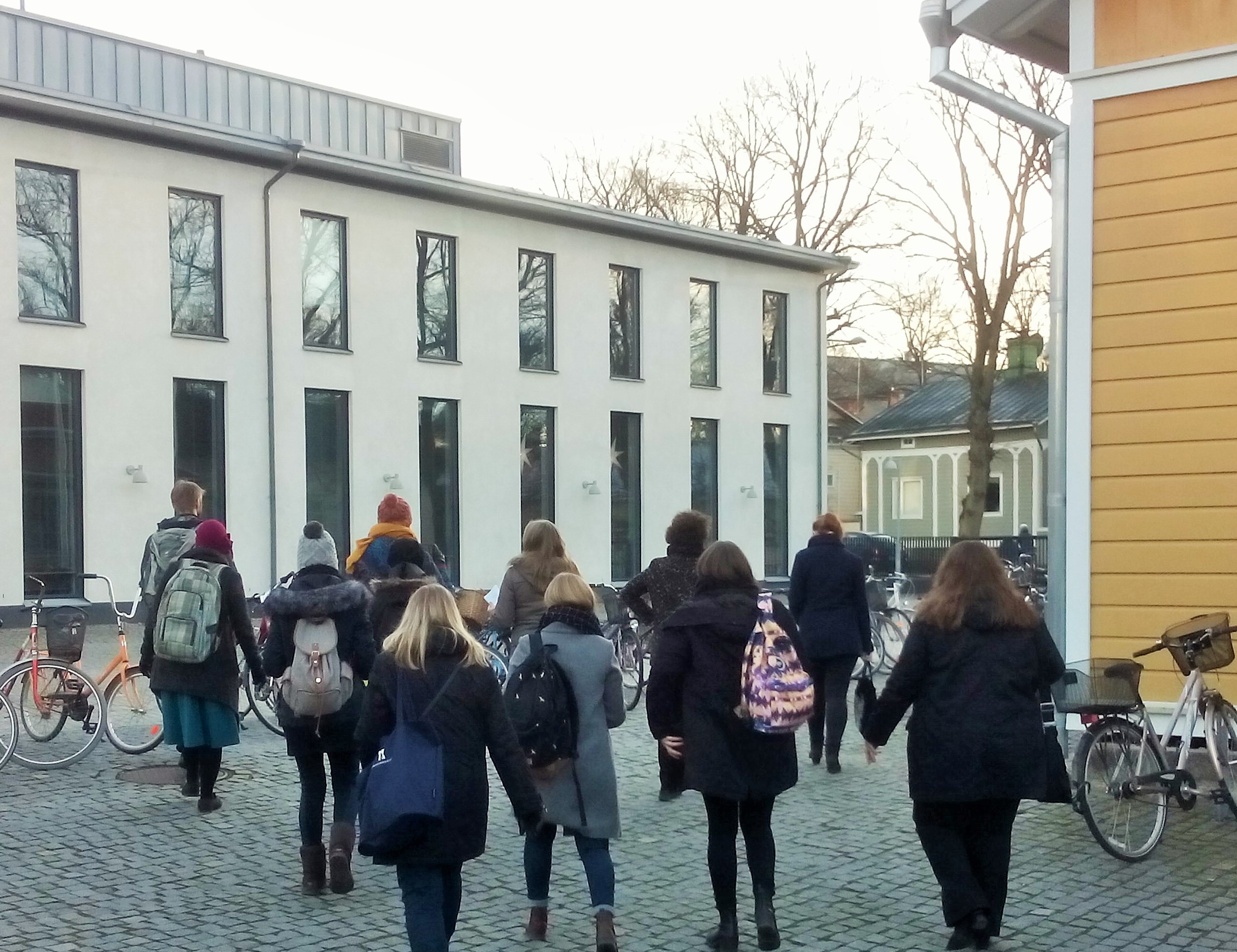
The TY group ventures from Arken to the Asa building.
How languages are learnt

It’s Christmas in September for anyone interested in language learning and teaching! A few years ago, the Department of English was actively involved in a popular course Language Teaching and Learning, which was a team-taught course for language and education majors. We are happy to announce that the contents of this course have now been published as an up-to-date book textbook. This is a textbook in Finnish with a target audience of teachers, students considering a teaching career and anyone generally interested in language learning and teaching.
KKO
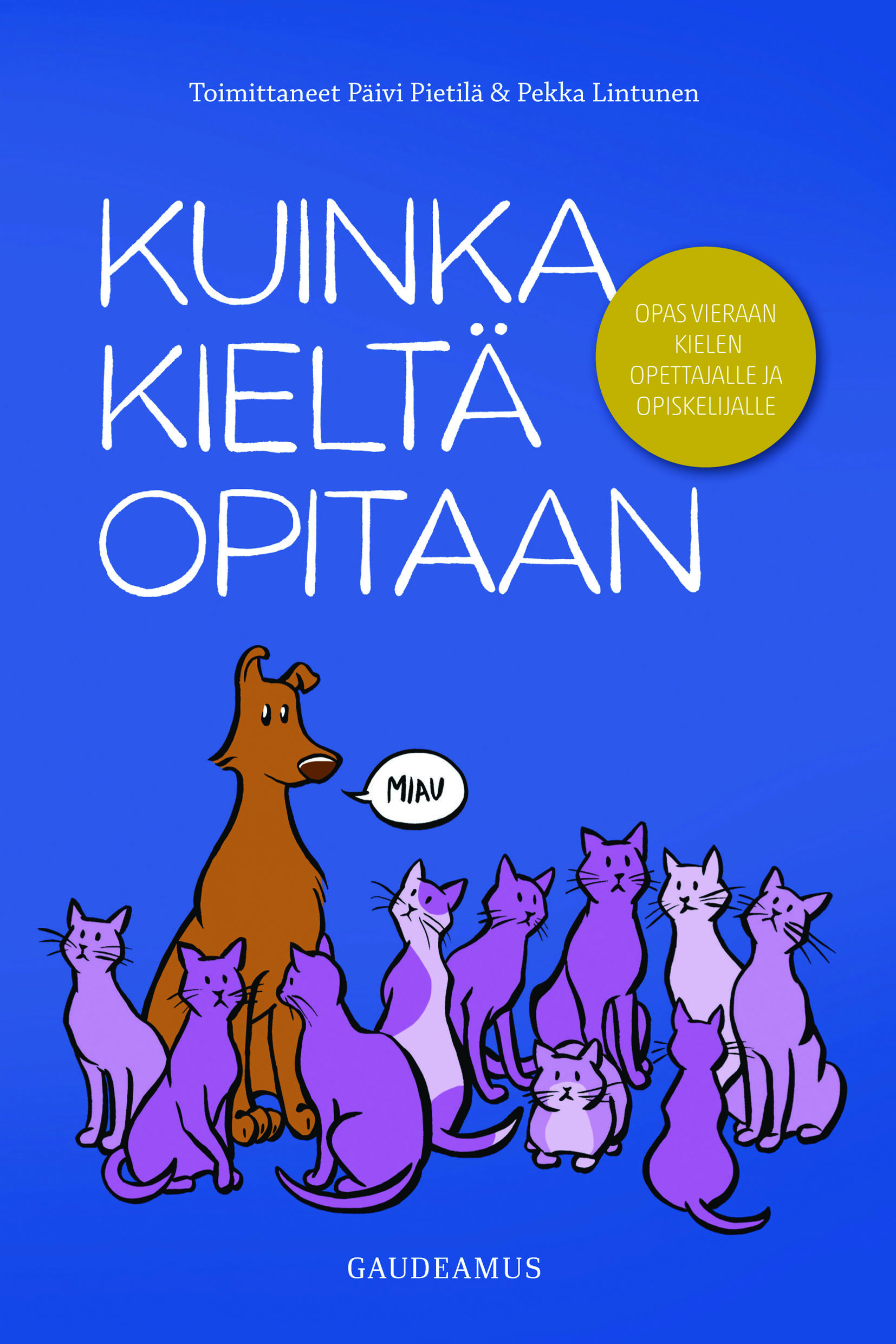
The new book Kuinka kieltä opitaan: opas vieraan kielen opettajalle ja opiskelijalle (published by Gaudeamus) was edited by Päivi Pietilä and Pekka Lintunen. The authors come from the University of Turku and Helsinki and represent didactics and different language departments.

The chapters discuss the nature of language skills, learners’ individual differences, theories of language learning and methods of language teaching. There are separate chapters on the teaching and learning of grammar, vocabulary and pronunciation of a foreign language. The book also includes a chapter on the role of culture in language teaching and, as a final chapter, an introduction to language assessment.

Turku University and the Department of English have always been active in teacher education and language learning research. Nowadays researchers are also encouraged to publish in Finnish and with a wide target audience in mind. After all, societal interaction is, in addition to research and teaching, a key function of a Finnish university. The new publication is a way to distribute the latest theories and research findings in a reader-friendly format.

The book includes reflective tasks after each chapter to help the readers in their own learning process and a lengthy list of references for the more research-oriented readers. And if September is too early for you, you can always add the book into your Christmas wish list.

Text by Pekka Lintunen
Editors’ photo by Outi Kitti/Gaudeamus.Kielenopettajat_Kuva_Gaudeamus_RGB
The book’s co-editors, Pekka Lintunen and Päivi Pietilä.

A Tale of Two Departments

IMG_0410

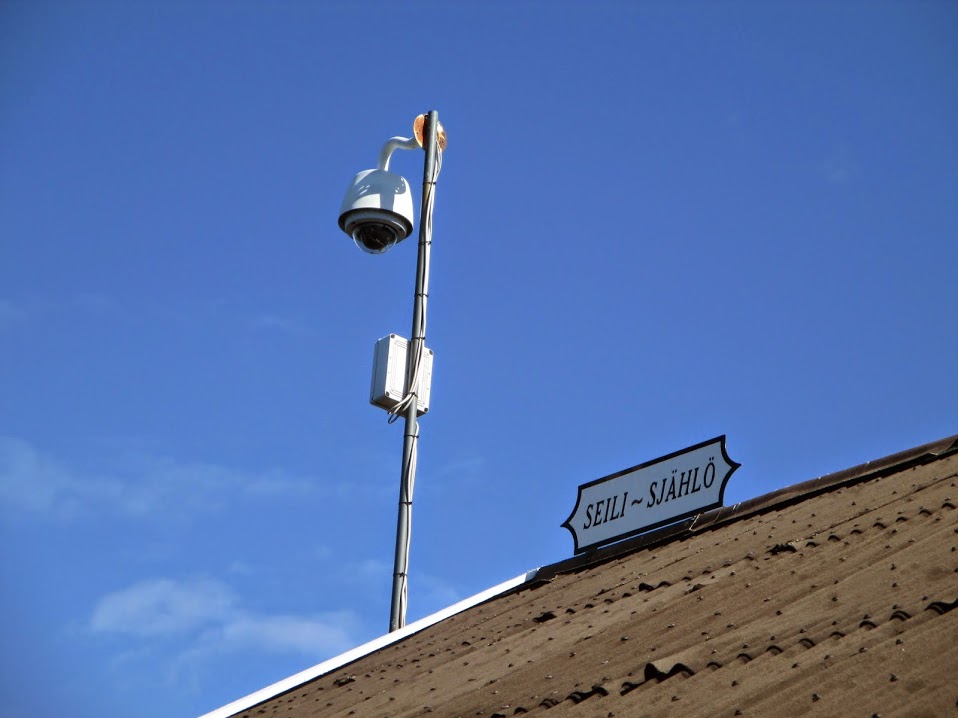
The two English Departments in Turku, Åbo Akademi and Turun Yliopisto, congregated, as has been the custom over the years, for a joint retreat, this time on the island of Seili in the Turku archipelago. Seili, of course, is the island historically (in)famous for its leper colony and later its mental institution. For the last 50 years, the Archipelago Research Institute has had its base on Seili.

IMG_0409

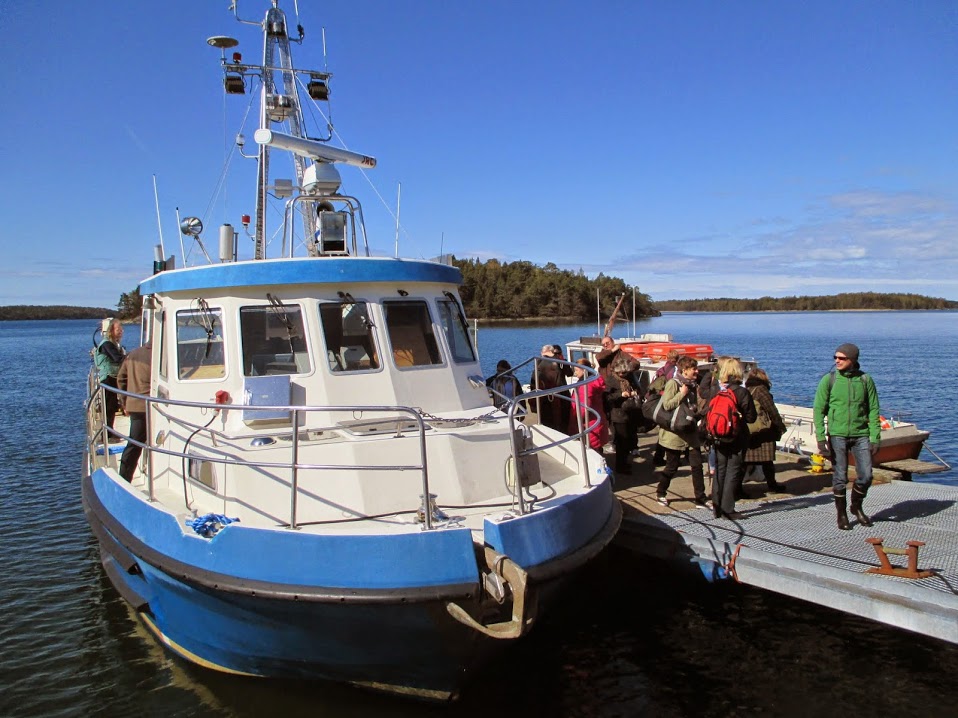
The retreat started from the River Aura, where the boat Aurelia picked us up on the two-hour sea voyage to Seili in sunny but cold spring weather. After settling in to our sleeping quarters and having lunch, it was time for official business. We started with a round of introductions, as despite a history of joint retreats, not everyone knew each other in advance. Informality characterises the retreats, and this one was no exception. Synergy cannot be achieved through official structures, but rather through interaction, spontaneity, and relaxed atmosphere. The retreats are ideal for that, as going away from your usual environment can foster new ideas.

Professor Anthony Johnson and PhD Candidate Aleksi Mäkilähde gave a presentation on their joint project on the Orationes, a collection of school plays from the late 17th century. Their excellent presentation was followed by Signe-Anita Lindgrén & Pekka Lintunen’s presentation on various learner corpora, as they chronicled the challenges involved in corpus-building, ranging from practical problems to comparability, but both also stressed that corpus-building is in fact lots of fun!

IMG_0439

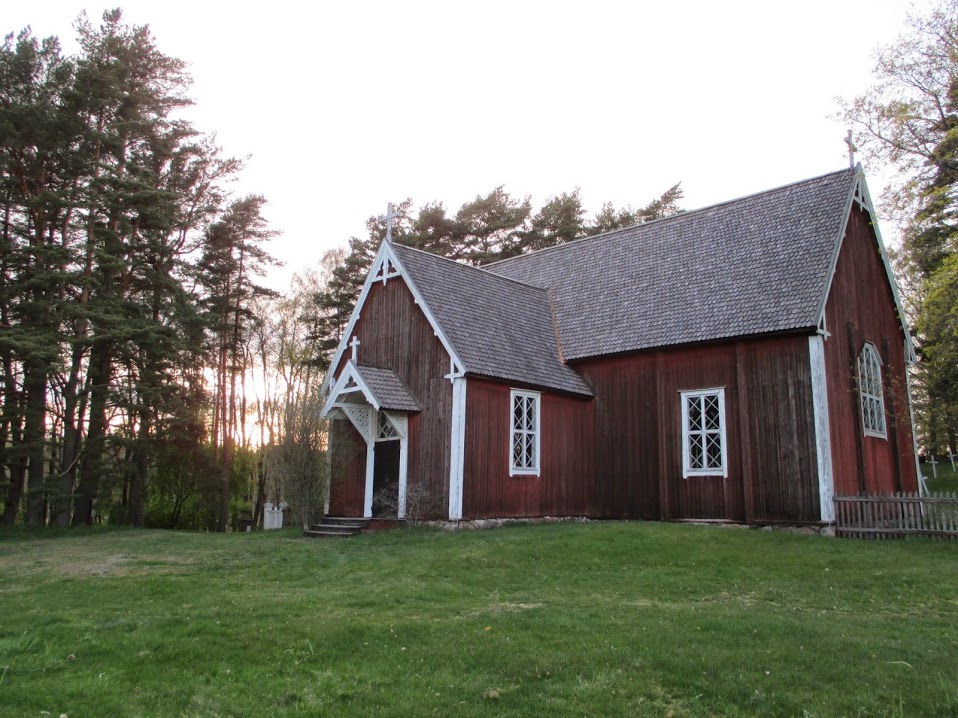
After the two joint presentations we were treated to an English-language guided walking tour of the island, on which we got to visit, for example, the island’s church which had a special section for those residents who had leprosy and thus were not allowed to sit with the other church goers back in the 18th century.

IMG_0419

In the afternoon, the two Fulbright scholars, one past and another present, Chris LaLonde (SUNY Oswego) and Casie Hermansson (Pittsburg State University, Kansas) had a discussion about the Fulbright experience as a member of both English departments in Turku. For both Casie and Chris, the Fulbright period far exceeded their expectations, an evidence of which is the fact that this was Chris’s fourth time back in Finland since his Fulbright year 1997-1998. Taking the time to discuss the Fulbright’s benefits perhaps also served as reinforcement for the two departments’ ongoing commitment to keep the scheme going. After all, the Fulbright scholar is a teacher to whom students stick, as remarked by Professor Emeritus of ÅA’s English Department, Roger Sell.

After the Fulbright discussion, Casie and family were gifted with Åboriginal t-shirts, followed by the ÅA faculty’s moving and laughter-inducing tribute to Professor Risto Hiltunen, who is about to retire. They likened Risto to the current James Bond, Daniel Craig, and reminded him about his skill in cultivating friendships the same way that he accidentally cultivated mold in an old coffee cup back in the eighties.

The day was concluded by sauna and dip in the cold sea, followed by sausage-grilling, refreshments, enjoying the beautiful sea view, and continued conversation about the day’s topics.

IMG_0442

The next morning, before leaving the island, we had a future-oriented workshop led by Risto, who reminded us about the twinship of the two departments, and encouraged the small groups to come up with practical suggestions about joint activities. The fruits this productive session will bear are to be seen, so both departments — including our students – will have lots to look forward to in the future!

Text: Elina Valovirta
Photos: Adam Borch

Mixing and Switching

hel_sofiankatu

”Etkö voisi please auttaa tässä?”
”And then she was like, no ei se mitään.”

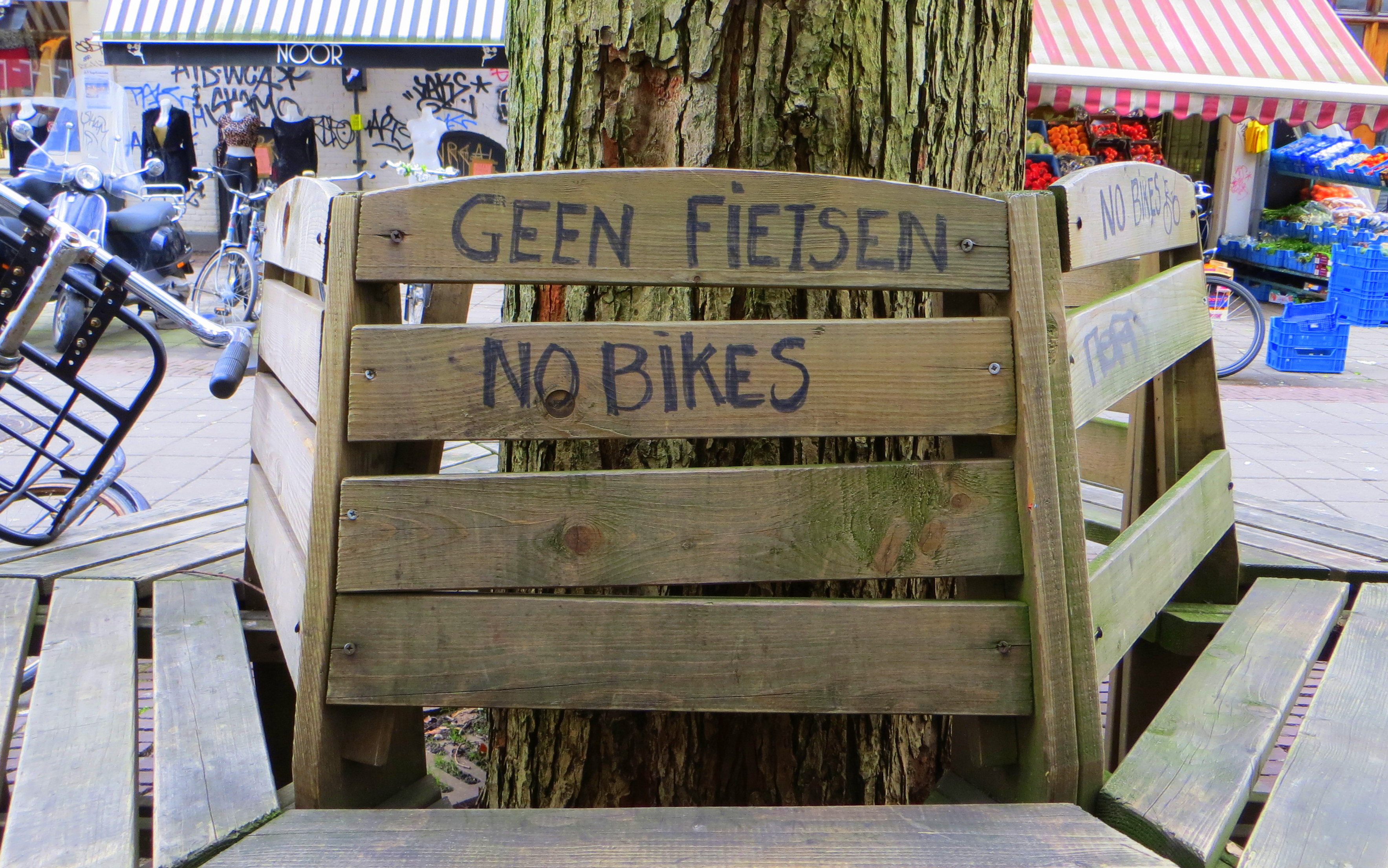
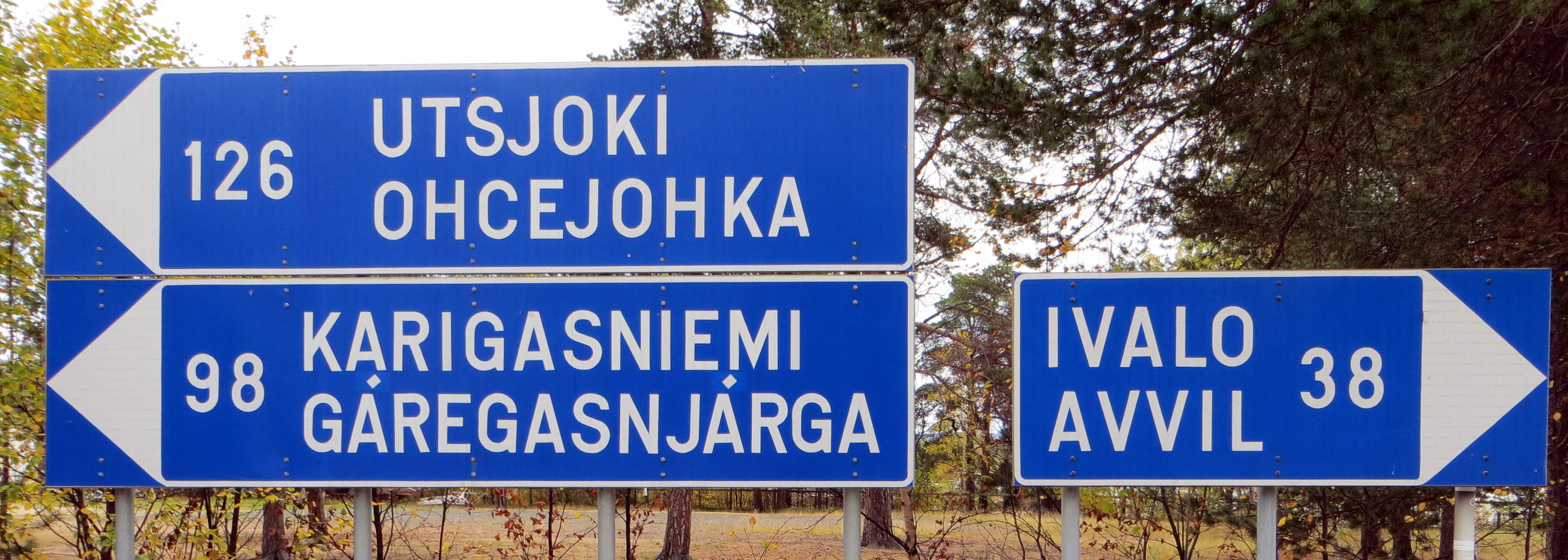
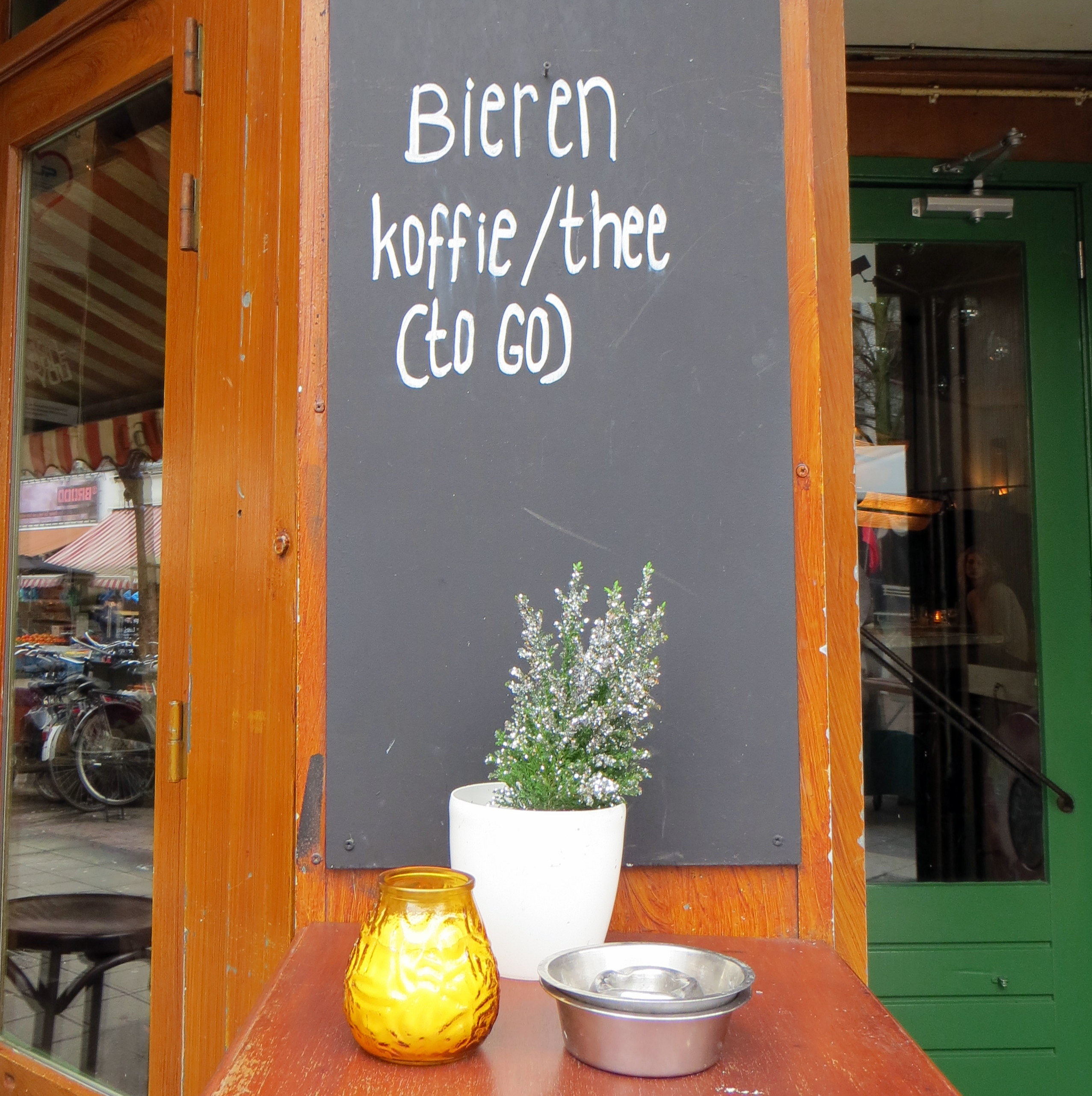
As language users – speakers, writers, listeners, readers – we are constantly surrounded by linguistic data, and some of the material we observe is bi- or multilingual. The examples above may not be authentic (as in ‘cited from a corpus of genuine conversation’), but they are certainly realistic (as in ‘I think I have heard something like this before, and not just once’). They exemplify code-switching, the use or two languages, dialects, language varieties or, more briefly, codes in a single communicative situation. People who know two or more languages are prone to code-switch on occasion.

ams_nobikes

The English Department offered a team-taught optional course on code-switching in the second half of the autumn semester, a unique enterprise bringing together eight teachers and researchers from the five tracks of the department. This ensured that the students were offered multiple viewpoints and approaches, ranging from written code-switching in medieval materials to multilingual practices in the EU to translations of postcolonial literature. One of the surprises offered in the lectures was that the use of students’ first language alongside their second or foreign language in the classroom also counts as code-switching, and that there are language classes in the world where the use of the first language is strictly forbidden – a feature not easily grasped by those who have learned English and other languages at Finnish schools.

lap_ivaloavvil

The course was well received by the nearly forty students who attended the lecture series. The participants were asked to write a variety of short texts about code-switching during the course and also to report on their own multilingual communication and the language-mixing they observed around them. Many said that they had not realized until this semester that code-switching was so frequent and had so many functions, and that it was such a huge issue that the six weeks of teaching were not nearly enough for a thorough survey. Indeed, several students have already chosen code-switching topics for their BA projects to be able to carry on with koodinvaihto research.
ams_koffietogo
Janne Skaffari