Philological fieldwork in London and Turku

If you trust Wikipedia, fieldwork refers to “the collection of information outside a laboratory, library or workplace setting”. However, philological ‘fieldwork’ often takes place within a library – but instead of reading secondary literature, we examine primary materials. I’m currently a visiting scholar at Queen Mary University of London. During my stay here, I work on 16th-century manuscripts and printed books in the British Library.

Although early materials are increasingly accessible in digital form, and many early texts are made available in editions, not all research questions can be asked of these substitutes. Codicological, palaeographical, and bibliographical research methods entail close examination of books and texts as material objects. Analysing the physical construction of a book or the scribal hands present in a manuscript, for example, may also provide crucial evidence for studying the contents of a book.

To access special collections, one usually needs to register as a reader (instructions can be found on library websites). After registering, you can then order items to study them in reading rooms. You can bring your laptop, notes, and pencils, but nothing that might damage the books such as pens or sharp implements. White gloves, although sometimes seen on TV, may also cause damage to the books. They are thus generally not used in professional libraries. Clean, dry, and careful hands are the better option!

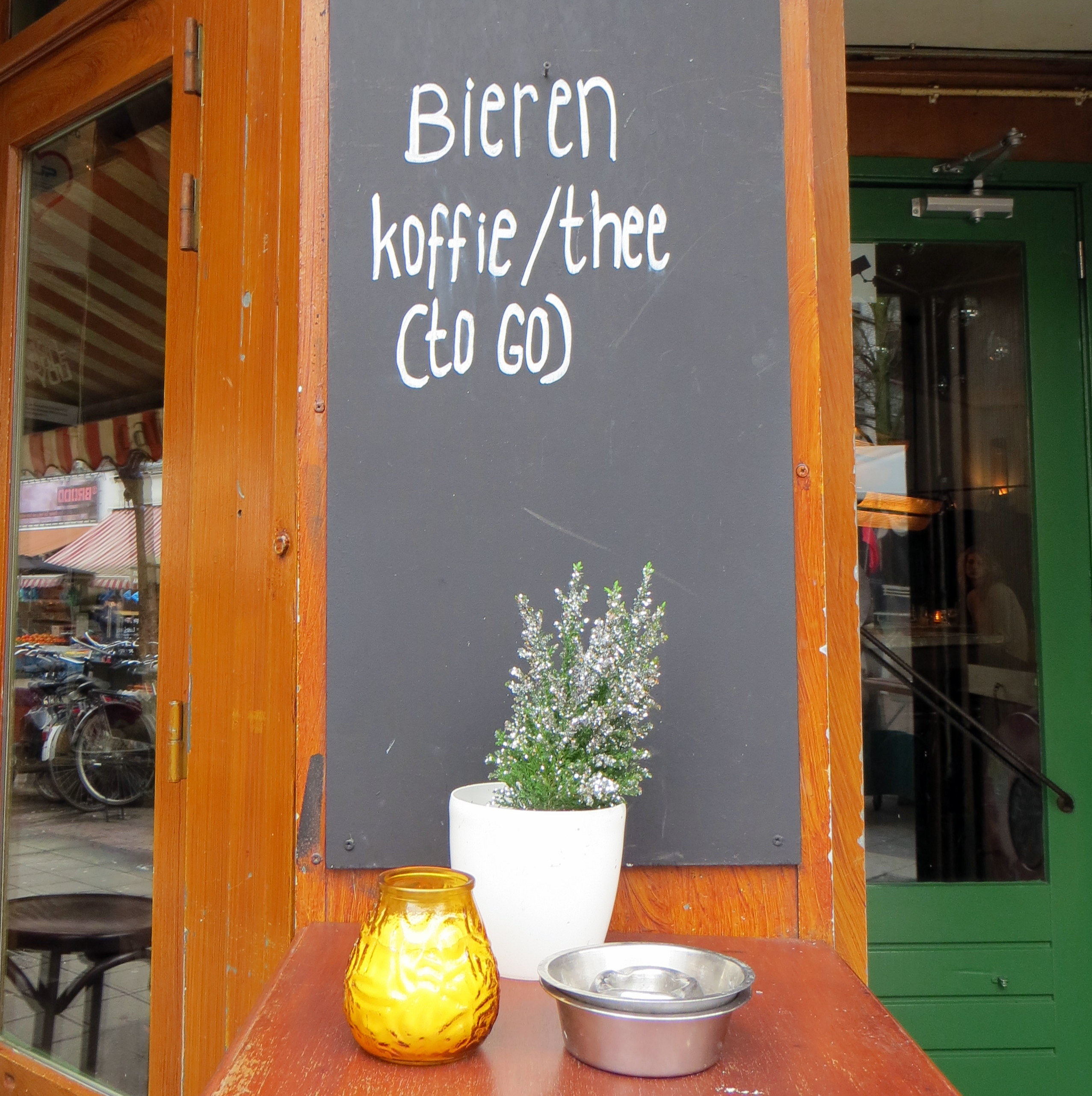
The University of Turku library also holds early materials. Last spring, students taking the Book History course organised by the Departments of English and European and World History had the chance to try their hand at being book detectives. My small group studied a selection of incunabula (books printed before 1501), practising the specialised skill of writing bibliographical descriptions of early books. Here they are at work!
Text and photo by Mari-Liisa Varila

Shakespeare 400 revisited

The Shakespeare 400 course was organised jointly by the University of Turku and Åbo Akademi University in autumn 2016.

After the first lecture on the history of English and the early printing history of Shakespeare’s works, the students delved deeper into other topics in Shakespeare studies. Aino Mäkikalli discussed Shakespeare’s sonnets, situating them in their historical and ideological context. Anthony Johnson highlighted the influence of early modern school curricula on Shakespeare’s plays.

The Finnish translations of Shakespeare’s plays and sonnets were introduced by Outi Paloposki. For example, in an early translation of the Scottish play, one of the characters is called Pirjo. Intrigued? Read the play here.

Tom Linkinen and Hannu Salmi approached Shakespeare from the point of view of cultural history. Linkinen discussed the ways in which genders and sexualities are performed in Shakespeare’s plays. Salmi, in turn, started from a mnemohistorical point of view, showing the audience examples of how Shakespeare has been interpreted on the silver screen. The last lecture by Joel Kuortti focused on the postcolonial rewritings of The Tempest.

The students also engaged in small group work. One of the tasks was to translate into Finnish Benedick’s troubled rant from Much Ado About Nothing (V.ii.35-41). It works quite nicely in the Turku dialect, too!

    En sunka mää ny mittä riimei ossa. Kyl mää niimpal yriti, mut ei mul mittä muut tullu miäle ku ”flikoi” ja ”sikoi”. Kuka ny simmossi puhu! Eikä koulun kans men mikkä muu, ku joulu. Mittä järke… Ei munt kyl ol tarkotettu mittä runoi värkkämä, eikä nättei puhuma muutenka!
    (Translation: Tuula Viitanen)

Text by Mari-Liisa Varila

Shakespeare 400 in Turku

This year marks the 400th anniversary of the death of William Shakespeare. Universities and other institutions around the world have been organising special events and courses throughout the year. One of these special courses is Shakespeare 400, a joint effort of the University of Turku and Åbo Akademi University.

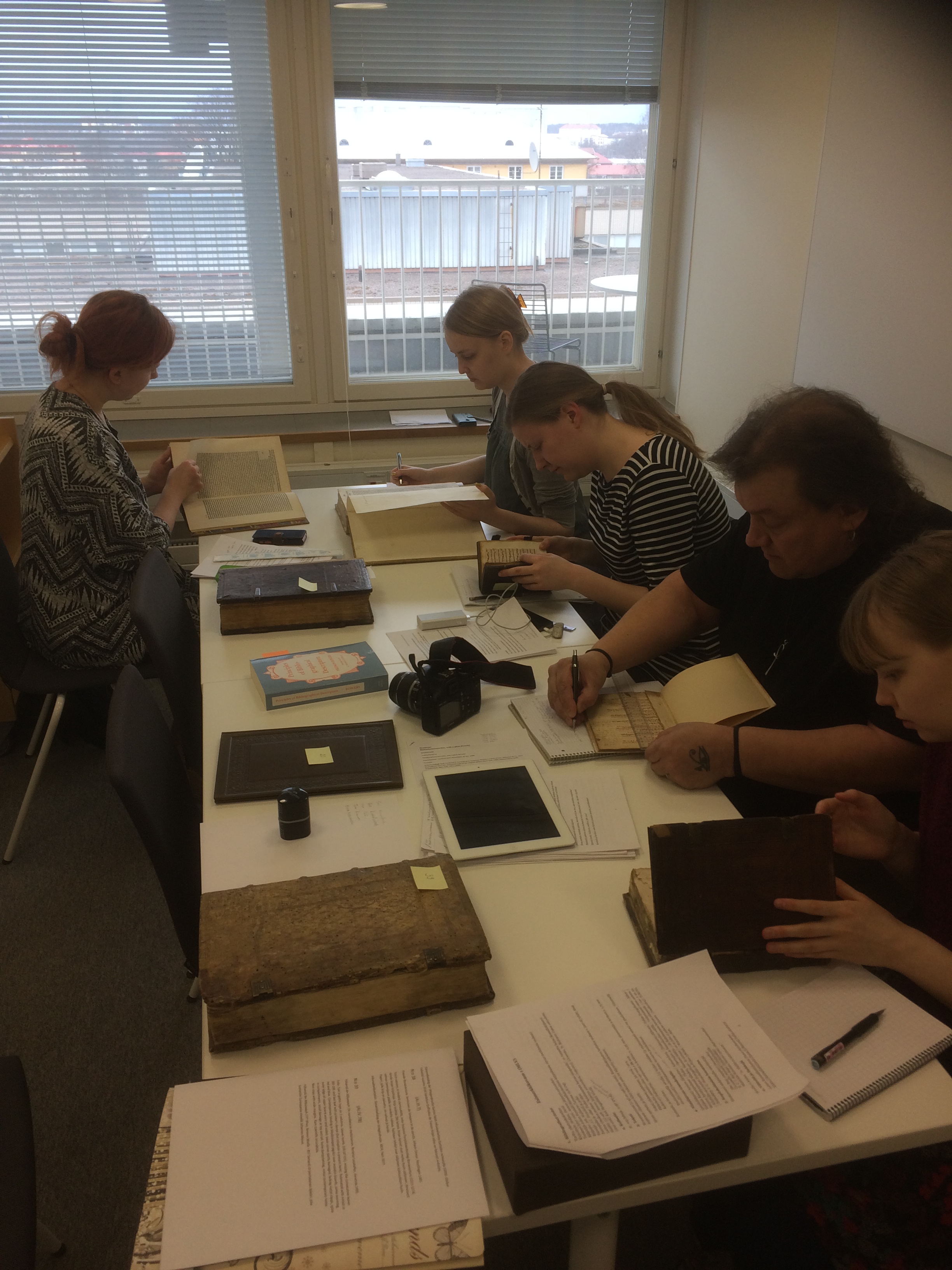
The course runs from late October to mid-December. It comprises seven lectures by eight lecturers from four different departments: the Department of English at ÅAU, the Department of English at UTU, the Department of Cultural History (UTU), and the Department of Comparative Literature (UTU). There are altogether fifty students taking the course.

The lecture series started on 27 October with a joint lecture by Dr Janne Skaffari and Prof. Matti Peikola from our own department. Janne Skaffari offered a fascinating glimpse to Early Modern English and Shakespeare’s language. He finished the lecture by reciting a sonnet in what is known as ‘Original Pronunciation’, a reconstructed version of what ‘Shakespeare’s English’ might have sounded like. If that piqued your interest, have a look at Ben Crystal’s Hamlet here!
shakespeare400

Matti Peikola then moved on to discuss the early editions of Shakespeare plays. Although the First Folio is the most well-known edition of Shakespeare, defining the canon for years to come, it was only published after Shakespeare’s death by his colleagues. However, Shakespeare’s plays were already published individually during his lifetime, in a smaller and much cheaper quarto format. The first quarto edition of Hamlet was much shorter than the First Folio version! You can read more about the quartos here.

Both Skaffari and Peikola reminded the audience that although Shakespeare has often been treated as a canonical author figure, many of his plays actually show evidence of collaborative authorship. Read more about recent findings here.

Text and photo by Mari-Liisa Varila
More Poetry from Our Students

Wizard Battle

Inside enchanted magical valley
Dark, narrow, ominous alley
Dastardly, evil, warlock-meeting
Legendary Thor, coming, greeting

Attacking with spells, fantastic blunder
Powerful, brave, controlling thunder
Using lightning, scary, frightening
Boldly fighting, wrongs righting

Calling strong blizzards
Freezing poor wizards
Impervious to pain
Summoning rain
Until Enemies swimming in water
Old Nordic tales, better than Potter

By Harri Jokinen

Poetry from our students

This academic year, our (mostly) first-year students have been assigned poetry-writing as a part of the Academic Writing Skills I course, taught by Henno Erikson Parks and Justin Parks (no relation). Our poetry expert and recent PhD, Elina Siltanen, selected some of the poems to be showcased here on the blog for your enjoyment. Well done, aspiring poets!

High, shelved, silent rows, timeworn
Heavy, dusty books, with delicate black letters on solemn pages
Old paper waiting, listening
Careful steps, hushed words, earnest young students
August room breathing beneath a dark ceiling
Columns soaring, serious white busts judging, smiling
In-between shaky ladders, paths to knowledge

By Hanna Yli-Paunu

Mixing and Switching

hel_sofiankatu

”Etkö voisi please auttaa tässä?”
”And then she was like, no ei se mitään.”

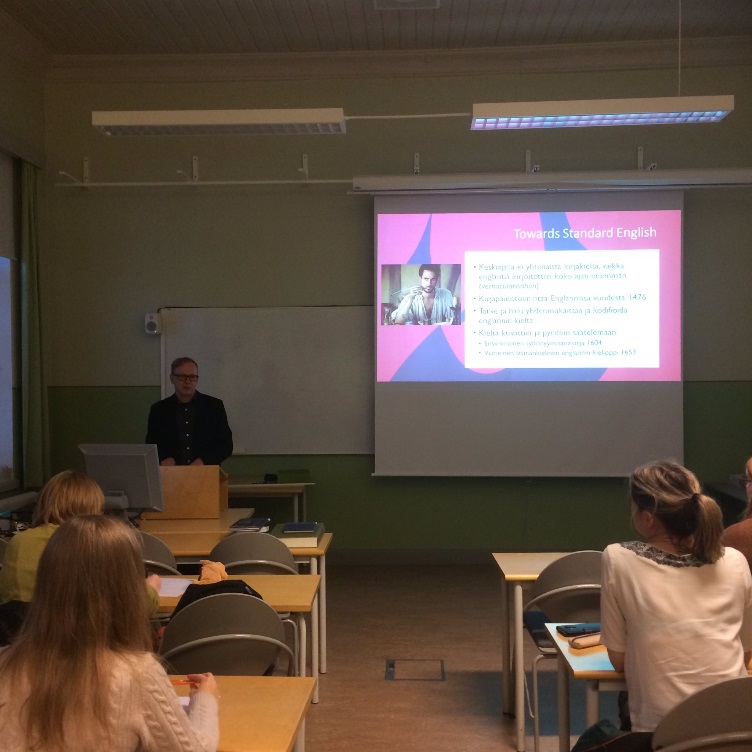
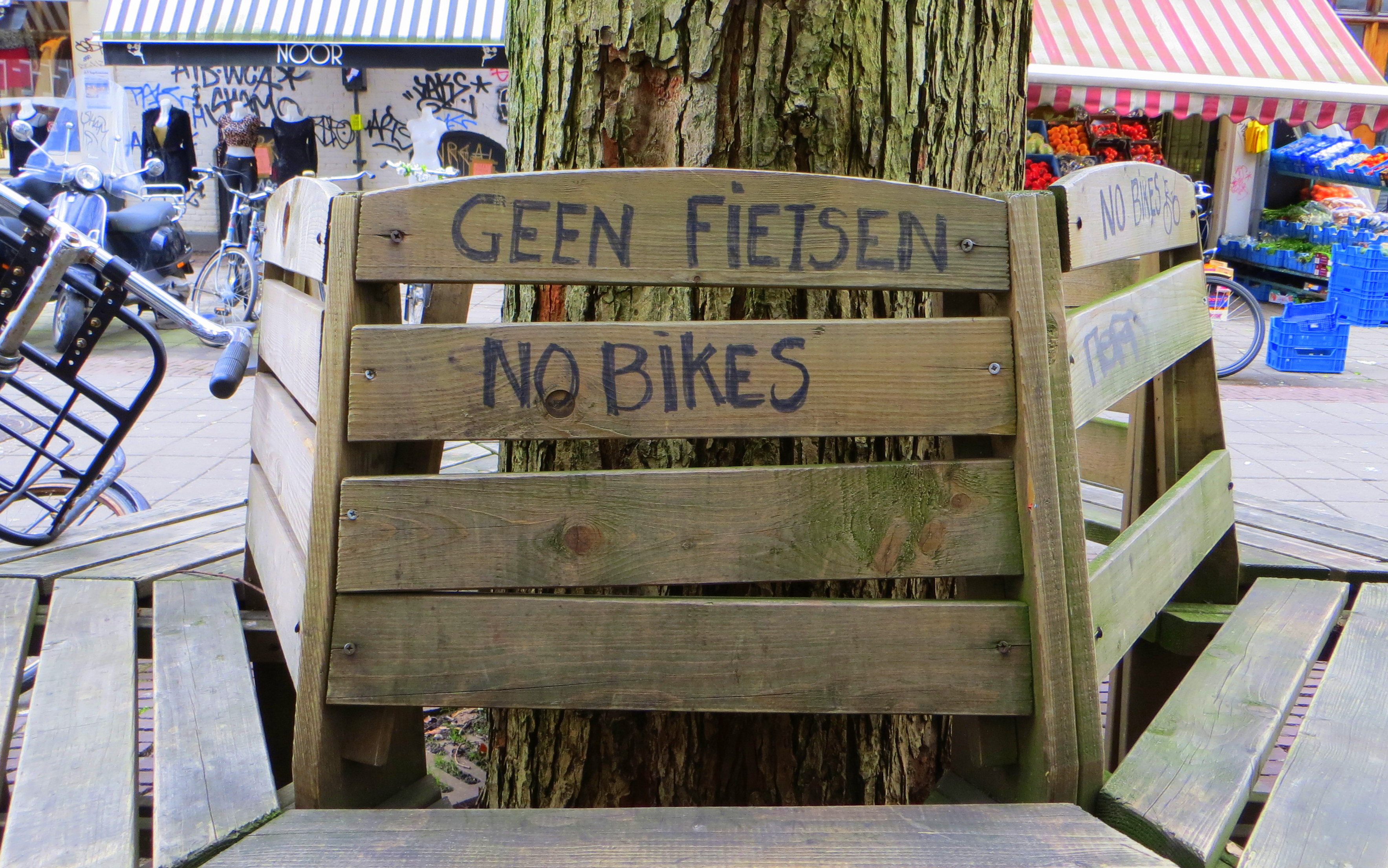
As language users – speakers, writers, listeners, readers – we are constantly surrounded by linguistic data, and some of the material we observe is bi- or multilingual. The examples above may not be authentic (as in ‘cited from a corpus of genuine conversation’), but they are certainly realistic (as in ‘I think I have heard something like this before, and not just once’). They exemplify code-switching, the use or two languages, dialects, language varieties or, more briefly, codes in a single communicative situation. People who know two or more languages are prone to code-switch on occasion.

ams_nobikes

The English Department offered a team-taught optional course on code-switching in the second half of the autumn semester, a unique enterprise bringing together eight teachers and researchers from the five tracks of the department. This ensured that the students were offered multiple viewpoints and approaches, ranging from written code-switching in medieval materials to multilingual practices in the EU to translations of postcolonial literature. One of the surprises offered in the lectures was that the use of students’ first language alongside their second or foreign language in the classroom also counts as code-switching, and that there are language classes in the world where the use of the first language is strictly forbidden – a feature not easily grasped by those who have learned English and other languages at Finnish schools.

lap_ivaloavvil

The course was well received by the nearly forty students who attended the lecture series. The participants were asked to write a variety of short texts about code-switching during the course and also to report on their own multilingual communication and the language-mixing they observed around them. Many said that they had not realized until this semester that code-switching was so frequent and had so many functions, and that it was such a huge issue that the six weeks of teaching were not nearly enough for a thorough survey. Indeed, several students have already chosen code-switching topics for their BA projects to be able to carry on with koodinvaihto research.
ams_koffietogo
Janne Skaffari