Postmodern feminist challenging of dominant discourses: Mehdi Ghasemi’s doctoral defence

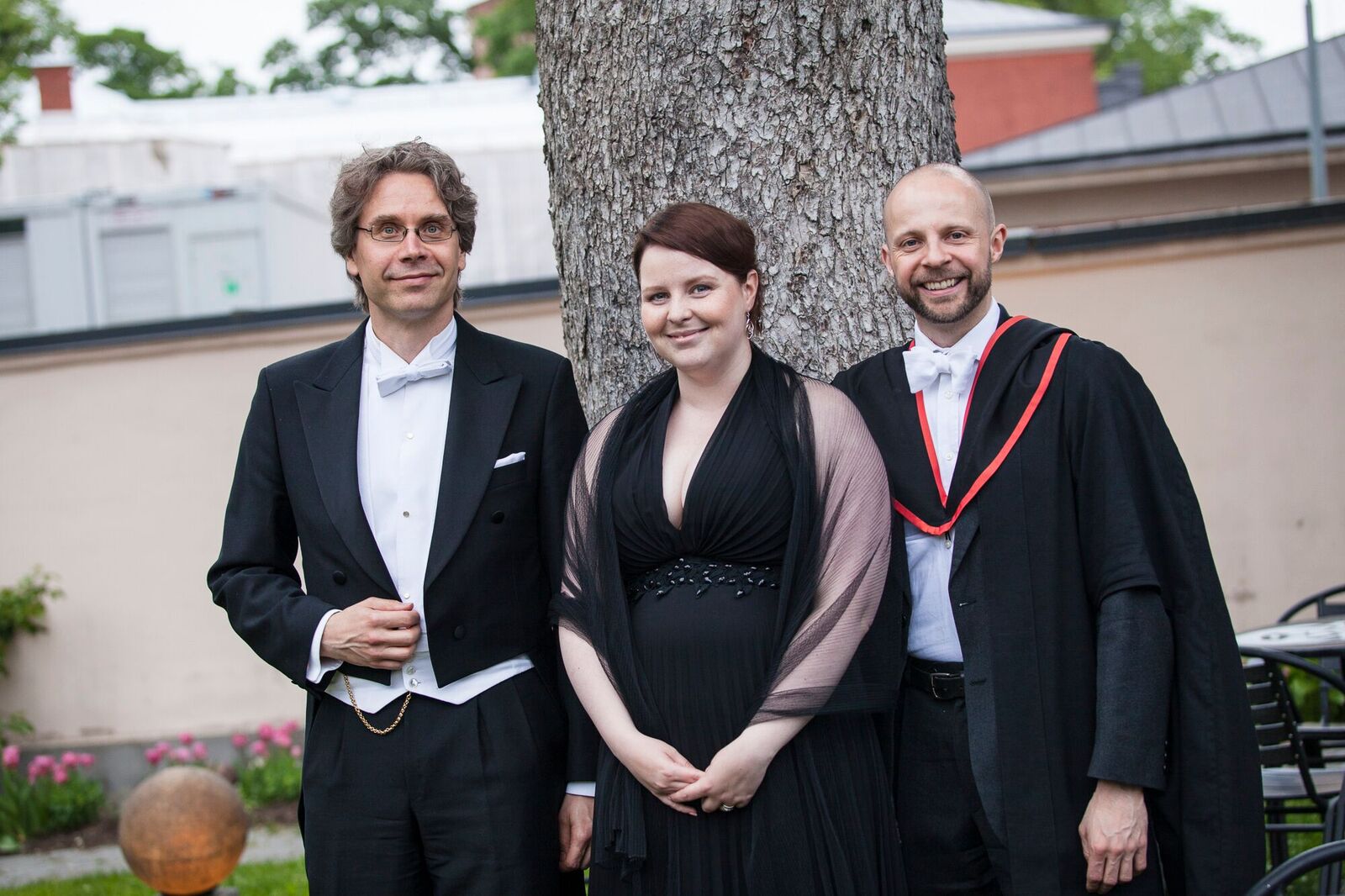
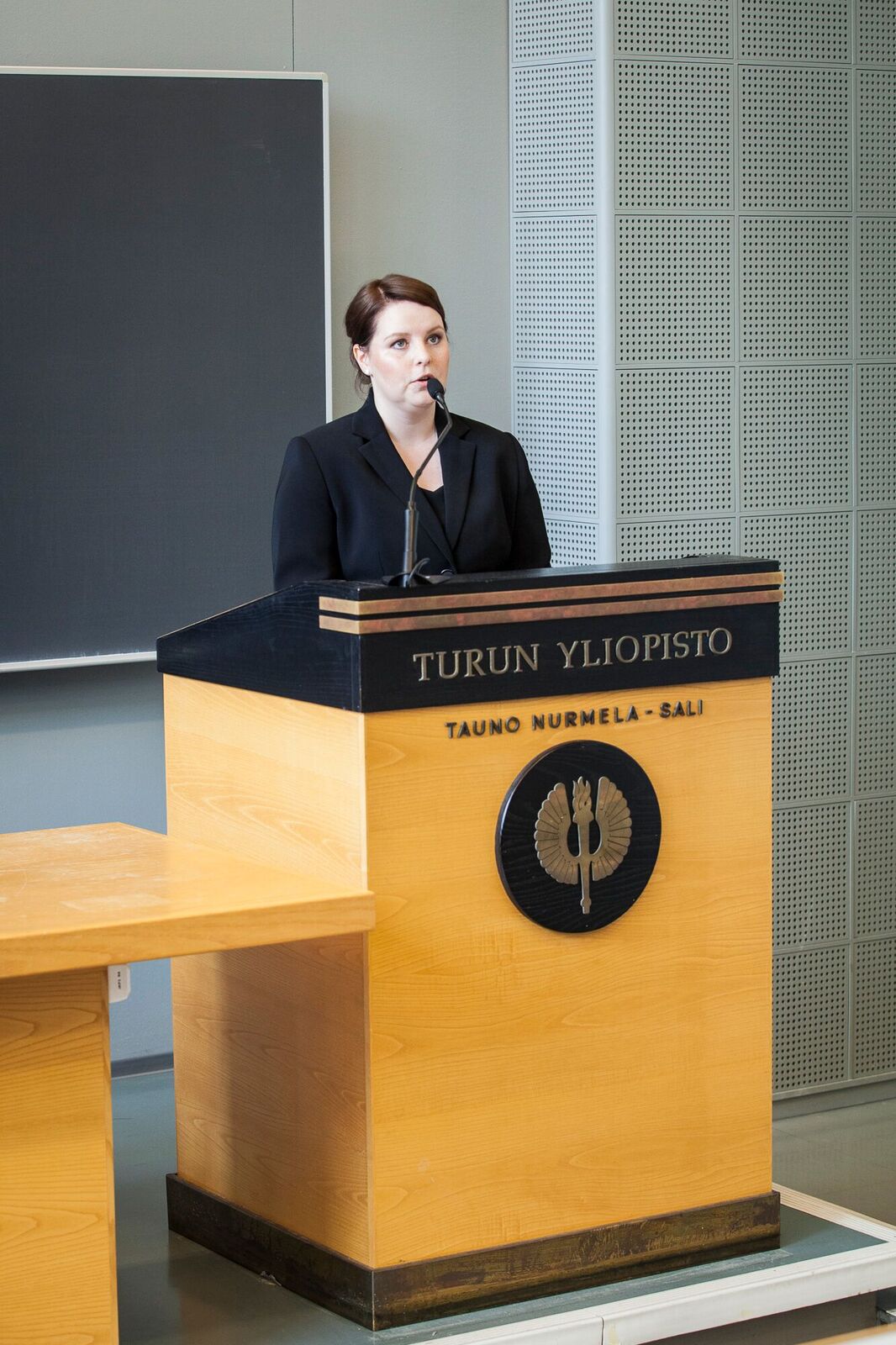
The second one of the two doctoral defences at the Department of English in the spring 2016 was Mehdi Ghasemi’s “Quest/ion of Identities in African American Feminist Postmodern Drama: A Study of Selected Plays by Suzan-Lori Parks”. The public examination of the dissertation took place at the University of Turku on 10 June, 2016. The candidate’s performance in the defence was eloquent and he was able to justify his choices and elaborate on the points that he was requested to clarify. Despite it being a Friday afternoon in June, the defence was attended by more than thirty people – and it was conducted in an orderly fashion.
mehdi
Mehdi Ghasemi’s doctoral dissertation is a study of three plays by Parks from the standpoints of postmodern drama and African American feminism with a focus on the terrains that reflect the quest and question of identities for African Americans, especially African American women. The study is a reading of three plays by Suzan Lori-Parks – The Death of the Last Black Man in the Whole Entire World (1990), Venus (1996) and Fucking A (2000). Ghasemi’s interpretetations of the three plays offer valuable insights on this understudied playwright and genre. Ghasemi argues that “Parks in these plays uses postmodern drama and African American feminism to encourage reflections on intersectionality in order to reveal the concerns of African Americans, particularly African American women“ (p. i).

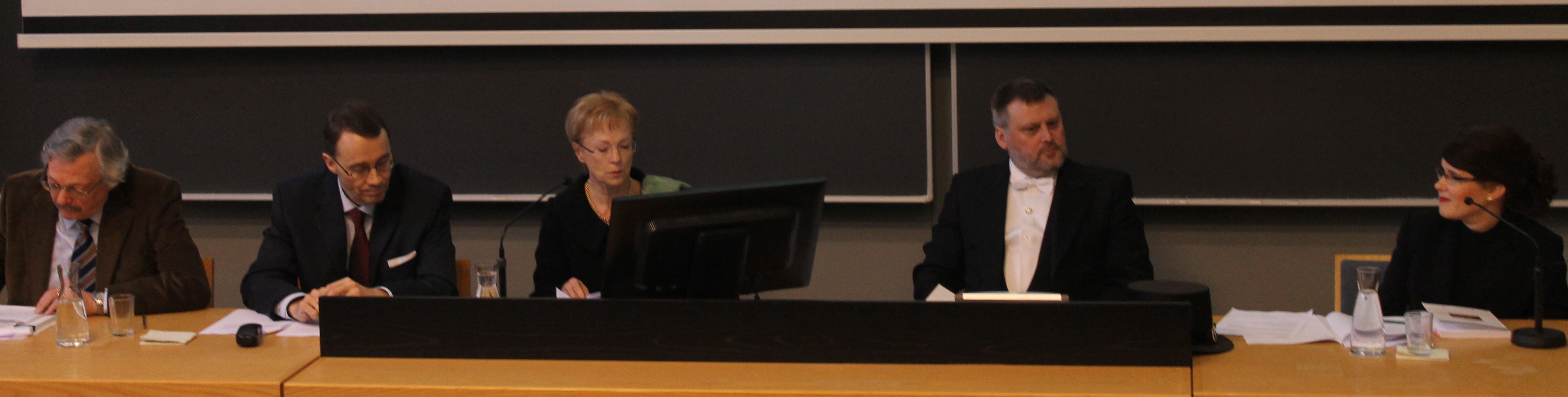
The opponent was Professor Jopi Nyman from the University of Eastern Finland, and Professor Joel Kuortti acted as custos. Professor Nyman posed demanding questions on the theoretical issues involved as well as on the particular analyses of the three plays. Mr. Ghasemi replied confidently, resulting in an engaging discussion that – judging from their reactions – was also appreciated by the audience. Finally, the opponent gave his final statement. There were no questions from the floor.

Mehdi Ghasemi is from Tehran, Iran and completed his MA on “Walt Whitman’s Loud Voice of Democracy and Individuality” at the Islamic Azad University of Karaj. The dissertation is published electronically in the Annales Universitatis Turkuensis B419.

Text by Professor Joel Kuortti, custos
The transmission of early scientific writing: Mari-Liisa Varila’s doctoral defence

It is always a happy occasion for the whole department when a doctoral candidate defends their dissertation. This spring we were treated to not only one but two public examinations of doctoral dissertations. The first was that of Mari-Liisa Varila. On 28 May 2016, she defended her dissertation titled “In search of textual boundaries: A case study on the transmission of scientific writing in 16th-century England”.

Mari1

Varila’s study concentrates on the text-production practices of scribes and compilers as they copied scientific (in this case, mostly astrological) texts in manuscript form. Early scientific writing has not been researched as much as the extant material would merit; nor has book production in the early sixteenth century been studied extensively, especially the production of manuscript books. Varila’s study helps to bridge both of these gaps in research. Her primary material consists of three English manuscripts including mostly scientific texts. These manuscripts have not been studied in detail before.

Mari2

The opponent was Daniel Wakelin, Jeremy Griffiths Professor of Medieval English Palaeography at the University of Oxford. Professor Matti Peikola acted as custos. Wakelin and Varila engaged in a lively, intriguing discussion on matters scribal, textual and material. The enthusiasm with which both the opponent and the candidate participated in the discussion was palpable to the audience. Wakelin commended Varila on her innovative approach, which combines several disciplines in order to present an accurate picture of her manuscript material and conclusions.

The combination of approaches including manuscript studies, textual scholarship and historical discourse linguistics allows Varila to look at her material in novel ways and to understand the broader contexts behind the manuscripts’ production. She concludes that early scientific texts and works are often flexible in their boundaries. Scribes could copy selectively and the information content was often more important than the linguistic form. Material features are important: the constraints of the physical page can affect the texts being copied. Varila also shows that the connections between manuscripts and early printed material are a fruitful object of study. We were happy to attend such a successful examination, a fitting finale for the years of hard work!

mari4

Text by Sara Norja & Aino Liira
Photos by Miikka Varila

Funding applications, Part 1: Finding funding opportunities

When you’re a first-time participant in the game of applying for research grants, it’s a good idea to ask around and learn a few tricks of the trade. This post explores online resources for finding suitable funding for your research and career stage, and it is first in a series of posts on how to apply for research funding.

For those thinking about pursuing postgraduate studies at the Department of English in Turku, a good starting point is to visit a few websites: The University’s own graduate school, UTUGS, The School of Languages and Translation Studies graduate program, Utuling, and the English Department’s Postgraduate Studies page.

The Research Whisperer is a great resource for career-related practical issues such as funding and networking. This blog post gives good tips on finding suitable funding opportunities.

The Finnish go-to resource for various kinds of research and travel funding is the Aurora database. The database includes most open calls, and you can search the database for example by field of research or deadline for applications. Always remember to also visit the websites of the funding bodies for more information.

Even if you are not applying for funding from them yet, take a look at the Academy of Finland website. The Academy of Finland is probably the most well-known and important funding body in Finland, and their website offers a wealth of information.

If you are interested in EU funding, start from the Participant Portal. Another EU-related site worth checking is EURAXESS, where you can find calls for all kinds of international jobs (including PhD positions in EU-funded training schemes) and fellowships.

Stay tuned for more on how to launch a research career and get funding!

Text by Mari-Liisa Varila

Upcoming event: MA Thesis Symposium

11 March, 10-12
Lecture room X

The first MA Thesis Symposium of the English department was organised last year. Six speakers, from different Advanced Studies tracks, gave a ten-minute paper on their pro gradu projects. The audience consisted of students and staff members, and many good questions were answered after the presentations.

The second MA Thesis Symposium will take place on 11 March, 10-12, in Lecture room X. Five speakers from different tracks have been invited to introduce their thesis projects (a more detailed programme will be published later). This is a great opportunity to hear about very different thesis topics and methods, and will no doubt be very useful especially to those students starting their pro gradu project soon. The event also offers a chance for the speakers to practise giving a talk in front of a friendly audience.

Students and staff from all departments are warmly welcome!

Hard Work Made Easy

On the last day of January, 2014, a fifty-strong crowd gathered in the Tauno Nurmela auditorium to listen to the defence of Elina Siltanen’s doctoral dissertation “Hard Work? Reciprocal Communication in Contemporary American Experimental Poetry”.

IMG_5628

The opponent who discussed the dissertation with Siltanen was professor emeritus Charles Molesworth (Queens College, The City University of New York). An eminent scholar of poetry, he has published The Fierce Embrace: A Study in Contemporary American Poetry, as well as critical books on Marianne Moore, Gary Snyder and Donald Barthelme, and biographies of Alain Locke and, most recently, Countee Cullen (2012). He has also two poetry titles to his name, Common Elegies and Words to That Effect. In the 1970s, he served as a Fulbright Professor in Turku, and the reunion with former colleagues was an amicable one.

In Siltanen’s study, the focus was on the works of three American experimental poets: John Ashbery (born 1927), Lyn Hejinian (1941) and Ron Silliman (1946). A literary critic herself, she proposes – on the basis of the discontinuous and repetitive character of experimental poetry – new ways of reading poetry that do not require clear-cut interpretations nor consistent subjectivity

Siltanen was one of the pioneers in the inter-university scheme Cotutelle, which is an agreement between two universities for a double degree in both universities; in this case the University of Turku and the Luleå University of Technology in Sweden. For the defence, this posed a technological challenge as the event was simultaneously videoed to Luleå, and the Swedish grading committee was present in Turku and took part in the discussion after the opponent.

IMG_5633

The respondent was very lucid in her comments to the questions posed to her first by the opponent and then the committee. Afterwards, several audience members commended the discussion for its clarity, and especially the approachability of the introductory lecture by the doctoral candidate (lectio praecursoria) was acclaimed. It made the hard work easier.

It was with satisfaction that I concluded the defence.

Joel Kuortti
custos

IMG_5648
“What a long strange trip it’s been”, is a famous exclamation by Jerry Garcia, which the poet Ron Silliman adapted to his poetry. The sentiment might be shared by Elina and her supervisor, Professor Lydia Kokkkola.

Our Literary Lady in London

DSC_0077

I still often think of the hours spent reading for my MA dissertation in the English department seminar library in Juslenia in 2007-2008. At least in two distinct ways, those hours were to have a lasting influence on my life.

First of all, they installed in me the desire to do further research. I had spent the spring of 2007 as a visiting student at King’s College London, where the thought of doing a PhD had gradually started taking shape. When I began to express interest in academic career, the staff members at our department in Turku were brilliant, offering me support and invaluable guidance without which I would not be where I am today. At KCL, I had attended a course on Proust’s A la recherche du temps perdu and Proust had been close to my heart ever since I started reading the Recherche at the age of 16. Once I began to think about a prospective topic for my PhD, Proust kept cropping up in every context. I had studied French as my minor (partly in order to be able to read Proust in the original language) and finally decided to apply for a PhD position in the KCL French department. My proposal was successful and a scholarship from the Oskar Huttunen Foundation enabled me to take this leap and move to London in 2009.

The other major impact those hours in the library had was my research topic. While at the time (reading for my MA thesis on Wilde) it seemed as if the books transported me into another time and place, what has actually remained with me from those hours is the psycho-physical context of reading: I remember the light, the temperature, the humidity, the smell of books, my excitement, and the changing of the seasons outside the window – all this much more vividly than the actual contents of the books. This realisation gradually became the crux of my PhD thesis – the highly individualised and potentially deeply revelatory memories that the reading experience may encompass.

IMG_1363

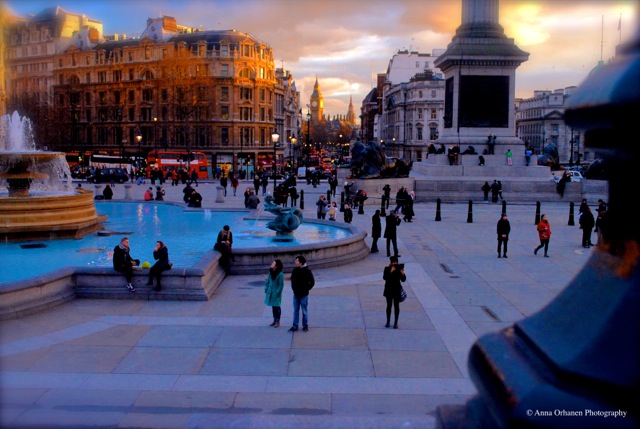
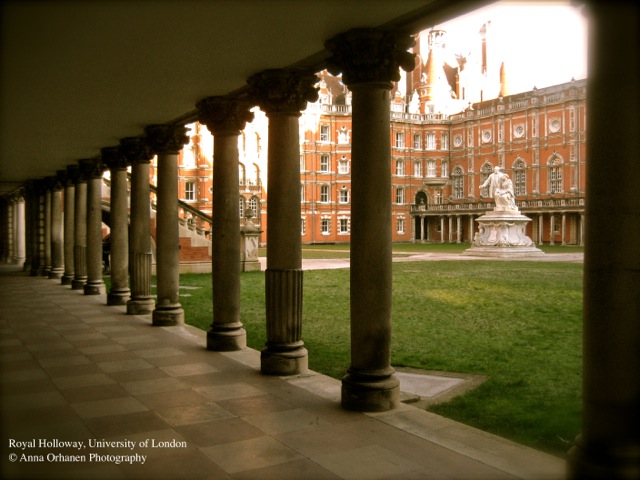
When I was finishing my PhD, I was approached by the Head of the French Department at Royal Holloway, University of London: due to staff migration, they needed someone to teach a module on Proust in the spring 2013. After a successful interview, I started as a visiting lecturer at RHUL and was consequently offered some more teaching in the Comparative Literature programme. I’m currently planning my first postdoctoral project on the imagery of breathing, and living in London has also given me a chance to pursue my other long-term passions as a free-lance photographer.

Still, with all the excitement London has to offer, sitting somewhere with a book in my hand continues to be one of my favourite pastimes. For over the years, Proust’s Narrator’s suggestion that reading offers us a gateway to our own reality by showing us the connection between our ‘immediate sensations and the memories which envelop us simultaneously with them’ – that an hour of reading is ‘never merely an hour’ – has proven immensely true to me.

Dr Anna Orhanen
Visiting lecturer at Royal Holloway, University of London
(Student at the English Department in Turku 2002-2008; Assistant at the English Department in Turku 2008-2009)
Anna was also a member of a research group in the department jokingly named ‘the Literary Ladies’.

DSC_0087 - Versio 2

Gradutalkoot Oct 18, 2013

Hackathon (from hack+marathon) is an event in which software developers collaborate on new projects for a set period of time. A hackathon usually starts with a presentation on the theme of the event. Then, teams are formed and work on the software projects is started. At the end of the event, results are presented.

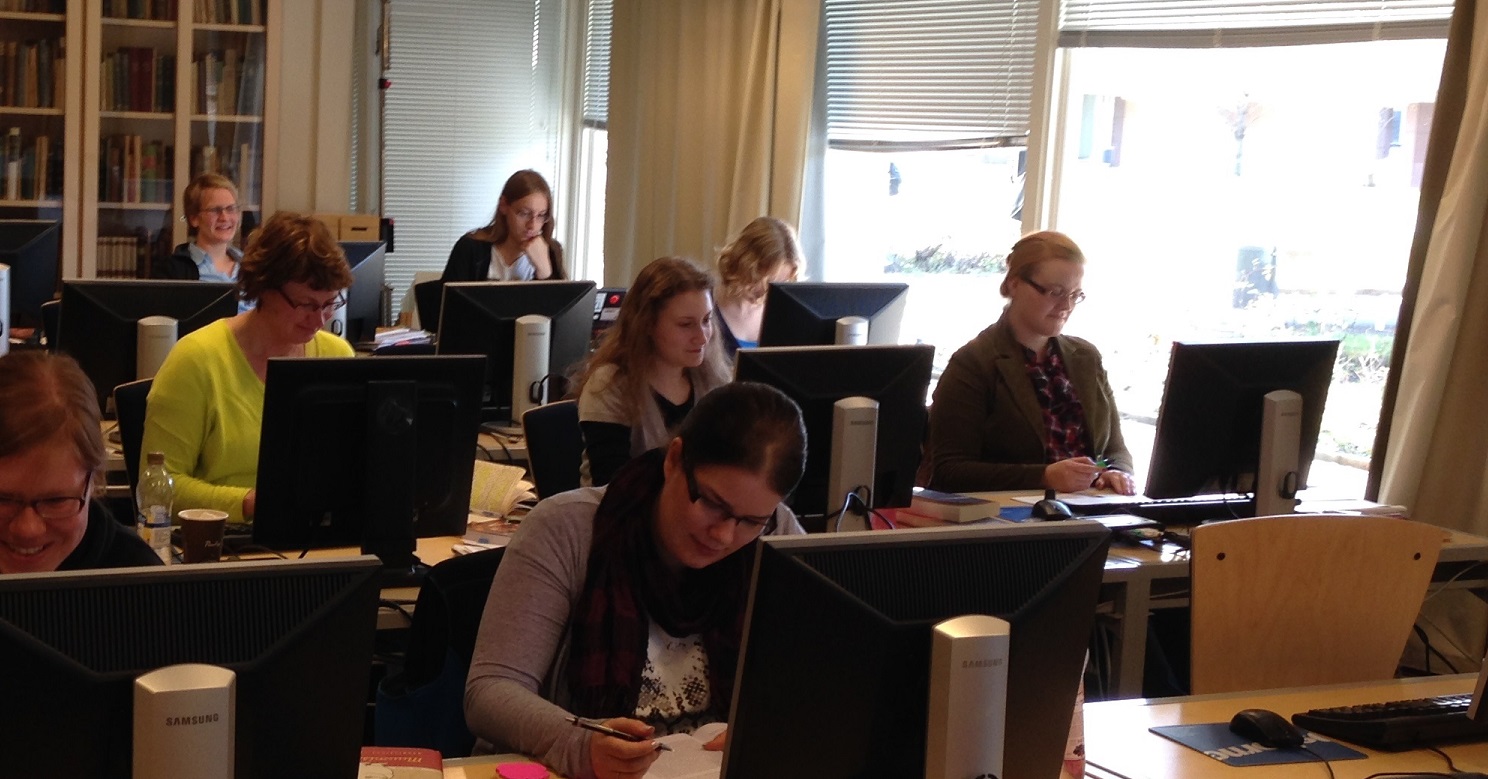
Inspired by the hackathons organized in the IT world, our department organized an MA thesis writing day, ‘Gradutalkoot’. The idea of this event was to give our thesis writers an opportunity to work on their thesis in an organized and goal-oriented manner. The event was coordinated by Elina Valovirta and Mari-Liisa Varila from the Department of English; Outi Paloposki and Ira Hansen from the Department also participated in the event.
The staff members and 11 thesis writers (from different Tracks) met on Friday 18 October at the Paasikivi room of the Main Library.

We began by setting individual goals for the day – for example, how many pages each participant would write. Passages from Neil Gaiman’s pep talk for NaNoWriMo writers were read aloud for inspiration. Leena Järveläinen from the University Library helped us with information retrieval issues; she also briefly introduced the new ResearchGuides service of the University Library. This service groups together various search tools and databases available via our library; we recommend taking a look!

We made good progress during the morning and did a brief round of situation reports before heading out to Assarin Ullakko for lunch. After lunch, the writing work continued in good spirits. We had a short coffee break — sponsored by the Department — in the afternoon to keep everybody awake and busy. We ended the successful working day with a debriefing session, where we assessed how we managed to reach the goals we set for ourselves and discussed the next stages of our projects.

Everyone felt that the event was successful; the next Gradutalkoot will be organised on 5 December, 9-14. Another event to look out for is the Thesis Symposium, where MA thesis writers from different Tracks and in different stages of their projects discuss their work. The first Thesis Symposium was held in Spring 2013, and we hope to organize the second one in Spring 2014. More information will be available later!
Mari-Liisa Varila

thesisday
Happy thesis writers hard at work.