What’s that MA Thesis all about?

On 8 April 2025, students and staff members of the Department of English gathered for the annual MA Thesis Symposium. The event has been organized since 2013, so one could safely say that it is turning into a true tradition of the English Department.

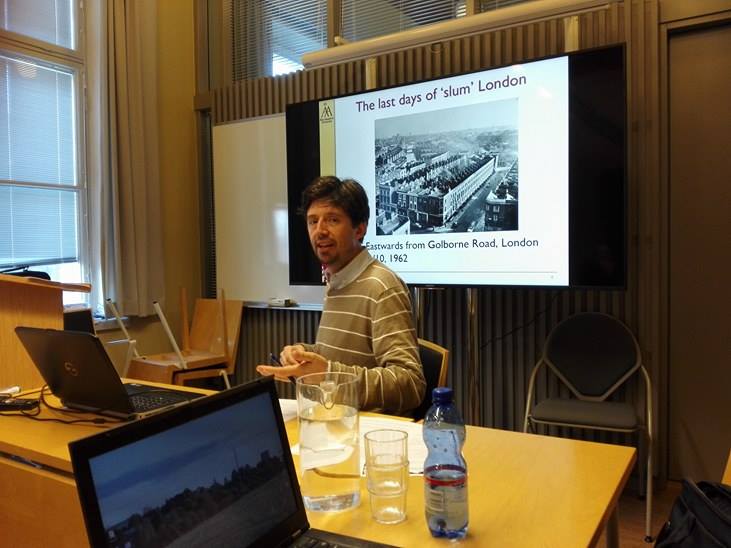
The MA Thesis Symposium showcases MA research done at the department. Major students who have just completed or are about to complete their MA Thesis give a short presentation where they talk about their thesis topic, methodologies and key findings, and often also about what it is like to write an MA Thesis. The symposium is specifically aimed for students starting their MA Thesis seminar, who might wonder about topic selection and the process in general, and BA level students, who are thinking about what to specialize in in their MA studies. The symposium also gives the speakers an opportunity to talk about their research and gain public speaking experience in a relaxed and friendly environment.

This year, we were lucky to have speakers from each of the Department’s MA tracks: philology, discourse, second language acquisition, literature, and multilingual translation studies. The level of maturity, professionalism and enthusiasm of the presenters was impressive. Each outlined their topic with confidence and was well-versed in academic language and presenting style, all the while making their varied topics accessible to everyone in the audience. The presenters carried themselves well through the lively discussions and answered questions from the audience knowledgeably. The event certainly served as encouragement to those still a bit apprehensive about writing an MA Thesis.
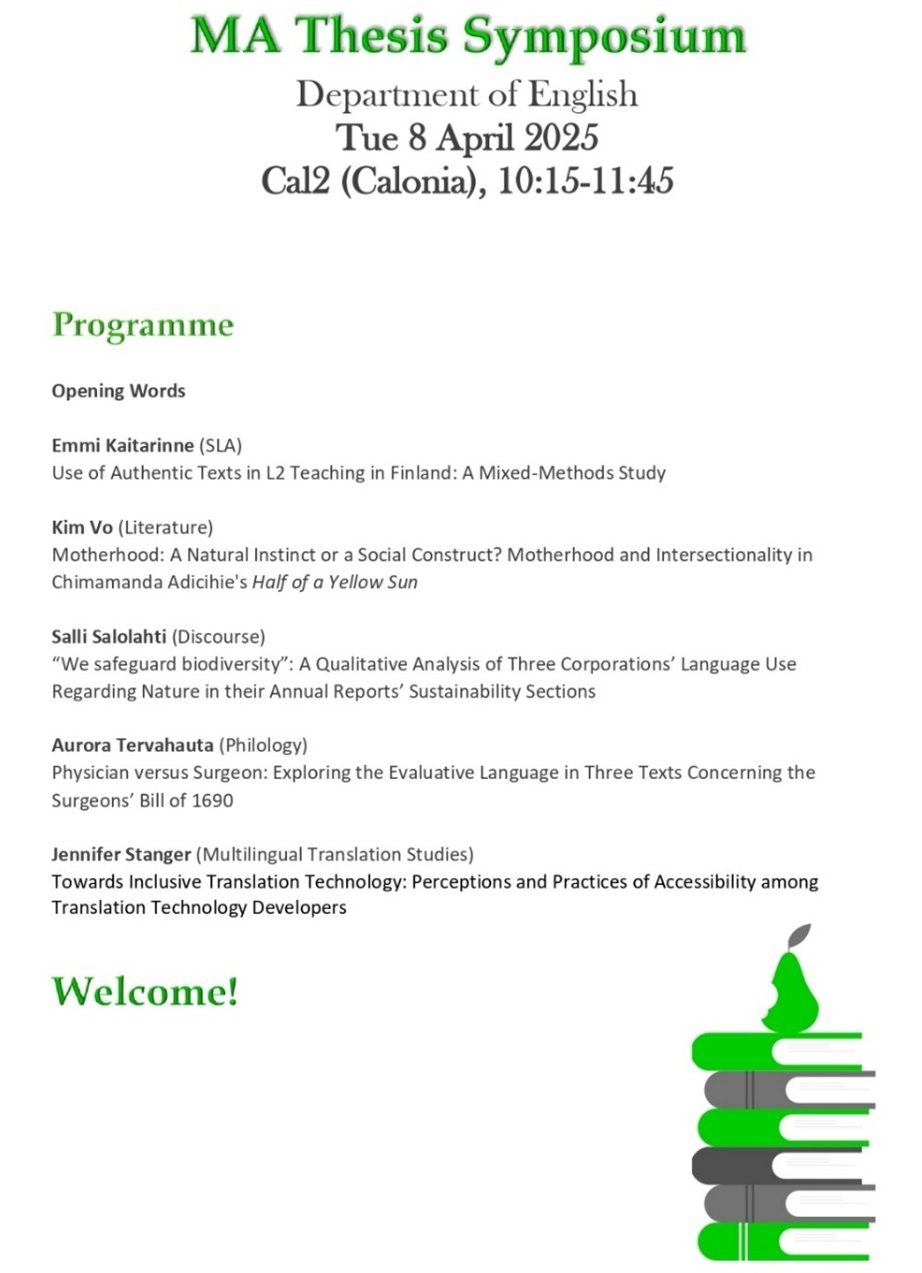
The program for MA Thesis Symposium held at Department of English on Tuesday 8 April 2025 Programme: Opening Words Emmi Kaitarinne (SLA) Use of Authentic Texts in L2 Teaching in Finland: A Mixed-Methods Study Kim Vo (Literature) Motherhood: A Natural Instinct or a Social Construct? Motherhood and Intersectionality in Chimamanda Adicihie's Half of a Yellow Sun Salli Salolahti (Discourse) “We safeguard biodiversity”: A Qualitative Analysis of Three Corporations’ Language Use Regarding Nature in their Annual Reports’ Sustainability Sections Aurora Tervahauta (Philology) Physician versus Surgeon: Exploring the Evaluative Language in Three Texts Concerning the Surgeons’ Bill of 1690 Jennifer Stanger (Multilingual Translation Studies) Towards Inclusive Translation Technology: Perceptions and Practices of Accessibility among Translation Technology Developers
This year’s MA Thesis Symposium had speakers from all of the Department’s MA Tracks.

I asked the presenters to join me in writing this blog, and Salli Salolahti and Kim Vo hopped onboard. Here they reflect on their experience of writing an MA Thesis and creating a short presentation based on it. They also touch on what it felt like to talk about their research in front of a live audience.

Salli Salolahti (Discourse track):

The MA thesis process definitely taught me a lot more than I initially thought it would! I perhaps naively thought that I would just get it done and that the biggest obstacle would be writing a paper this extensive. However, it turned out that for me the biggest obstacle to overcome was not the writing or any theory – it was perfectionism!

To make progress in the MA thesis process, you have to go through different steps like turning in your topic proposal, research plan, first draft, and so on. I had to accept that these would be less than perfect and that the whole process is simultaneously about showing what I have already learned and learning something new. I spent a lot of time experimenting with different approaches before finding the ones that I could make work. While this was at times frustrating, it was also great to realise that I was able to reflect on and solve many of the issues myself.

When it came time to present my thesis, I assumed squeezing it into a ten-minute presentation would be easy, but it turned out that was not the case. It had been a while since I submitted my thesis, and I had promptly forgotten how much ground it covered! While ten minutes initially sounded like plenty of time, in the end it went really fast.

I was both excited and nervous to present my research. Speaking in front of a live audience did not make me nervous, as I am used to it, but the idea of possibly misrepresenting something about my own research, methods, or theories stressed me. But I needn’t have worried about it: as soon as I started talking, it felt like I remembered everything. It was actually quite nice to talk about something that I myself had done and was proud of and also knew more about than anyone else in the room!
The title slide from Salli Salolahti's powerpoint presentation, depicting the title of the presentation (“We safeguard biodiversity”: A Qualitative Analysis of Three Corporations’ Language Use Regarding Nature in their Annual Reports’ Sustainability Sections) in white in front of a picture of a forest
In her MA Thesis, Salli Salolahti used ecolinguistics, critical discourse analysis and transitivity analysis from systemic functional grammar to analyze the language different corporations use when they talk about nature.

Kim Vo (Literature track):

My MA thesis explores a deceptively simple question: is motherhood an innate, natural instinct — or a social construct shaped by culture and expectation? As it turns out, writing about motherhood felt a lot like… well, becoming a mother.

The early days of thesis writing were filled with anticipation – glowing, even. I was excited, full of ideas, and ready to dive in. Then came the “morning sickness” phase: nausea-inducing literature reviews, endless source hunting, and the creeping dread that maybe I’d bitten off more than I could chew. But just like in pregnancy, there were those magical kicks – moments when my analysis clicked, and I felt the baby (read: thesis) growing into something real.

The final stretch? Labor. Pure, exhausting, deadline-driven labor. Pulling everything together felt like pushing through contractions – painful, but with a purpose. And finally, there it was: a fully formed thesis, screaming for attention and citations.

Presenting my work was another surprise. Despite two years of teaching experience, I still felt butterflies facing a new audience. But once I started talking, the nerves melted away. Ten minutes flew by – barely enough time to scratch the surface – but I was proud to share my research and answer questions.

This journey taught me that writing a thesis isn’t just academic – it’s deeply personal, occasionally chaotic, and ultimately rewarding. And like any proud parent, I’m just glad it’s finally out in the world.
The title slide from Kim Vo's powerpoint presentation, depicting the title of the presentation (Motherhood: A Natural Instinct or a Social Construct? Motherhood and Intersectionality in Chimamanda Adicihie's Half of a Yellow Sun) in white in front of a picture of flowers
In her MA Thesis, Kim Vo explored the many types of motherhood present in Chimamanda Adichie’s depiction of post-colonial Nigeria and concluded that motherhood exists as a dynamic interplay between instinct, choice, and social influence.

Text and photos by Ira Hansen, Salli Salolahti and Kim Vo

Research visit to Philipps University Marburg

As part of my postdoctoral research period in the Research Council of Finland funded project Fluency and Disfluency Features in L2 Speech (FDF2; 2020–2024, PI Pekka Lintunen), I spent six months as a visiting researcher at Philipps University Marburg in Germany during January–June 2023. The main purpose of this research visit was to facilitate collaboration with a member of the project’s international advisory board, Professor Sandra Götz. 

It’s all about collaboration

My six months in Germany ended up, indeed, facilitating the collaboration with Prof. Götz in various ways. I appreciated the opportunity to discuss various research-related and other matters with her in our weekly meetings. Working in adjacent offices also allowed us to deepen and extend our existing collaboration, notably on a study addressing the speaking style and task mode effects on L2 speech fluency. I am also grateful to Prof. Götz and the Department of English and American Studies for making it possible to invite one of our collaborators, Dr. Loulou Kosmala from Université Paris Nanterre, for a short visit to Marburg. Her visit greatly facilitated the progress of our collaborative work on the links between fluency and gesture, which is based on the interactional data collected in the FDF2 project. Our pilot study has been published as part of the DiSS workshop 2023 proceedings. My research stay in Marburg, therefore, not only facilitated the collaboration with German colleagues, but also brought me closer to my other central European colleagues, including Dr. Kosmala.

Happy hosts (me and Prof. Götz on the left) and our visitor, Dr. Kosmala (on the right)

Getting to know the department

While working at the Department of English and American Studies, I had the privilege to get to know the department’s wonderful staff. I familiarized myself with the research done in the department by participating in their Linguistics colloquium research meetings and got to present our FDF2 project to the group. During lunches and other casual meetings, I learned that one of my colleagues, Aoife Holmes-Rein, hosts a podcast called Grandiose Grammar, including 45 episodes (and counting!) on various aspects of English Grammar.

During my stay in Marburg, I also got to witness the beginning of a great new practice facilitating casual encounters among the department’s students and staff, namely the Language lovers’ lunch club (3LC), launched by Holmes-Rein, Kathrin Kircili and Prof. Götz. The department has an Instagram account (@iaa_marburg) where they post about the lunch meetings and other activities at the department.

In the first 3LC meeting, the topic was language change and lexical innovation. Finnish “sisu” mentioned!

Teaching benefits research

While my visit was focused on research, I was happy to get the chance to give some guest lectures as well. I talked about social approaches to language learning on a course focusing on linguistic theory and the history of linguistic ideas. In addition, I gave fluency-themed talks on two different courses: one focused on spoken English and another focused on English as a foreign language. The participants on the latter course were future teachers of English, so we focused especially on the teaching of speech fluency. Getting to reflect on these topics with various groups of students gave a lot of food for thought also for my own research. I am grateful to all students in Marburg who attended these classes and to Prof. Götz and my dear “roommate” at Marburg, Kathrin Kircili, who kindly gave me the chance to join their courses as a visiting lecturer.

Other activities

A lot of my spare time during the visit was spent exploring my hometown, Marburg, as well as the cities nearby. To make the most of the central European rail network, I travelled both within Germany (for instance to Cologne, Hamburg, and Berlin) and to neighboring countries (France). In addition to these non-work-related trips, I also travelled outside Europe during my stay to participate in the annual conference for the American Association for Applied Linguistics in Portland, Oregon. At the conference, I presented preliminary findings on the effects of L1 speaking style and task mode on L2 fluency and got to meet colleagues especially from outside Europe.

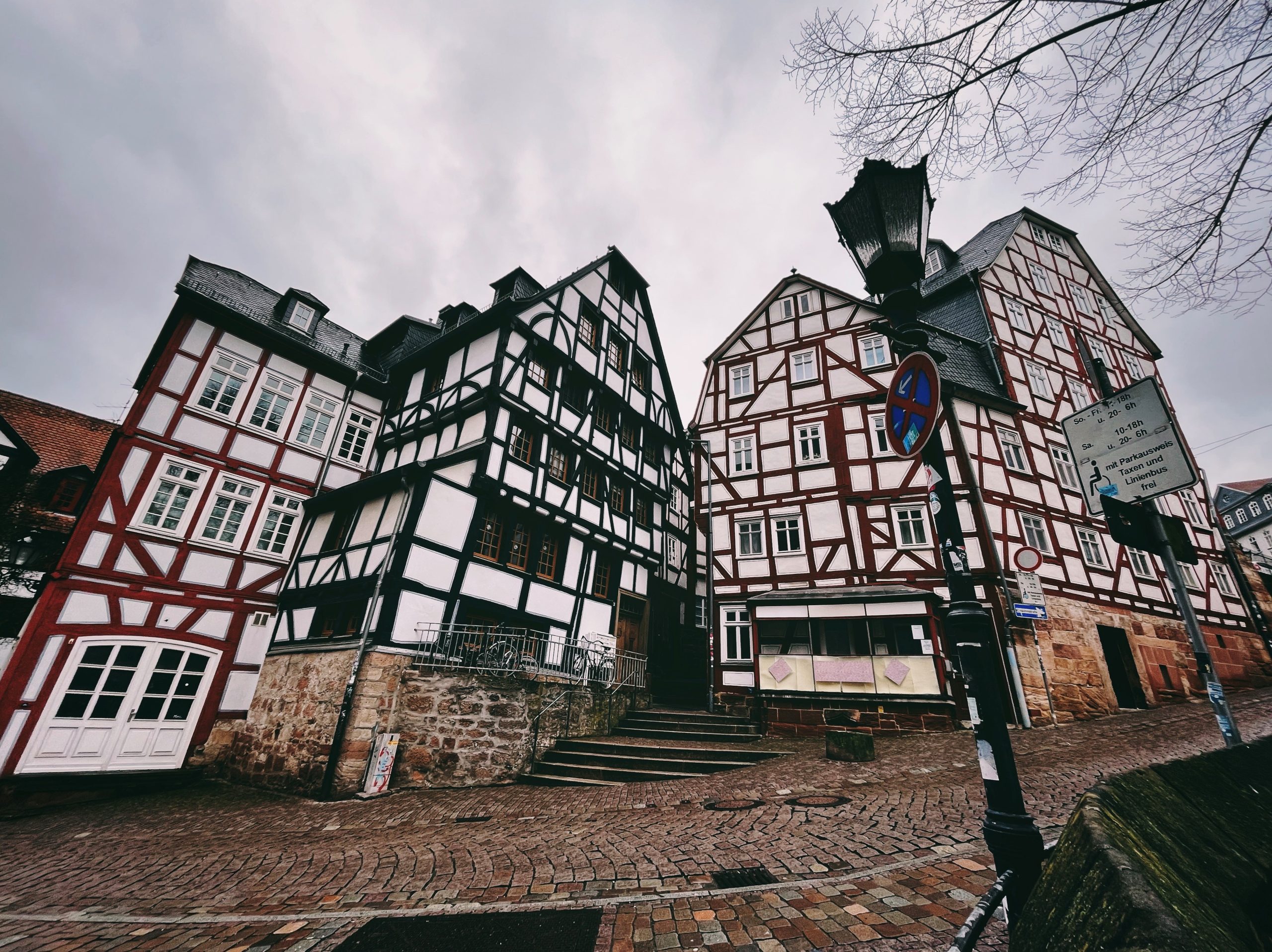
The Old Town of Marburg.

All in all, the six months I spent in Marburg were really enjoyable and rewarding, both from personal and professional perspectives. I learned a lot during my stay. I know that our collaboration will continue at least remotely, but I hope I can return to Marburg for another visit sometime in the future. 

Thank you to Prof. Sandra Götz, the Department of English and American Studies at Philipps University Marburg and the Research Council of Finland for making this visit possible.

Text by Pauliina Peltonen

First photo by Sandra Götz, second and third photos by Pauliina Peltonen

A Poetry Researcher’s Field Day

One might assume that literature research would not necessitate fieldwork, but sometimes it is useful to those of us working with such esoteric topics as contemporary US poetry as well. In early May, I visited the State University of New York at Buffalo, and particularly their library’s Poetry Collection, in search of more materials for my research project, Difficult Relations: Reading for Emotion in Recent American Experimental Poetry.

SUNY-Buffalo, or UB as the locals like to call it, hosts the Poetry Collection, “the library of record for 20th- and 21st-century poetry in English”. The collection, started by Charles Abbott in 1937, is hidden away from the public in closed stacks, so visitors desiring to peruse books have to give a list to the staff, and they will pull it out for use in the library’s reading room. Like in many archives and special collections, use of the materials requires care, and only computers or pencils can be used for note-taking. Photographs are not allowed without special permission.

The reading room is a large hall, guarded over by a portrait of James Joyce. Incidentally, the UB Poetry Collection is also home to the world’s largest collection of Joyce-related materials, like first editions, correspondence, notebooks and photographs. Oscar Silverman, who worked at UB, had visited a Joyce exhibition in Paris in 1949 and got the idea to bring the collection to UB. Joyce is a pervasive presence in the Poetry Collection reading room, watching over it all like a grandfather of modern English literature that he is.

My 10 day visit to Buffalo was a handy one-stop method for browsing through many important works published in the last 15 years or so. Many of these were published in limited editions or are otherwise difficult to find from overseas. While I order what I can from online stores, it was very useful to have it all at my disposal at once. It also allowed me to observe the sheer materiality of recent poetry works, viewing as I did items ranging from large anthologies and collections to thin and plain chapbooks and even little cards on which poems had been printed. In a tangible way, it brought the liveliness of contemporary poetry culture into view.

UB is also home to a fairly substantial population of Canada geese, one of which is pictured here.

Text and photo by Elina Siltanen

Eating elephants

Nearly 1.5 years into my doctoral studies, I have already encountered some sort of block. Things are just not progressing the way I would like, something is not working. I feel like I have read every possible piece of available research about my topic but starting the first article seems like a horrendous endeavor. What am I doing? Where do I start? What perspective should I take? Am I prepared enough? Do I have the concepts right? Maybe I should just make another cup of tea…

A couple of days before the event that was to take place on March 21,2019, I received an e-mail stating that there were places still available in the Finding joy and productivity in academic writing lecture and workshop. Guest lecturer Carol Kiriakos, co-author of Tohtoritakuu, was to speak about practical approaches to academic writing. My first thought was, “This is scary!” Can you imagine? This was exactly what I needed, and here it was in my mailbox, and none too soon as the event was in just two days! I was not really sure what the ‘practical approaches’ might entail, but the words ‘joy’ and ‘productivity’ were what really caught my eye. Could I really find joy in my situation of ‘rookie’s block’, and could I ever become productive in my revelry of procrastination?

Carol Kiriakos provided answers to both questions, “Yes and yes.” First, you have to take an inventory of your beliefs; what beliefs do you have about yourself or your writing that keep you from writing? Participants took a few minutes to write down their beliefs, and to my astonishment, we were all struggling with the same issues: getting started, time management, insecurities pertaining to abilities, being prepared, procrastination, lack of inspiration, etc., etc. At this point, the group of participants became a united whole – we were all in the same boat struggling in the same weather to keep it afloat.

Once you are aware of what is keeping you from writing, you need to create a writing habit. At what time of day do you feel the most creative or productive? A rule of thumb is the further the day progresses, the less creative and productive we become because other things begin competing for our attention. How much should you write at one go? Kiriakos warned us not to set ourselves up for failure. If you plan to write 5 pages on a certain day and do not achieve that goal, most likely you are going to feel like you have failed and starting the writing process again may take an unnecessary number of days or weeks.

The third thing, and perhaps the most important, you should do is learn how to eat an elephant. Well? How DO you eat an elephant? According to Kiriakos, the answer is: One bite at a time. For example, if you write in your calendar “PhD thesis” for every day you would have time to work on it (as I have done and now have a lot of erasing to do), you are setting yourself up for failure. Not only is it impossible to write a PhD thesis in a day, but you are also creating the feeling that you never get anything done. A more sensible approach would be to write, “1 page for Section 2.2.”, for example, or simply “one paragraph”. The same idea can be used for setting goals, i.e. break them down into smaller bites. For example: long-term goal (months to years) -> short-term goal (weeks to months) -> daily goal (hours to days).

To combat procrastination, i.e. always waiting for inspiration or the ‘right moment’ to write, Kiriakos suggested free-writing. During the lecture and workshop, we participants engaged in two free-writing sessions, both lasting about ten minutes. Free-writing was a surprisingly good way to get into the ‘habit’ of writing. We were given a topic each time: The Ideal Academic Writer and The Most Important Thing to Me. Both topics also gave us a bone to chew, which helped us to process the beliefs we have of ourselves. When doing free-writing on your own, you do not necessarily need a topic; on the other hand, having a topic may get you put your thoughts in order. You need to set a timer, so you do not have to look at the clock, and then just write about the ideas or topics you have for writing your thesis on that particular day. With free-writing, you can find that inspiration, and the moment you sit down to free-write is exactly the ‘right moment’ you keep waiting for.
I left the workshop feeling I had eaten my elephant, or at least cut it down into smaller, more manageable pieces. Feeling inspired by Kiriakos and getting the push I needed to start writing, I decided to share my experience here. I recommend reading Tohtoritakuu to BA students , MA students, even to the experts whose doctoral hat is worn around the edges and whose sword has defended truth and knowledge many times over. It contains useful strategies for anyone contending with an elephant…. One bite at a time.

Text by Judi Rose

ÅboutU seminar: Publishing

In September 2015, Matti Peikola from the University of Turku and Adam Borch from Åbo Akademi University held a seminar for doctoral candidates. In a workshop held after the presentations, the participants called for more contact between doctoral candidates of UTU and ÅAU, and so a committee was created for this purpose. The committee members, Sirkku Ruokkeinen (UTU), Ira Hansen (UTU), Eva Norrman (ÅAU) and Emma Kanckos (ÅAU) named the group ÅboutU – a most clever play on the words Åbo and UTU.

During the past year, ÅboutU has focused on organizing social events and providing opportunities for networking. In addition to the bi-monthly get-togethers at Koulu, ÅboutU organised a seminar for PhD candidates in late September 2016 with the theme ‘publishing’. The seminar had two keynote speakers, Dr. Jason Finch (ÅAU) and Dr. Pekka Lintunen (UTU), who spoke on the processes of writing an article from one’s conference paper, and on acting as a referee, respectively. The PhD candidates then held five-minute presentations on their work of late.

Dr. Finch’s presentation was titled “From Conference Paper to Published Article: Preparing Submissions to Journals and Edited Collections”. Dr. Finch began by pointing out that for those who are planning a career in academia, there is a need to distinguish oneself by writing journal articles. Conference papers are a good starting point.

jason
Dr. Jason Finch (ÅAU)

The most important part of a conference paper as well as an article is a new idea that somehow contributes to your field. However, working that idea into a conference paper or into an article are two different processes. When planning a conference paper that will be turned into an article, you might want to write the full length article first, and then present a shorter version of it at a conference. You can also write the conference paper first, and expand the paper based on the feedback received at the conference. In any case you should have a clear vision of the journal you wish to publish in and edit your text accordingly.

pekka
Dr. Pekka Lintunen (UTU)

Dr. Lintunen’s presentation was titled “The Peer Review Process from the Perspective of the Reviewer”, and it described the do’s and the don’ts of acting as a reviewer. The review process begins with contact: usually the editorial board contacts you through email, sending the title and the abstract of the article. It is a good idea to accept, should your schedule allow it. There is no need to worry about qualifications – if you have been contacted, Lintunen reassured us, you are probably qualified.

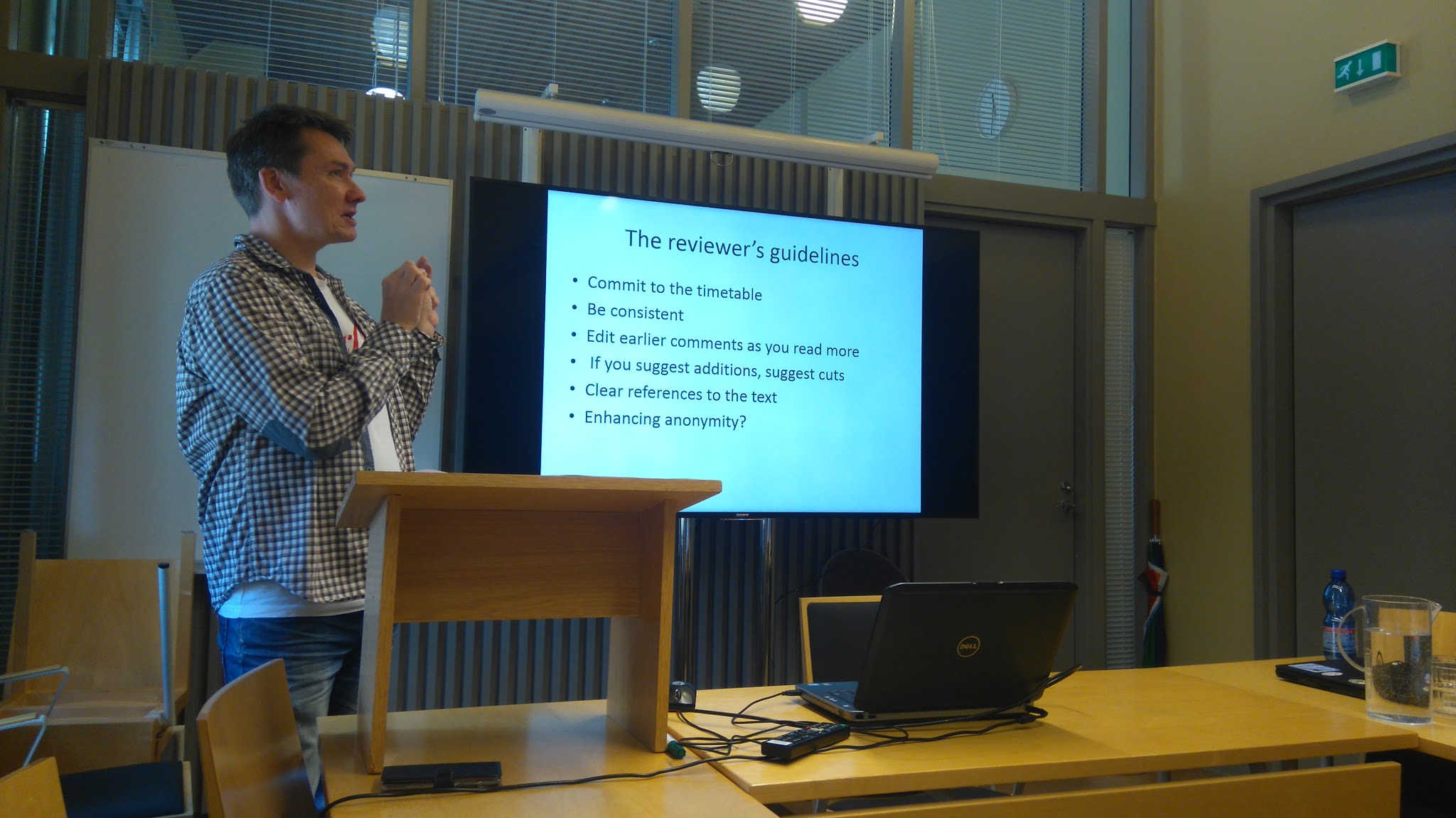
The instructions for the reviewers can sometimes be found on the journal’s website. If not, you can email and ask for them. You might also want to check the journal’s instructions for authors. In a review process you should pay attention to the goals of the paper, its theoretical framework, references, and argumentation. You should consider whether the paper is suitable for the journal it has been submitted to. If so, think whether the argument is clearly presented, valid and reliable. Are the results well evaluated and defended? Are the results based on the data? Remember to stick to your own field and expertise when you are giving your feedback.

After the keynotes, thirteen PhD candidates gave five-minute presentations on their ongoing work, for example recent publications or difficulties they had run into during the process. The presentations were followed by discussion. Issues dealing with article publishing were naturally a recurrent theme; Marja-Leena Niitemaa discussed reviewer’s comments she had already received, while Eva Norrman and Aino Liira spoke of the process of co-writing and the content of their articles. Sara Norja and Susanna Mäkinen discussed their articles in preparation; both were writing an article based on a conference paper. Jay Rauhoff, Emma Kanckos and Ira Hansen focused on more specific sections of their dissertations, while Sirkku Ruokkeinen and Cathryn McWilliams used the opportunity to ask for advice concerning their work. Timo Savela, Eva Fjällstöm and Johanna Rastas, who were there for the ÅboutU seminar for the first time, presented the topics of their dissertation work.

aboutu
ÅboutU is looking for new committee members.

The September Seminar was also the venue for selecting a new committee for ÅboutU. Jay Rauhoff, a UTU PhD candidate, has already volunteered. The current committee is searching for two new members from the Åbo Akademi University, and one additional member from University of Turku English Departments. If you’d like to take part in bringing our two departments together, please contact Jay at gajara[at]utu.fi.

The 2016 ÅboutU committee would like to thank the keynote speakers and PhD students from ÅAU and UTU!

Text and photos by Ira Hansen, Emma Kanckos, Eva Norrman and Sirkku Ruokkeinen

Greetings from Mousehole, Cornwall

Mousehole_harbour
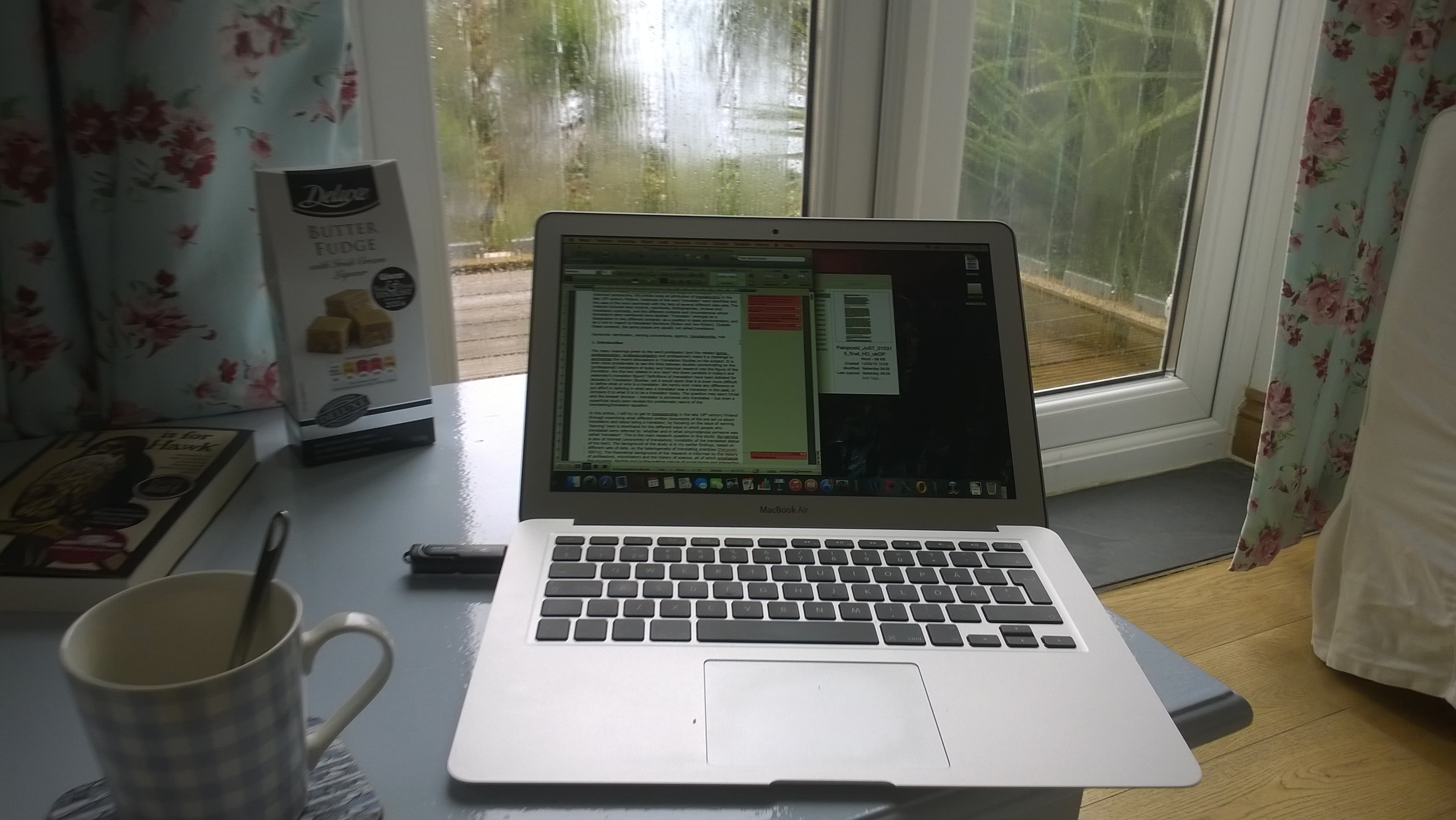
I am writing this piece after a night of gales and storm over England, Wales and Scotland. The small bedsit I am renting for a writing-cum-walking retreat gives out to the sea (there are seals, I’m told, but I have not managed to see them), which is now surprisingly still. The sun rises beautiful and serene, lighting the surface of the water.

office_rainyday
A change in the setting is almost always a good thing; especially if you do not need to worry about the routine tasks at home and are not tempted to start cleaning or washing to escape from writing. Obviously there are other temptations here: Cornwall is beautiful in the spring with its many daffodils. Did you know, by the way, that it was the building of the railway to Penzance in 1859 that made the daffodils from the Scilly Islands and Cornwall a major “export” to London? During the Second World War, though, land was needed for cultivation of food crops, and redundant bulbs were thrown into the hedges. This is why there is a large variety of different kinds of daffodils growing wild on cliff slopes and in woodland areas and hedges. This I learned from the Penlee House Art Gallery booklet accompanying a set of etchings of daffodils by Sally Corbet.
on_the_edge

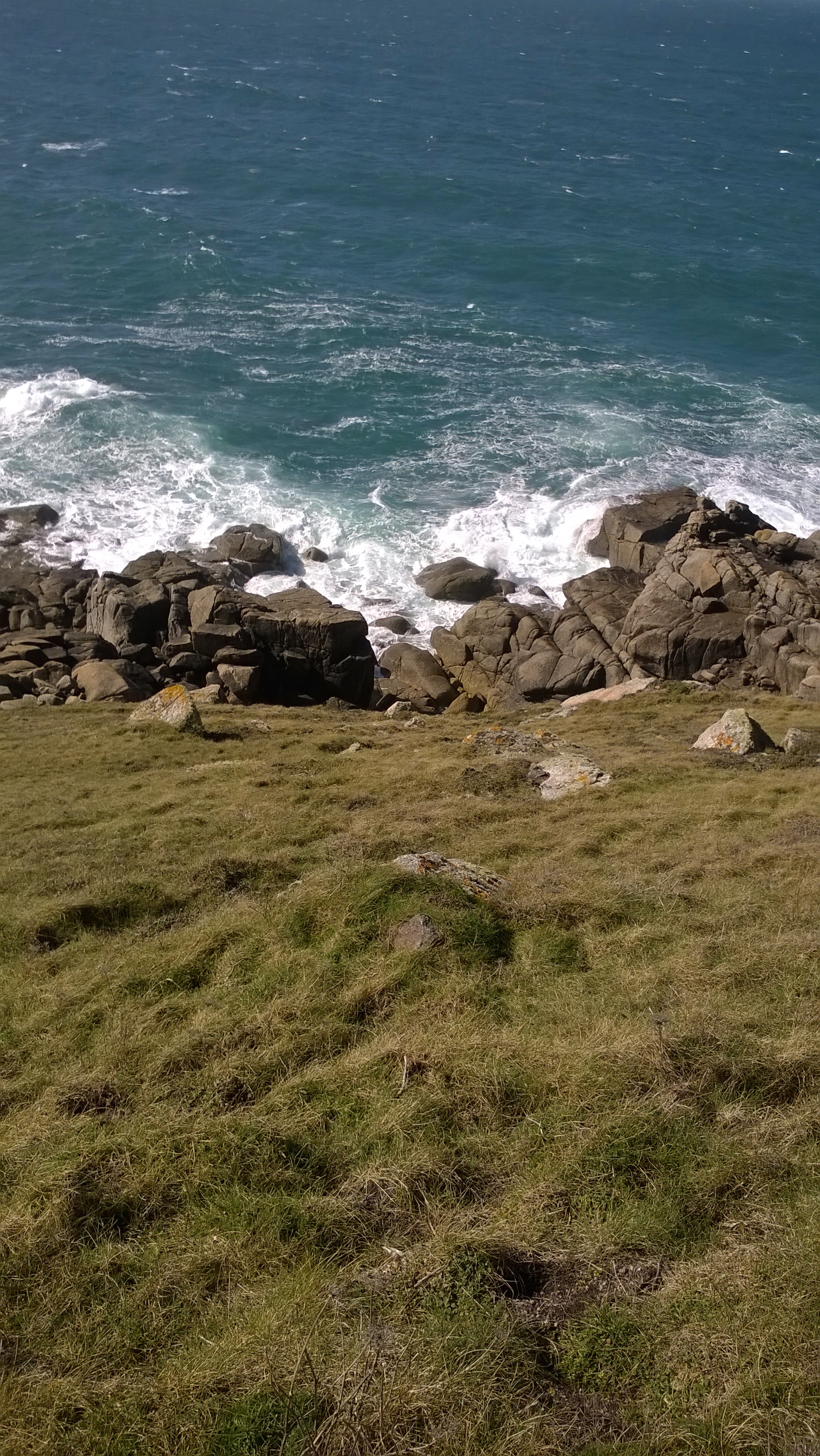
Apart from daffodils and their fascinating story, this tip of Cornwall has more history than what can possibly be digested during a short stay. Take the disused mines, old engine houses, eerie run-down towers and mine shafts in the middle of the heath and rugged cliff landscape. They all bear witness to Cornwall’s past mining industry. By the early nineteenth century, Cornwall was the world’s largest copper producer, but with copper being found in other parts of the world, the prices went down and tin mining came to replace copper. Historical sites in South-Western Cornwall also include the Porthcurno Telegraph Museum: this is where the first under-sea cable was laid between England and India in 1870. And you must not forget the arts: Cornwall is home to the Newlyn school from the 1880s and the St. Ives artist colony, whose famous resident included the Finnish painter, Helene Schjerfbeck.
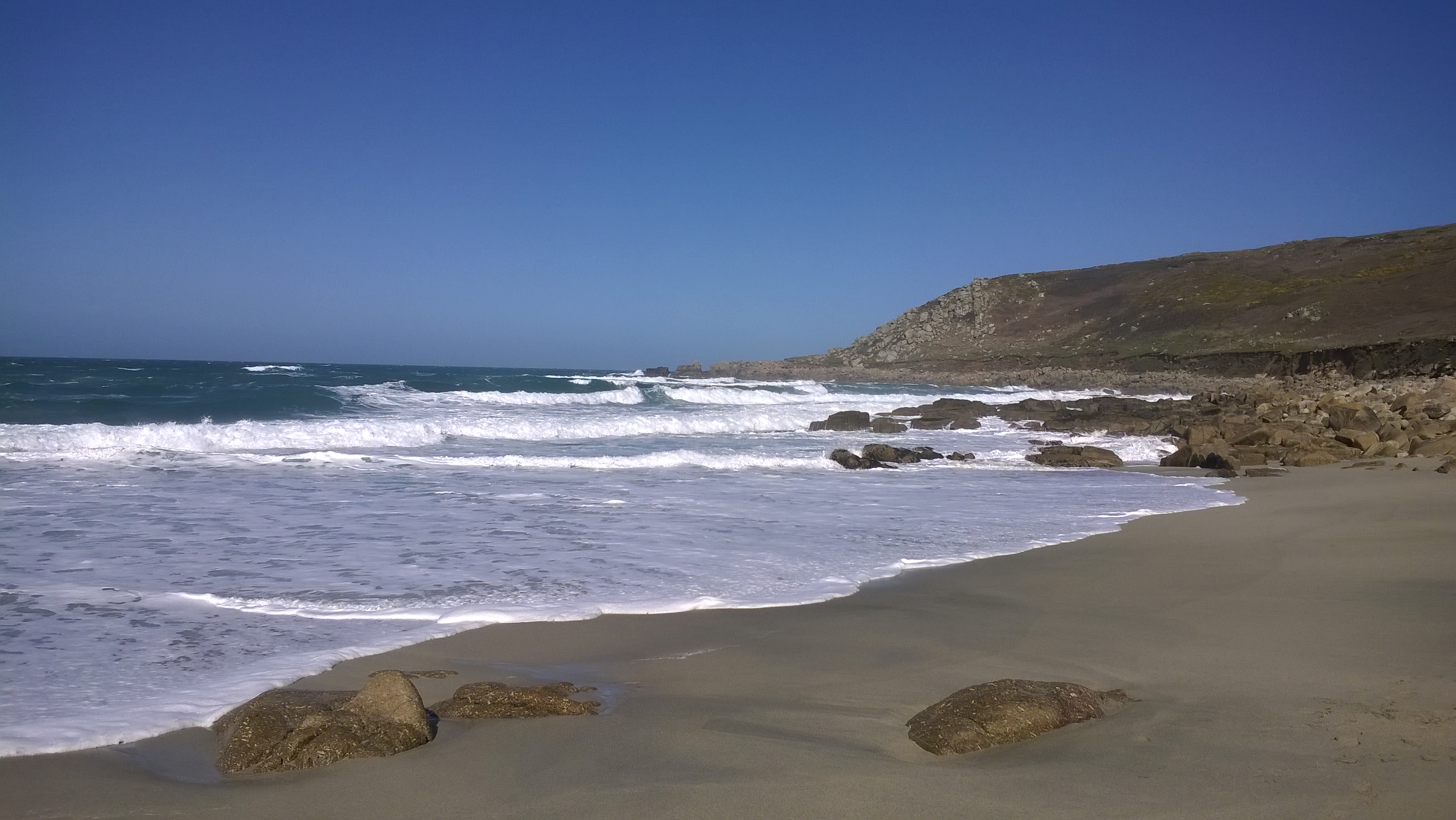
sennen_cove

I am staying in the small but extremely pretty village of Mousehole, which has a number of cafés for me sit in if I tire of writing or walking. My favourite one is Hole Foods Deli, but I have had my best scones at 2 Fore Street – just a tip in case you ever visit this part of Cornwall. There are pleasant surprises in other villages as well – both in the way of food and drink AND in literary/photographic/artistic sense, like the Cook Book café in St. Just. Their website and newsletter have nice photos with inventive captions of the surrounding people, flora and fauna.
Walk_in_the_woods

To end with a rather triste, yet strangely consoling note: this morning I was moved to tears listening to the poet Clive James live on BBC on his life, impending death, and poetry. If you are interested, read this Guardian story.

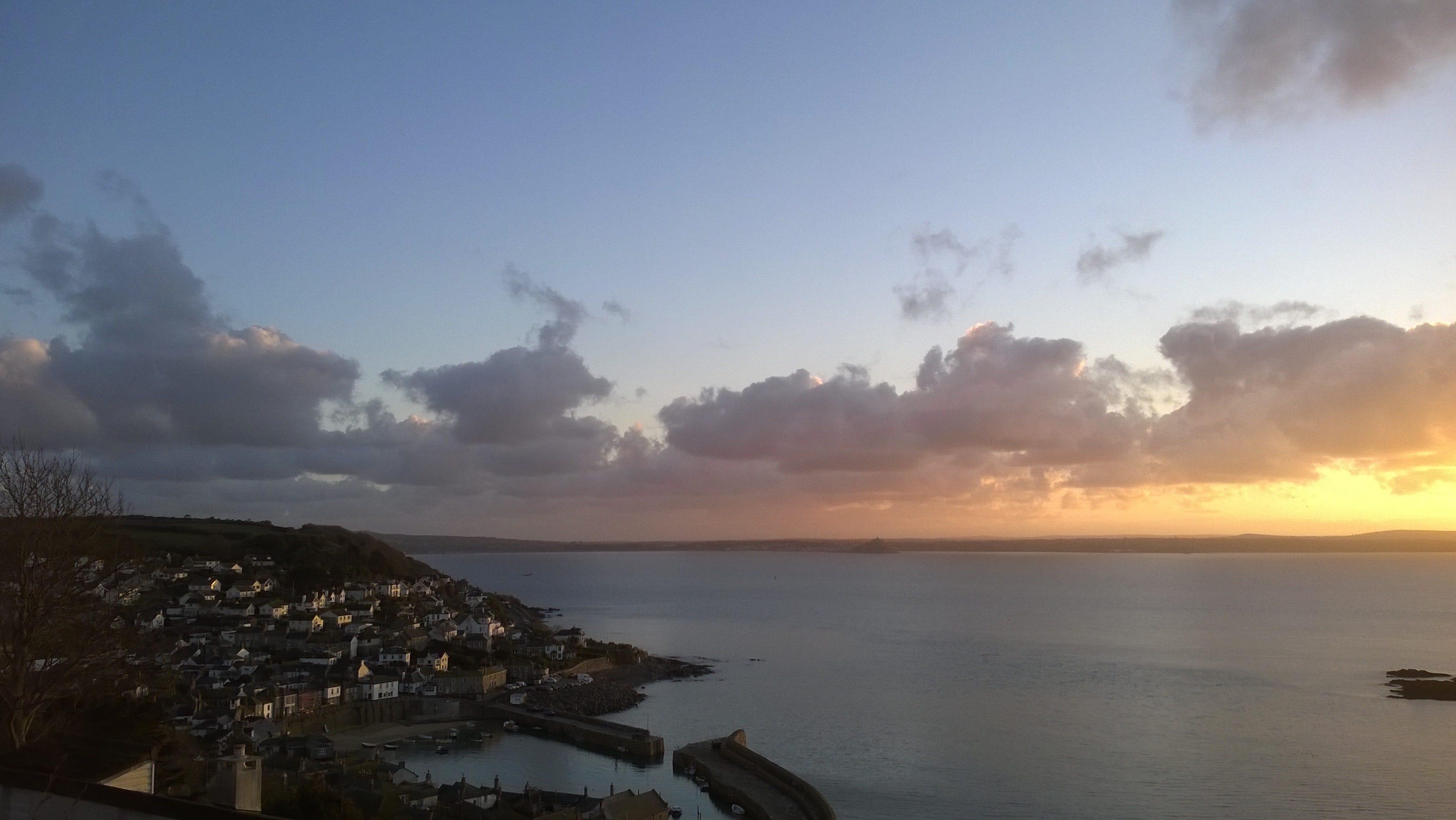
Mousehole at sunrise

I believe these thoughts on life and death, resurrection and hope, as well as the beauty and regenerative powers of nature are quite appropriate for Easter week. I wish all of our students and staff a Happy Easter!

Text and photos by Professor Outi Paloposki

Funding applications, Part 1: Finding funding opportunities

When you’re a first-time participant in the game of applying for research grants, it’s a good idea to ask around and learn a few tricks of the trade. This post explores online resources for finding suitable funding for your research and career stage, and it is first in a series of posts on how to apply for research funding.

For those thinking about pursuing postgraduate studies at the Department of English in Turku, a good starting point is to visit a few websites: The University’s own graduate school, UTUGS, The School of Languages and Translation Studies graduate program, Utuling, and the English Department’s Postgraduate Studies page.

The Research Whisperer is a great resource for career-related practical issues such as funding and networking. This blog post gives good tips on finding suitable funding opportunities.

The Finnish go-to resource for various kinds of research and travel funding is the Aurora database. The database includes most open calls, and you can search the database for example by field of research or deadline for applications. Always remember to also visit the websites of the funding bodies for more information.

Even if you are not applying for funding from them yet, take a look at the Academy of Finland website. The Academy of Finland is probably the most well-known and important funding body in Finland, and their website offers a wealth of information.

If you are interested in EU funding, start from the Participant Portal. Another EU-related site worth checking is EURAXESS, where you can find calls for all kinds of international jobs (including PhD positions in EU-funded training schemes) and fellowships.

Stay tuned for more on how to launch a research career and get funding!

Text by Mari-Liisa Varila

Upcoming event: MA Thesis Symposium

11 March, 10-12
Lecture room X

The first MA Thesis Symposium of the English department was organised last year. Six speakers, from different Advanced Studies tracks, gave a ten-minute paper on their pro gradu projects. The audience consisted of students and staff members, and many good questions were answered after the presentations.

The second MA Thesis Symposium will take place on 11 March, 10-12, in Lecture room X. Five speakers from different tracks have been invited to introduce their thesis projects (a more detailed programme will be published later). This is a great opportunity to hear about very different thesis topics and methods, and will no doubt be very useful especially to those students starting their pro gradu project soon. The event also offers a chance for the speakers to practise giving a talk in front of a friendly audience.

Students and staff from all departments are warmly welcome!

Gradutalkoot Oct 18, 2013

Hackathon (from hack+marathon) is an event in which software developers collaborate on new projects for a set period of time. A hackathon usually starts with a presentation on the theme of the event. Then, teams are formed and work on the software projects is started. At the end of the event, results are presented.

Inspired by the hackathons organized in the IT world, our department organized an MA thesis writing day, ‘Gradutalkoot’. The idea of this event was to give our thesis writers an opportunity to work on their thesis in an organized and goal-oriented manner. The event was coordinated by Elina Valovirta and Mari-Liisa Varila from the Department of English; Outi Paloposki and Ira Hansen from the Department also participated in the event.
The staff members and 11 thesis writers (from different Tracks) met on Friday 18 October at the Paasikivi room of the Main Library.

We began by setting individual goals for the day – for example, how many pages each participant would write. Passages from Neil Gaiman’s pep talk for NaNoWriMo writers were read aloud for inspiration. Leena Järveläinen from the University Library helped us with information retrieval issues; she also briefly introduced the new ResearchGuides service of the University Library. This service groups together various search tools and databases available via our library; we recommend taking a look!

We made good progress during the morning and did a brief round of situation reports before heading out to Assarin Ullakko for lunch. After lunch, the writing work continued in good spirits. We had a short coffee break — sponsored by the Department — in the afternoon to keep everybody awake and busy. We ended the successful working day with a debriefing session, where we assessed how we managed to reach the goals we set for ourselves and discussed the next stages of our projects.

Everyone felt that the event was successful; the next Gradutalkoot will be organised on 5 December, 9-14. Another event to look out for is the Thesis Symposium, where MA thesis writers from different Tracks and in different stages of their projects discuss their work. The first Thesis Symposium was held in Spring 2013, and we hope to organize the second one in Spring 2014. More information will be available later!
Mari-Liisa Varila

thesisday
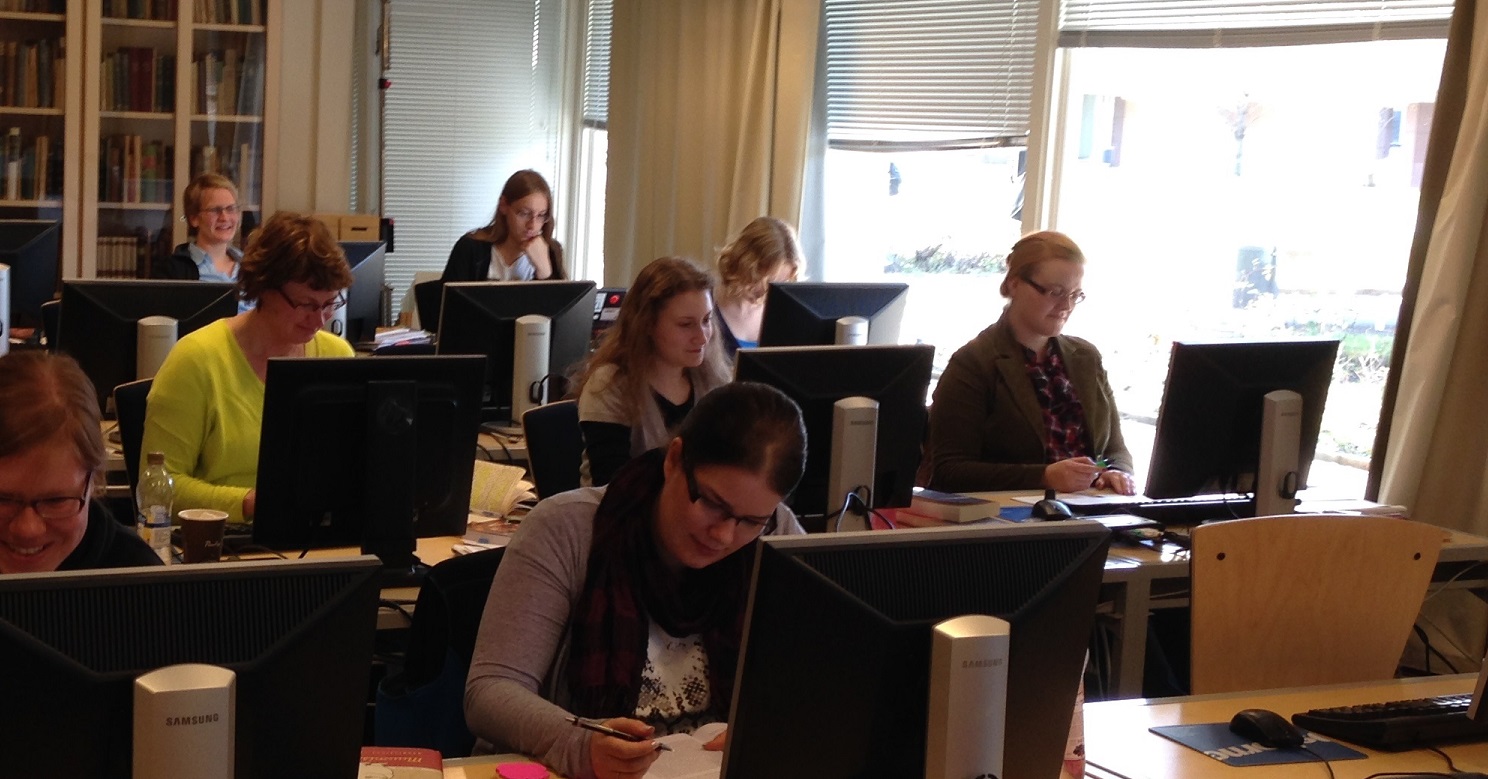
Happy thesis writers hard at work.