Greetings from Gorgeous Galway

irelandview

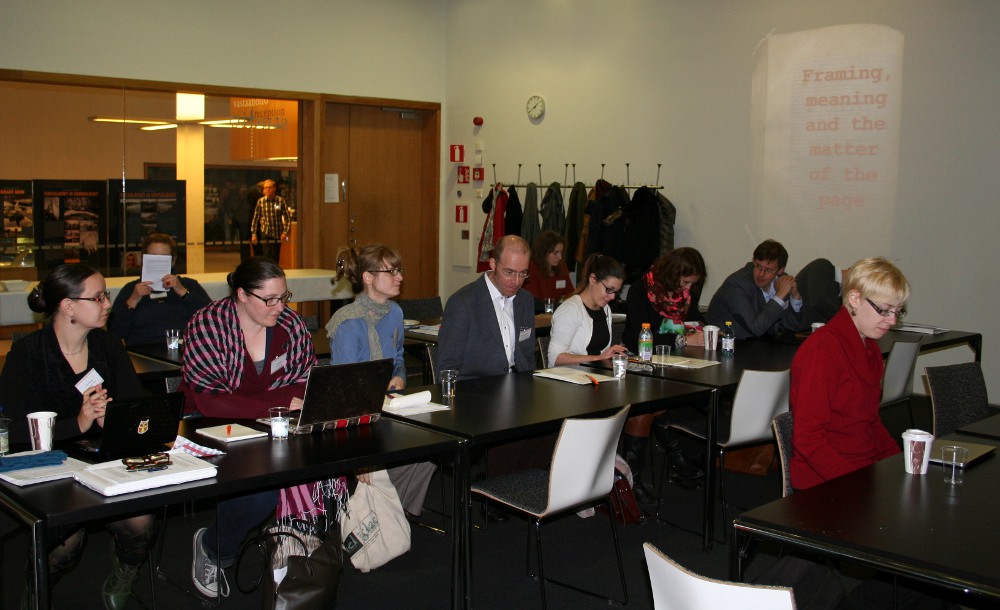
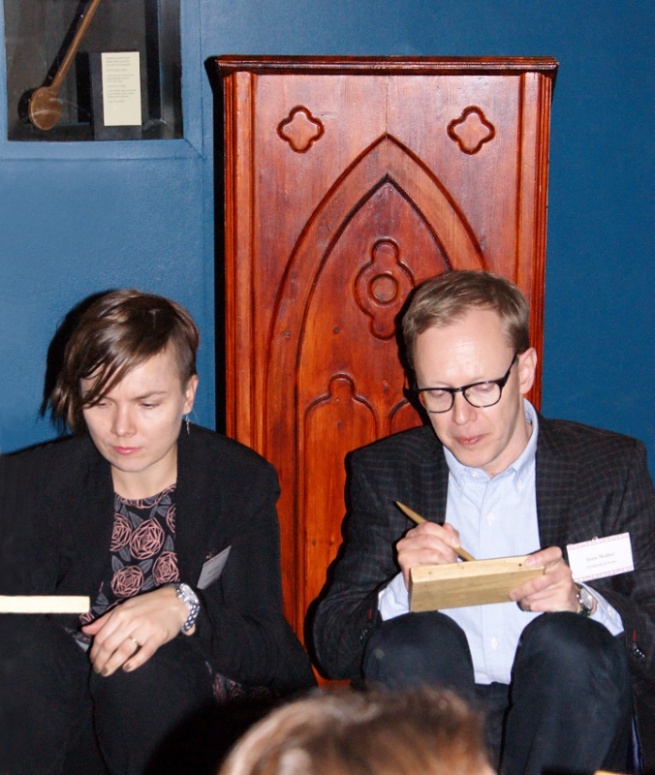
While our historical linguists were enjoying the heatwave in Essen, another delegation from the English department went on a similar mission to a place with just one letter’s difference: ESSE – the European Society for the Study of English biannual conference in gorgeous Galway, Ireland. Our research project funded by the Academy of Finland, Out of the Ordinary: Challenging Commonplace Concepts in Anglophone Literature, hosted a round table debate on the topic of competition for research funding in Europe and its consequences for English Studies. Visions were similar from all over Europe: competition for research funding is fierce, resources are diminishing, but everybody is making it work one way or another. Cautiously optimistic could perhaps be seen as the general attitude in the end of the discussion: after all, we have platforms like ESSE in and from which to push the English Studies agenda further. Besides the round table, the five-day conference with over seven hundred participants held numerous highlights, both intra- and extracurricular.

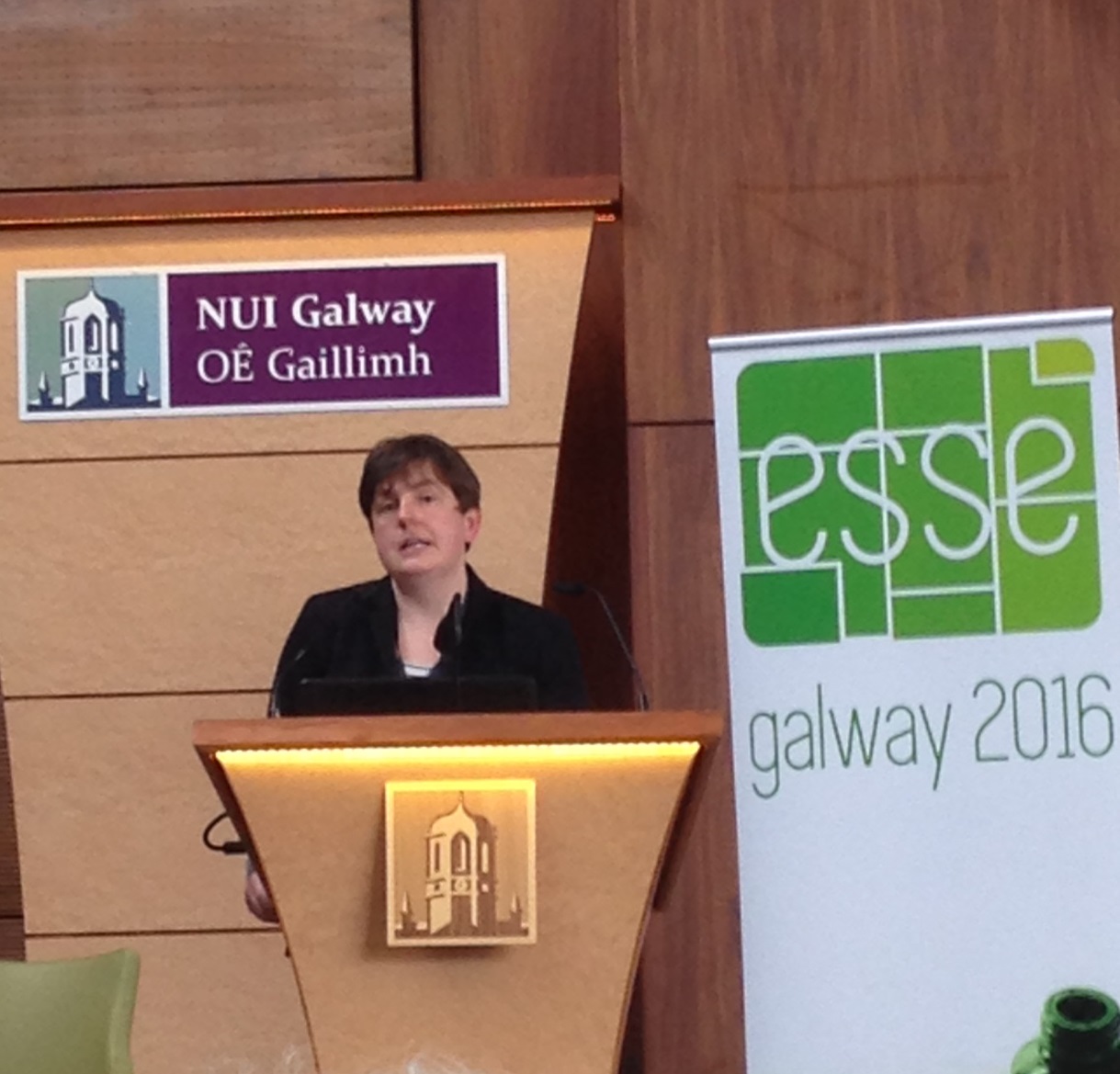
The conference began and ended with prestigious keynote lectures, the first by Emma Smith, Professor of Shakespeare Studies at Oxford. Her discussion on the changes, annotations, and scribbles made by previous owners to copies of Shakespeare’s First Folio denotes the very material quality of books as writing — they are not just stories but also stories about people who have owned or handled them. Smith is further known for her pedagogical efforts, not least of which is the Approaching Shakespeare podcast series, a very accessible way to get to know the Bard of Avon.
emmasmith

The conference ended on another high note, when Professor and author Colm Tóibín in his keynote, titled “As Things Fall Apart: The Response to Violence in the work of W.B. Yeats and James Joyce”, discussed Irish political history and literary analysis hand in hand, with a plot and detailed characterization as only a novelist/scholar could tell it. Thrilling treat, indeed!

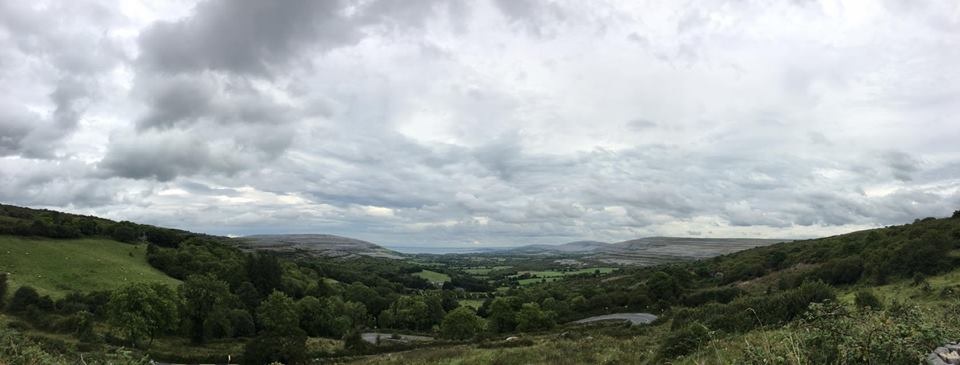
With storytellers like Tóibín hailing from Ireland, it is no wonder that Galway will be the European Capital of Culture in 2020. The beautiful Atlantic scenery, seafood, music, culture, grazing sheep, ponies, and cattle in the green valleys make it an ideal destination for anyone looking to fall in love with places like the historical Kylemore Abbey pictured below. The Gothic castle and Victorian walled garden are now home to the Benedictine community, who welcome visitors to take in the peaceful atmosphere by the lake, which can only be described in the words of the Irish poet, Patrick Kavanagh: “Tranquillity walk with me/And no care/O, the quiet ecstasy/Like a prayer”.
kylemore

Text by Elina Valovirta
Photos by Ira Hansen and Elina Valovirta.

p.s. The next ESSE conference will be held in Brno, Czech Republic, in 2018. For more photos about ESSE, see the ESSE website and for another conference report from a participant in the very successful panel on children’s literature, see here.

Heat wave and historical linguistics in Essen

For university faculty, summer does not simply equal vacation. It is also a prime time for international conferences that are part of our work as researchers. In the end of August, historical linguists flocked to Essen, Germany for the 19th biennial ICEHL conference (22–26 August). ICEHL stands for “International Conference on English Historical Linguistics”.

essen2

The four conference days were packed with excellent plenaries and fascinating papers on all aspects of English historical linguistics – for example pragmatics, speech representation, syntax, variation, language contact, phonology and semantics. Together, the papers covered a millennium of the story of English, from Old English to Late Modern English. You can take a look at the programme here.

Our Philological Track was well represented in the conference. Hanna Salmi gave a paper on verse and prose debates in early modern England. Aleksi Mäkilähde discussed his pragmaphilological approach to the study of language choice in Early Modern English school drama. Janne Skaffari also dealt with multilingual practices in a paper he gave together with Arja Nurmi from the University of Tampere. Finally, Matti Peikola and I discussed early sixteenth-century title-pages as sites of textual discourse. We were delighted to be in the same session with our former Turku colleague Carla Suhr (currently University of Helsinki) who also explored early English title-pages in her talk.

While the other members of our team are frequent ICEHL delegates, this was my first (but probably not the last) ICEHL conference. I really enjoyed my time in Essen, and the heat wave that struck us during the conference was a welcome break after the chilly Finnish summer. The next ICEHL will be hosted by the University of Edinburgh in 2018. As that is the 20th ICEHL conference, organised during the famous Fringe festival in August, I am sure it will be a festive experience indeed!

Text and photos by Mari-Liisa Varila

Postmodern feminist challenging of dominant discourses: Mehdi Ghasemi’s doctoral defence

The second one of the two doctoral defences at the Department of English in the spring 2016 was Mehdi Ghasemi’s “Quest/ion of Identities in African American Feminist Postmodern Drama: A Study of Selected Plays by Suzan-Lori Parks”. The public examination of the dissertation took place at the University of Turku on 10 June, 2016. The candidate’s performance in the defence was eloquent and he was able to justify his choices and elaborate on the points that he was requested to clarify. Despite it being a Friday afternoon in June, the defence was attended by more than thirty people – and it was conducted in an orderly fashion.
mehdi
Mehdi Ghasemi’s doctoral dissertation is a study of three plays by Parks from the standpoints of postmodern drama and African American feminism with a focus on the terrains that reflect the quest and question of identities for African Americans, especially African American women. The study is a reading of three plays by Suzan Lori-Parks – The Death of the Last Black Man in the Whole Entire World (1990), Venus (1996) and Fucking A (2000). Ghasemi’s interpretetations of the three plays offer valuable insights on this understudied playwright and genre. Ghasemi argues that “Parks in these plays uses postmodern drama and African American feminism to encourage reflections on intersectionality in order to reveal the concerns of African Americans, particularly African American women“ (p. i).

The opponent was Professor Jopi Nyman from the University of Eastern Finland, and Professor Joel Kuortti acted as custos. Professor Nyman posed demanding questions on the theoretical issues involved as well as on the particular analyses of the three plays. Mr. Ghasemi replied confidently, resulting in an engaging discussion that – judging from their reactions – was also appreciated by the audience. Finally, the opponent gave his final statement. There were no questions from the floor.

Mehdi Ghasemi is from Tehran, Iran and completed his MA on “Walt Whitman’s Loud Voice of Democracy and Individuality” at the Islamic Azad University of Karaj. The dissertation is published electronically in the Annales Universitatis Turkuensis B419.

Text by Professor Joel Kuortti, custos

SLT historical linguistics seminar 13.5 – Winding through the dusty deserts of a lush philology, pt 2

World map from the Polychronicon. Wikimedia Commons, Bodleian Library.
The seminar continued with the Department of Finnish and Finno-Ugric languages revealing its onomastic side, as we heard presentations from Kirsi-Maria Nummila and Regina Bűdi. Nummila studies medieval street names in Turku and the credit that is their due to Baltic Sea region city plans or the so called German city plan. This city plan seems to have been variously implemented by some big East-European cities like Stockholm, Turku, and Tallinn, and these cities, interestingly, share street names. In her research, Nummila has questioned the traditional view that medieval street names were formed quite spontaneously drawing from the functions and situation of the street, and suggests that they might rather have been borrowed along with the city plan. Bűdi studies the proper names in the Turku bishop Ericus Erici Sorolainen’s sermon collection (Postilla 1621/1625), and more precisely in its gospel text passages. She compares these proper names to the ones found in corresponding passages in Mikael Agricola’s New Testament (1548) and the first Finnish whole Bible (1642), as well as in mainly sixteenth-century German, Latin, Greek, and Swedish translations of the Bible. Her aim is to study the similarities and differences between the proper names from these sources, the degree to which Sorolainen’s proper names were impacted by foreign languages and historical language development, and the gradual assimilation of foreign personal names into Finnish. She also wants to specify the definition of some nouns that could be seen as both common and proper nouns.

Asta Rauhala from the Department of Scandinavian Languages presented her doctoral research that concerns early, thirteenth- to seventeenth-century, Swedish loans into Finnish. Rauhala’s goal is to discover the scope and semantic categories of especially the medieval borrowed vocabulary, the speed of the borrowing process, and the length of time the loans were used in written language. Perhaps this could even lead to new etymologies or to new perspectives on language contacts and life in medieval Eastern Scandinavia! Likewise related to Scandinavian languages is Kendra Willson’s (TIAS) study that examines the possibility of Finnish and Sami names and words appearing in Scandinavian runes, especially ones that we have not been able to decipher thus far. One tricky rune that Willson presented at the seminar reads ”MINVLESIÖMEPVRVANTA” that seems to include at least the words “to me” (minvle), and “eat” or “food” (siöme), and “porridge” (pvrv) in Finnish. It was a good brainteaser to have a guess at the meaning of this passage at the seminar.

Other researchers doing detective work similar to Willson are doctoral candidates Harri Uusitalo and Reko Tikka. Uusitalo from the Department of Finnish studies the Finnish translation from Swedish of a seventeenth-century land law document, the Aitolahti land law. Uusitalo will edit the document that is still in manuscript form and investigate its sources and its possible author based on for example handwriting and vocabulary. Two sources that are previous translations are already known, but there still are passages in the document that are from neither of these. One possible writer is Hartvig Speitz, who may have written the text while sitting a punishment in jail! Uusitalo also wishes to study the development of Finnish legal language. Tikka from the Department of Classics researches games of chance in ancient Rome and the early Middle Ages. Using written and archeological sources, he aims to find out what kinds of games of chance were played and what their significance and functions were to the players. For instance, their possible use in gambling is investigated. Tikka suspects the absence from many European languages of a verb denoting especially the play of children, that exists in Finnish and Swedish (‘leikkiä’, ‘leka’), may up to recent times have discouraged the study of games as a less dignified pursuit. This kind of research is to my mind great proof of how the knowledge of and research in languages can aid cultural and historical study. The dusty deserts of philology do not seem so barren after all.
Find out more about the historical linguistic research of each department on the UTU departmental websites under “Research and doctoral studies”.

Wishing everyone a creative, sunny, and relaxing summer!
On behalf of the seminar presenters,
Aino Haataja, MA, English

Battle and Hastings

My three-year research project on multilingual practices in England in the ‘long twelfth century’ ended in August, when its last research trip took me to the UK for the sixth time since 2012. In addition to doing library work, I paid a visit to the place where my long century began: Hastings, on the south coast, and the small town of Battle, which is just fifteen minutes from Hastings by train and, despite its fierce name, quite a sleepy place today. Hastings is a pleasant seaside town, a lively resort on a sunny Sunday afternoon in August but quiet and a little sad on a grey Monday morning.

All students of British history associate Hastings with the battle that won Duke William of Normandy the crown of England on 14th October, 1066. The fighting actually took place outside Hastings itself, at a site where a few years after his victory William the Conqueror built a monastery. The spot where England’s King Harold lost his life on that bloody day was where the high altar of the Battle Abbey church was located.

eng_battruins

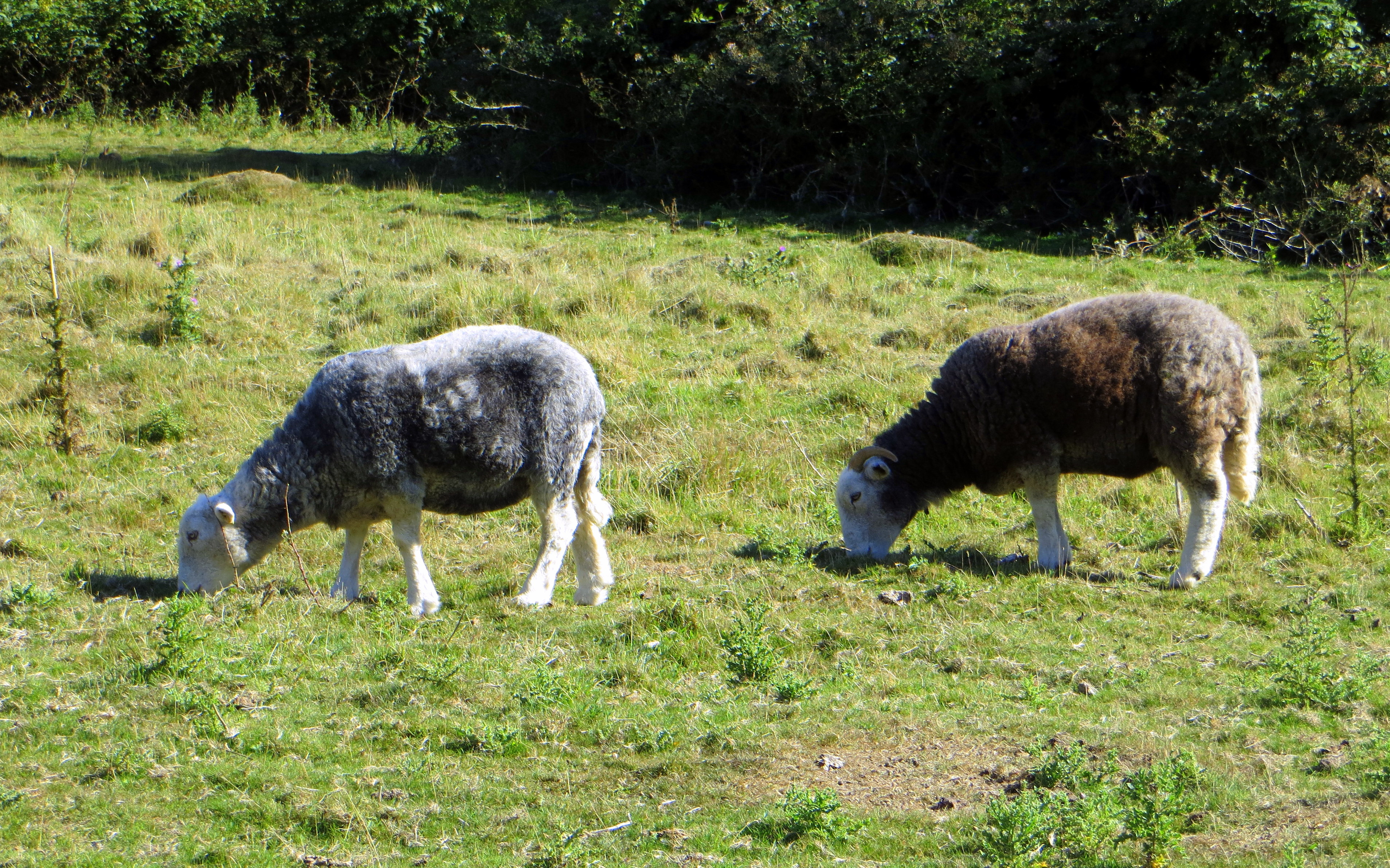
Over ten thousand men fought in the battle that changed the course of history in just one day. On a sunny summer’s day centuries later, this is quite hard to imagine, especially as the battlefield is now a meadow with grazing sheep, inside what is perhaps best described as a not particularly well looked-after park. The walk around the battlefield takes little more than half an hour, and although there are tourists pottering about, they are outnumbered by the sheep. The Abbey is now in ruins, but the site, run by English Heritage, is still interesting to visit. The village of Battle makes the most of the historic significance of the place; even one of the restaurants serves lunches that cost exactly £10.66.

eng_battsheep

The consequences of the battle of Hastings and the Norman Conquest more broadly include social, political and cultural changes – and also linguistic ones, as French gained a new, prominent position in England. It was English lexis in particularly that was influenced by language contact; the previous sentence alone contains at least half a dozen words of French origin. As a historical linguist, I hope that the linguistic legacy of the Conquest is also remembered next year – the 950th anniversary of the Battle of Hastings.

Text and photos by Janne Skaffari.

A Heat Wave of Digital Humanities

cover_leipzig

leipzig2
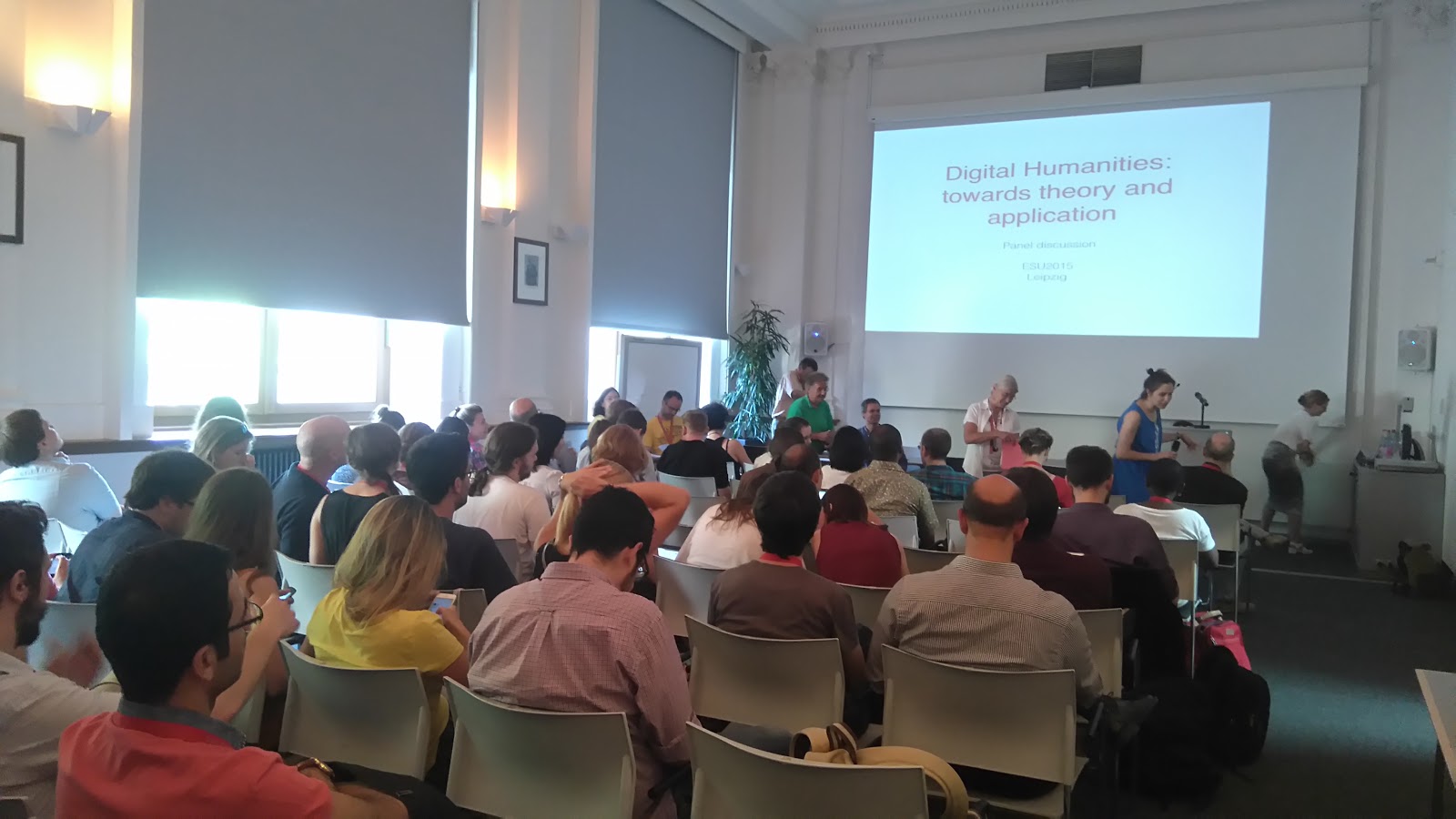
It’s not summer for a doctoral student if it doesn’t include an intensive training week or two. We two intrepid travellers from the Department attended the sixth European Summer University in Digital Humanities (ESU DH), “Culture and Technology”, held at Universität Leipzig July 28-August 7.

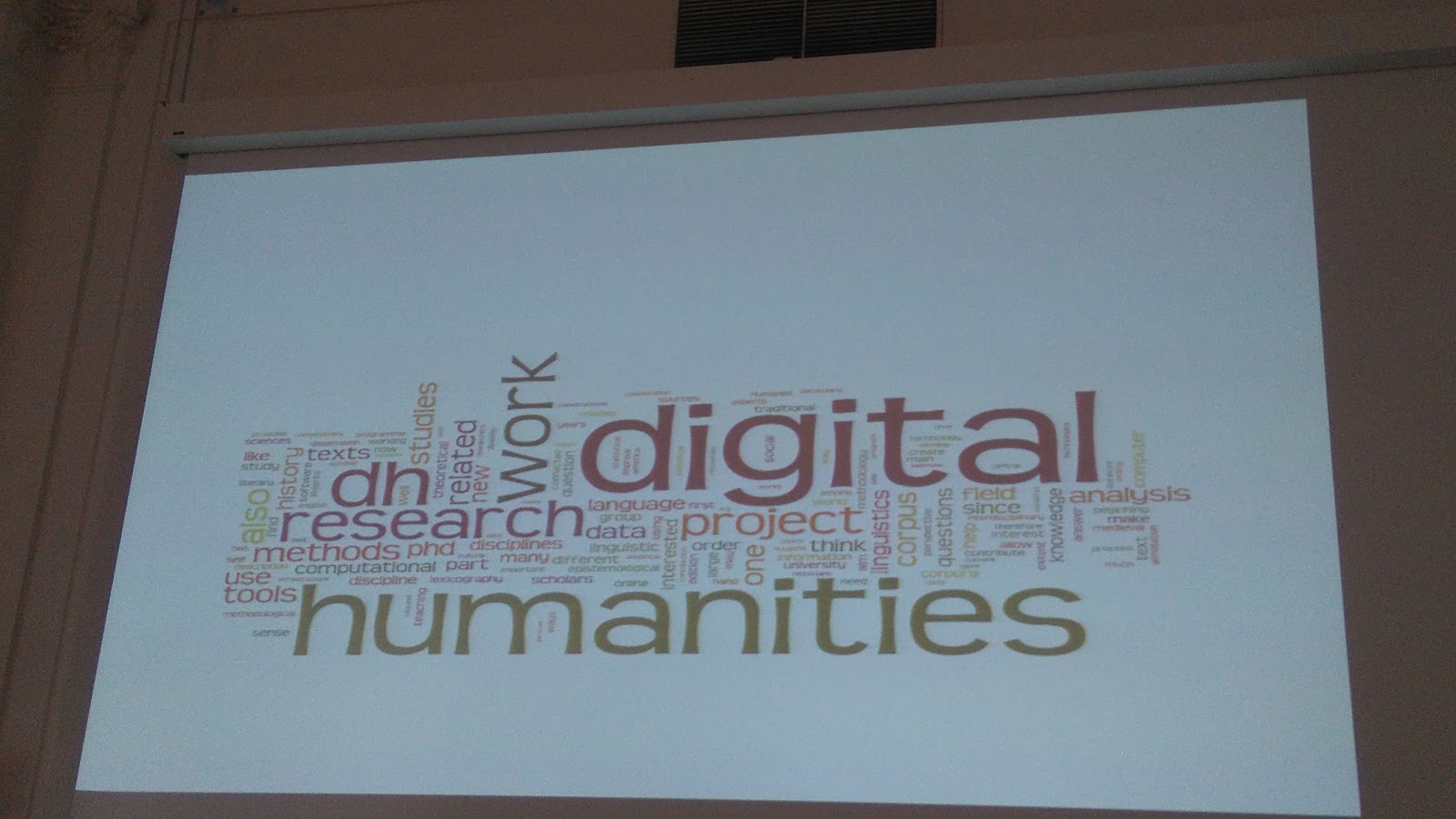
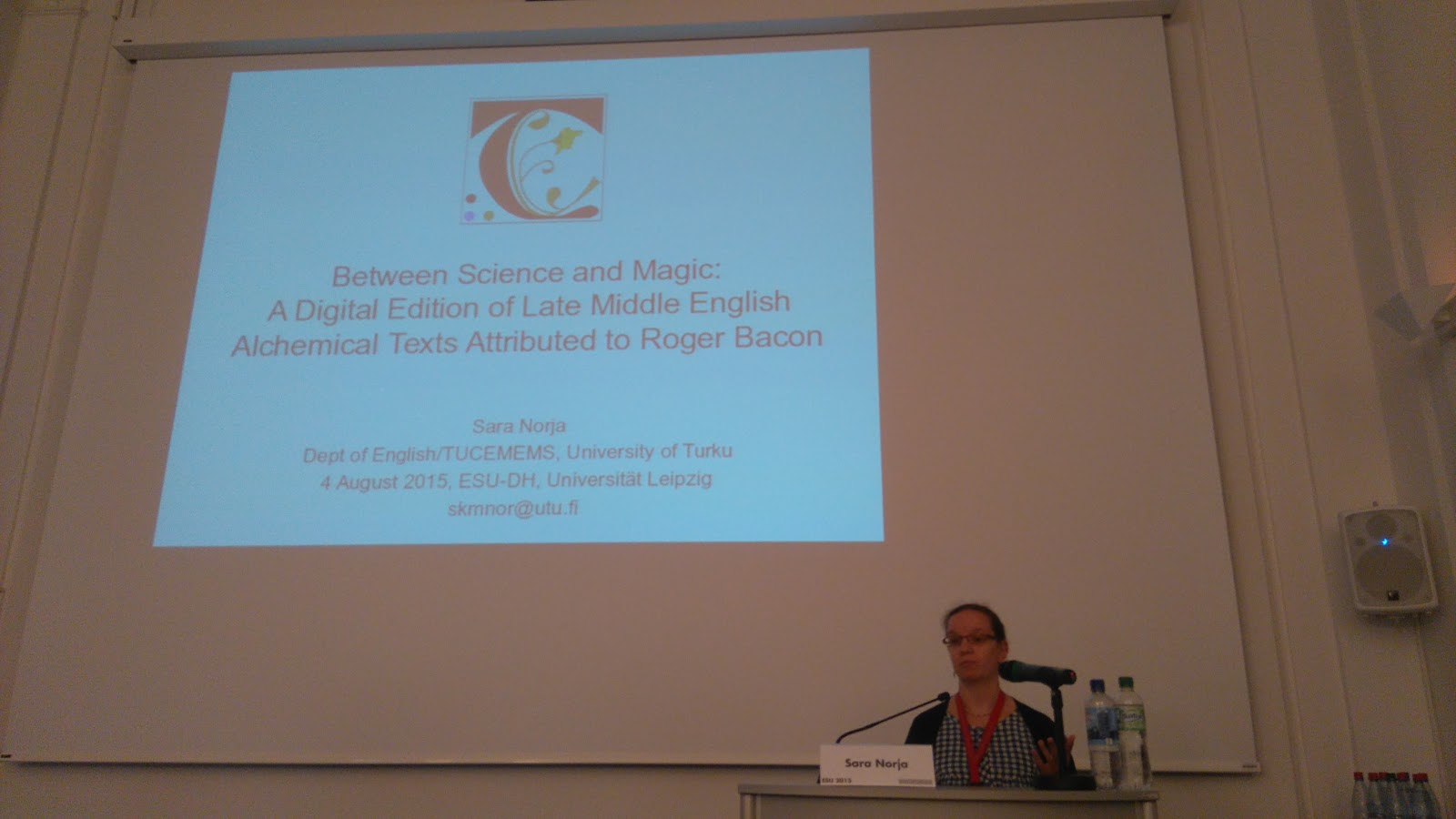
Founded by Prof. Elisabeth Burr, ESU DH is a multilingual, multidisciplinary forum for young digital humanists of all stripes. The summer university offers a great number of workshops on topics ranging from programming languages and editorial principles to software tools. In addition to the two workshops taken by each participant, we were treated to a number of lectures and project presentations, poster sessions, panels and even two science slams. (Our workshop won the first one!) One of the most rewarding aspects of ESU DH was discussions with people hailing from various disciplines, united by our interest in the digital applications of humanities research.
leipzig3
We both attended the two-week workshop “Digital Editions and Editorial Theory: Historical Texts and Documents”. The first week, taught by Dr. Johanna Green (University of Glasgow), concentrated on (digital) editorial theory, using online editions of historical texts to highlight issues discussed. Both of our doctoral dissertations deal with historical texts in digital environments, so the workshop’s content had great practical value. Sara’s doctoral dissertation incorporates a digital edition of early English texts, while Sirkku’s involves a corpus of Renaissance paratexts. Both benefit from the instruction in editorial theory. Hence one of the highlights of the workshop was the theoretical discussion on different digital editions already published online, which gave insight into the options available for future work. The editions varied in presentation and style from The Dream of the Rood to Jane Austen’s Fiction Manuscripts and The Chymistry of Isaac Newton.

The second week, taught by Kathryn Simpson (Edinburgh Napier University), was more hands-on, introducing us to the world of XML-encoded digital editing using material from the Livingstone Online Project. The project has collected a sizeable number of Livingstone’s field diaries, used spectral imaging technology to bring out the (often rather illegible) diary page, and is in the process of producing a digital edition. We got to participate in the project through transcribing pages from David Livingstone’s field diaries into XML using OXygen.
leipzig4
Livingstone, 1871 Field Diary, 297b/157-138 in color (left) and spectral ratio (right).
Image credit: Livingstone Online Project (CC).

Despite the full schedule, ESU DH managed to include a plethora of social events including coffees and communal dinners, as well as excursions to local museums and parks. The evening activities were slightly hampered by the heat, which climbed close to 40 degrees celsius (!) Thankfully the school itself was air conditioned. Since Leipzig celebrates its 1000th year as a city in 2015, there was too much to see to let the heat bother us. (Including a really rather convincing Elvis impersonator performing in a free open air concert on our final evening.) The highlight of the events for us was the visit to the Museum für Druckkunst, a printing history museum with a collection of several dozen printing presses, type foundries, and a number of historical print products, including their collection of incunabula.

leipzig6
All in all, the summer university was a fantastic experience and we both highly recommend it for anyone interested in, or doing research on, digital humanities.

Text: Sara Norja and Sirkku Ruokkeinen
Cover image credit: Maciej Eder (Uniwersytet Pedagogiczny, Kraków, Poland)

The Zoo

An important part of academics’ work is attending conferences; think Presentation Skills meets Proseminar, or an MA Elective class, but with professors and researchers instead of students. While some of the best conferences are symposia with just a dozen or so papers, such as our own Linguistics Meets Book History last autumn, others are huge, with hundreds or thousands of participants. I went to a biggie in mid-May: the International Congress on Medieval Studies in Kalamazoo, Michigan.

If you work on anything to do with the Middle Ages, the Kalamazoo congress will be on your bucket list. Affectionately known as The Zoo, it is an annual event organised by the Medieval Institute at Western Michigan University. It is attended by 3000 medievalists each year, and this time the number of sessions was 567, each of them with three or more presentations, spread over three and a half days.
usa_kzoosign

This was the first time I attended the congress, and I have to admit it was difficult to choose between so many intriguing-sounding parallel sessions. I tended to choose sessions which, one way or the other, focused on language; these were clearly in the minority as most of the speakers at The Zoo are historians rather than historical linguists. As much as you might learn from papers on topics that you are not that familiar with, it is often more useful to choose presentations which have some potential relevance for your own work. The clearly most linguistic session I attended was on polysemy in Old English, but I also went to three panels on translation, with papers on texts translated in the Middle Ages, translating medieval texts today, and on one occasion, not just rendering Chaucer in present-day language but also transmuting the Canterbury Tales into a comic book. One of my favourite sessions was a well-attended panel introducing some of the most ambitious projects for digitising medieval manuscripts; overall, Digital Humanities was quite prominent at the congress. My own paper on multilingual practices in post-Conquest England was in a less well-attended manuscripts session. As for the texts discussed at The Zoo, the English-language materials ranged from Beowulf to True Blood. For more on what went on at the congress, it is worth checking #kzoo2015 on Twitter.
usa_tornado
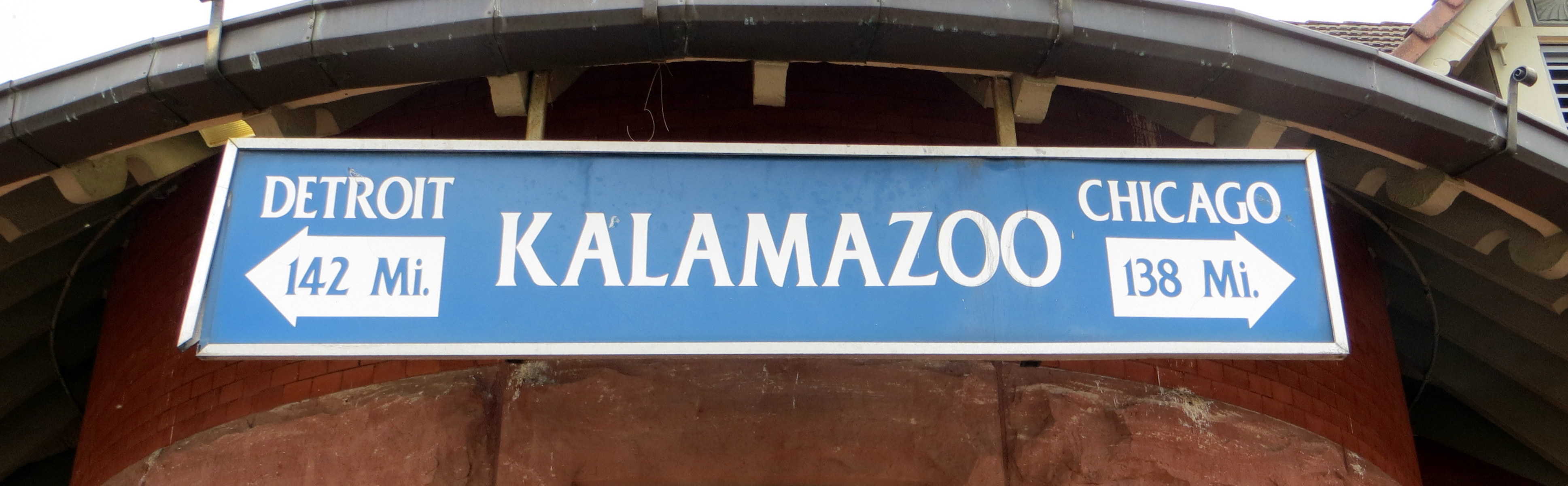
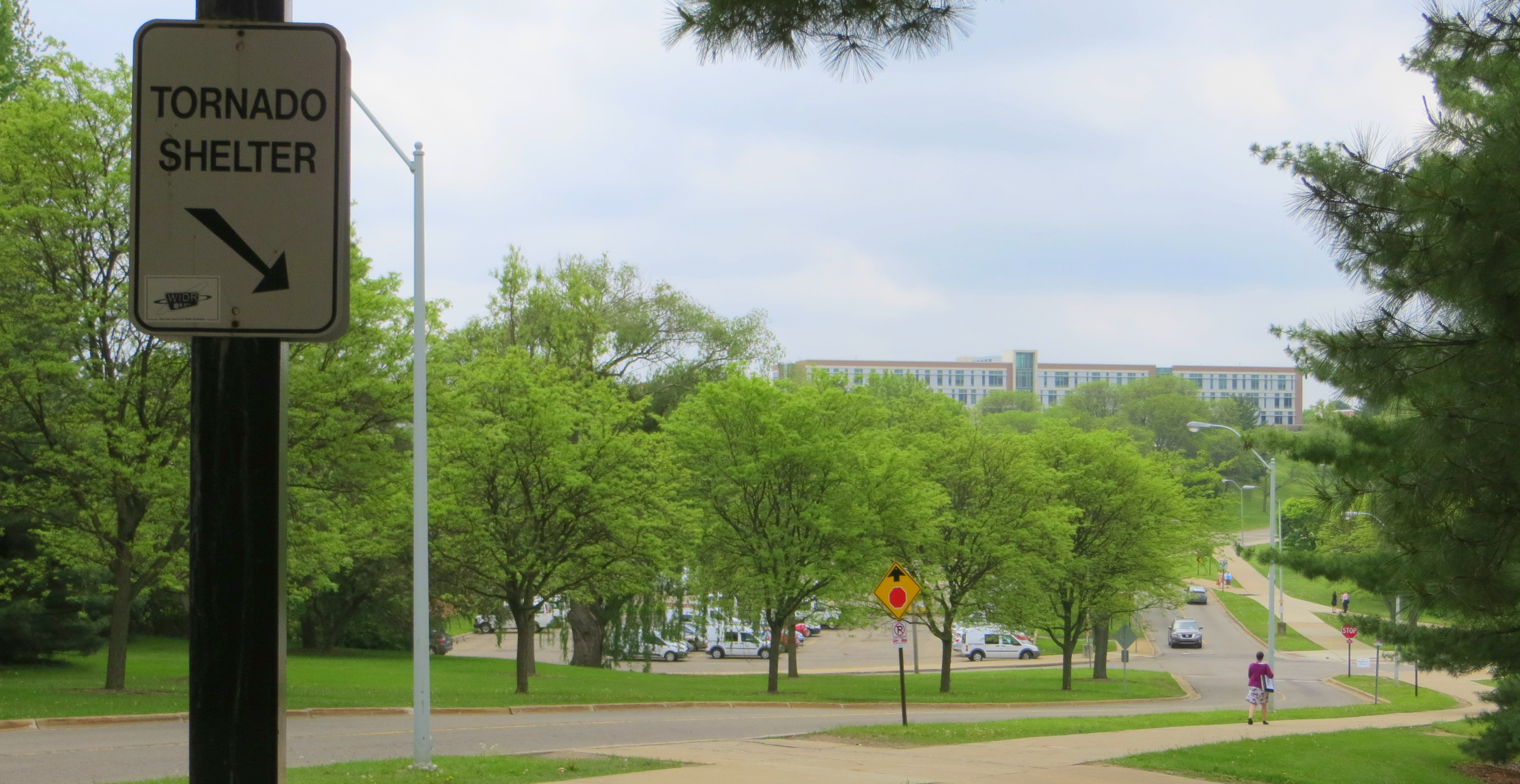
Kalamazoo itself is the size of Joensuu and located a three-hour train ride from Chicago. My impression was that the town is known for three things: the Glenn Miller song from the 1940s, the range of local beers, and the university (might the last two be interconnected?). With 24,000 students, WMU is a good example of an American campus that is like a city within a city. The buildings are many, there are sports facilities and eateries, and in the middle there is a lovely green park complete with a pond (and swans). Many of the congress participants actually stayed on campus and slept in the dormitories. That part of the Kalamazoo experience I missed, as I stayed in a downtown hotel instead. Maybe next time?

Text and photos by Janne Skaffari

Greetings from Mousehole, Cornwall

Mousehole_harbour
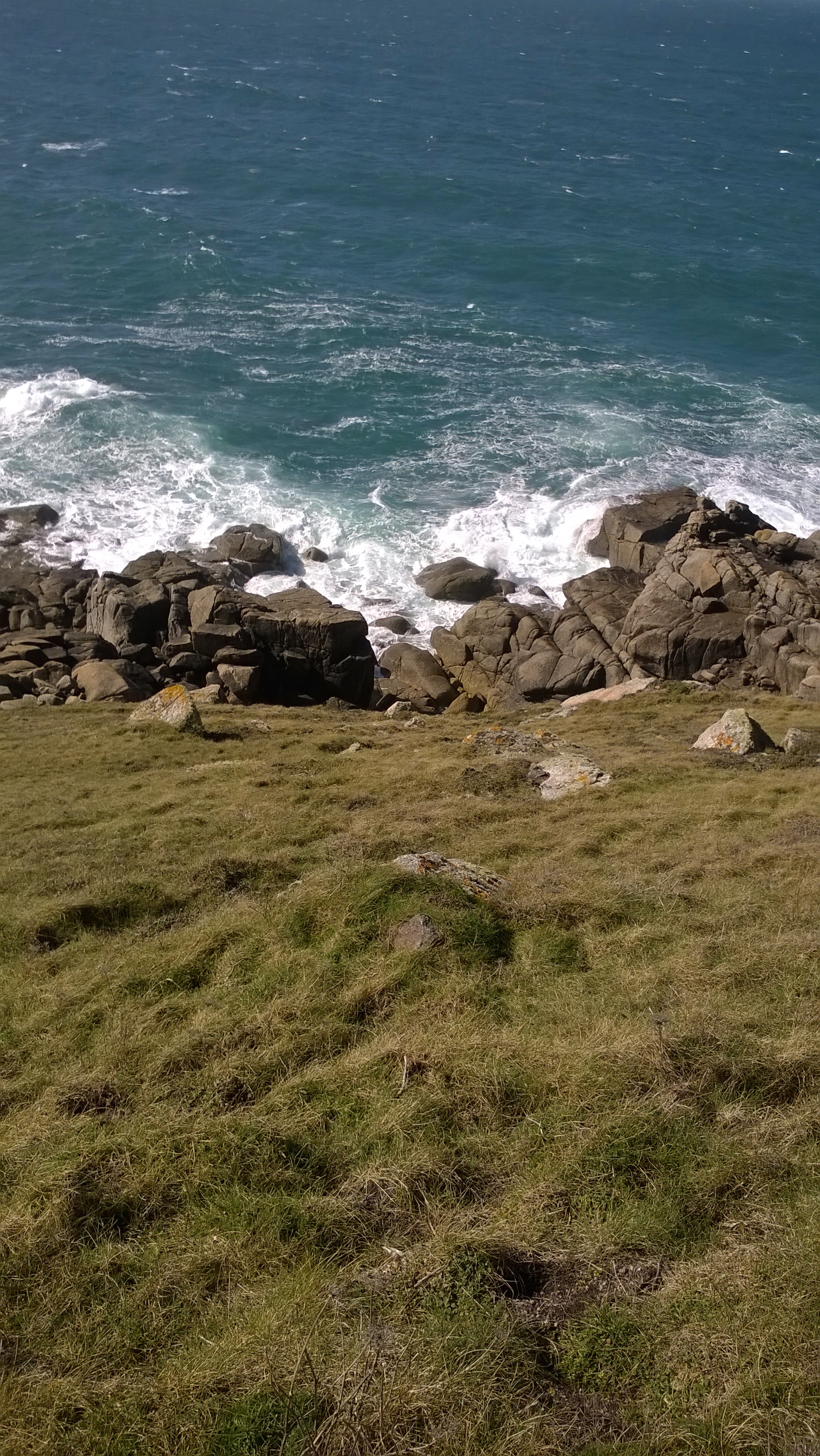
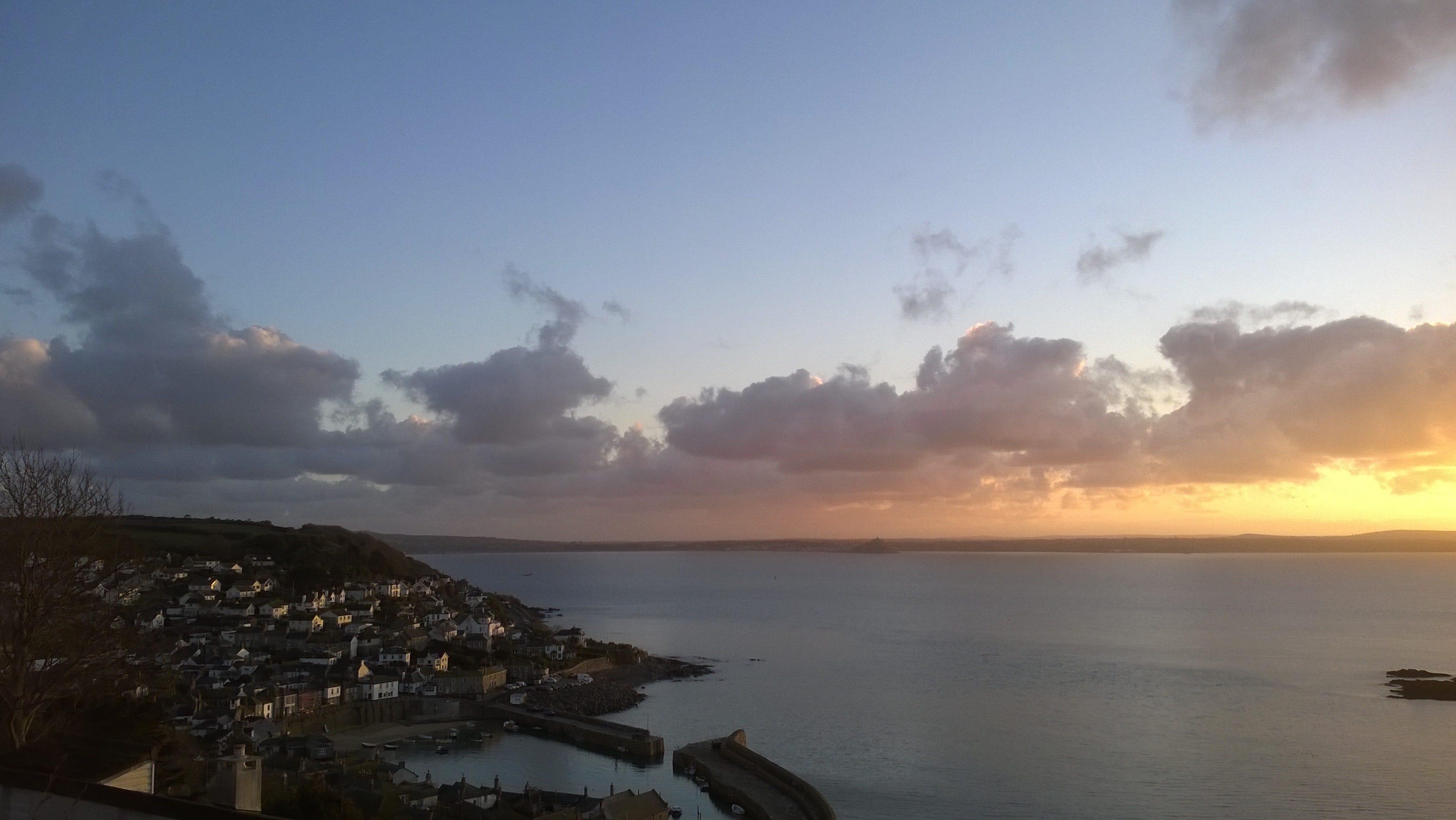
I am writing this piece after a night of gales and storm over England, Wales and Scotland. The small bedsit I am renting for a writing-cum-walking retreat gives out to the sea (there are seals, I’m told, but I have not managed to see them), which is now surprisingly still. The sun rises beautiful and serene, lighting the surface of the water.

office_rainyday
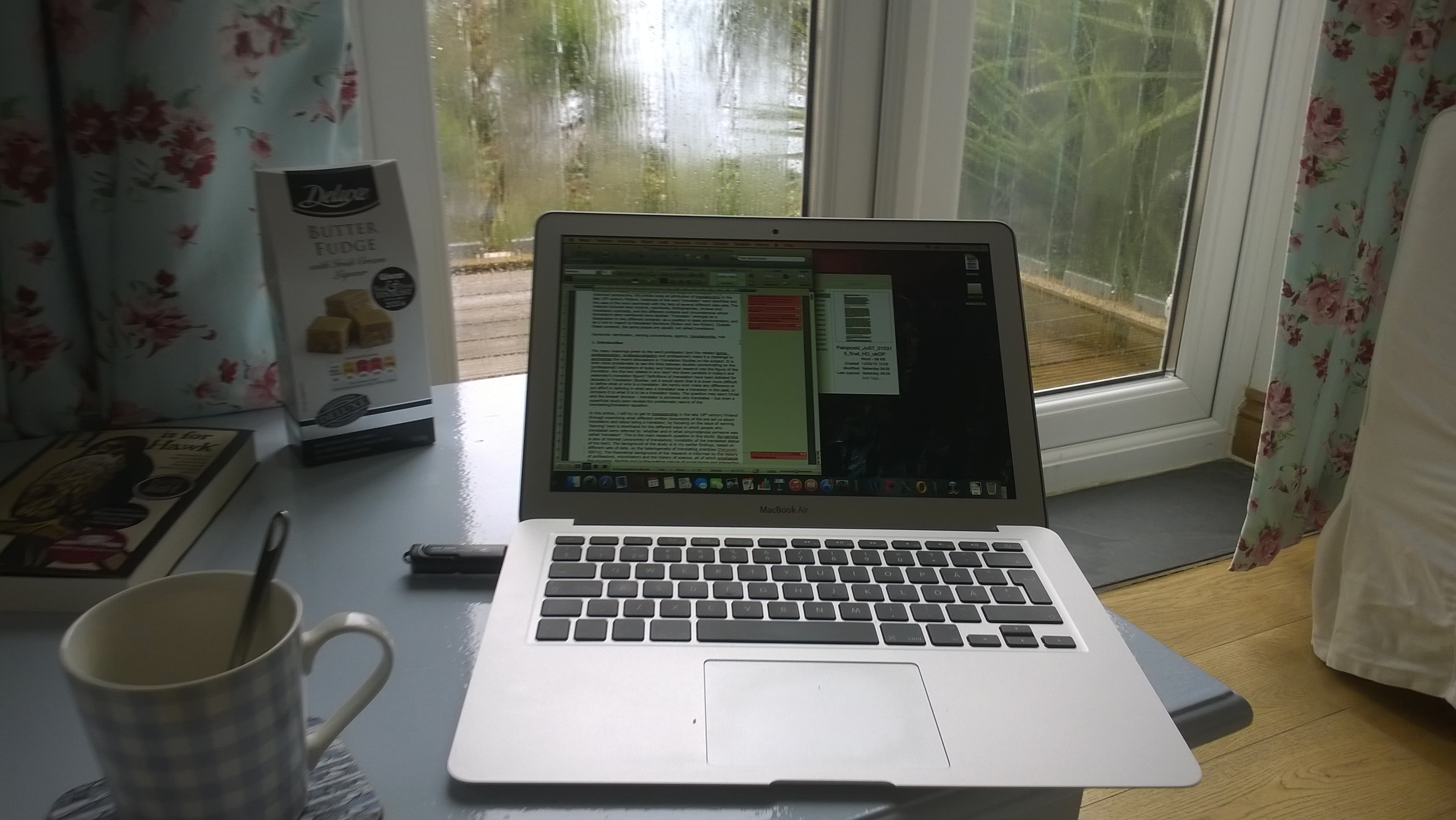
A change in the setting is almost always a good thing; especially if you do not need to worry about the routine tasks at home and are not tempted to start cleaning or washing to escape from writing. Obviously there are other temptations here: Cornwall is beautiful in the spring with its many daffodils. Did you know, by the way, that it was the building of the railway to Penzance in 1859 that made the daffodils from the Scilly Islands and Cornwall a major “export” to London? During the Second World War, though, land was needed for cultivation of food crops, and redundant bulbs were thrown into the hedges. This is why there is a large variety of different kinds of daffodils growing wild on cliff slopes and in woodland areas and hedges. This I learned from the Penlee House Art Gallery booklet accompanying a set of etchings of daffodils by Sally Corbet.
on_the_edge

Apart from daffodils and their fascinating story, this tip of Cornwall has more history than what can possibly be digested during a short stay. Take the disused mines, old engine houses, eerie run-down towers and mine shafts in the middle of the heath and rugged cliff landscape. They all bear witness to Cornwall’s past mining industry. By the early nineteenth century, Cornwall was the world’s largest copper producer, but with copper being found in other parts of the world, the prices went down and tin mining came to replace copper. Historical sites in South-Western Cornwall also include the Porthcurno Telegraph Museum: this is where the first under-sea cable was laid between England and India in 1870. And you must not forget the arts: Cornwall is home to the Newlyn school from the 1880s and the St. Ives artist colony, whose famous resident included the Finnish painter, Helene Schjerfbeck.
sennen_cove

I am staying in the small but extremely pretty village of Mousehole, which has a number of cafés for me sit in if I tire of writing or walking. My favourite one is Hole Foods Deli, but I have had my best scones at 2 Fore Street – just a tip in case you ever visit this part of Cornwall. There are pleasant surprises in other villages as well – both in the way of food and drink AND in literary/photographic/artistic sense, like the Cook Book café in St. Just. Their website and newsletter have nice photos with inventive captions of the surrounding people, flora and fauna.
Walk_in_the_woods

To end with a rather triste, yet strangely consoling note: this morning I was moved to tears listening to the poet Clive James live on BBC on his life, impending death, and poetry. If you are interested, read this Guardian story.

Mousehole at sunrise

I believe these thoughts on life and death, resurrection and hope, as well as the beauty and regenerative powers of nature are quite appropriate for Easter week. I wish all of our students and staff a Happy Easter!

Text and photos by Professor Outi Paloposki

Funding applications, Part 1: Finding funding opportunities

When you’re a first-time participant in the game of applying for research grants, it’s a good idea to ask around and learn a few tricks of the trade. This post explores online resources for finding suitable funding for your research and career stage, and it is first in a series of posts on how to apply for research funding.

For those thinking about pursuing postgraduate studies at the Department of English in Turku, a good starting point is to visit a few websites: The University’s own graduate school, UTUGS, The School of Languages and Translation Studies graduate program, Utuling, and the English Department’s Postgraduate Studies page.

The Research Whisperer is a great resource for career-related practical issues such as funding and networking. This blog post gives good tips on finding suitable funding opportunities.

The Finnish go-to resource for various kinds of research and travel funding is the Aurora database. The database includes most open calls, and you can search the database for example by field of research or deadline for applications. Always remember to also visit the websites of the funding bodies for more information.

Even if you are not applying for funding from them yet, take a look at the Academy of Finland website. The Academy of Finland is probably the most well-known and important funding body in Finland, and their website offers a wealth of information.

If you are interested in EU funding, start from the Participant Portal. Another EU-related site worth checking is EURAXESS, where you can find calls for all kinds of international jobs (including PhD positions in EU-funded training schemes) and fellowships.

Stay tuned for more on how to launch a research career and get funding!

Text by Mari-Liisa Varila

Turku #PoPsymp 2014: International symposium of linguistics and book history

SONY DSC

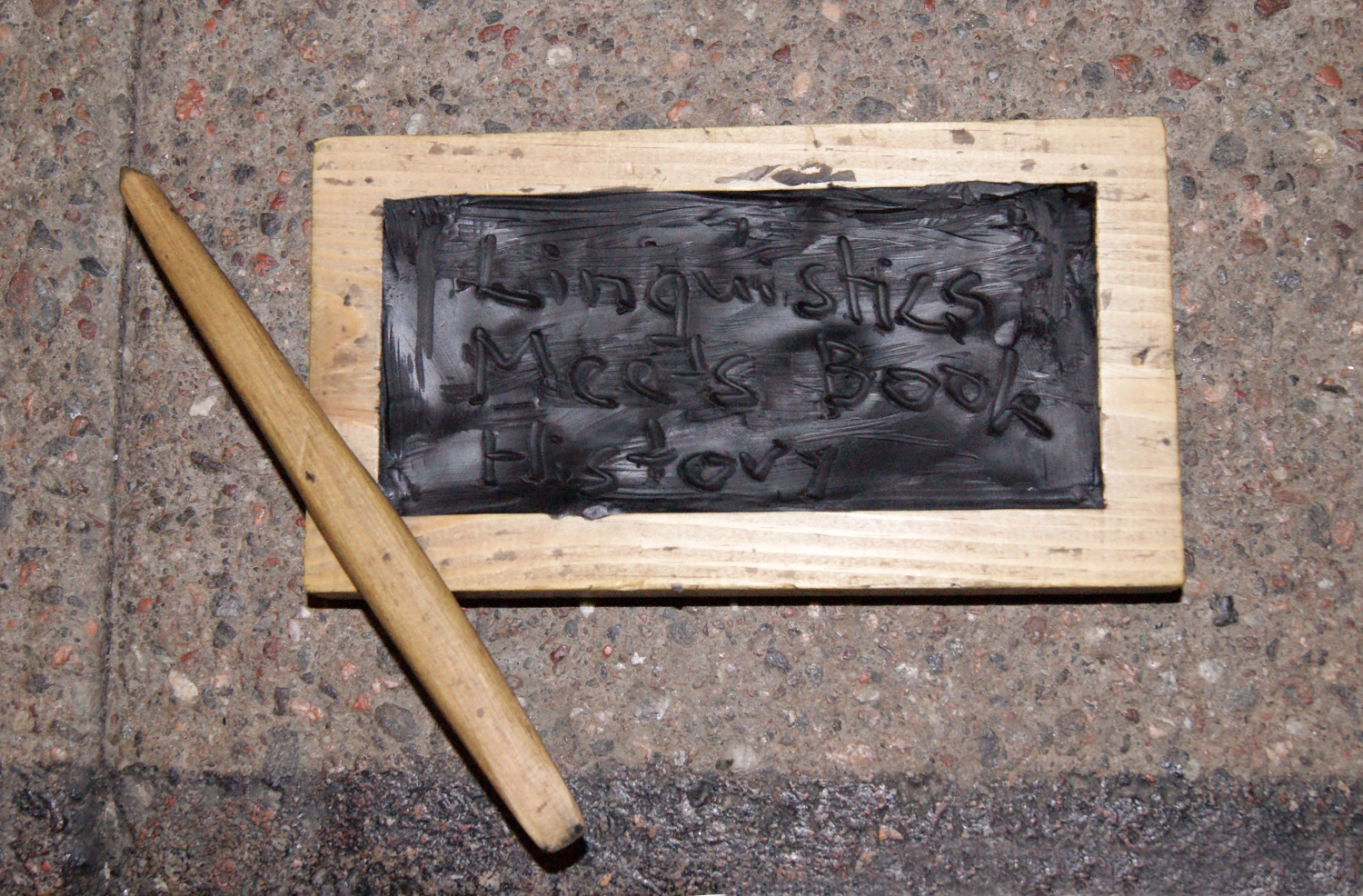
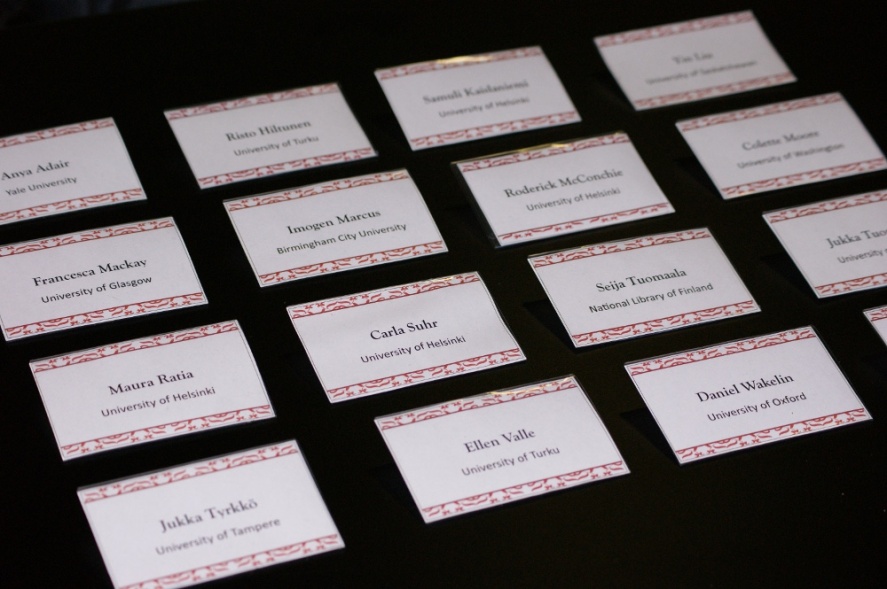
Linguistics met book history on 24–25 October 2014 as twenty-odd participants gathered in the Turku Main Library for an invigorating two days of presentations and discussion on the interaction of linguistic and material issues in the study of historical text. Linguistics Meets Book History: Seeking New Approaches (aka the PoP symposium), was organised by the Department’s Pragmatics on the Page (PoP) team in association with the Turku Centre for Medieval and Early Modern Studies (TUCEMEMS).
badges
We were treated to a number of stimulating presentations on topics such as code-switching, corpus studies, script-switching, otiose and ambiguous strokes, speech markers in manuscripts, layout and organisation of the page, genre markers, and reading practices. The majority of the contributors studied late medieval to early modern material, namely manuscripts and early books, letters, inscribed artefacts and various corpora.

crowdPOP

The three keynote speakers demonstrated a variety of approaches to combining linguistics with historical and material context. Colette Moore (University of Washington) spoke on linguistic and scribal organisation in Middle English devotional texts. Her study focused on the use of visual and textual organisation in the interpretation of historical dialogues. Jukka Tyrkkö (University of Tampere) discussed multilingualism in early printed books, concluding that code-switching correlates with bibliographical features such as format. Daniel Wakelin (University of Oxford) delivered a paper on the communicative aspects of page-framing and the patterns of ruling.

Personal highlights for the writers included, for example, Anya Adair’s presentation on ambiguous (rather than otiose) strokes in late medieval scripts; Maura Ratia’s presentation on textual labels signalling genre, text type and/or discourse form; and Daniel Wakelin’s keynote on aesthetic functions and implications of e.g. prestige carried by such practical elements as page ruling.
crowd2
The symposium concluded in a round-table discussion on the re-introduction of philology as a terminological starting point to studies of linguistics and book history, tactics for editing historical texts, and the usefulness of collaboration between people working on different time periods. The participants unanimously agreed that the symposium had been fruitful and everyone sounded excited about the idea of #PoPsymp2.0.
aboavetus
Scholars relaxing after a long day. The evening programme included a guided tour to the Aboa Vetus exhibition Letter by Letter: Traces of Reading and Writing.

Text and photos: Aino Liira, Sara Norja and Sirkku Ruokkeinen