Trextuality – at the intersection of textual scholarship and translation studies

The XII annual colloquium of Variantti, the Finnish network of researchers working on textual scholarship and scholarly editing, was held on Friday, 4 October 2019, at the University of Turku to foster interdisciplinarity between textual scholarship and translation studies.The theme trextuality encompassed textuality, transmission and translation, concepts central in both fields. In translation studies, trextuality means going beyond the source-target text pair and in textual scholarships, it refers to observing the transmission of texts across languages. Some fifty attendees heard eleven talks addressing trextual issues.

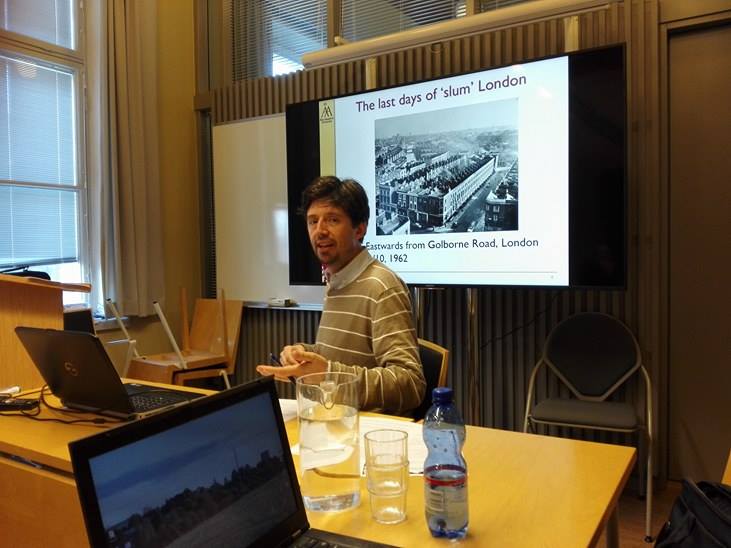
Tanja Toropainen discussed the continuum of editions and translations behind Codex Westh and its Ars Morendi part, which is a translation from German – except that the The Bible quotations are translations from Swedish. Sara Norja pointed out that like many of early English texts, also The Mirror of Alchemy is a translation – the source language of the various versions (Latin or French) can be deduced from how the alchemy-related terminology is translated. Niko Huttunen & Tuomas Juntunen explained that the forthcoming Finnish translation of The Bible for mobile platforms will have vocabulary different from what the audience is accustomed to because the language is made understandable for 20-year-olds.
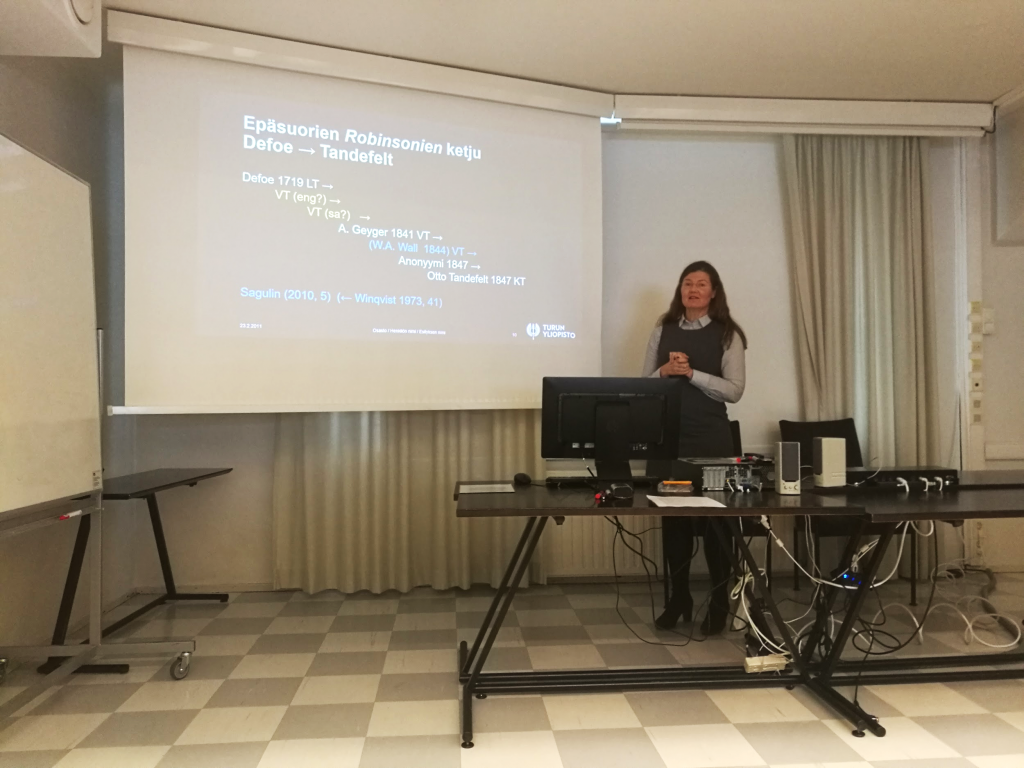
Kristiina Taivalkoski-Shilov talked about the long,
multilingual transmission history of Robinson Crusoe.

Leena Eilittä discussed intertextuality in Herman Broch’s works; for example, Broch changed the title of his poem into Hille Mitternacht (A clear midnight) after having translated Walt Whitman’s A clear midnight into German. Marja Sorvari addressed the intertwinedness writing, writing in a second language, and self-translation through the example of two translingual authors, Zinaida Lindén and Polina Kopylova.

Instead of studying what changes in translation, Taivalkoski-Shilov showed how Friday’s way of talking remains unchanged in the Finnish Robinson Crusoe (re)translations even if translated indiretcly from English to German to Swedish to finally Finnish. Members of the Digilang project Christophe Leblay, Maarit Koponen, Maarit Mutta, Anna Salmela, Leena Salmi & Mikko Suhonen showed examples of text editing process visualizations using tools such as GenographiX: for example, A2-level writers proceed straightforwardly while C2-level producers make loops as they write and edit different parts of the text at different times.
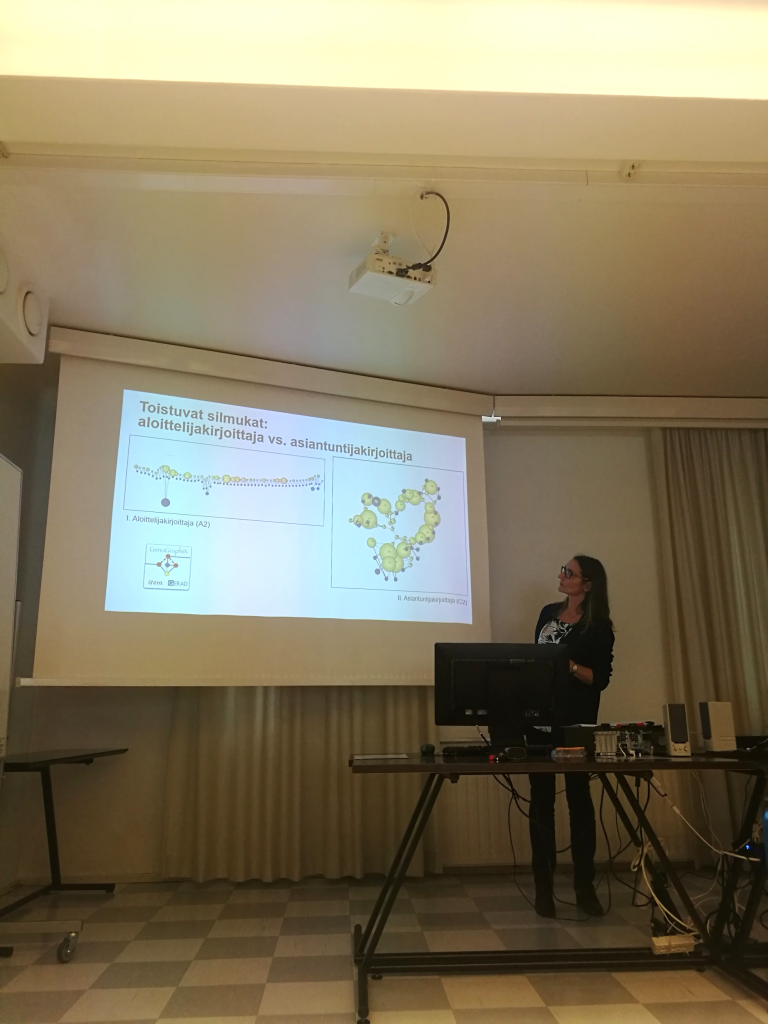
Maarit Mutta showed how writing processes can be visualized.

Annamari Korhonen suggested that because something always changes when a text is translated, translating is creative even with pragmatic texts. Tuuli Ahonen demonstrated how a translator cannot translate the whole film if one of the modes – picture, dialogue, music, or sound effects – is missing because the subtitles are part of the polysemiotic whole that the modes together make.

Minna Seppänen & Outi Paloposki discussed how in the early 19th-century Ancient Greek literature was translated into Finnish more to show off one’s language skills than to produce beautiful Finnish translations. The day concluded with the perspective of a professional translator: Jaakko Kankaanpää shared his observations on the differences, such as replacing racist vocaublary with politically correct terminology, between various Finnish (re)translations of Agatha Christie’s novels, including his own ones.

Text and photos: Laura Ivaska

A Poetry Researcher’s Field Day

One might assume that literature research would not necessitate fieldwork, but sometimes it is useful to those of us working with such esoteric topics as contemporary US poetry as well. In early May, I visited the State University of New York at Buffalo, and particularly their library’s Poetry Collection, in search of more materials for my research project, Difficult Relations: Reading for Emotion in Recent American Experimental Poetry.

SUNY-Buffalo, or UB as the locals like to call it, hosts the Poetry Collection, “the library of record for 20th- and 21st-century poetry in English”. The collection, started by Charles Abbott in 1937, is hidden away from the public in closed stacks, so visitors desiring to peruse books have to give a list to the staff, and they will pull it out for use in the library’s reading room. Like in many archives and special collections, use of the materials requires care, and only computers or pencils can be used for note-taking. Photographs are not allowed without special permission.

The reading room is a large hall, guarded over by a portrait of James Joyce. Incidentally, the UB Poetry Collection is also home to the world’s largest collection of Joyce-related materials, like first editions, correspondence, notebooks and photographs. Oscar Silverman, who worked at UB, had visited a Joyce exhibition in Paris in 1949 and got the idea to bring the collection to UB. Joyce is a pervasive presence in the Poetry Collection reading room, watching over it all like a grandfather of modern English literature that he is.

My 10 day visit to Buffalo was a handy one-stop method for browsing through many important works published in the last 15 years or so. Many of these were published in limited editions or are otherwise difficult to find from overseas. While I order what I can from online stores, it was very useful to have it all at my disposal at once. It also allowed me to observe the sheer materiality of recent poetry works, viewing as I did items ranging from large anthologies and collections to thin and plain chapbooks and even little cards on which poems had been printed. In a tangible way, it brought the liveliness of contemporary poetry culture into view.

UB is also home to a fairly substantial population of Canada geese, one of which is pictured here.

Text and photo by Elina Siltanen

Eating elephants

Nearly 1.5 years into my doctoral studies, I have already encountered some sort of block. Things are just not progressing the way I would like, something is not working. I feel like I have read every possible piece of available research about my topic but starting the first article seems like a horrendous endeavor. What am I doing? Where do I start? What perspective should I take? Am I prepared enough? Do I have the concepts right? Maybe I should just make another cup of tea…

A couple of days before the event that was to take place on March 21,2019, I received an e-mail stating that there were places still available in the Finding joy and productivity in academic writing lecture and workshop. Guest lecturer Carol Kiriakos, co-author of Tohtoritakuu, was to speak about practical approaches to academic writing. My first thought was, “This is scary!” Can you imagine? This was exactly what I needed, and here it was in my mailbox, and none too soon as the event was in just two days! I was not really sure what the ‘practical approaches’ might entail, but the words ‘joy’ and ‘productivity’ were what really caught my eye. Could I really find joy in my situation of ‘rookie’s block’, and could I ever become productive in my revelry of procrastination?

Carol Kiriakos provided answers to both questions, “Yes and yes.” First, you have to take an inventory of your beliefs; what beliefs do you have about yourself or your writing that keep you from writing? Participants took a few minutes to write down their beliefs, and to my astonishment, we were all struggling with the same issues: getting started, time management, insecurities pertaining to abilities, being prepared, procrastination, lack of inspiration, etc., etc. At this point, the group of participants became a united whole – we were all in the same boat struggling in the same weather to keep it afloat.

Once you are aware of what is keeping you from writing, you need to create a writing habit. At what time of day do you feel the most creative or productive? A rule of thumb is the further the day progresses, the less creative and productive we become because other things begin competing for our attention. How much should you write at one go? Kiriakos warned us not to set ourselves up for failure. If you plan to write 5 pages on a certain day and do not achieve that goal, most likely you are going to feel like you have failed and starting the writing process again may take an unnecessary number of days or weeks.

The third thing, and perhaps the most important, you should do is learn how to eat an elephant. Well? How DO you eat an elephant? According to Kiriakos, the answer is: One bite at a time. For example, if you write in your calendar “PhD thesis” for every day you would have time to work on it (as I have done and now have a lot of erasing to do), you are setting yourself up for failure. Not only is it impossible to write a PhD thesis in a day, but you are also creating the feeling that you never get anything done. A more sensible approach would be to write, “1 page for Section 2.2.”, for example, or simply “one paragraph”. The same idea can be used for setting goals, i.e. break them down into smaller bites. For example: long-term goal (months to years) -> short-term goal (weeks to months) -> daily goal (hours to days).

To combat procrastination, i.e. always waiting for inspiration or the ‘right moment’ to write, Kiriakos suggested free-writing. During the lecture and workshop, we participants engaged in two free-writing sessions, both lasting about ten minutes. Free-writing was a surprisingly good way to get into the ‘habit’ of writing. We were given a topic each time: The Ideal Academic Writer and The Most Important Thing to Me. Both topics also gave us a bone to chew, which helped us to process the beliefs we have of ourselves. When doing free-writing on your own, you do not necessarily need a topic; on the other hand, having a topic may get you put your thoughts in order. You need to set a timer, so you do not have to look at the clock, and then just write about the ideas or topics you have for writing your thesis on that particular day. With free-writing, you can find that inspiration, and the moment you sit down to free-write is exactly the ‘right moment’ you keep waiting for.
I left the workshop feeling I had eaten my elephant, or at least cut it down into smaller, more manageable pieces. Feeling inspired by Kiriakos and getting the push I needed to start writing, I decided to share my experience here. I recommend reading Tohtoritakuu to BA students , MA students, even to the experts whose doctoral hat is worn around the edges and whose sword has defended truth and knowledge many times over. It contains useful strategies for anyone contending with an elephant…. One bite at a time.

Text by Judi Rose

Philologists in Edinburgh

The International Conference on English Historical Linguistics (ICEHL) was organised for the 20th time in Edinburgh on 27–30 August. The conference gathers together English scholars from around the world, studying English from Old to Late Modern.

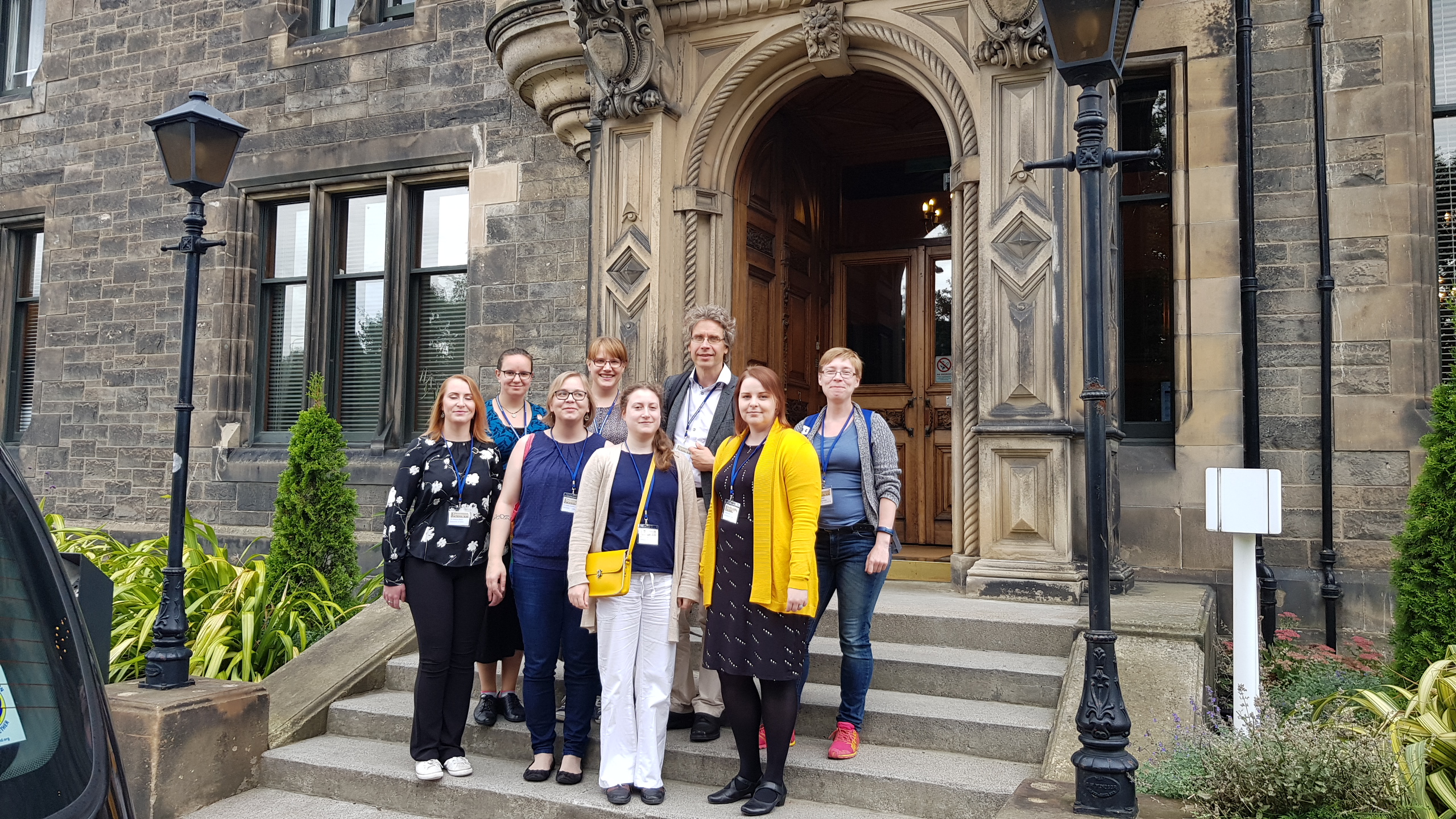
Almost all of our researchers from the Philological Track made it to ICEHL. Matti Peikola, Mari-Liisa Varila, Hanna Salmi (currently at the University of Stockholm), Aino Liira, and Sirkku Ruokkeinen gave papers in the workshop “Paratextual Communication in a Historical Linguistic Perspective”, organised by Matti Peikola and Birte Bös (University of Duisburg-Essen). Matti Peikola and Peter Grund (University of Kansas) presented a paper on orthographical variation together with Johanna Rastas. Aleksi Mäkilähde gave a paper on the metatheory of pragmaphilology. Susanna Mäkinen gave a paper on references to fugitives in runaway slave notices. I gave a paper on the different translations of The Mirror of Alchemy. We were a busy lot!

This was my first ICEHL, but I hope it won’t be the last. The conference was packed astonishingly full of great papers and interesting discussions; the programme can be found here. I have never been to a conference with so many excellent papers on fascinating topics that were relevant for my own research. I was especially excited by papers on topics such as medieval Latin-English code-switching, spelling variation and standardisation in the early modern period, and multilingualism in late modern medical discourse.

Despite the busy academic programme, there was also time for social events. The conference ceilidh on Tuesday 28 August was especially memorable: it was wonderful to dance and to watch a crowd of other scholars skipping merrily along to the live traditional music. Lots of us also found time to climb up to Arthur’s Seat, the majestic hill right next to the conference location.

ICEHL also involved a final day of activities on Friday 31st August. Most of us Turku philologists – unsurprisingly – chose to go to Lindisfarne, the monastic Holy Island where the Anglo-Saxon Lindisfarne Gospels were produced. The weather was astoundingly warm and sunny; we had a glorious day trip filled with island beauty, the island’s old history, and clean sea wind. It was a fitting and excellent ending to a week’s worth of English historical linguistics.

Text by Sara Norja
Photo by Minna Nevala

Introducing our latest permanent staff member: Q&A with Maarit Koponen


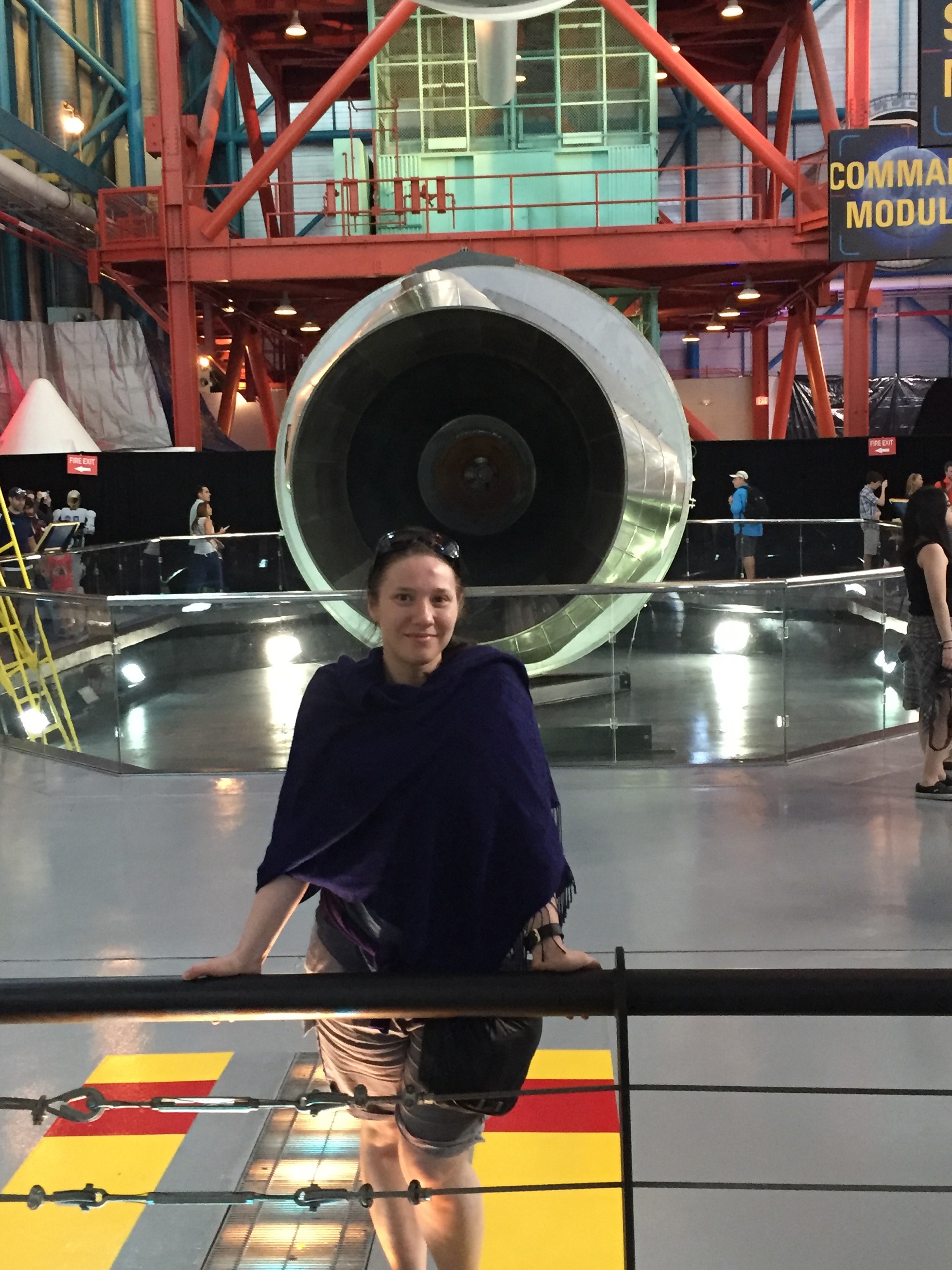
Maarit Koponen visiting the Kennedy Space Center.

1. Tell us a little bit of who you are.
I am a university lecturer of English, researcher of translation technology, a former professional translator, and a fan of both historical dramas and science fiction. I have an MA in English Philology and a PhD in Language Technology, both from the University of Helsinki. I live in Helsinki, and commute to Turku, for which reason I feel both profound appreciation and frequent annoyance toward the Finnish railway system.

2. What kinds of courses do you teach? How and when can our students meet you?
I teach English BA-level courses, such as Academic Writing & Speaking and Grammar 2, and various translation and technology courses on the Multilingual Translation Studies MA track. Currently my office hours are on Thursdays, 11-12, but that tends to change in different semesters. Making an appointment by email is a good option.

3. What do you do research on? What would you like to study in future?
My research focuses on translation technology, particularly machine translation, and the effect of technology on translation processes – how they produce translations. Questions of cognitive processing fascinate me, and in future research I hope to be able to dig deeper into the effect of (machine) translated text quality and errors on cognitive load both for translators and for readers of those texts. How do translators process errors and correct them? How do errors affect the reader response, and how are readers able to recover information even from an imperfect text?

4. Can you describe what a typical working day is like for a lecturer?
Different working days vary a lot, so it is difficult to define a “typical” one. There are days where I am teaching several lectures, or taking part in various meetings, or both, with lots of running in between. There are days preparing lectures and marking student papers. And then there are research days, which may mean staring at an xml file trying to figure out what on Earth is going on with my data, or writing, which may mean either furious typing or staring at a blank page.

5. What do you do when you are not a lecturer? Any time for other things in life?
I enjoy music and dance – I play percussion instruments and go to dance classes to get exercise beyond running between lectures and meetings. For a relaxing evening, I enjoy watching documentaries. My interests range from the history of the English monarchy to dinosaurs to all things space, aliens, conspiracy theories, and true crime, which is occasionally characterized as “baffling and slightly worrisome” by my nearest and dearest.

Philological fieldwork in London and Turku

If you trust Wikipedia, fieldwork refers to “the collection of information outside a laboratory, library or workplace setting”. However, philological ‘fieldwork’ often takes place within a library – but instead of reading secondary literature, we examine primary materials. I’m currently a visiting scholar at Queen Mary University of London. During my stay here, I work on 16th-century manuscripts and printed books in the British Library.

Although early materials are increasingly accessible in digital form, and many early texts are made available in editions, not all research questions can be asked of these substitutes. Codicological, palaeographical, and bibliographical research methods entail close examination of books and texts as material objects. Analysing the physical construction of a book or the scribal hands present in a manuscript, for example, may also provide crucial evidence for studying the contents of a book.

To access special collections, one usually needs to register as a reader (instructions can be found on library websites). After registering, you can then order items to study them in reading rooms. You can bring your laptop, notes, and pencils, but nothing that might damage the books such as pens or sharp implements. White gloves, although sometimes seen on TV, may also cause damage to the books. They are thus generally not used in professional libraries. Clean, dry, and careful hands are the better option!

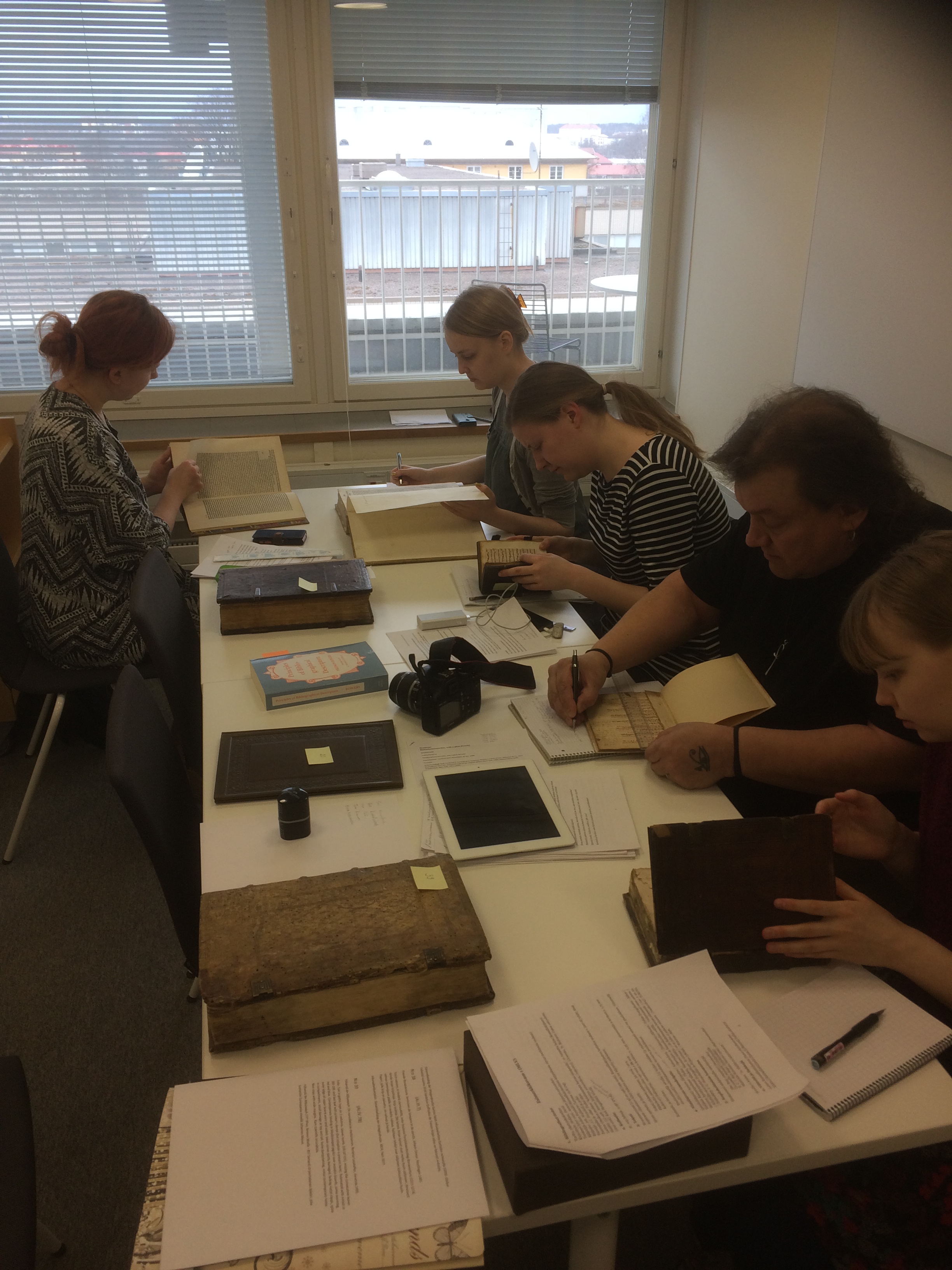
The University of Turku library also holds early materials. Last spring, students taking the Book History course organised by the Departments of English and European and World History had the chance to try their hand at being book detectives. My small group studied a selection of incunabula (books printed before 1501), practising the specialised skill of writing bibliographical descriptions of early books. Here they are at work!

Text and photo by Mari-Liisa Varila

My Days as a Conference Assistant

The Finnish Society for the Study of English (FINSSE) held its eighth biannual conference here in Turku this summer. Having never attended a conference before, I leapt at the opportunity to work as an assistant at the event and get credits for my Master’s internship. I’m glad I did, for The FINSSE-8 conference, “What’s in a Century?”, turned out to be the highlight of my academic year.

The whole experience was very positive. The organising committee welcomed me with open arms; I was given clear instructions as to what was expected of me and in moments of doubt I could simply ask for help. It soon became clear that organising a conference takes hours and hours of planning and preparation. Even I, a mere assistant, sat through several meetings and wrote countless emails. Those in charge certainly had a lot of work on their hands! Funding, venues, catering, timetables, name tags – all the meticulous work done in advance resulted in a successful conference.

During the event I took care of odd jobs here and there: I put up info signs, greeted people at the registration, carried water bottles and whatnot. I dabbled with things that may seem small, but, in the end, helped create a smooth conference experience. I was being useful and I liked it!

Amidst the work and responsibilities there were fun surprises and major perks. For example, during the first conference day we were treated to a small music number. The memory of conference participants, postgrads and professors alike, swirling around and dancing to the tunes of a violin will probably stay with me forever. Most importantly, though, I got a glimpse into the inner circle of English research in Finland: I felt like a little sponge soaking up knowledge and ideas. I had the opportunity to attend some interesting paper sessions and meet people working in fascinating fields of research – the conference even provided me with help for my upcoming MA thesis. The research community felt warm and supportive and people seemed to enjoy the conference. I’m lucky I got to be a part of it.

Text by Lilli Laine

Revisiting Galway: Translation Meets Book History

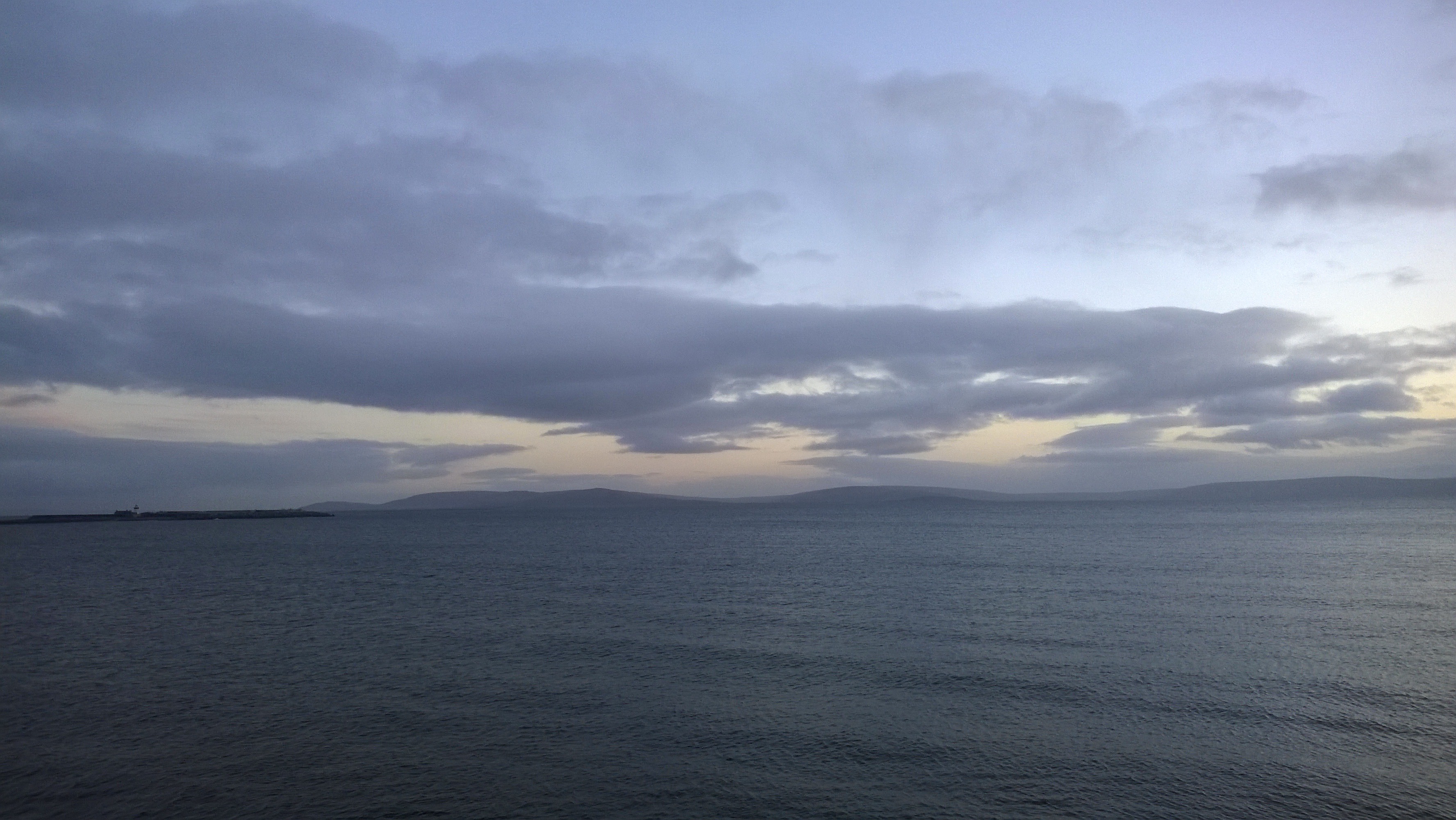
The English Department seems to be building up a special affinity with Galway. The ESSE conference last August was attended by quite a crowd (see blog post here); earlier last year I had the chance to visit the National University of Ireland in Galway as Moore Institute Research Fellow. And now I am back at the Institute for more research and networking in connection with a seminar on book history and translation studies.

There are a thousand excellent reasons to come back to Galway: the Irish are an extremely friendly people (and seem to share a number of things with Finns – maybe living at opposite ends of Europe makes for some sort of a bond?), Galway is an attractive and cosy town with an interesting history, and the University offers a vibrant intellectual atmosphere and a very warm welcome to visiting scholars.

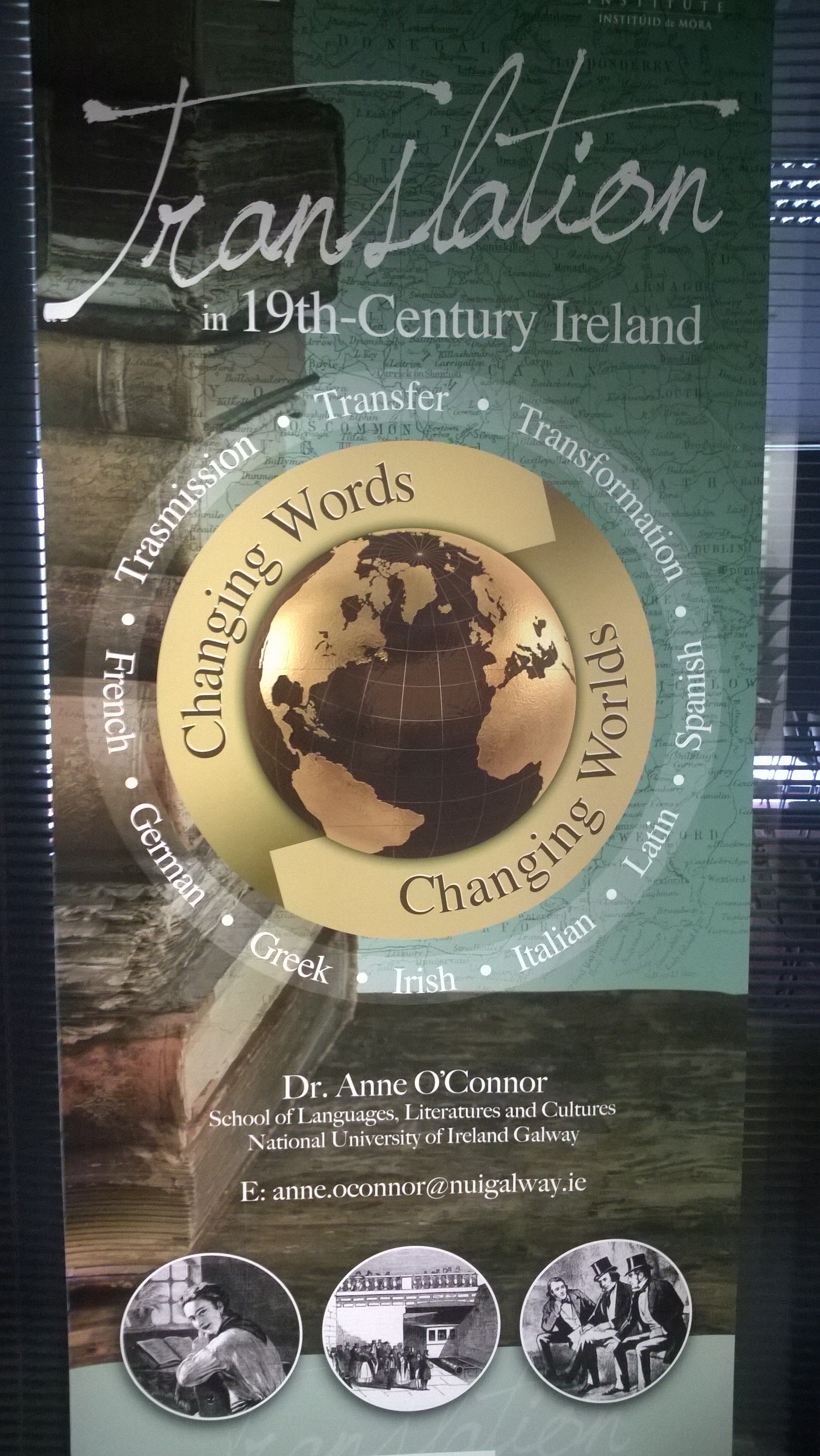
The conference “Book History Meets Translation Studies” was organised by Dr. Alice Colombo, a Marie Curie scholar in Galway, together with Dr. Anne O’Connor, who has just come out with a fantastic book on Irish translation history in the 19th century (see here) and Dr. Niall Ó Ciosáin, a renowned scholar of the Irish print culture (see here). The conference brought together researchers from different parts of the world and with widely varying topics, ranging from multilingual texts in 19th century North Africa to book illustrations, from Urdu scribes’ manuals to publishers’ archives. Katja Vuokko from our department gave a paper on Finnish translators’ footnotes; I talked about the Tauchnitz series “Collection of British Authors” and the introduction of British literature in Finland. The keynote speaker was Prof. Norbert Bachleitner from the University of Vienna with a highly interesting paper on 18th century women translators.

Apart from academic interests, Galway boasts a wealth of historical sites and places to see (and a very large number of pubs). In a street corner there is a statue of Oscar Wilde and the Estonian author Eduard Vilde, “a humorous quip on literary history”. The original statue of the W/Vildes is in Tartu (sculptor Tiiu Kirsipuu); the copy was presented to the city of Galway to celebrate Estonia’s membership in the EU. In real life, the two authors never met.

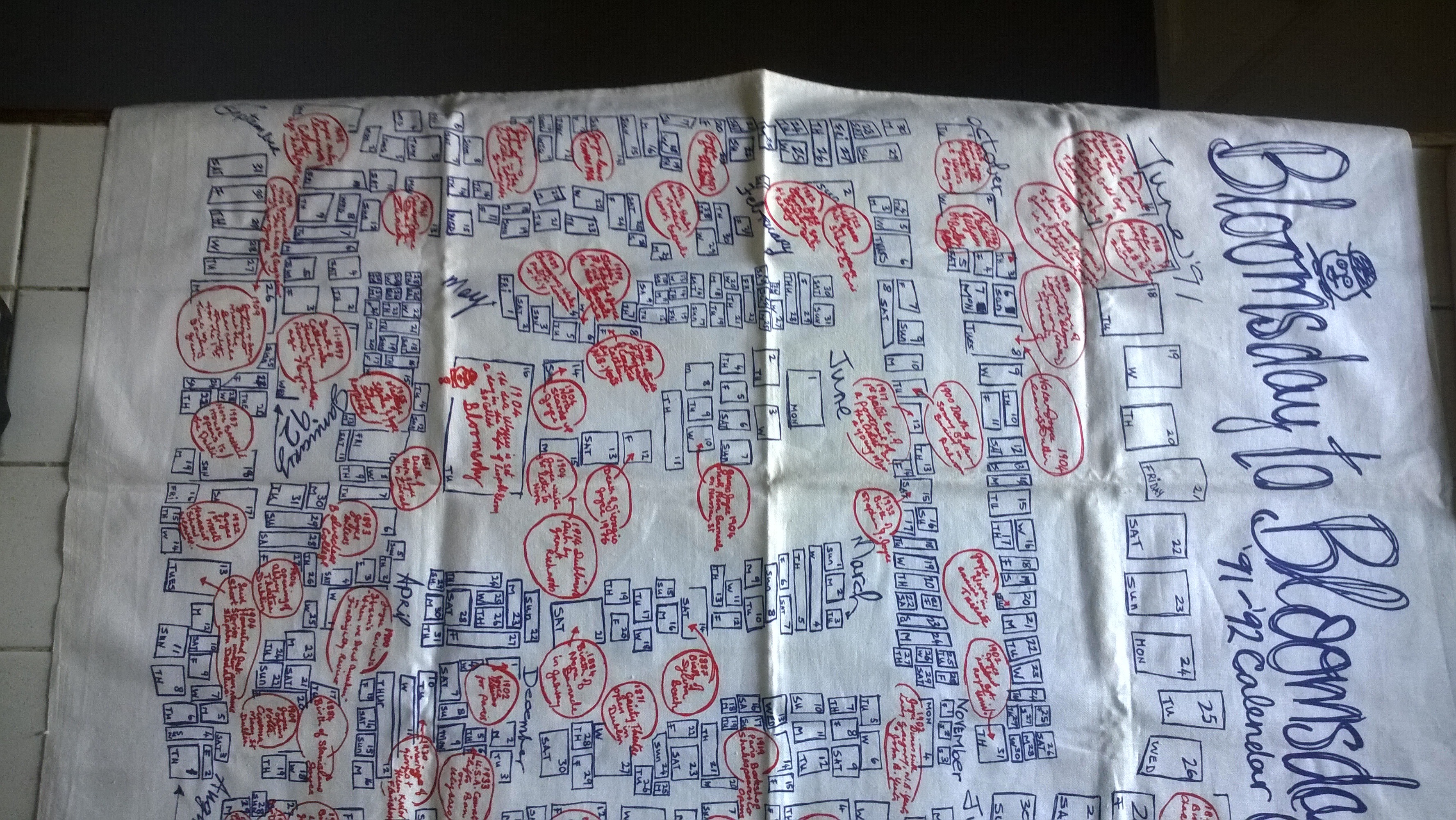
For me the most memorable place in Galway is Nora Barnacle’s house in Bowling Green, where I was taken by my wonderful landlady Sheila (the museum is presently not open for public). This was the home of Nora, James Joyce’s wife, and it is the smallest museum in Ireland with just two rooms and a backyard. Mary and Sheila Gallagher bought the house in 1987 and it is thanks to them that the house has been preserved and restored. The teatowel in the picture below celebrated the 1991 Bloomsday; one in the series of events organised by Mary and Sheila.

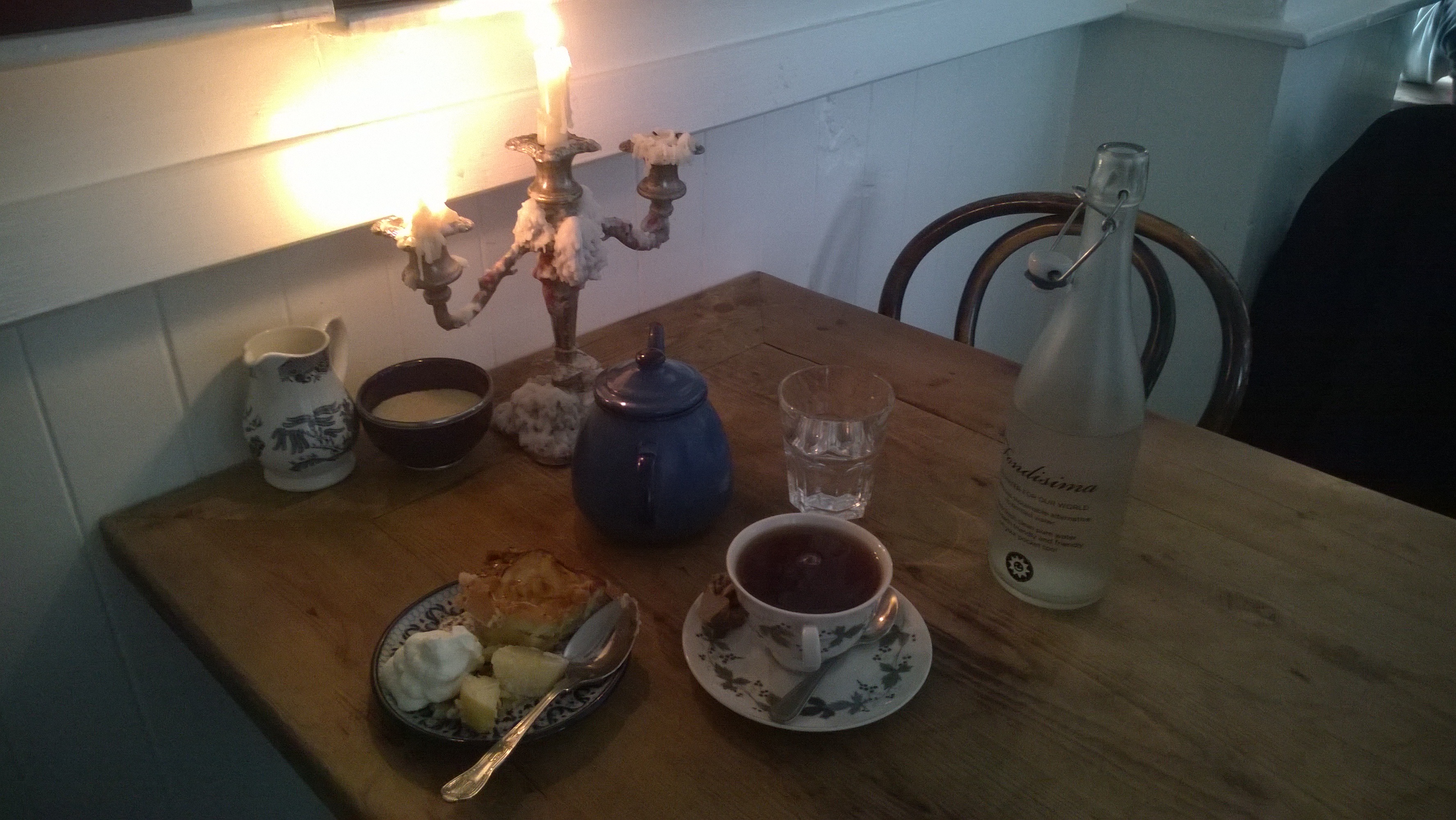
No research visit is complete without cafés and tea houses. There is plenty to choose from in Galway: Ard Bia at Spanish Arch and The Kitchen at the Galway museum are my favourites. A perfect way of combining work and leisure on a rainy day!

Text and photos by Outi Paloposki

Your thesis in three minutes

Thursday 9 March was an exciting day on campus, as it was the day for the final of the Three Minute Thesis (3MT) competition, which was organized for the first time at the University of Turku.The competition was developed by the University of Queensland and the first 3MT competition was held at UQ in 2008. The idea is that doctoral candidates introduce their research to the public as interestingly as possible in three minutes. I decided to participate because the event offers an excellent opportunity to practice presentation skills. It also helps to understand the essence of your own research when you need to explain it to others in three minutes.

The competition started with two semi-finals in early February. The first semi-final was organized for the doctoral candidates within Humanities, Education, Social Sciences, Law, and Economics, and the other for doctoral candidates within Science and Medicine. From both first rounds five top presentations were selected to the final and I was honored to learn that mine was one of them.

The 3MT final drew a large audience in the Tauno Nurmela hall. The atmosphere was full of excitement and it was very interesting to get to hear of other people’s PhD projects from different fields. There were also good prizes for the best ones. Moreover, the winner gets to participate in the Coimbra Group Competition with the video that was filmed during the final. Three best video recordings of the presentation will continue to compete in a live competition in Edinburgh in the beginning of June.

In addition to the diploma all finalists received at the event, we all gained useful experience in giving a presentation and summing up our research. All in all, the whole experience was very positive and I hope that the University of Turku organizes this event in the future too. I encourage all doctoral candidates to grab the opportunity!

Text: Johanna Rastas
Photos: Johanna Rastas & The University of Turku

ÅboutU seminar: Publishing

In September 2015, Matti Peikola from the University of Turku and Adam Borch from Åbo Akademi University held a seminar for doctoral candidates. In a workshop held after the presentations, the participants called for more contact between doctoral candidates of UTU and ÅAU, and so a committee was created for this purpose. The committee members, Sirkku Ruokkeinen (UTU), Ira Hansen (UTU), Eva Norrman (ÅAU) and Emma Kanckos (ÅAU) named the group ÅboutU – a most clever play on the words Åbo and UTU.

During the past year, ÅboutU has focused on organizing social events and providing opportunities for networking. In addition to the bi-monthly get-togethers at Koulu, ÅboutU organised a seminar for PhD candidates in late September 2016 with the theme ‘publishing’. The seminar had two keynote speakers, Dr. Jason Finch (ÅAU) and Dr. Pekka Lintunen (UTU), who spoke on the processes of writing an article from one’s conference paper, and on acting as a referee, respectively. The PhD candidates then held five-minute presentations on their work of late.

Dr. Finch’s presentation was titled “From Conference Paper to Published Article: Preparing Submissions to Journals and Edited Collections”. Dr. Finch began by pointing out that for those who are planning a career in academia, there is a need to distinguish oneself by writing journal articles. Conference papers are a good starting point.

jason
Dr. Jason Finch (ÅAU)

The most important part of a conference paper as well as an article is a new idea that somehow contributes to your field. However, working that idea into a conference paper or into an article are two different processes. When planning a conference paper that will be turned into an article, you might want to write the full length article first, and then present a shorter version of it at a conference. You can also write the conference paper first, and expand the paper based on the feedback received at the conference. In any case you should have a clear vision of the journal you wish to publish in and edit your text accordingly.

pekka
Dr. Pekka Lintunen (UTU)

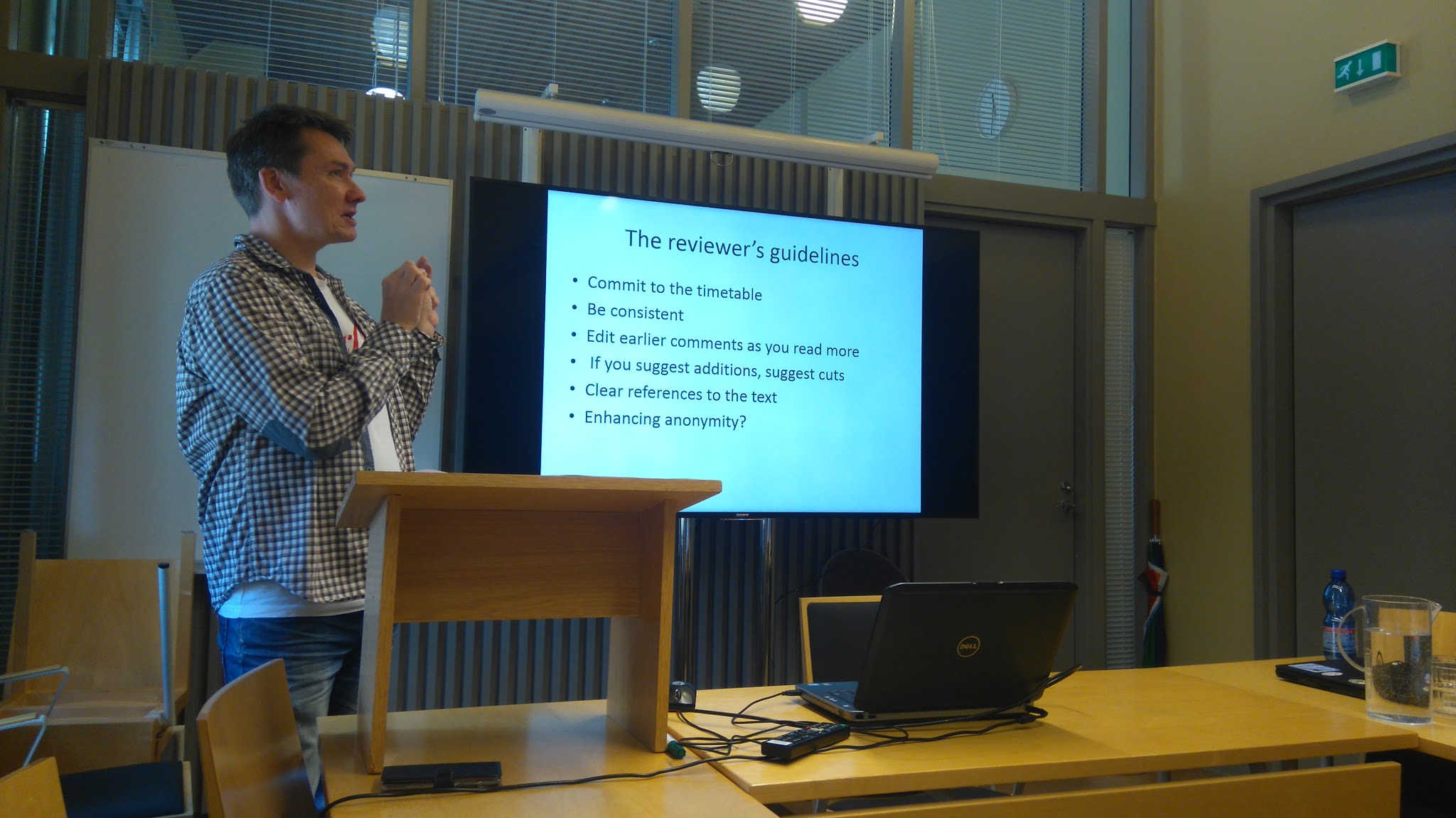
Dr. Lintunen’s presentation was titled “The Peer Review Process from the Perspective of the Reviewer”, and it described the do’s and the don’ts of acting as a reviewer. The review process begins with contact: usually the editorial board contacts you through email, sending the title and the abstract of the article. It is a good idea to accept, should your schedule allow it. There is no need to worry about qualifications – if you have been contacted, Lintunen reassured us, you are probably qualified.

The instructions for the reviewers can sometimes be found on the journal’s website. If not, you can email and ask for them. You might also want to check the journal’s instructions for authors. In a review process you should pay attention to the goals of the paper, its theoretical framework, references, and argumentation. You should consider whether the paper is suitable for the journal it has been submitted to. If so, think whether the argument is clearly presented, valid and reliable. Are the results well evaluated and defended? Are the results based on the data? Remember to stick to your own field and expertise when you are giving your feedback.

After the keynotes, thirteen PhD candidates gave five-minute presentations on their ongoing work, for example recent publications or difficulties they had run into during the process. The presentations were followed by discussion. Issues dealing with article publishing were naturally a recurrent theme; Marja-Leena Niitemaa discussed reviewer’s comments she had already received, while Eva Norrman and Aino Liira spoke of the process of co-writing and the content of their articles. Sara Norja and Susanna Mäkinen discussed their articles in preparation; both were writing an article based on a conference paper. Jay Rauhoff, Emma Kanckos and Ira Hansen focused on more specific sections of their dissertations, while Sirkku Ruokkeinen and Cathryn McWilliams used the opportunity to ask for advice concerning their work. Timo Savela, Eva Fjällstöm and Johanna Rastas, who were there for the ÅboutU seminar for the first time, presented the topics of their dissertation work.

aboutu
ÅboutU is looking for new committee members.

The September Seminar was also the venue for selecting a new committee for ÅboutU. Jay Rauhoff, a UTU PhD candidate, has already volunteered. The current committee is searching for two new members from the Åbo Akademi University, and one additional member from University of Turku English Departments. If you’d like to take part in bringing our two departments together, please contact Jay at gajara[at]utu.fi.

The 2016 ÅboutU committee would like to thank the keynote speakers and PhD students from ÅAU and UTU!

Text and photos by Ira Hansen, Emma Kanckos, Eva Norrman and Sirkku Ruokkeinen