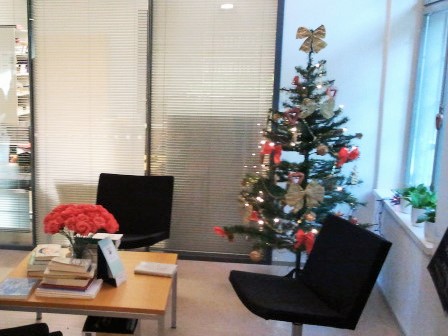
English – think of the possibilities

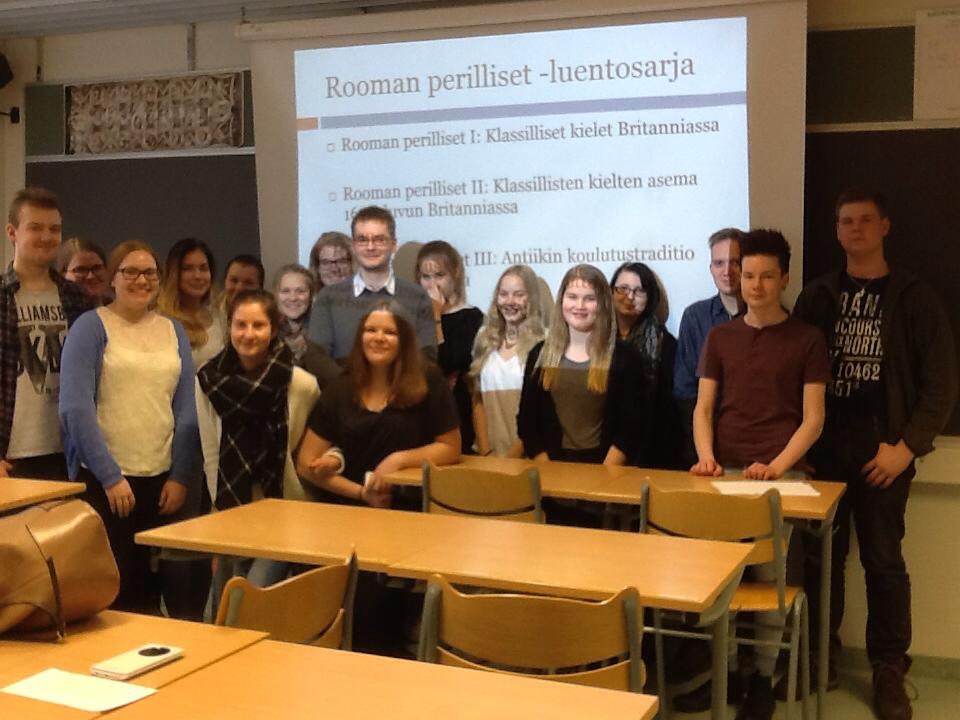
We’ve pretty much all studied the English language for many years already in our lives before making decisions about third level education. That English is a whole different beast than the one that’s studied in universities. Earlier you’ve simply studied how to use the language. When studying English at a university, you will get the chance to see the power of language up close.

You can take up the quest of learning the intricacies of literature and how it affects the reader. You can critically analyse media texts and through them power structures prevalent in society. You can see for yourself how the English language came about through its infancy to the present lingua franca and how the history is funneled to the present day. You will have the chance to study simply how the language itself is constructed. Perhaps you will want to delve in to the peculiar process of translation, where the diversity of different cultures and languages will become apparent and you will see why language is such a strong identity builder. Naturally, you can also learn the specifics of teaching a language to others, how language acquisition works, why language is such a special human feature, and how its best transferred to others for the benefit of us all.

While having the chance to do all this, you will also have a chance to join the merriest bunch of people out there that makes all the aforementioned studying just that much more fun. I’m of course talking about the student organization for English students in the University of Turku – Anglica. Anglica is a very open, welcoming and active organization that organizes a variety of events for students. These can include anything like board game nights, movie nights, various sports events, sitz and nightclub parties, visits to a theater and other cultural events as well as just casual hangouts. The best thing about these events is after all the people.

There seems to be a kind of a kindred spirit among Anglicans. We’re all different of course but it feels like there’s something similar about us all. That makes it easy to get on board and meet new people. I am one of the two members in the board of Anglica responsible for events and I can tell that I am already looking forward to seeing many new faces in the events to come next autumn.
Text and photo by Teemu Helenius
students
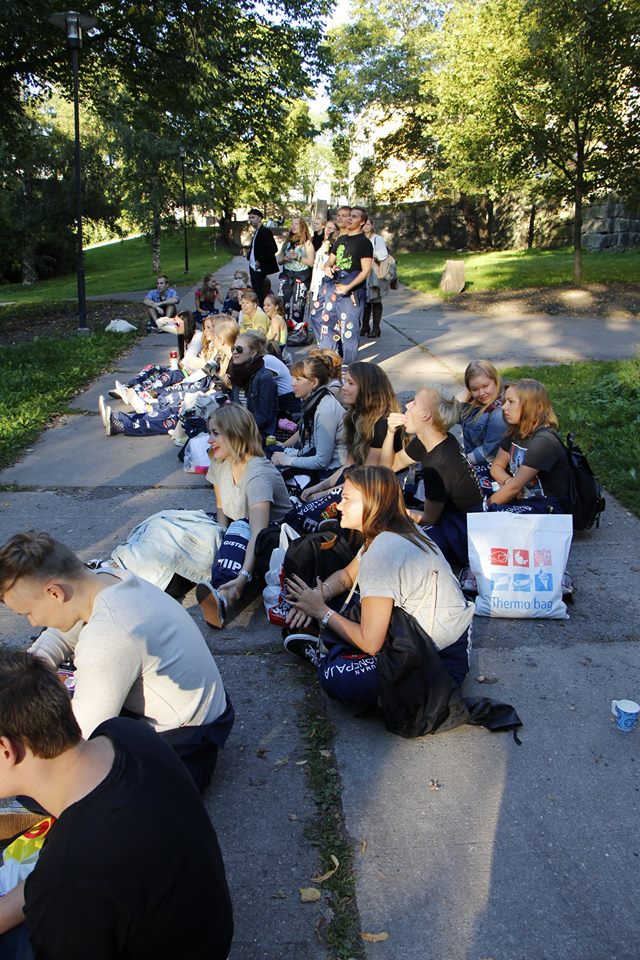
English students exploring a world of possibilities.

Battle and Hastings

My three-year research project on multilingual practices in England in the ‘long twelfth century’ ended in August, when its last research trip took me to the UK for the sixth time since 2012. In addition to doing library work, I paid a visit to the place where my long century began: Hastings, on the south coast, and the small town of Battle, which is just fifteen minutes from Hastings by train and, despite its fierce name, quite a sleepy place today. Hastings is a pleasant seaside town, a lively resort on a sunny Sunday afternoon in August but quiet and a little sad on a grey Monday morning.

All students of British history associate Hastings with the battle that won Duke William of Normandy the crown of England on 14th October, 1066. The fighting actually took place outside Hastings itself, at a site where a few years after his victory William the Conqueror built a monastery. The spot where England’s King Harold lost his life on that bloody day was where the high altar of the Battle Abbey church was located.

eng_battruins

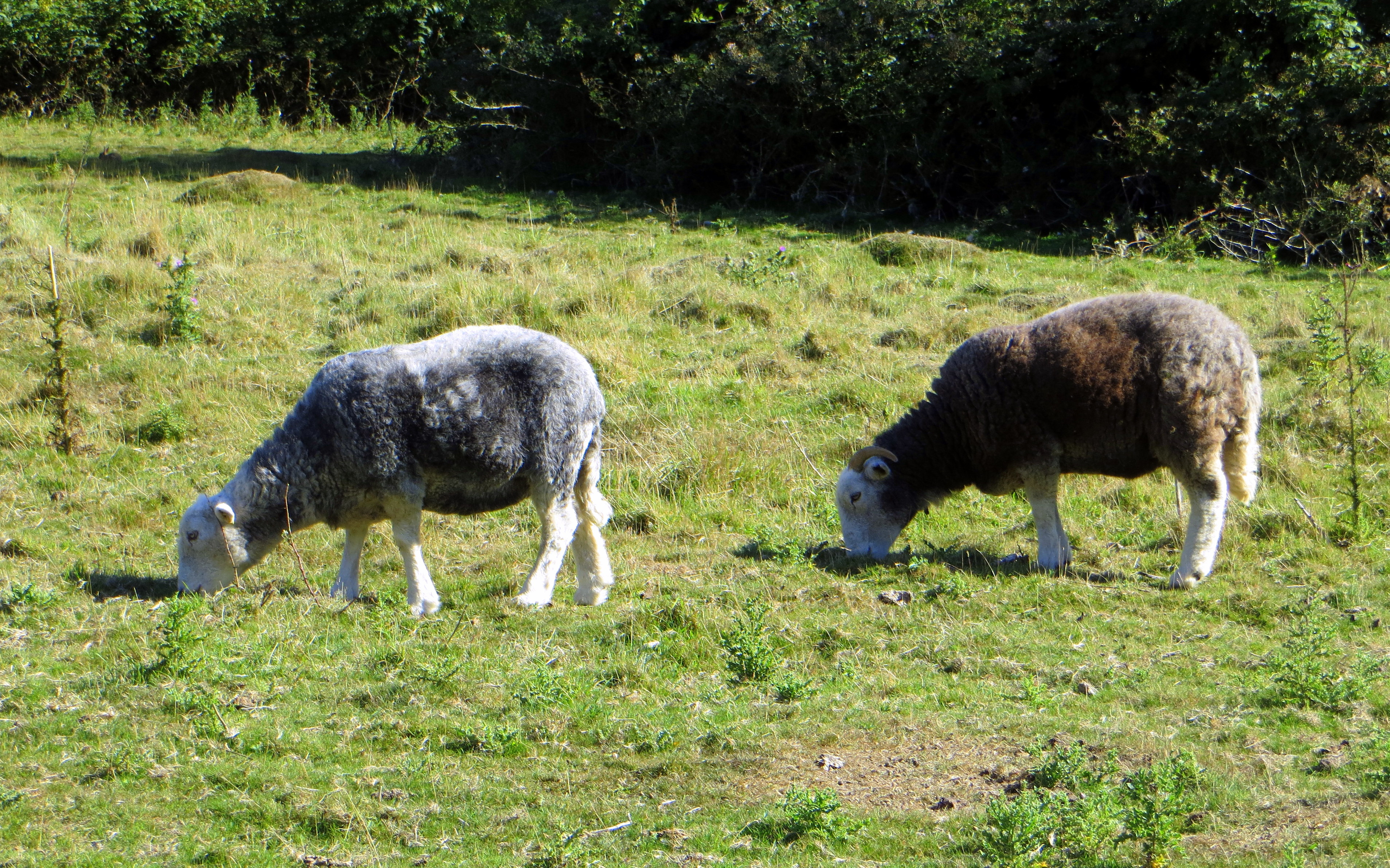
Over ten thousand men fought in the battle that changed the course of history in just one day. On a sunny summer’s day centuries later, this is quite hard to imagine, especially as the battlefield is now a meadow with grazing sheep, inside what is perhaps best described as a not particularly well looked-after park. The walk around the battlefield takes little more than half an hour, and although there are tourists pottering about, they are outnumbered by the sheep. The Abbey is now in ruins, but the site, run by English Heritage, is still interesting to visit. The village of Battle makes the most of the historic significance of the place; even one of the restaurants serves lunches that cost exactly £10.66.

eng_battsheep

The consequences of the battle of Hastings and the Norman Conquest more broadly include social, political and cultural changes – and also linguistic ones, as French gained a new, prominent position in England. It was English lexis in particularly that was influenced by language contact; the previous sentence alone contains at least half a dozen words of French origin. As a historical linguist, I hope that the linguistic legacy of the Conquest is also remembered next year – the 950th anniversary of the Battle of Hastings.

Text and photos by Janne Skaffari.

A Heat Wave of Digital Humanities

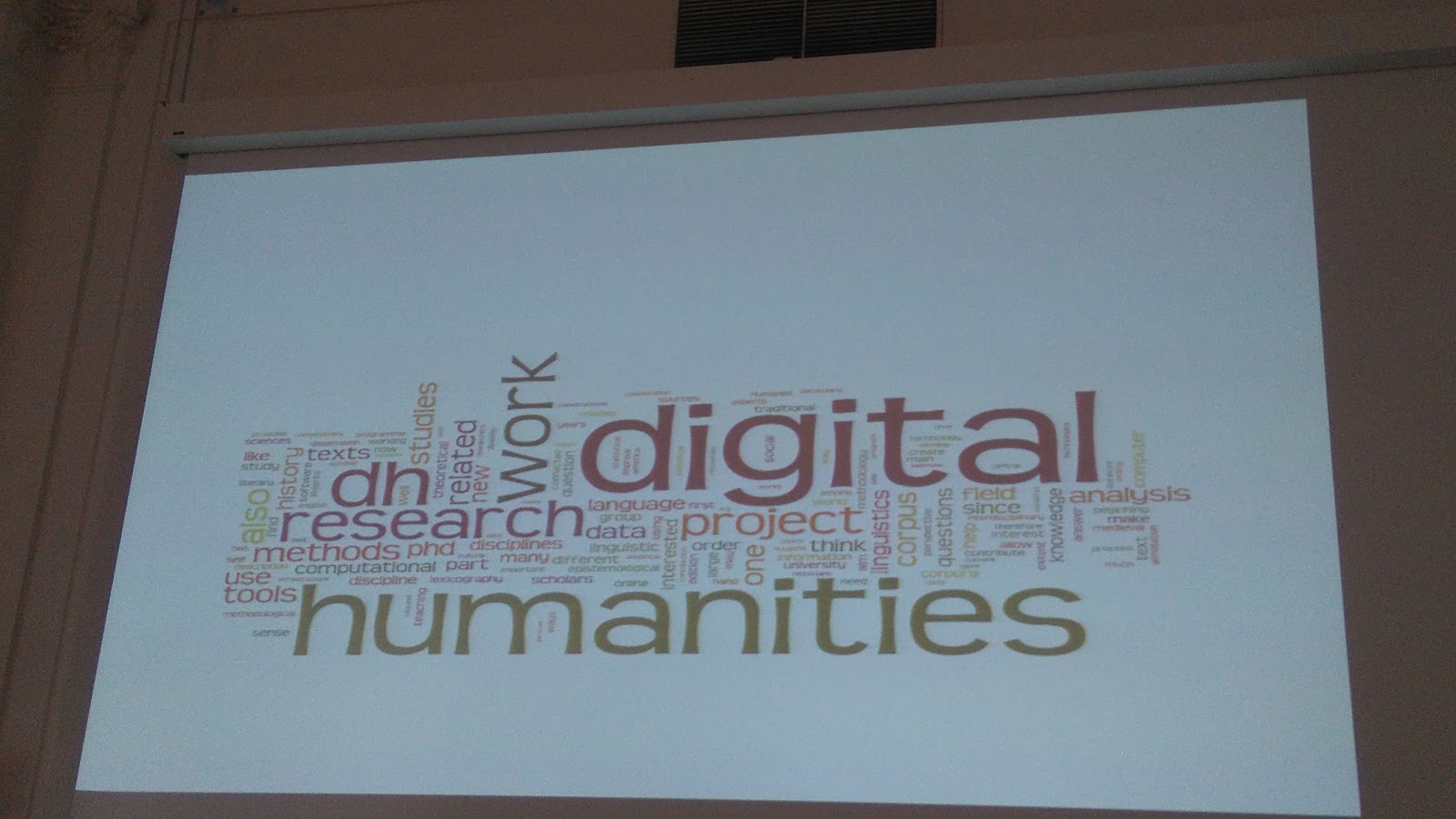
cover_leipzig

leipzig2
It’s not summer for a doctoral student if it doesn’t include an intensive training week or two. We two intrepid travellers from the Department attended the sixth European Summer University in Digital Humanities (ESU DH), “Culture and Technology”, held at Universität Leipzig July 28-August 7.

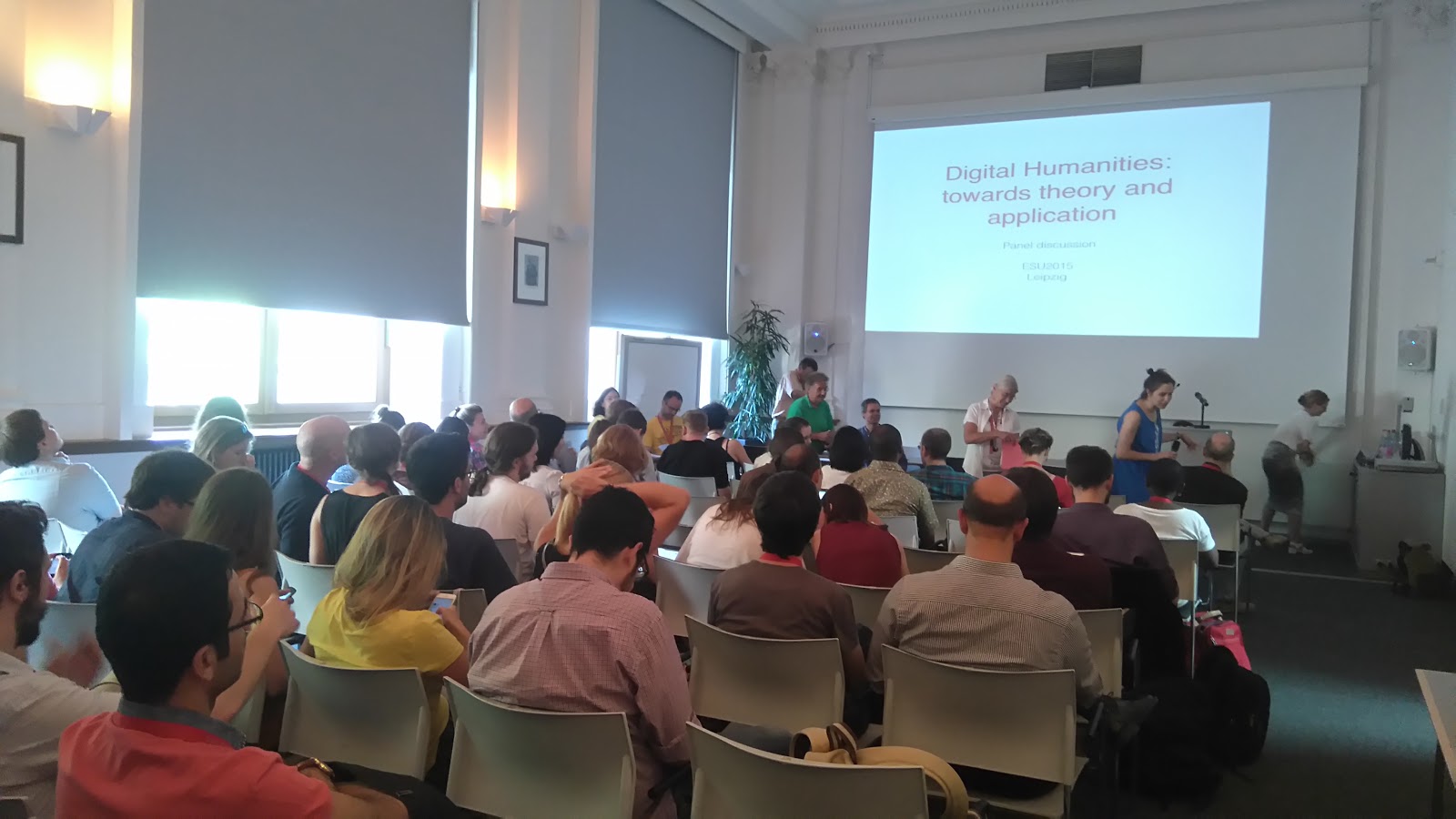
Founded by Prof. Elisabeth Burr, ESU DH is a multilingual, multidisciplinary forum for young digital humanists of all stripes. The summer university offers a great number of workshops on topics ranging from programming languages and editorial principles to software tools. In addition to the two workshops taken by each participant, we were treated to a number of lectures and project presentations, poster sessions, panels and even two science slams. (Our workshop won the first one!) One of the most rewarding aspects of ESU DH was discussions with people hailing from various disciplines, united by our interest in the digital applications of humanities research.
leipzig3
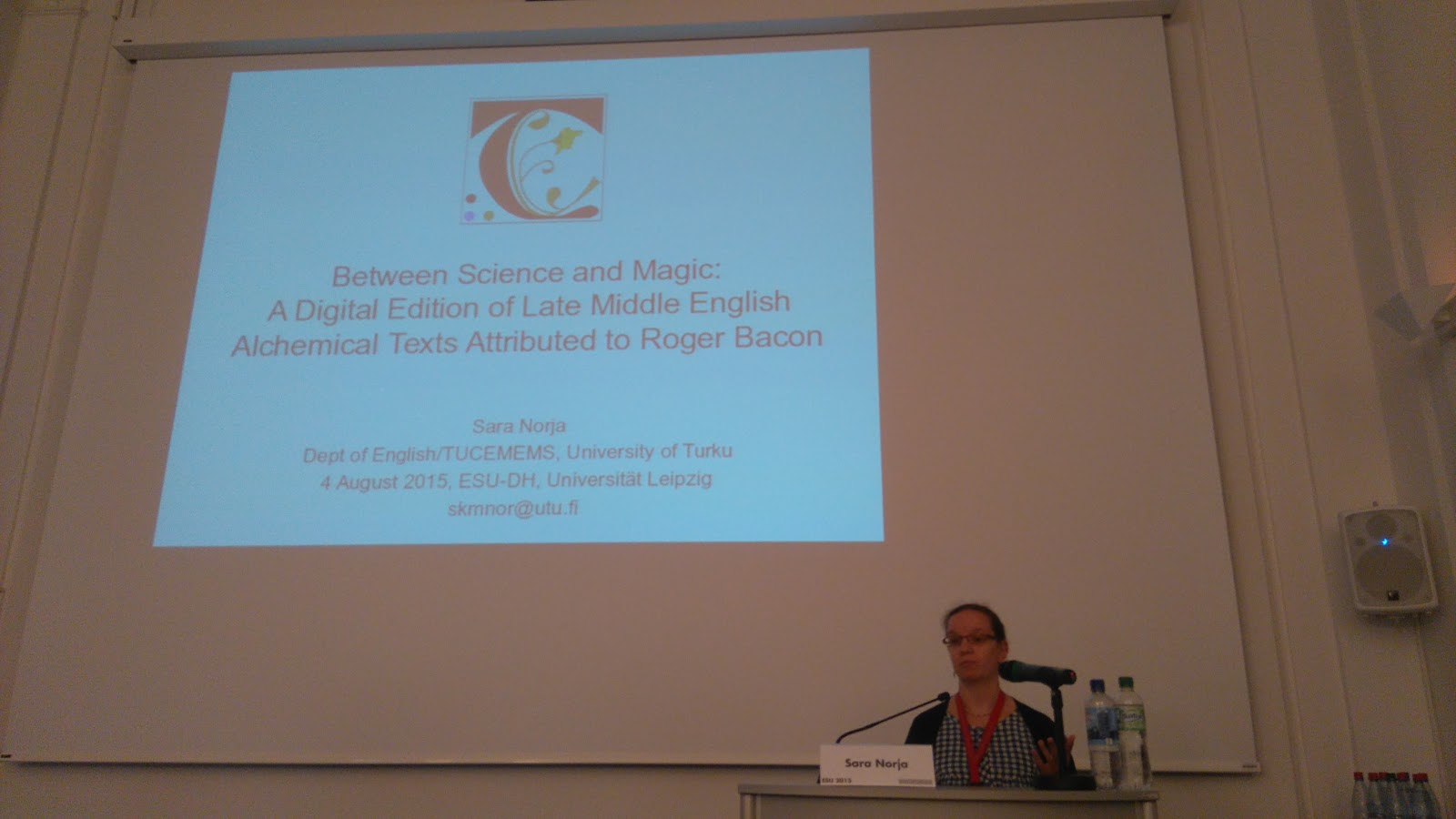
We both attended the two-week workshop “Digital Editions and Editorial Theory: Historical Texts and Documents”. The first week, taught by Dr. Johanna Green (University of Glasgow), concentrated on (digital) editorial theory, using online editions of historical texts to highlight issues discussed. Both of our doctoral dissertations deal with historical texts in digital environments, so the workshop’s content had great practical value. Sara’s doctoral dissertation incorporates a digital edition of early English texts, while Sirkku’s involves a corpus of Renaissance paratexts. Both benefit from the instruction in editorial theory. Hence one of the highlights of the workshop was the theoretical discussion on different digital editions already published online, which gave insight into the options available for future work. The editions varied in presentation and style from The Dream of the Rood to Jane Austen’s Fiction Manuscripts and The Chymistry of Isaac Newton.

The second week, taught by Kathryn Simpson (Edinburgh Napier University), was more hands-on, introducing us to the world of XML-encoded digital editing using material from the Livingstone Online Project. The project has collected a sizeable number of Livingstone’s field diaries, used spectral imaging technology to bring out the (often rather illegible) diary page, and is in the process of producing a digital edition. We got to participate in the project through transcribing pages from David Livingstone’s field diaries into XML using OXygen.
leipzig4
Livingstone, 1871 Field Diary, 297b/157-138 in color (left) and spectral ratio (right).
Image credit: Livingstone Online Project (CC).

Despite the full schedule, ESU DH managed to include a plethora of social events including coffees and communal dinners, as well as excursions to local museums and parks. The evening activities were slightly hampered by the heat, which climbed close to 40 degrees celsius (!) Thankfully the school itself was air conditioned. Since Leipzig celebrates its 1000th year as a city in 2015, there was too much to see to let the heat bother us. (Including a really rather convincing Elvis impersonator performing in a free open air concert on our final evening.) The highlight of the events for us was the visit to the Museum für Druckkunst, a printing history museum with a collection of several dozen printing presses, type foundries, and a number of historical print products, including their collection of incunabula.

leipzig6
All in all, the summer university was a fantastic experience and we both highly recommend it for anyone interested in, or doing research on, digital humanities.

Text: Sara Norja and Sirkku Ruokkeinen
Cover image credit: Maciej Eder (Uniwersytet Pedagogiczny, Kraków, Poland)

The Zoo

An important part of academics’ work is attending conferences; think Presentation Skills meets Proseminar, or an MA Elective class, but with professors and researchers instead of students. While some of the best conferences are symposia with just a dozen or so papers, such as our own Linguistics Meets Book History last autumn, others are huge, with hundreds or thousands of participants. I went to a biggie in mid-May: the International Congress on Medieval Studies in Kalamazoo, Michigan.

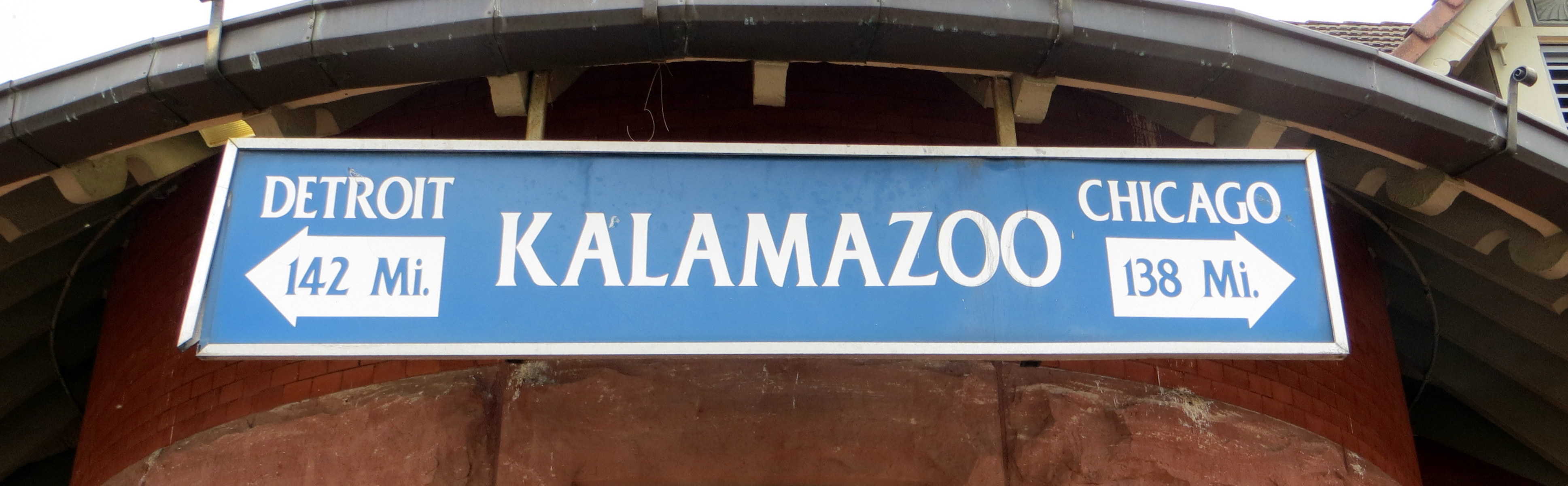
If you work on anything to do with the Middle Ages, the Kalamazoo congress will be on your bucket list. Affectionately known as The Zoo, it is an annual event organised by the Medieval Institute at Western Michigan University. It is attended by 3000 medievalists each year, and this time the number of sessions was 567, each of them with three or more presentations, spread over three and a half days.
usa_kzoosign

This was the first time I attended the congress, and I have to admit it was difficult to choose between so many intriguing-sounding parallel sessions. I tended to choose sessions which, one way or the other, focused on language; these were clearly in the minority as most of the speakers at The Zoo are historians rather than historical linguists. As much as you might learn from papers on topics that you are not that familiar with, it is often more useful to choose presentations which have some potential relevance for your own work. The clearly most linguistic session I attended was on polysemy in Old English, but I also went to three panels on translation, with papers on texts translated in the Middle Ages, translating medieval texts today, and on one occasion, not just rendering Chaucer in present-day language but also transmuting the Canterbury Tales into a comic book. One of my favourite sessions was a well-attended panel introducing some of the most ambitious projects for digitising medieval manuscripts; overall, Digital Humanities was quite prominent at the congress. My own paper on multilingual practices in post-Conquest England was in a less well-attended manuscripts session. As for the texts discussed at The Zoo, the English-language materials ranged from Beowulf to True Blood. For more on what went on at the congress, it is worth checking #kzoo2015 on Twitter.
usa_tornado
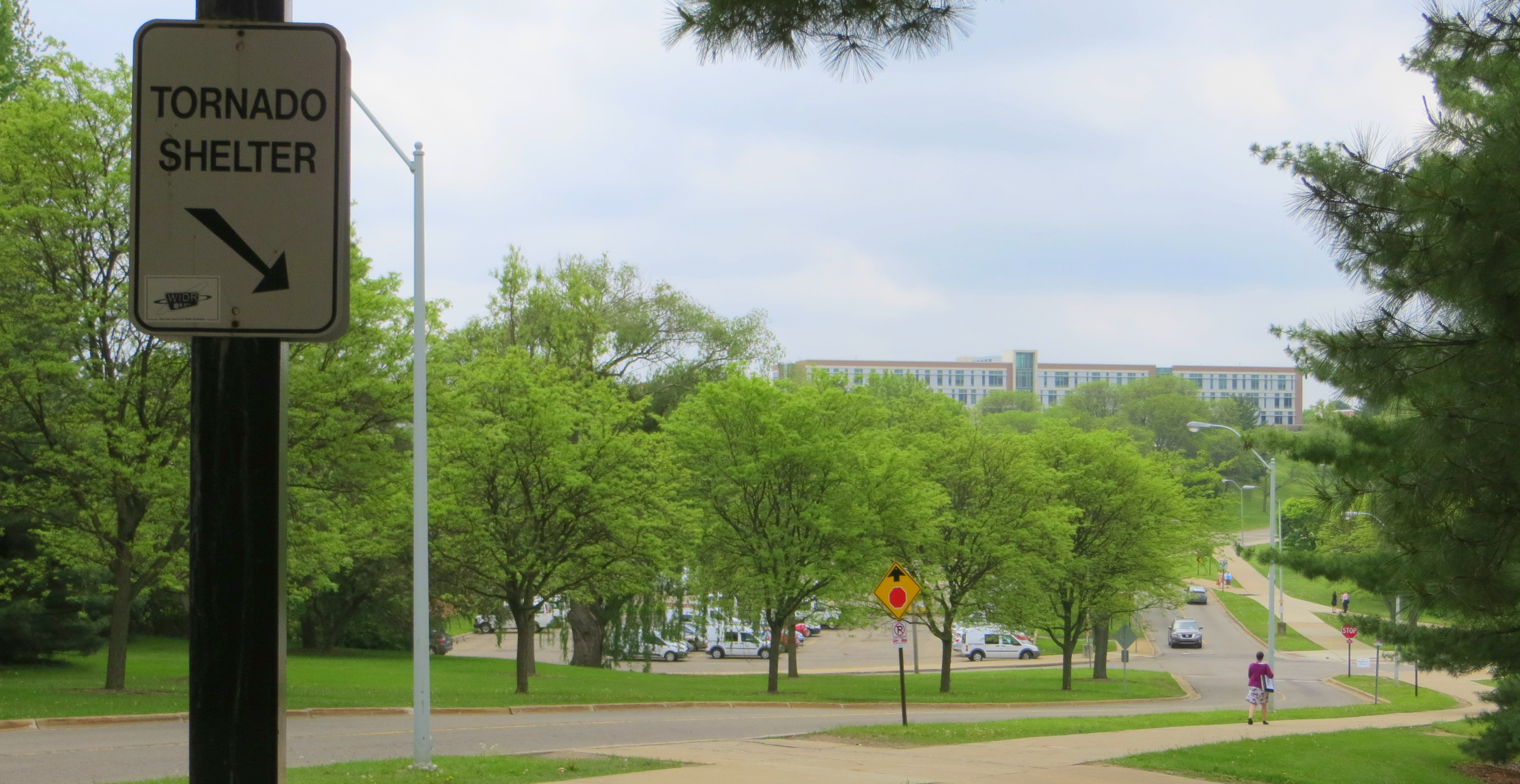
Kalamazoo itself is the size of Joensuu and located a three-hour train ride from Chicago. My impression was that the town is known for three things: the Glenn Miller song from the 1940s, the range of local beers, and the university (might the last two be interconnected?). With 24,000 students, WMU is a good example of an American campus that is like a city within a city. The buildings are many, there are sports facilities and eateries, and in the middle there is a lovely green park complete with a pond (and swans). Many of the congress participants actually stayed on campus and slept in the dormitories. That part of the Kalamazoo experience I missed, as I stayed in a downtown hotel instead. Maybe next time?

Text and photos by Janne Skaffari

Greetings from Mousehole, Cornwall

Mousehole_harbour
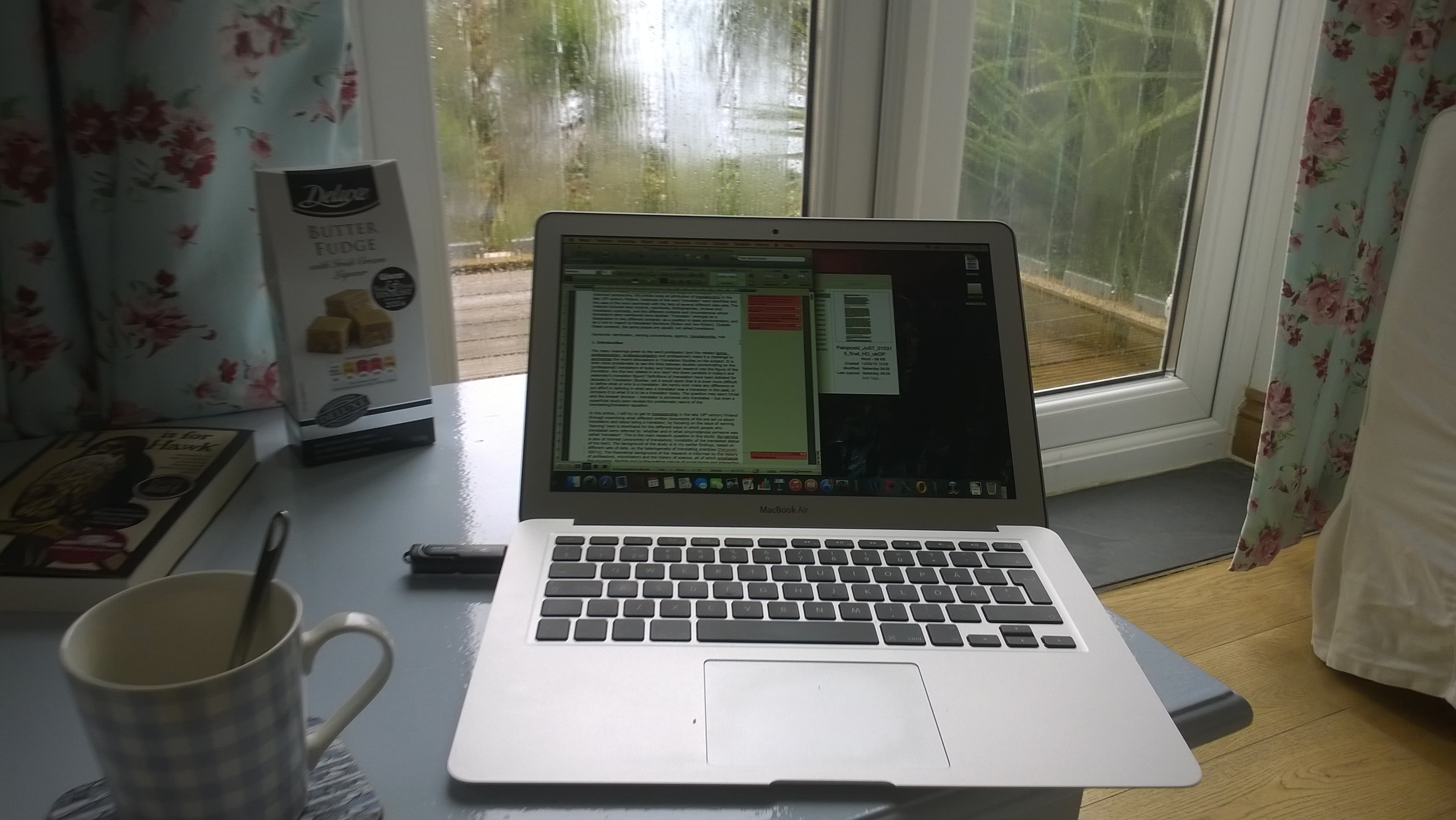
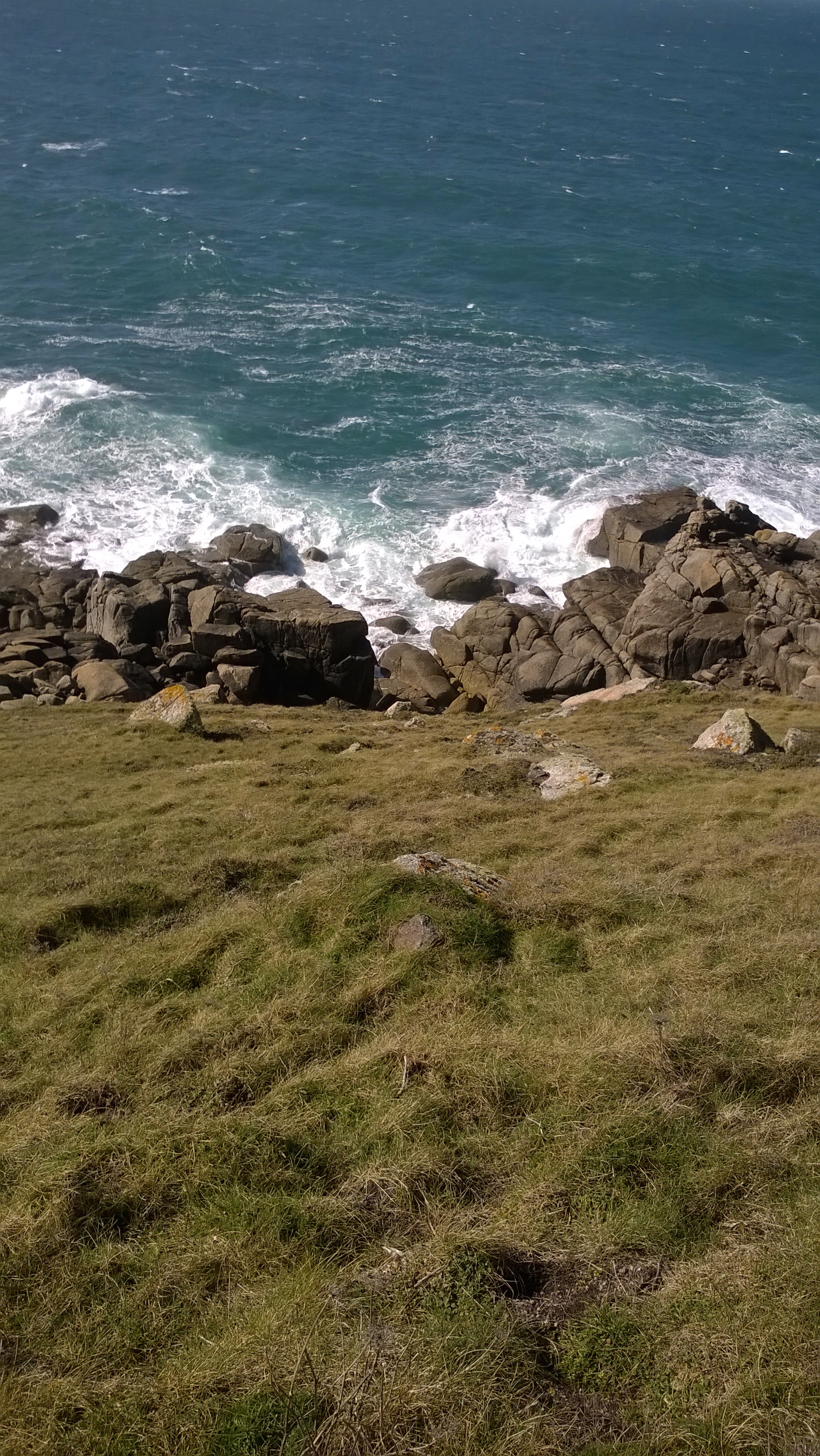
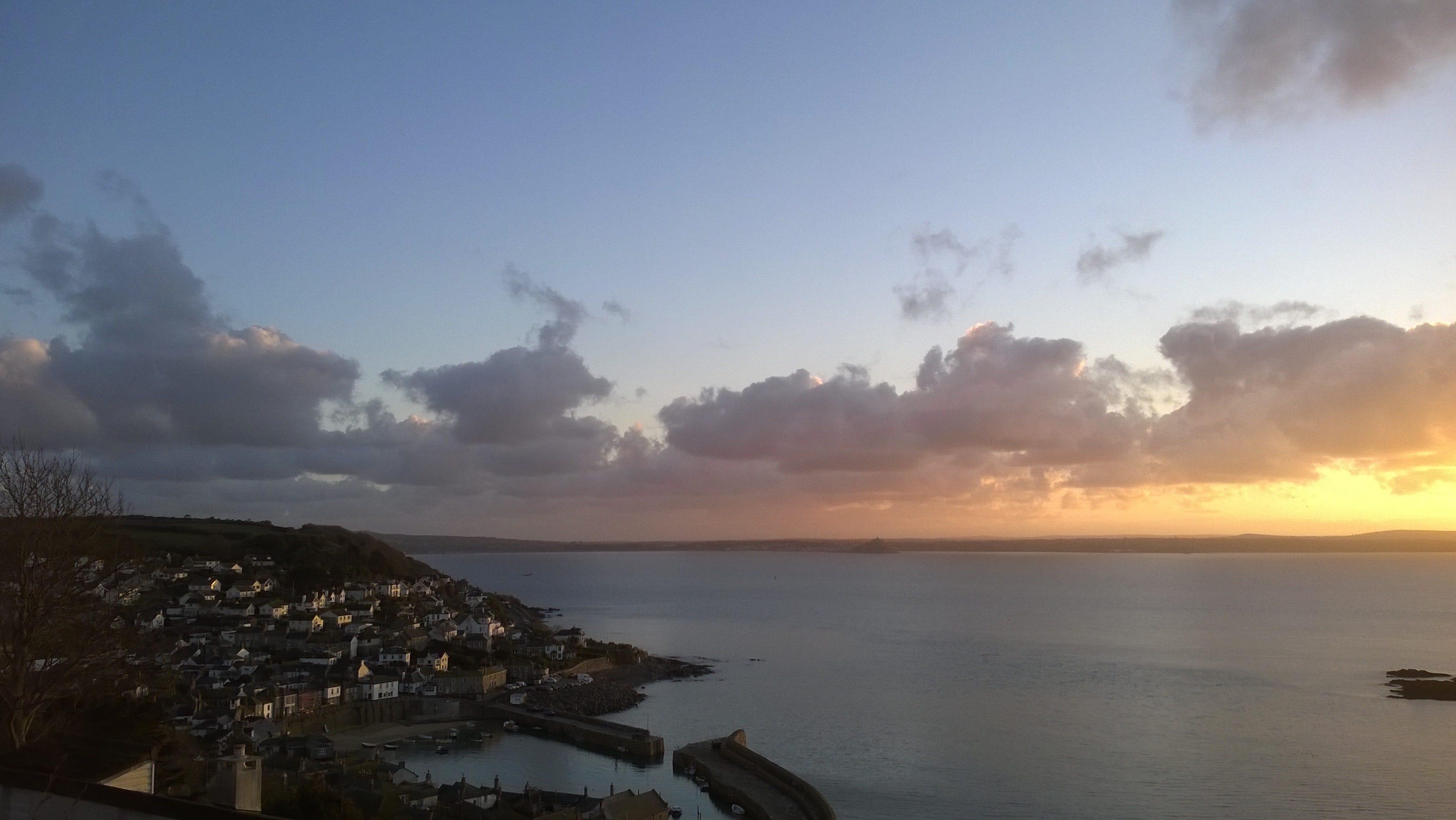
I am writing this piece after a night of gales and storm over England, Wales and Scotland. The small bedsit I am renting for a writing-cum-walking retreat gives out to the sea (there are seals, I’m told, but I have not managed to see them), which is now surprisingly still. The sun rises beautiful and serene, lighting the surface of the water.

office_rainyday
A change in the setting is almost always a good thing; especially if you do not need to worry about the routine tasks at home and are not tempted to start cleaning or washing to escape from writing. Obviously there are other temptations here: Cornwall is beautiful in the spring with its many daffodils. Did you know, by the way, that it was the building of the railway to Penzance in 1859 that made the daffodils from the Scilly Islands and Cornwall a major “export” to London? During the Second World War, though, land was needed for cultivation of food crops, and redundant bulbs were thrown into the hedges. This is why there is a large variety of different kinds of daffodils growing wild on cliff slopes and in woodland areas and hedges. This I learned from the Penlee House Art Gallery booklet accompanying a set of etchings of daffodils by Sally Corbet.
on_the_edge

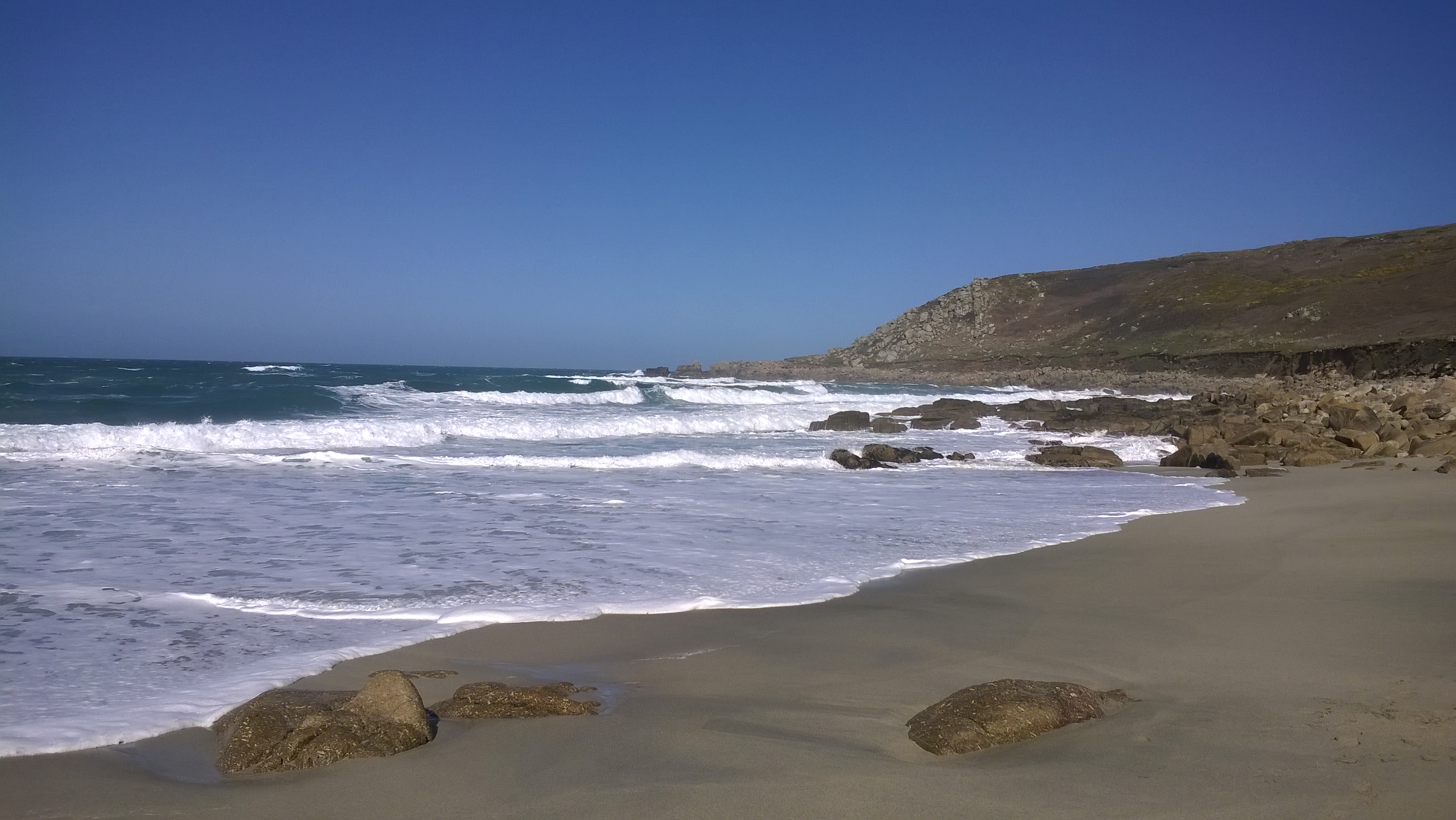
Apart from daffodils and their fascinating story, this tip of Cornwall has more history than what can possibly be digested during a short stay. Take the disused mines, old engine houses, eerie run-down towers and mine shafts in the middle of the heath and rugged cliff landscape. They all bear witness to Cornwall’s past mining industry. By the early nineteenth century, Cornwall was the world’s largest copper producer, but with copper being found in other parts of the world, the prices went down and tin mining came to replace copper. Historical sites in South-Western Cornwall also include the Porthcurno Telegraph Museum: this is where the first under-sea cable was laid between England and India in 1870. And you must not forget the arts: Cornwall is home to the Newlyn school from the 1880s and the St. Ives artist colony, whose famous resident included the Finnish painter, Helene Schjerfbeck.
sennen_cove

I am staying in the small but extremely pretty village of Mousehole, which has a number of cafés for me sit in if I tire of writing or walking. My favourite one is Hole Foods Deli, but I have had my best scones at 2 Fore Street – just a tip in case you ever visit this part of Cornwall. There are pleasant surprises in other villages as well – both in the way of food and drink AND in literary/photographic/artistic sense, like the Cook Book café in St. Just. Their website and newsletter have nice photos with inventive captions of the surrounding people, flora and fauna.
Walk_in_the_woods

To end with a rather triste, yet strangely consoling note: this morning I was moved to tears listening to the poet Clive James live on BBC on his life, impending death, and poetry. If you are interested, read this Guardian story.

Mousehole at sunrise

I believe these thoughts on life and death, resurrection and hope, as well as the beauty and regenerative powers of nature are quite appropriate for Easter week. I wish all of our students and staff a Happy Easter!

Text and photos by Professor Outi Paloposki

Beyond the ivory tower: Co-operation with a local upper secondary school

When I was in upper secondary school (‘lukio’ in Finnish), two of my teachers organized a “Rome Club” (‘Rooma-kerho’), which could be taken as an optional course. In order to receive credit for the course, we needed to take part in a variety of activities, one of which was attending guest lectures by researchers and PhD students. I always found the lectures fascinating, and I thought that it would be great if, at some point in my life, I could do something like that myself.

In the autumn of 2014 the thought became a reality when I began my lecture series titled “The heirs of Rome” at my old school, Turun klassillinen lukio, where the Rome Club was still going strong. To be sure, the initial idea was to offer a single lecture to the club, but partly due to the nature of my chosen topic and partly due to the enthusiasm of the pupils it became clear that a series of lectures was in order.

The idea behind the series was to show how Roman (and, more generally, classical) culture had been kept alive following the collapse of the Roman Empire. This topic is especially relevant for my ongoing PhD research since I am interested in the status of Latin and Greek in 17th century England. Accordingly, the main focus of the lecture series was on Britain. The titles of the individual lectures were:

1. “The Classical languages in Britain”
2. “The status of the Classical languages in 17th century Britain”
3. “Classical education in the early modern period”

The second lecture was given in conjunction with the school’s 135th anniversary celebration in November. The fourth and final lecture, which will take place at the beginning of May, elaborates on the theme of education with examples drawn from my dissertation material.

I have found the lecture series a refreshing experience, and it seems that the pupils have enjoyed it as well. Although my dissertation focusses on theoretical matters, it has been surprisingly easy to come up with suitable topics for the lectures. One easily forgets that what seems self-evident to oneself may be completely new information to almost everyone else. I have also found it an excellent exercise to try and explain my own research in as simple terms as possible, because this makes it a prerequisite that I actually understand what I am talking about.

Rooma-kerho 3
The Rome Club with their visiting teacher, Aleksi.

Text: Aleksi Mäkilähde
Photo: Reija Pentti-Tuomisto

Funding applications, Part 1: Finding funding opportunities

When you’re a first-time participant in the game of applying for research grants, it’s a good idea to ask around and learn a few tricks of the trade. This post explores online resources for finding suitable funding for your research and career stage, and it is first in a series of posts on how to apply for research funding.

For those thinking about pursuing postgraduate studies at the Department of English in Turku, a good starting point is to visit a few websites: The University’s own graduate school, UTUGS, The School of Languages and Translation Studies graduate program, Utuling, and the English Department’s Postgraduate Studies page.

The Research Whisperer is a great resource for career-related practical issues such as funding and networking. This blog post gives good tips on finding suitable funding opportunities.

The Finnish go-to resource for various kinds of research and travel funding is the Aurora database. The database includes most open calls, and you can search the database for example by field of research or deadline for applications. Always remember to also visit the websites of the funding bodies for more information.

Even if you are not applying for funding from them yet, take a look at the Academy of Finland website. The Academy of Finland is probably the most well-known and important funding body in Finland, and their website offers a wealth of information.

If you are interested in EU funding, start from the Participant Portal. Another EU-related site worth checking is EURAXESS, where you can find calls for all kinds of international jobs (including PhD positions in EU-funded training schemes) and fellowships.

Stay tuned for more on how to launch a research career and get funding!

Text by Mari-Liisa Varila

The Department by the River

As mentioned earlier in the Tale of Two Departments, there are two Departments of English here in Turku. Situated as we are on the University Hill, our department is known as the Department Up the Hill, while our Åbo Akademi sister department (right at the brink of the river Aura) is known as the Department by the River.

This year we have been determined to increase cooperation between the two units. Among other things, this means that we encourage our students to complete optional studies in the other department, allowing this way a wider selection of special fields.

On Halloween in October, we hosted a guided tour of the TY campus to the ÅA students and staff. On an exceptionally sunny and bright December afternoon, it was finally our turn to make a counter visit to the Åbo Akademi campus.

SAMSUNG
It’s Christmas time at the English Department by the River.

The ÅA Department’s intern Annette Byskata and doctoral student Adam Borch greeted us at the entrance hall of the Arken building, where most of the ÅA Humanities’ units are located. They directed us first to the second floor of the building and into the ÅA English Department’s corridor. We got to see where the Department office is located, but also learned that it will be moved soon because of changes in the admin staff. Also, we saw the Department’s three main lecture rooms (Helikon, Kramer and Donner), and sat down at the Kramer hall to meet the staff, hear about their teaching and to learn how to browse the ÅA website.

SAMSUNG
Our guide, Annette Byskata, at the Arken lobby.

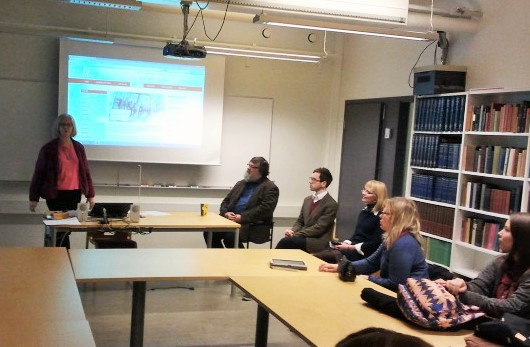
The Head of the Department, Brita Wårvik, welcomed us to the tour and introduced us to the ÅA syllabus. Anthony Johnson, Jason Finch, and Stuart McWilliams gave us more detailed info on the Department’s literature courses. Signe-Anita Lindgrén, the SLA expert of the department, talked about the teacher track of the Department, while Martin Gill discussed the Department’s culture-oriented teaching. Finally, Brita introduced the discourse studies related courses available. During the Q&A with the staff, we discovered practical facts: e.g. that the ÅA term is divided into quarters differently from TY (something to consider when taking their courses!). Also, many of their courses last only one quarter, where as our courses typically last two quarters. These kind of differences may allow flexibility for TY students wanting to complete courses in a schedule different to ours.

SAMSUNG
The ÅA staff introducing their curriculum.

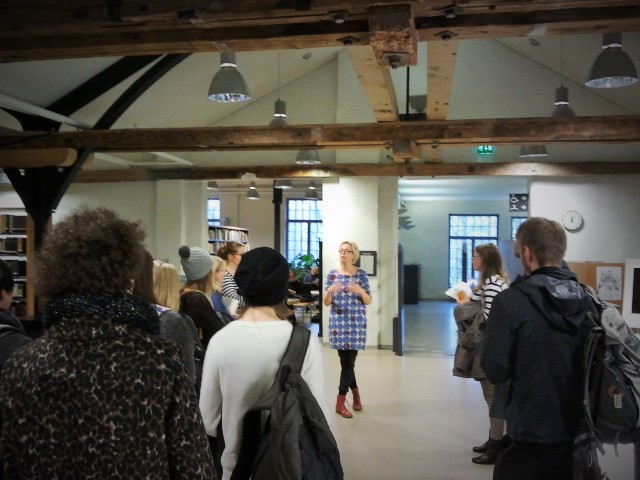
After meeting the staff, we were ready to continue with our tour. The next pit-stop was the Humanities library on the first floor of Arken. The librarian Maria Lassén-Seger greeted us at the library entrance and talked to us about the library customs and about the history of the building, which was originally a factory. In fact, the first Finnish tractor was built there! Maria took us to see the linguistics and English sections of the library’s collections before sending us off to the next stop of our tour, the Asa building.

SAMSUNG
Maria Lassén-Seger urges the TY students to use the ÅA libraries, too.

In the Asa building, Annette and Adam first guided us to the IT centre of ÅA on the first floor, humorously named “the Oracle”. Rumour has it that occasionally the helpdesk’s instructions are as ambiguous as the oracle’s advice in a well-written Greek comedy. Finally, we stopped by the course book library in the Asa building, where the students had the possibility to activate their TY library cards for ÅA use.

Warm thanks again to the staff of the Department by the River for inviting us and for organising such a fun and educational tour for us!

Text by Anna Kalpio
Photos by Anna Kalpio & Adam Borch


abo1
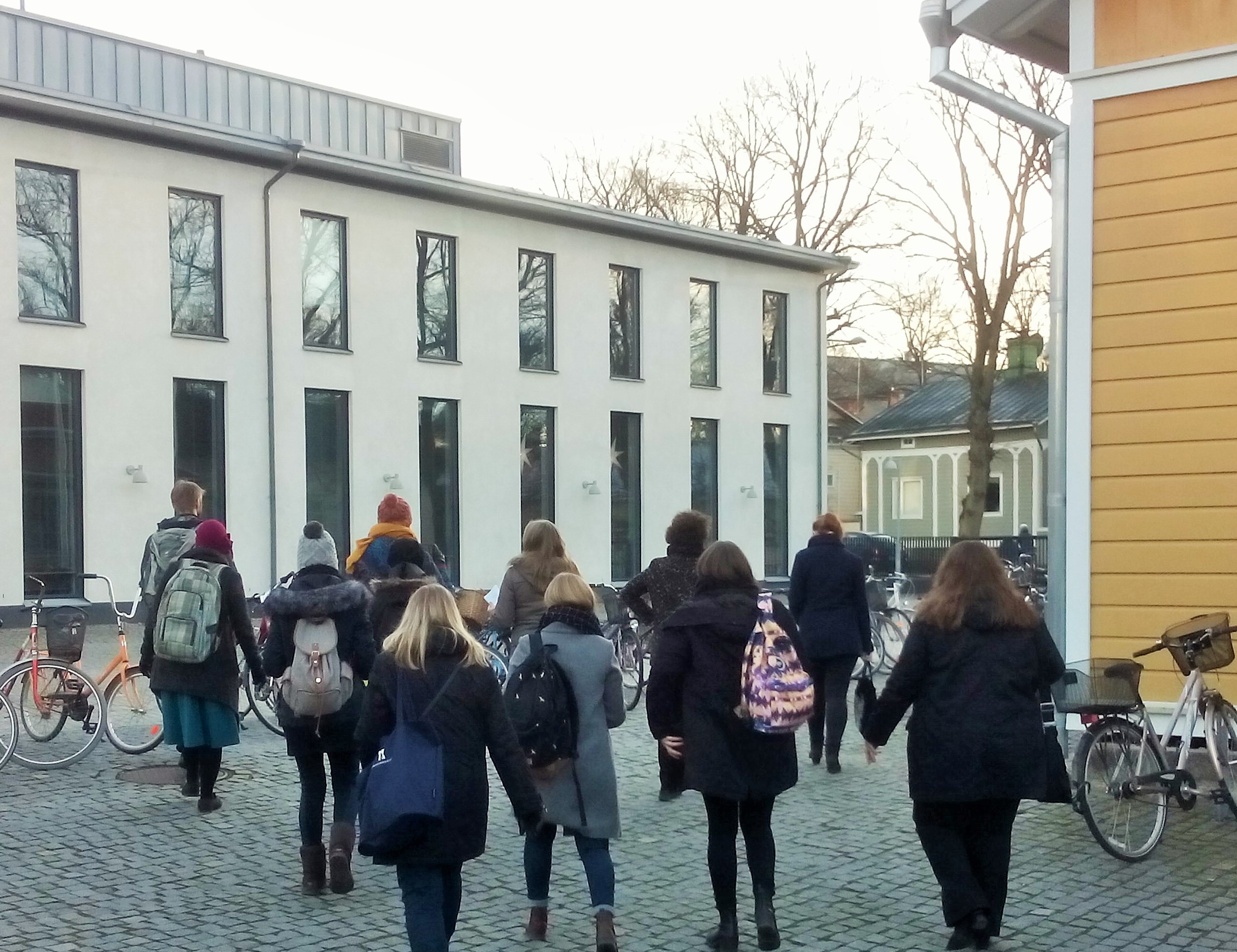
The TY group ventures from Arken to the Asa building.

Turku #PoPsymp 2014: International symposium of linguistics and book history

SONY DSC

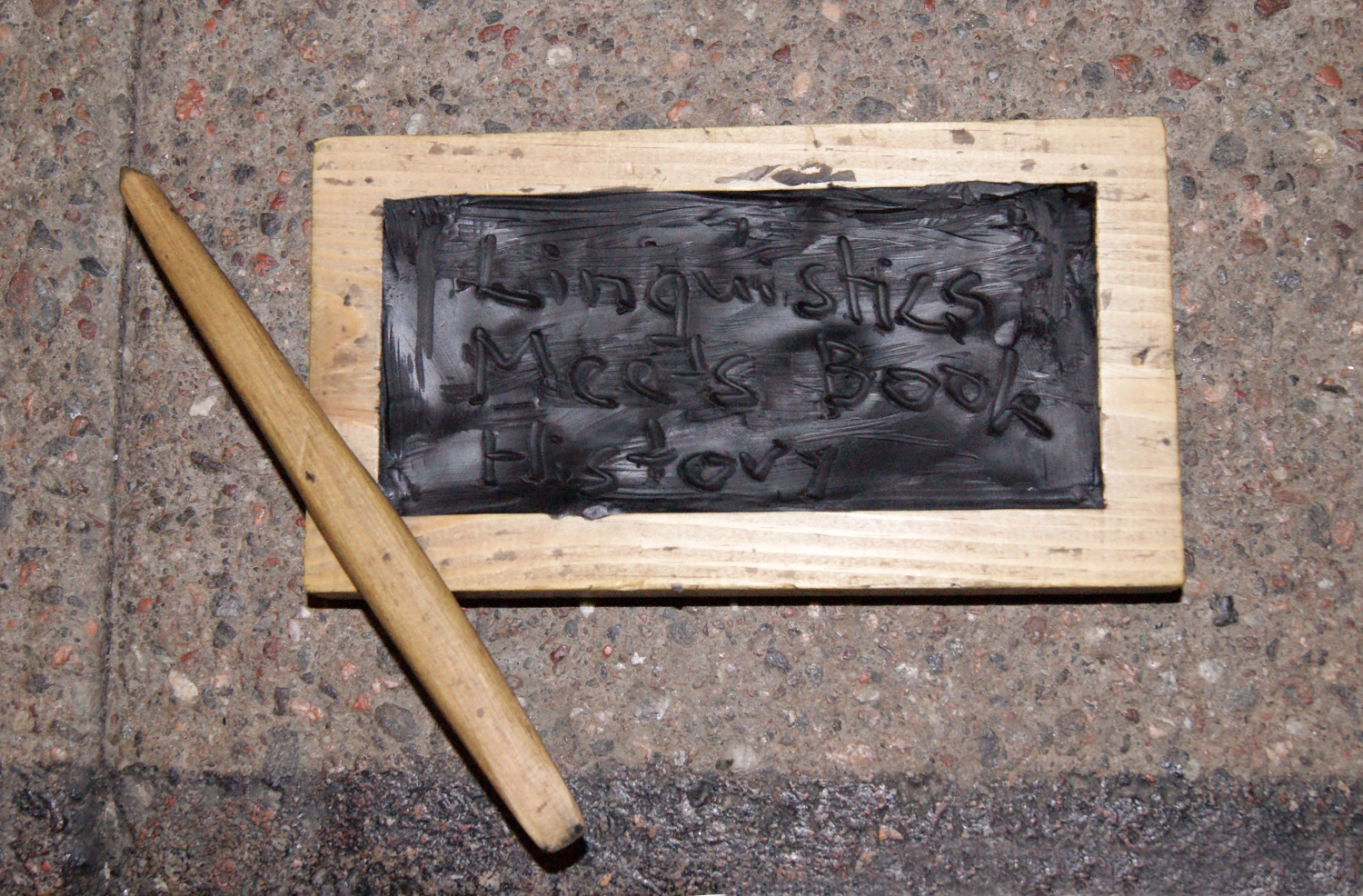
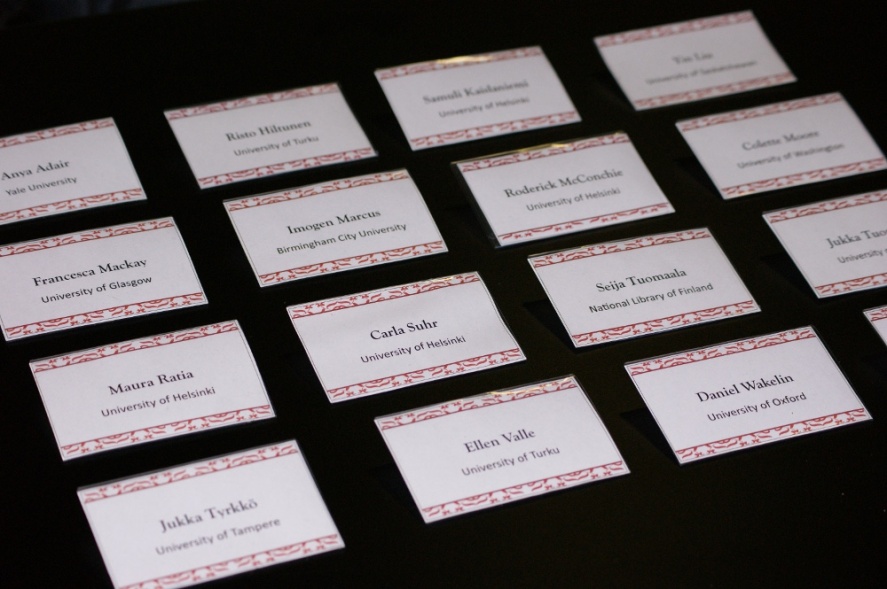
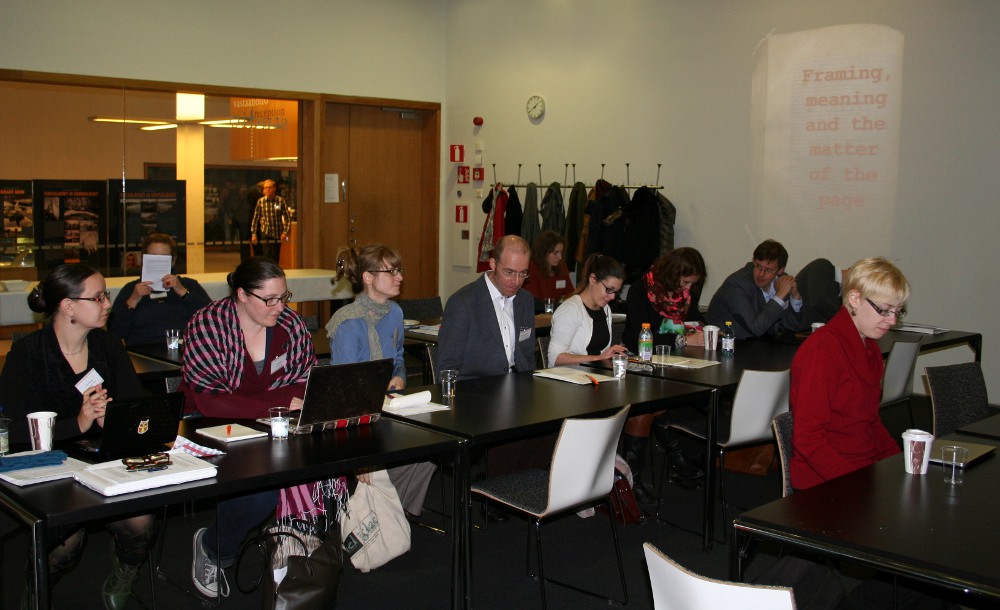
Linguistics met book history on 24–25 October 2014 as twenty-odd participants gathered in the Turku Main Library for an invigorating two days of presentations and discussion on the interaction of linguistic and material issues in the study of historical text. Linguistics Meets Book History: Seeking New Approaches (aka the PoP symposium), was organised by the Department’s Pragmatics on the Page (PoP) team in association with the Turku Centre for Medieval and Early Modern Studies (TUCEMEMS).
badges
We were treated to a number of stimulating presentations on topics such as code-switching, corpus studies, script-switching, otiose and ambiguous strokes, speech markers in manuscripts, layout and organisation of the page, genre markers, and reading practices. The majority of the contributors studied late medieval to early modern material, namely manuscripts and early books, letters, inscribed artefacts and various corpora.

crowdPOP

The three keynote speakers demonstrated a variety of approaches to combining linguistics with historical and material context. Colette Moore (University of Washington) spoke on linguistic and scribal organisation in Middle English devotional texts. Her study focused on the use of visual and textual organisation in the interpretation of historical dialogues. Jukka Tyrkkö (University of Tampere) discussed multilingualism in early printed books, concluding that code-switching correlates with bibliographical features such as format. Daniel Wakelin (University of Oxford) delivered a paper on the communicative aspects of page-framing and the patterns of ruling.

Personal highlights for the writers included, for example, Anya Adair’s presentation on ambiguous (rather than otiose) strokes in late medieval scripts; Maura Ratia’s presentation on textual labels signalling genre, text type and/or discourse form; and Daniel Wakelin’s keynote on aesthetic functions and implications of e.g. prestige carried by such practical elements as page ruling.
crowd2
The symposium concluded in a round-table discussion on the re-introduction of philology as a terminological starting point to studies of linguistics and book history, tactics for editing historical texts, and the usefulness of collaboration between people working on different time periods. The participants unanimously agreed that the symposium had been fruitful and everyone sounded excited about the idea of #PoPsymp2.0.
aboavetus
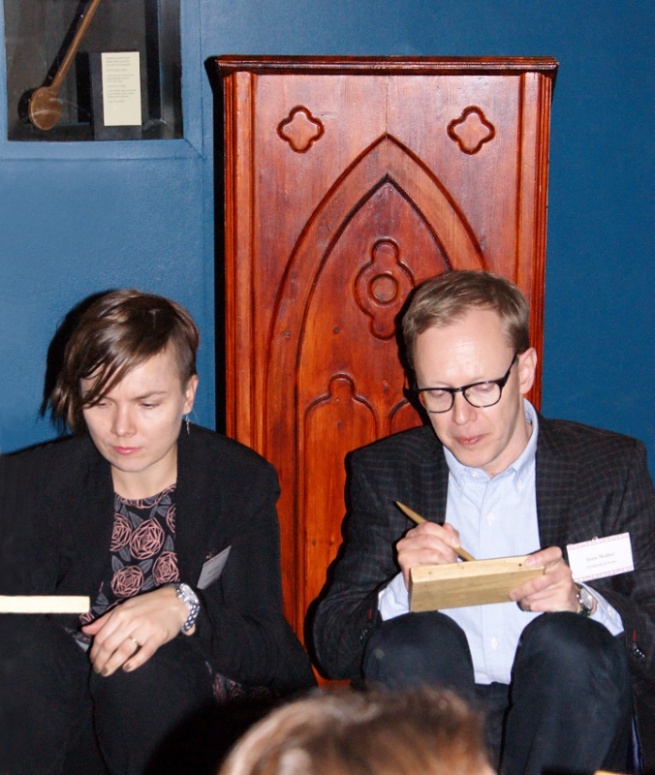
Scholars relaxing after a long day. The evening programme included a guided tour to the Aboa Vetus exhibition Letter by Letter: Traces of Reading and Writing.

Text and photos: Aino Liira, Sara Norja and Sirkku Ruokkeinen