Image: Žieda Tamašauskaitė.
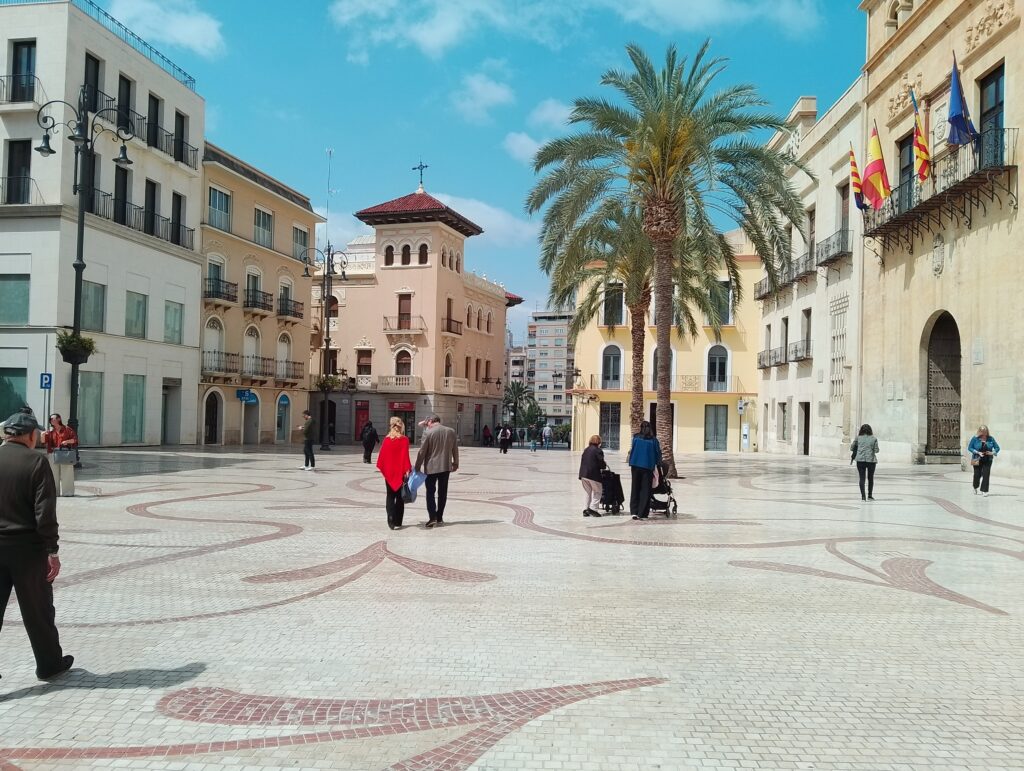
Professor Maunu Häyrynen’s opening on landscapes of conflict left me thinking about a particular type of landscape, one that has been not only used but also perceived as the prime site for staging political debates, fighting for one’s rights and believes and negotiating conflicts. The landscape I am referring to is urban public space. Indeed, many scientific publications discussing the nature and evolution of cities and urban public spaces give an impression that public space is rooted in an ongoing struggle between different interests or that the publicness of urban space is measurable by its openness for disputing issues. Yet, my numerous observations of the public life as it is lived in urban public spaces are not often, if at all, congruent with the descriptions.
Following scientific discussions on the use of, rights in and regulations over urban public space, it appears that public space is a container of conflicting urban uses. A broad range of activities, from community-oriented and intellectual endeavours to the most basic undertakings are often said to cause tensions among users of urban public space. For example, human geographer Don Mitchell speaks about the exercise of rights and how public space is defined and established in people’s attempt to assert their rights in public, and political scientist Margaret Kohn, in turn, finds the opportunity for staging polemical scenes (or making conflicts between different groups visible) to be a key feature of public space.
As I see it, what is being suggested is that urban public space is more than an urban space – it is a landscape, or a cultural phenomenon, that is tangible and intangible at once i.e., material, but not inert. It appears that it is through the processes in which the general public negotiate questions fundamental to their existence that urban public space is constantly evolving and becoming what it is. If so, then conflict is a force for change and development, both for the society and for the urban space.
Yet, conflicts in or over urban public space may also have more mundane sources. Some publications – both the well-known works such as Jane Jacobs’ The Death and Life of Great American Cities (1961) and the recent most by the present-day scholars – refer to the very encounter of different peoples, cultures, and life experiences as a potential source of tensions. Even the activity of moving between urban spaces, both public and private, and using public space for other everyday activities can, it seems, be taken as a potential source of conflict, making urban public space another landscape of conflict.
Although the basic everyday activities are much less intellectual sources of conflict, they do not seem to make the conflict a less important or less defining feature of urban public space. Actually, it appears to work in the opposite direction: extending the range of contestations over urban public space it makes the idea of urban public space as a landscape of conflict more apparent and more topical.
What does seem to raise doubts about urban public space as a landscape of conflict is that in real life situations the conflicts over the use of public space are not so pronounced or prominent for conflicting activities find ways of managing themselves before any conflicts brake out, and many conflicts are resolved almost effortlessly. For a case in point, I want to remind you of William H. Whyte, who having done numerous observations in public spaces in New York concluded that people passing by adapt to other people, and that they are successful at moving in crowded spaces.
Besides this argument, I have another one to give based on my own observations conducted in various urban public spaces in Helsinki, Finland, as well as elsewhere in European cities: conflicts do not necessarily break out as activities can distribute themselves across time and place, or the general public might intentionally avoid any clashes of interest. Having spent tens of hours observing how people use urban public spaces in Helsinki, I came to a conclusion that passing through is the most intensive of all activities carried out in urban public spaces. Next followed various activities that allowed people to be among other people in a passive way i.e., to spend time among strangers while avoiding any direct contact with them. Actually, I found opportunities for being among others rather than opportunities for carrying out specific activities to have been searched for by most of the people who drew to urban public spaces to spend some of their free time.
As for potential conflicts (over activities, interests or viewpoints), they appeared to me to be resolved well before becoming a reason for a conflict to break out meanwhile the activities that could be considered as potentially conflicting (e.g. political activities, loitering or noisy behaviour) turned out to work in support of one another. What I am trying to say here is that on the face of it, the public urban spaces that I observed appeared to me more as landscapes of peace and resilience, not as landscapes of conflict.
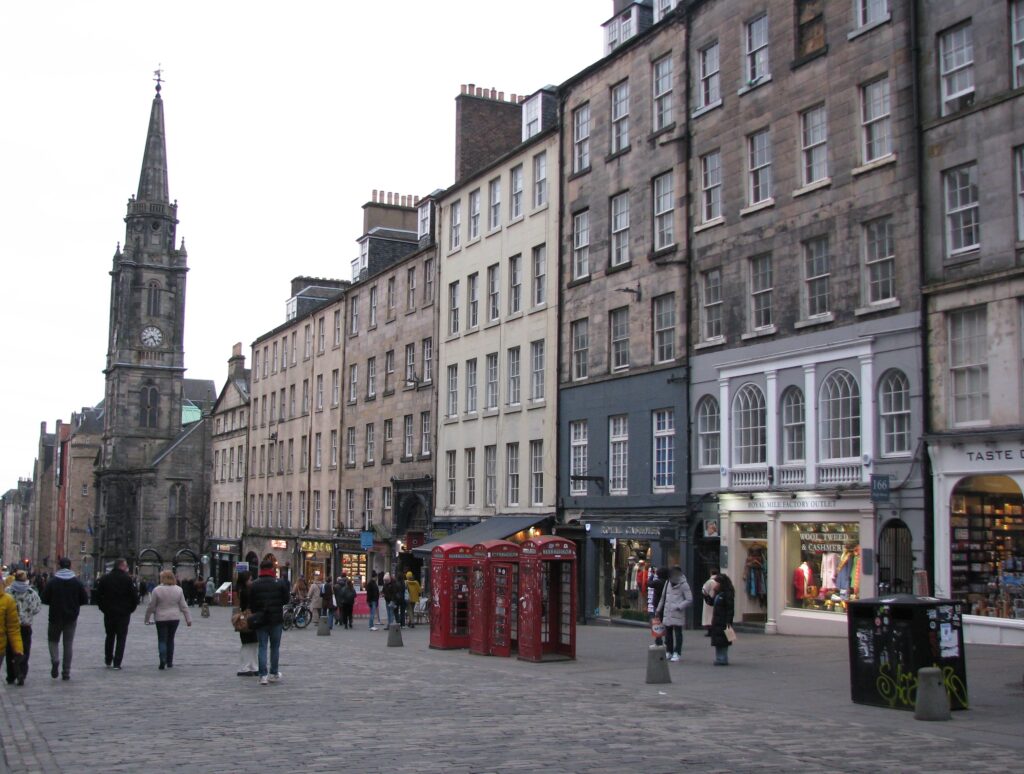
Image: Žieda Tamašauskaitė.
Having said that, I do not intend to reject the idea of urban public space as a landscape of conflict; many scholars have already proved public space to qualify for that kind of treatment. My intension is to point to the multiplicity of urban public spaces as well as to raise a question about how much the publicness of urban space entails conflicting uses. Is it, I wonder, that a landscape of peace and resilience evolves from (or after) a landscape of conflict? Or maybe the conflict is always there anyway, but not necessarily visible to the public eye? The only answer that I have for now is that I have to go back to the field for more observational data.
Kaunas, September 2026
Žieda Tamašauskaitė
The author holds a PhD in Landscape Studies from the University of Turku (Turku, Finland), and is a teacher of Urbanism, Urban landscape and Qualitative research methods at Vytautas Magnus University (Kaunas, Lithuania).
Viimeisimmät kommentit