Philologists in Edinburgh

The International Conference on English Historical Linguistics (ICEHL) was organised for the 20th time in Edinburgh on 27–30 August. The conference gathers together English scholars from around the world, studying English from Old to Late Modern.
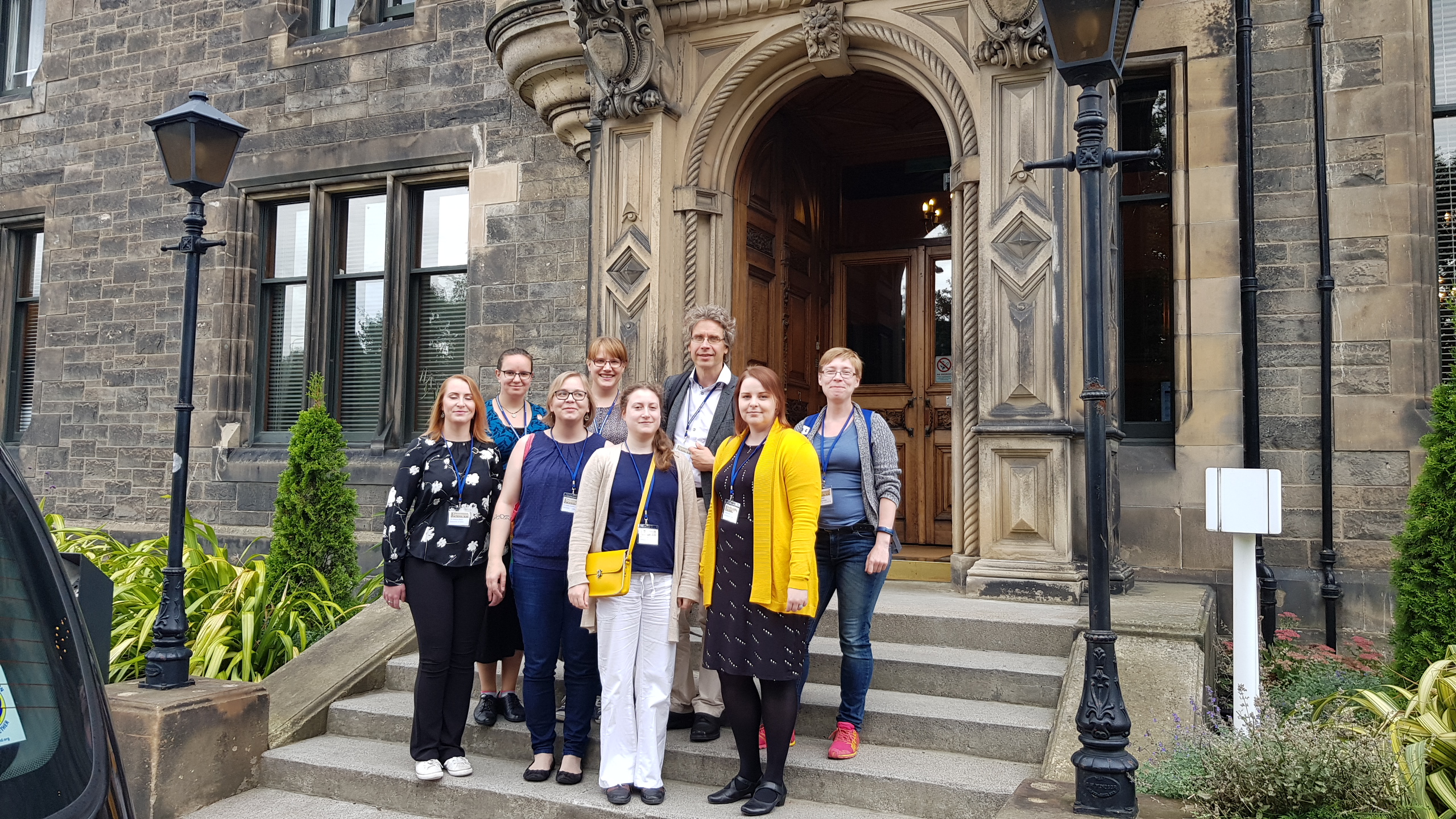
Almost all of our researchers from the Philological Track made it to ICEHL. Matti Peikola, Mari-Liisa Varila, Hanna Salmi (currently at the University of Stockholm), Aino Liira, and Sirkku Ruokkeinen gave papers in the workshop “Paratextual Communication in a Historical Linguistic Perspective”, organised by Matti Peikola and Birte Bös (University of Duisburg-Essen). Matti Peikola and Peter Grund (University of Kansas) presented a paper on orthographical variation together with Johanna Rastas. Aleksi Mäkilähde gave a paper on the metatheory of pragmaphilology. Susanna Mäkinen gave a paper on references to fugitives in runaway slave notices. I gave a paper on the different translations of The Mirror of Alchemy. We were a busy lot!

This was my first ICEHL, but I hope it won’t be the last. The conference was packed astonishingly full of great papers and interesting discussions; the programme can be found here. I have never been to a conference with so many excellent papers on fascinating topics that were relevant for my own research. I was especially excited by papers on topics such as medieval Latin-English code-switching, spelling variation and standardisation in the early modern period, and multilingualism in late modern medical discourse.

Despite the busy academic programme, there was also time for social events. The conference ceilidh on Tuesday 28 August was especially memorable: it was wonderful to dance and to watch a crowd of other scholars skipping merrily along to the live traditional music. Lots of us also found time to climb up to Arthur’s Seat, the majestic hill right next to the conference location.

ICEHL also involved a final day of activities on Friday 31st August. Most of us Turku philologists – unsurprisingly – chose to go to Lindisfarne, the monastic Holy Island where the Anglo-Saxon Lindisfarne Gospels were produced. The weather was astoundingly warm and sunny; we had a glorious day trip filled with island beauty, the island’s old history, and clean sea wind. It was a fitting and excellent ending to a week’s worth of English historical linguistics.

Text by Sara Norja
Photo by Minna Nevala
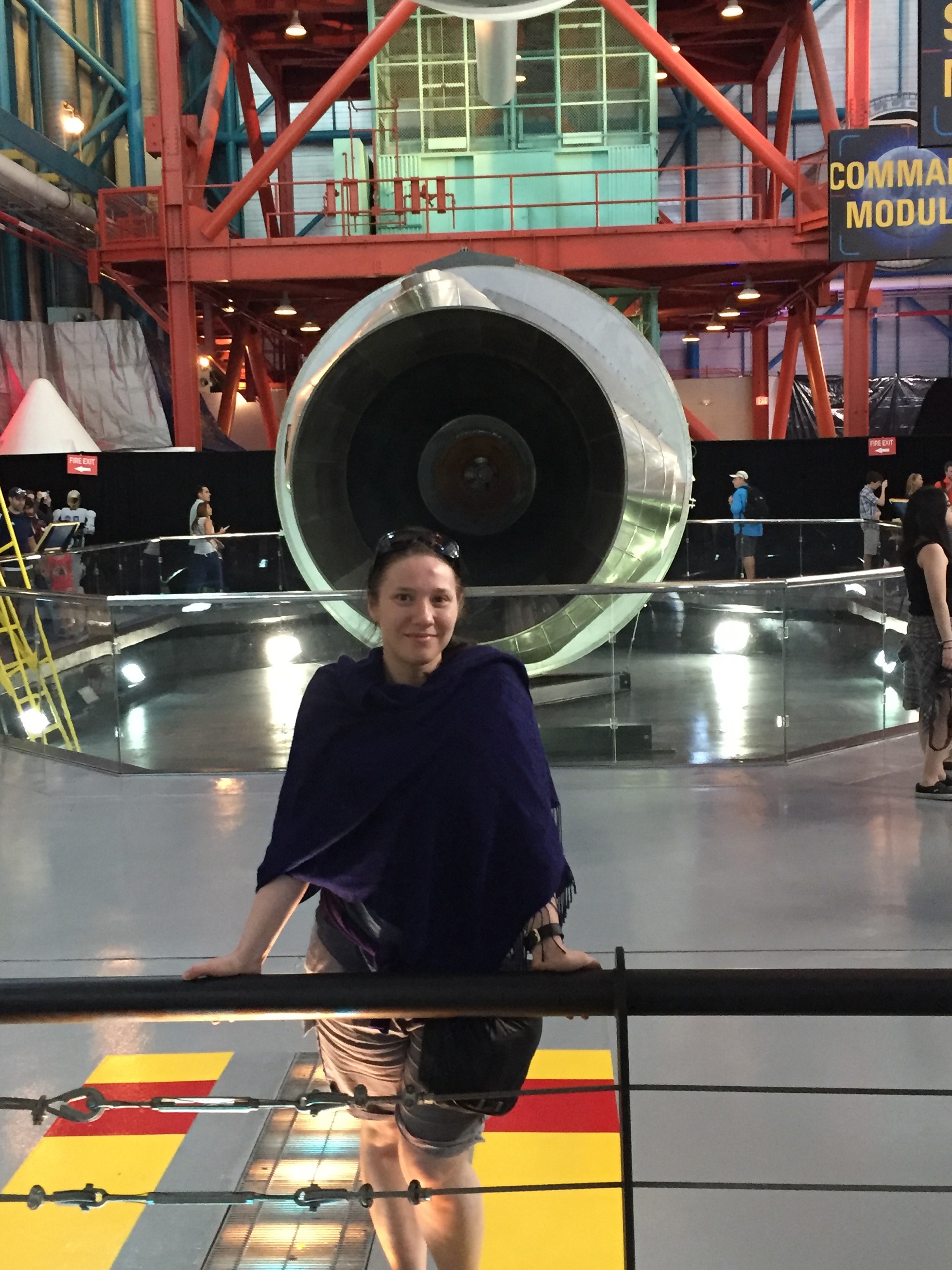
Introducing our latest permanent staff member: Q&A with Maarit Koponen


Maarit Koponen visiting the Kennedy Space Center.

1. Tell us a little bit of who you are.
I am a university lecturer of English, researcher of translation technology, a former professional translator, and a fan of both historical dramas and science fiction. I have an MA in English Philology and a PhD in Language Technology, both from the University of Helsinki. I live in Helsinki, and commute to Turku, for which reason I feel both profound appreciation and frequent annoyance toward the Finnish railway system.

2. What kinds of courses do you teach? How and when can our students meet you?
I teach English BA-level courses, such as Academic Writing & Speaking and Grammar 2, and various translation and technology courses on the Multilingual Translation Studies MA track. Currently my office hours are on Thursdays, 11-12, but that tends to change in different semesters. Making an appointment by email is a good option.

3. What do you do research on? What would you like to study in future?
My research focuses on translation technology, particularly machine translation, and the effect of technology on translation processes – how they produce translations. Questions of cognitive processing fascinate me, and in future research I hope to be able to dig deeper into the effect of (machine) translated text quality and errors on cognitive load both for translators and for readers of those texts. How do translators process errors and correct them? How do errors affect the reader response, and how are readers able to recover information even from an imperfect text?

4. Can you describe what a typical working day is like for a lecturer?
Different working days vary a lot, so it is difficult to define a “typical” one. There are days where I am teaching several lectures, or taking part in various meetings, or both, with lots of running in between. There are days preparing lectures and marking student papers. And then there are research days, which may mean staring at an xml file trying to figure out what on Earth is going on with my data, or writing, which may mean either furious typing or staring at a blank page.

5. What do you do when you are not a lecturer? Any time for other things in life?
I enjoy music and dance – I play percussion instruments and go to dance classes to get exercise beyond running between lectures and meetings. For a relaxing evening, I enjoy watching documentaries. My interests range from the history of the English monarchy to dinosaurs to all things space, aliens, conspiracy theories, and true crime, which is occasionally characterized as “baffling and slightly worrisome” by my nearest and dearest.

Philological fieldwork in London and Turku

If you trust Wikipedia, fieldwork refers to “the collection of information outside a laboratory, library or workplace setting”. However, philological ‘fieldwork’ often takes place within a library – but instead of reading secondary literature, we examine primary materials. I’m currently a visiting scholar at Queen Mary University of London. During my stay here, I work on 16th-century manuscripts and printed books in the British Library.

Although early materials are increasingly accessible in digital form, and many early texts are made available in editions, not all research questions can be asked of these substitutes. Codicological, palaeographical, and bibliographical research methods entail close examination of books and texts as material objects. Analysing the physical construction of a book or the scribal hands present in a manuscript, for example, may also provide crucial evidence for studying the contents of a book.

To access special collections, one usually needs to register as a reader (instructions can be found on library websites). After registering, you can then order items to study them in reading rooms. You can bring your laptop, notes, and pencils, but nothing that might damage the books such as pens or sharp implements. White gloves, although sometimes seen on TV, may also cause damage to the books. They are thus generally not used in professional libraries. Clean, dry, and careful hands are the better option!

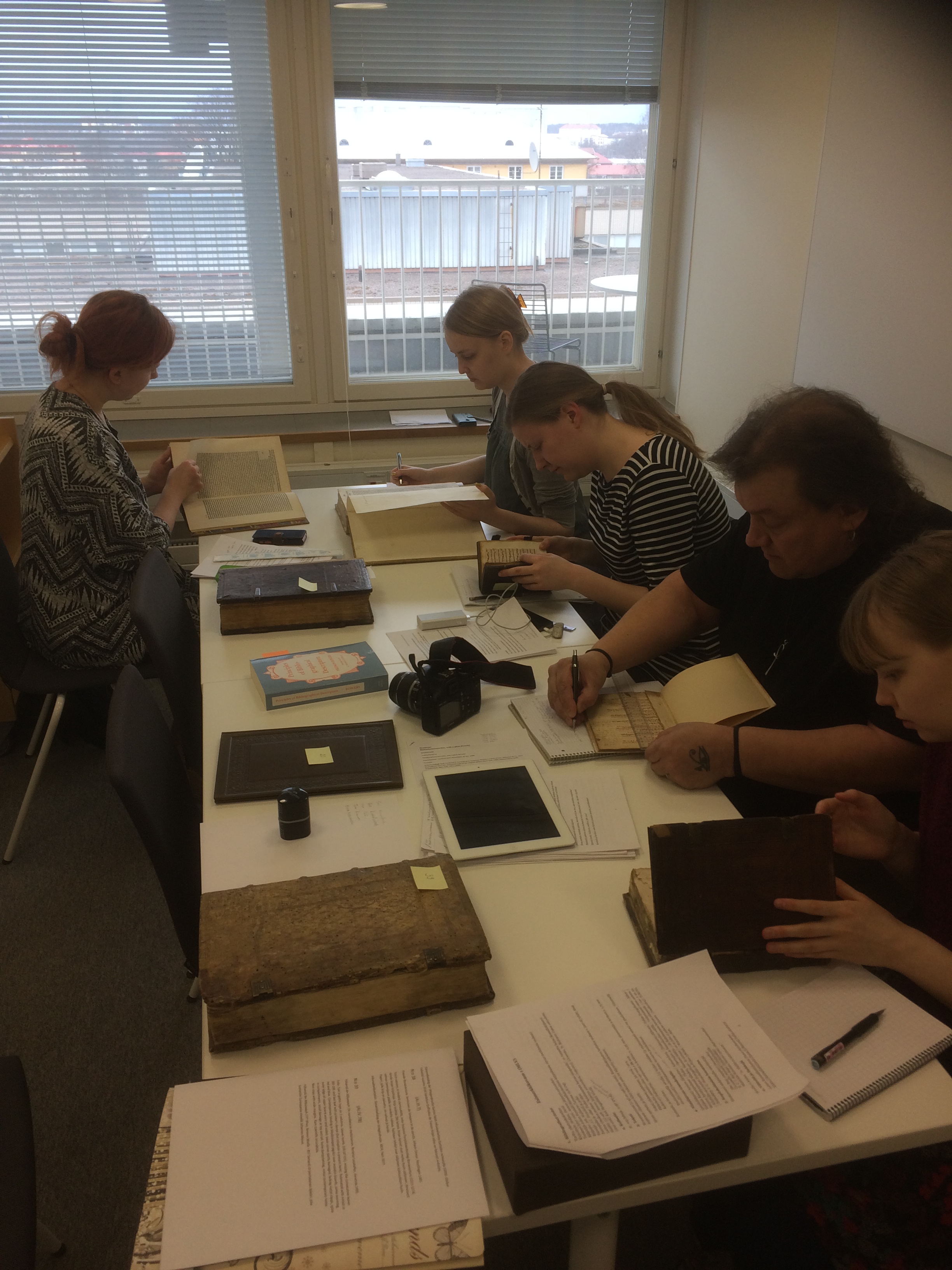
The University of Turku library also holds early materials. Last spring, students taking the Book History course organised by the Departments of English and European and World History had the chance to try their hand at being book detectives. My small group studied a selection of incunabula (books printed before 1501), practising the specialised skill of writing bibliographical descriptions of early books. Here they are at work!

Text and photo by Mari-Liisa Varila

Soup with Paul Auster


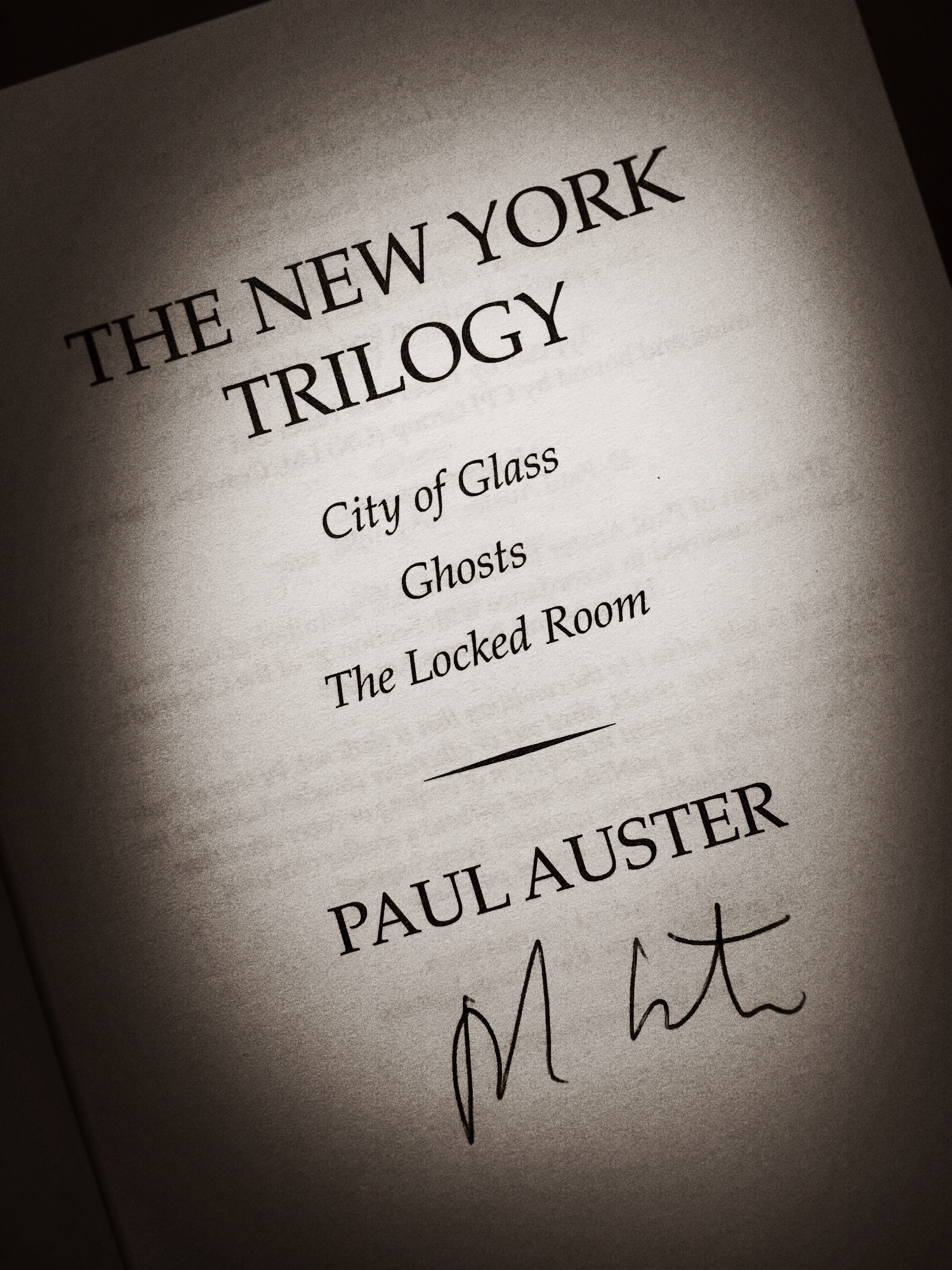
There is something surreal about eating the same soup as Paul Auster. All of a sudden, the intangible, enigmatic, almost disembodied author, whose books I read, whose films I watch and whose activities I follow in the media, is scooping mashed potatoes (and soup) on his plate (not the one that had the soup) at the “grubby little place” (his words, not mine) next to the House of the Estates in Helsinki and ranting enthusiastically about Beckett. Such encounters are, of course, one of the somewhat nerve-racking benefits of studying a living author.

At the turn of August and September 2017, the Finnish Society of Sciences and Letters organized a two-day seminar in honour of Finland’s centenary, titled Open Windows: Democracy, Censorship, Literature. As an avid defender of freedom of expression, a former Vice President of PEN America (2005-2007) and a member of its Board of Trustees (2004-2009), Paul Auster was a most suitable guest of honour.

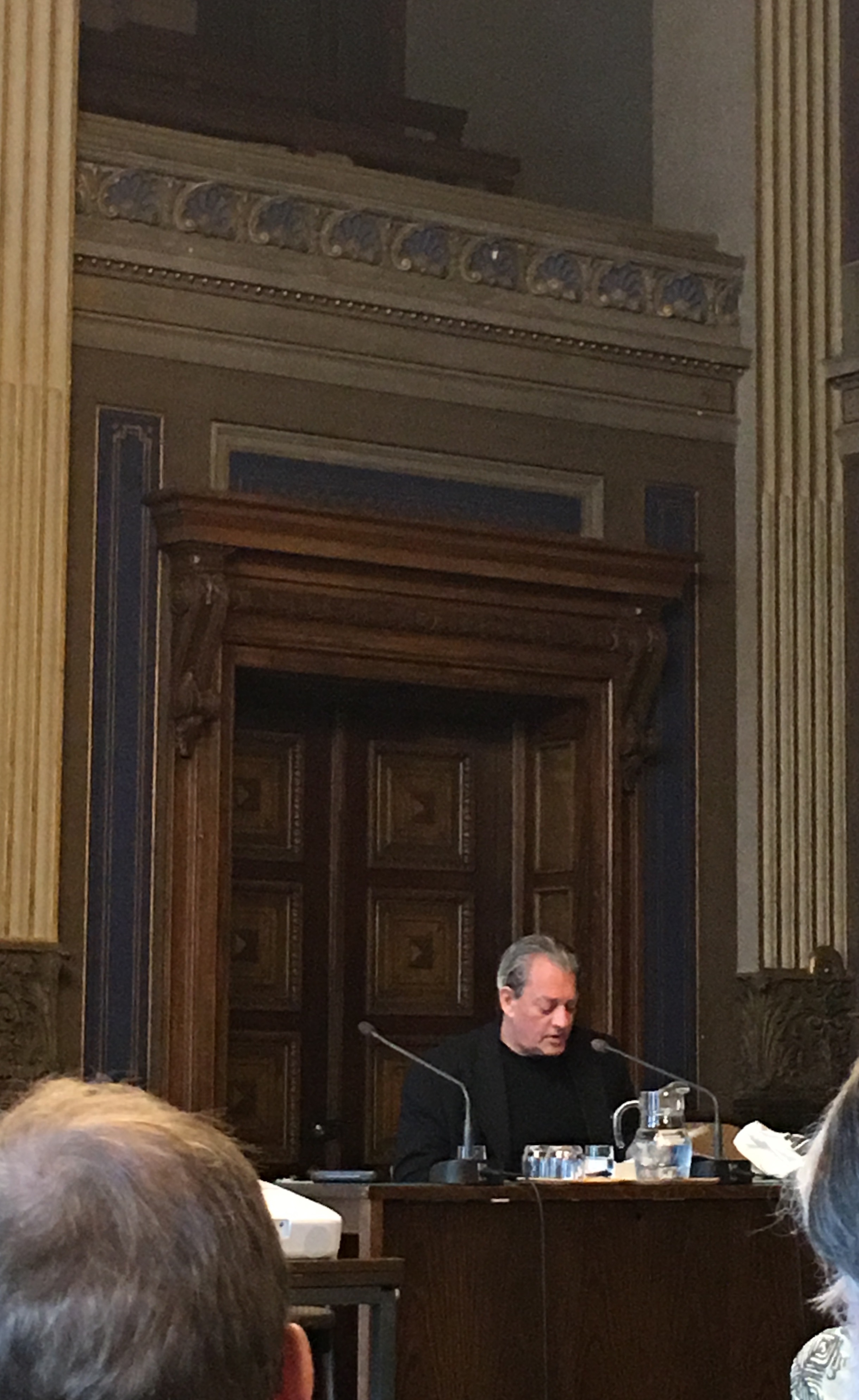
The seminar begun with Professor Bo Pettersson interviewing Auster on, among other things, his latest novel 4 3 2 1. What struck me the most was the calm yet enthusiastic way Auster approached every question, the passion with which he engaged his work and life in general, the way his speech flowed as eloquently as his writing. I hadn’t really thought what he would be like, but in hindsight, he could not have been more Paul Auster.

The seminar continued with Auster reading passages from 4 3 2 1, but unfortunately he could not stay for the rest of the first day’s presentations. The five or so days he spent in Finland were packed with interviews and other engagements, and he further claimed that the one-month-nine-countries tour would be his last of the kind.


Auster did, however, return on the second day for a panel with the Finnish author Sirpa Kähkönen, pictured above with Auster. Towards the end of the discussion, Auster remarked along these lines:

      Writing a novel is a political act, even if the writer is not conscious of it. Novels are about ordinary lives; authors get to enter the lives of the most ordinary people in the most intimate ways. Literature and writing are, therefore, democratic acts, because even the smallest of lives matter. Literature is a defence against tyranny; in connecting the reader with those who are not yourself, literature creates and teaches empathy. Novels are democracy in action.

This manifesto was accompanied by applause, and I’m sure I witnessed a few in the audience discreetly dab tears from the corners of their eyes.

Text and photos by Ira Hansen

My Days as a Conference Assistant

The Finnish Society for the Study of English (FINSSE) held its eighth biannual conference here in Turku this summer. Having never attended a conference before, I leapt at the opportunity to work as an assistant at the event and get credits for my Master’s internship. I’m glad I did, for The FINSSE-8 conference, “What’s in a Century?”, turned out to be the highlight of my academic year.

The whole experience was very positive. The organising committee welcomed me with open arms; I was given clear instructions as to what was expected of me and in moments of doubt I could simply ask for help. It soon became clear that organising a conference takes hours and hours of planning and preparation. Even I, a mere assistant, sat through several meetings and wrote countless emails. Those in charge certainly had a lot of work on their hands! Funding, venues, catering, timetables, name tags – all the meticulous work done in advance resulted in a successful conference.

During the event I took care of odd jobs here and there: I put up info signs, greeted people at the registration, carried water bottles and whatnot. I dabbled with things that may seem small, but, in the end, helped create a smooth conference experience. I was being useful and I liked it!

Amidst the work and responsibilities there were fun surprises and major perks. For example, during the first conference day we were treated to a small music number. The memory of conference participants, postgrads and professors alike, swirling around and dancing to the tunes of a violin will probably stay with me forever. Most importantly, though, I got a glimpse into the inner circle of English research in Finland: I felt like a little sponge soaking up knowledge and ideas. I had the opportunity to attend some interesting paper sessions and meet people working in fascinating fields of research – the conference even provided me with help for my upcoming MA thesis. The research community felt warm and supportive and people seemed to enjoy the conference. I’m lucky I got to be a part of it.

Text by Lilli Laine

Ceremonial Conferment of Doctoral Degrees, 25-26 May 2017

Academic festivities are there for a reason: they help us remember that we are part of a long scholarly tradition which is our cultural and intellectual heritage. That is where we belong. Not to mention the fact that they are extremely fun and enjoyable! 136 young doctors and 12 honorary doctors participated in a two-day conferment ceremony at the University of Turku towards the end of May. Our department was involved in two important ways: Professor Kenneth Hyltenstam from the University of Stockholm, a prominent scholar who has published widely on bilingualism and SLA and who has had a strong impact on research conducted in our department, had been invited to receive the title of honorary doctor on our initiative, and our very own Mari-Liisa Varila was among the young doctors on whom the doctoral degree was conferred in the ceremony (see Mari-Liisa’s own words below).


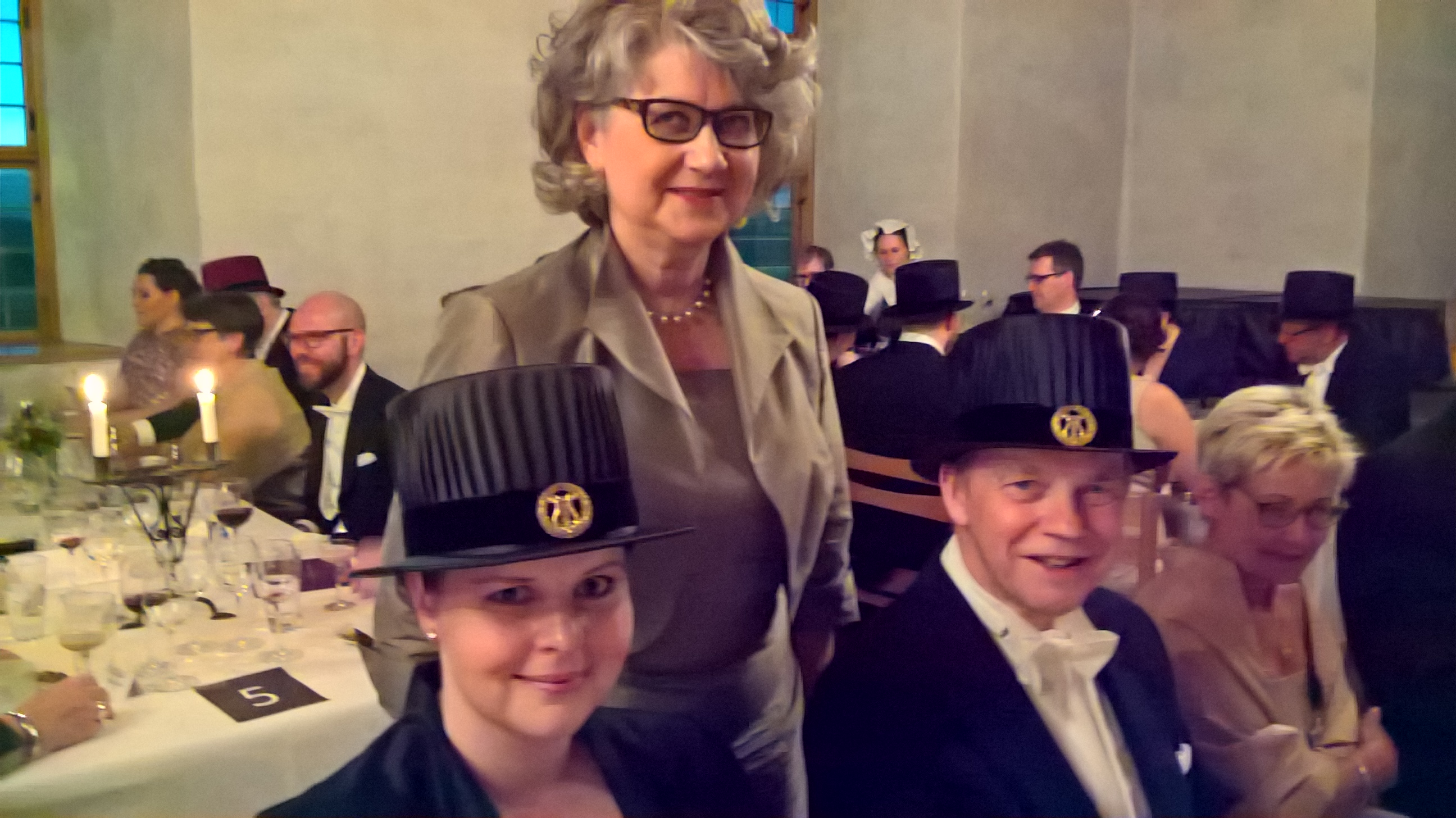
Mari-Liisa Varila, Päivi Pietilä and Kenneth Hyltenstam celebrating at Turku Castle.

It must have felt like two rather hectic days for our esteemed honorary doctors. All practical arrangements had been planned carefully beforehand by the organizing committee, including a fitting session on the morning of the first day, to make sure the white tie was the right size (the dress code is notably very strict on these occasions!), and transportation from the hotel to the various events and back again. The events consisted of a rehearsal at the Concert Hall, a sword-sharpening ceremony on the eve of the big day, the conferment ceremony itself, an academic procession from the Concert Hall to the Cathedral, a service at the Cathedral, a banquet at Turku Castle in the evening, and finally a ball at the Turku VPK House. In earlier years, the festivities went on even longer, as there was a boat trip to Naantali and lunch at Kaivohuone. Maybe it is not such a bad thing that the programme has been cut slightly; it is rather exhausting to be festive for two entire days, let alone three! But on the other hand, the two days were thoroughly enjoyable, and even the weather was better than anyone could have wished for: sunshine and a bright blue sky.

Text by Päivi Pietilä

The doctor in the hat

My doctoral degree was awarded already in June 2016, but the ceremonial conferment of doctoral degrees is only organised once every two or three years. To officially receive my hat, sword, and doctoral diploma, I participated in the festivities this year. It is not obligatory to take part in the ceremonial conferment, but I felt that it was a good way to stop for a moment and celebrate my achievement together with the other young doctors, the honorary doctors, and our academic community.


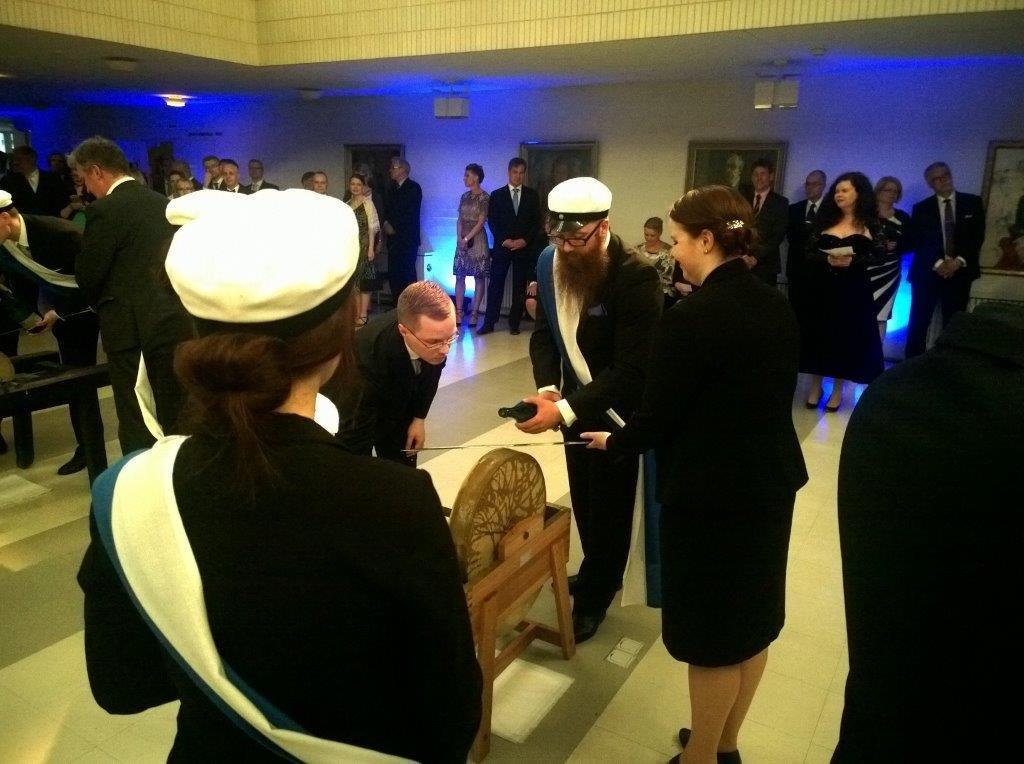
In the rehearsal on Thursday afternoon, we practised solemnly walking in pairs, receiving the sword, and bowing to the conferrer without dropping our hats. Excitement filled the air. In the sword-sharpening ceremony on Thursday evening, we symbolically honed our blades for the big day. Our avecs turned the grindstones while the heralds poured some bubbly on the swords.


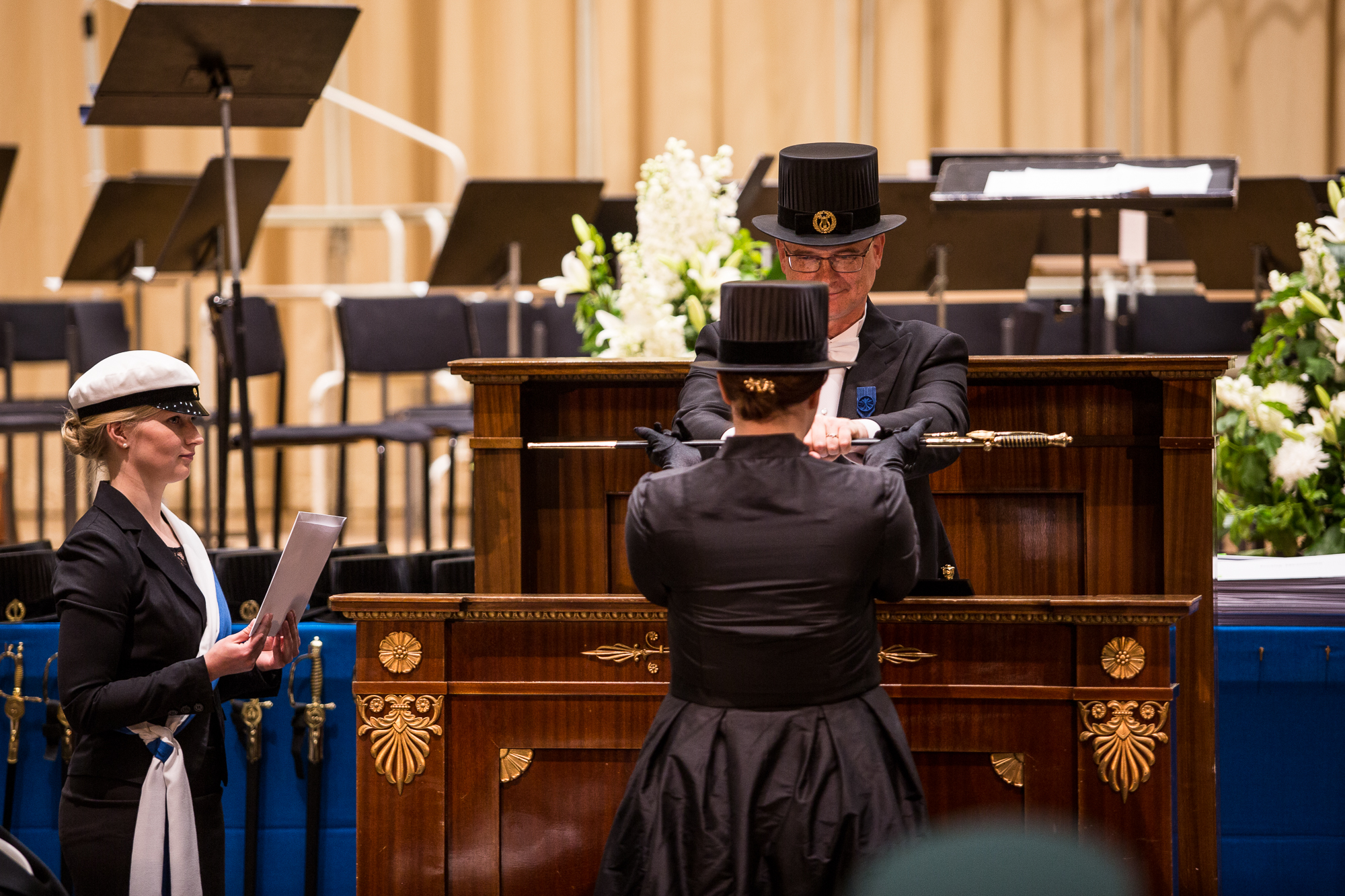
Mari-Liisa Varila receiving her sword.

On Friday noon we gathered to the Concert Hall, all in tailcoats or long black dresses. At quarter past twelve, the procession entered the hall. We sat down in the front of the room, waiting for our turn to receive the hat and sword. Each conferrer stepped up to the podium in their turn, delivering their trilingual speech – Finnish, English, and Latin. They pressed the hats on our heads and presented us with our swords and (Latin) diplomas. After the ceremony, our procession moved from the Concert Hall to the Cathedral where a bilingual service was held. Our day was made even more special by the beautiful singing of the Turku University Choir.

In the evening, we gathered to the Turku Castle. We were served a three-course dinner, interspersed with speeches and some more singing. I was honoured to have been asked to deliver the speech to the honorary doctors. We then moved to the VPK house for a polonaise and a waltz, with music provided by Sohon Torwet. Our evening ended, very appropriately, in a speech to the sun.

Text by Mari-Liisa Varila
Photos by Miikka Varila and Markku Hakala

Revisiting Galway: Translation Meets Book History

The English Department seems to be building up a special affinity with Galway. The ESSE conference last August was attended by quite a crowd (see blog post here); earlier last year I had the chance to visit the National University of Ireland in Galway as Moore Institute Research Fellow. And now I am back at the Institute for more research and networking in connection with a seminar on book history and translation studies.

There are a thousand excellent reasons to come back to Galway: the Irish are an extremely friendly people (and seem to share a number of things with Finns – maybe living at opposite ends of Europe makes for some sort of a bond?), Galway is an attractive and cosy town with an interesting history, and the University offers a vibrant intellectual atmosphere and a very warm welcome to visiting scholars.

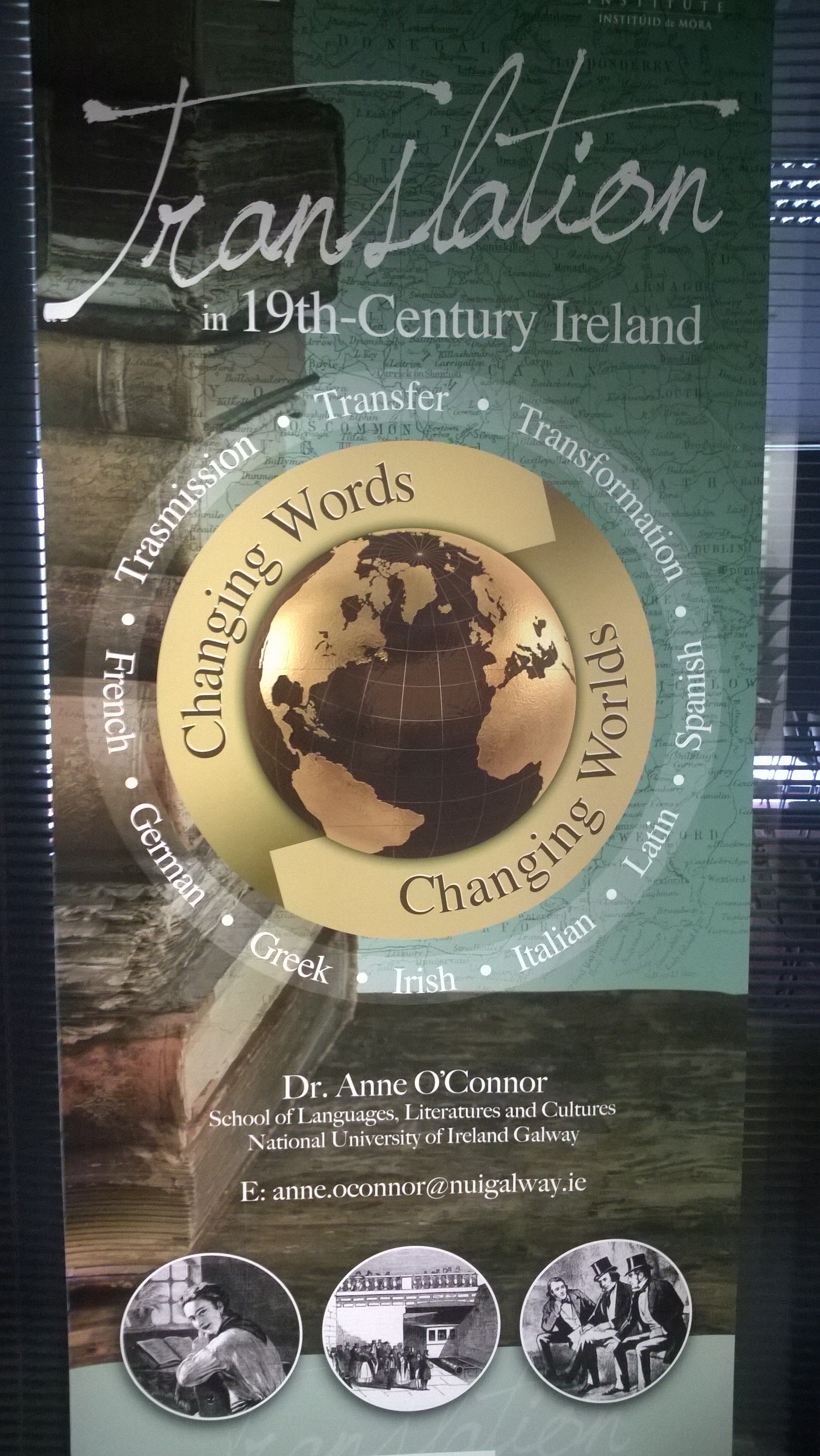
The conference “Book History Meets Translation Studies” was organised by Dr. Alice Colombo, a Marie Curie scholar in Galway, together with Dr. Anne O’Connor, who has just come out with a fantastic book on Irish translation history in the 19th century (see here) and Dr. Niall Ó Ciosáin, a renowned scholar of the Irish print culture (see here). The conference brought together researchers from different parts of the world and with widely varying topics, ranging from multilingual texts in 19th century North Africa to book illustrations, from Urdu scribes’ manuals to publishers’ archives. Katja Vuokko from our department gave a paper on Finnish translators’ footnotes; I talked about the Tauchnitz series “Collection of British Authors” and the introduction of British literature in Finland. The keynote speaker was Prof. Norbert Bachleitner from the University of Vienna with a highly interesting paper on 18th century women translators.

Apart from academic interests, Galway boasts a wealth of historical sites and places to see (and a very large number of pubs). In a street corner there is a statue of Oscar Wilde and the Estonian author Eduard Vilde, “a humorous quip on literary history”. The original statue of the W/Vildes is in Tartu (sculptor Tiiu Kirsipuu); the copy was presented to the city of Galway to celebrate Estonia’s membership in the EU. In real life, the two authors never met.

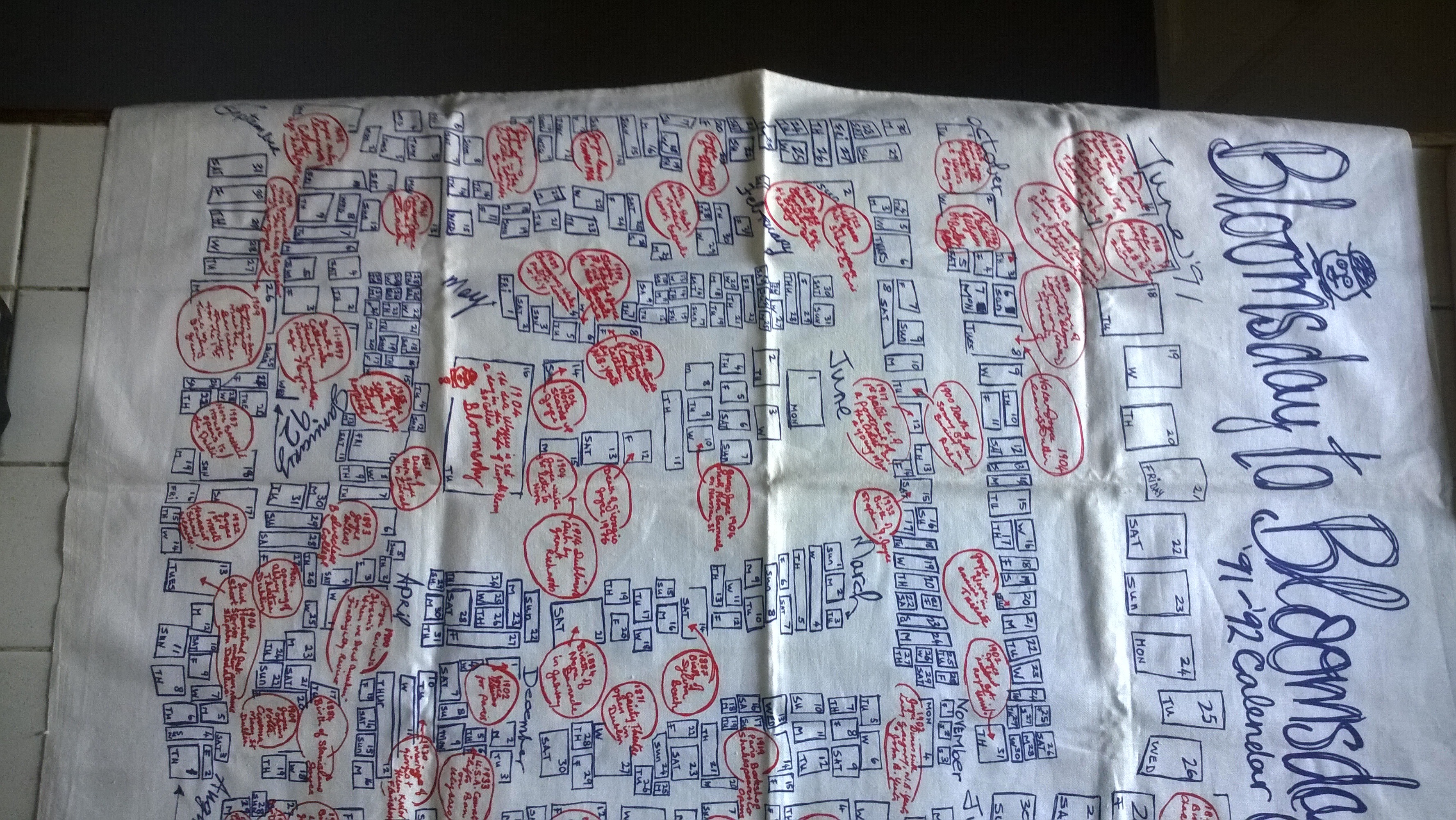
For me the most memorable place in Galway is Nora Barnacle’s house in Bowling Green, where I was taken by my wonderful landlady Sheila (the museum is presently not open for public). This was the home of Nora, James Joyce’s wife, and it is the smallest museum in Ireland with just two rooms and a backyard. Mary and Sheila Gallagher bought the house in 1987 and it is thanks to them that the house has been preserved and restored. The teatowel in the picture below celebrated the 1991 Bloomsday; one in the series of events organised by Mary and Sheila.

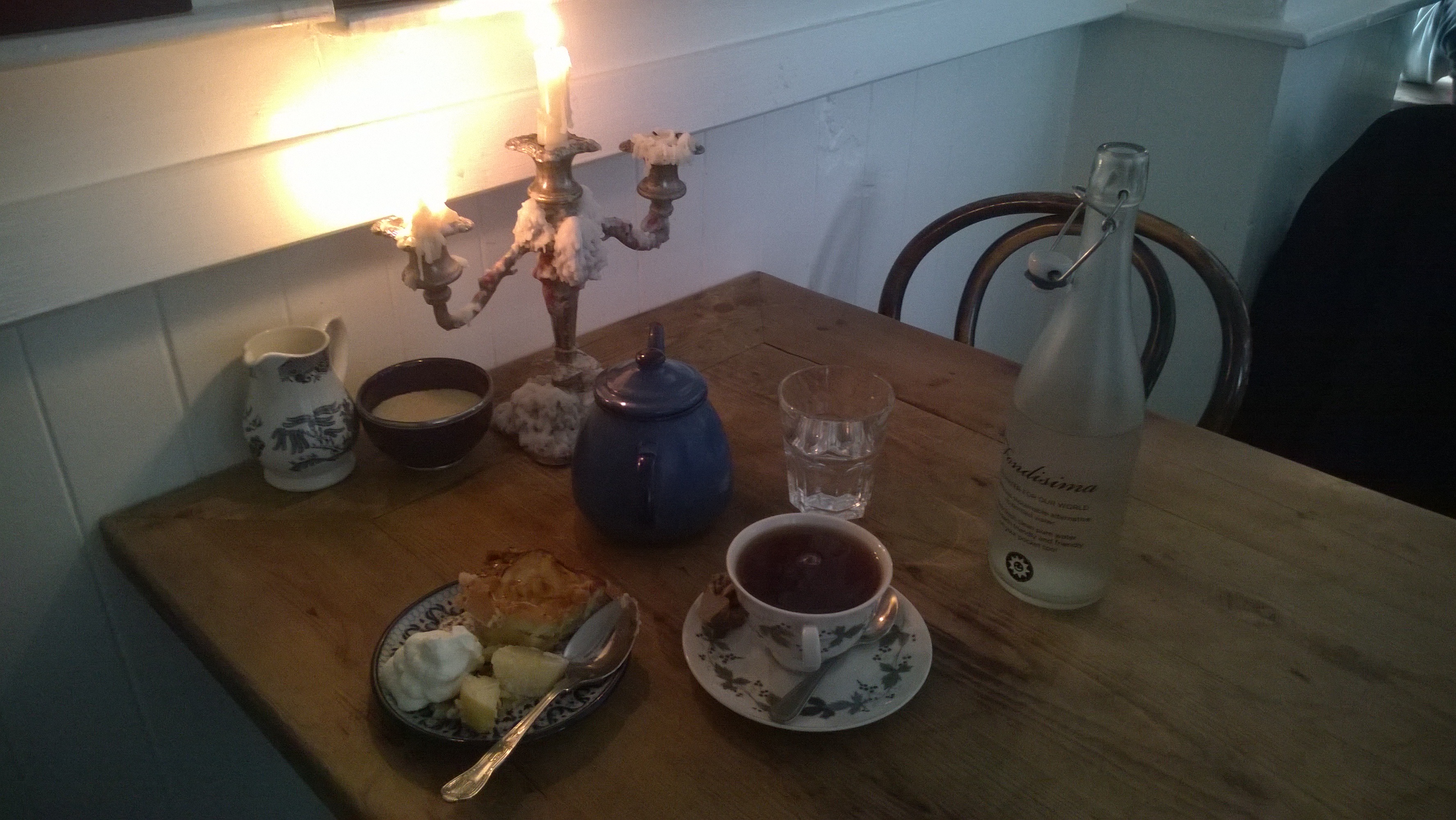
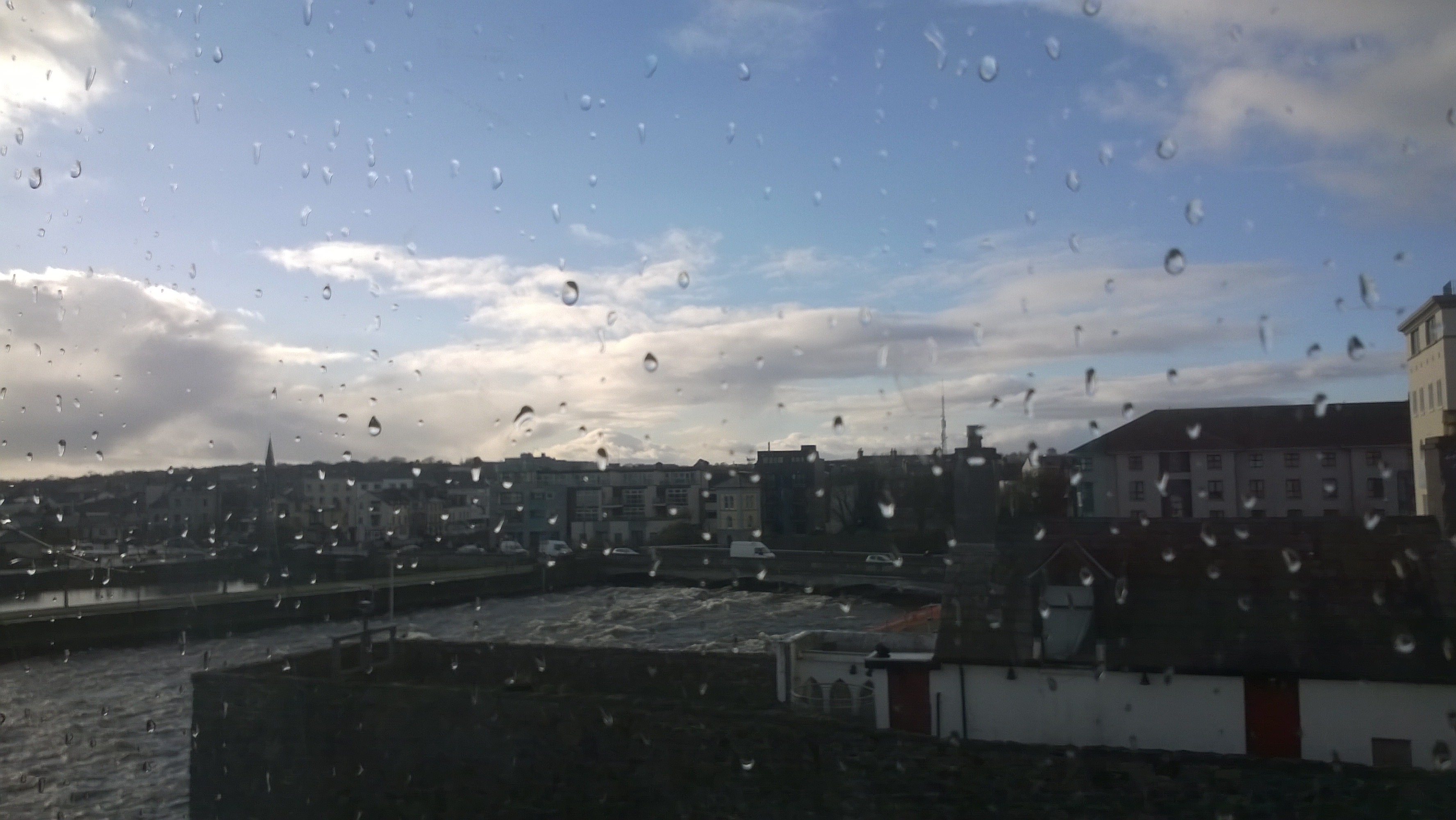
No research visit is complete without cafés and tea houses. There is plenty to choose from in Galway: Ard Bia at Spanish Arch and The Kitchen at the Galway museum are my favourites. A perfect way of combining work and leisure on a rainy day!

Text and photos by Outi Paloposki

Your thesis in three minutes

Thursday 9 March was an exciting day on campus, as it was the day for the final of the Three Minute Thesis (3MT) competition, which was organized for the first time at the University of Turku.The competition was developed by the University of Queensland and the first 3MT competition was held at UQ in 2008. The idea is that doctoral candidates introduce their research to the public as interestingly as possible in three minutes. I decided to participate because the event offers an excellent opportunity to practice presentation skills. It also helps to understand the essence of your own research when you need to explain it to others in three minutes.

The competition started with two semi-finals in early February. The first semi-final was organized for the doctoral candidates within Humanities, Education, Social Sciences, Law, and Economics, and the other for doctoral candidates within Science and Medicine. From both first rounds five top presentations were selected to the final and I was honored to learn that mine was one of them.

The 3MT final drew a large audience in the Tauno Nurmela hall. The atmosphere was full of excitement and it was very interesting to get to hear of other people’s PhD projects from different fields. There were also good prizes for the best ones. Moreover, the winner gets to participate in the Coimbra Group Competition with the video that was filmed during the final. Three best video recordings of the presentation will continue to compete in a live competition in Edinburgh in the beginning of June.

In addition to the diploma all finalists received at the event, we all gained useful experience in giving a presentation and summing up our research. All in all, the whole experience was very positive and I hope that the University of Turku organizes this event in the future too. I encourage all doctoral candidates to grab the opportunity!

Text: Johanna Rastas
Photos: Johanna Rastas & The University of Turku

Shakespeare 400 revisited

The Shakespeare 400 course was organised jointly by the University of Turku and Åbo Akademi University in autumn 2016.

After the first lecture on the history of English and the early printing history of Shakespeare’s works, the students delved deeper into other topics in Shakespeare studies. Aino Mäkikalli discussed Shakespeare’s sonnets, situating them in their historical and ideological context. Anthony Johnson highlighted the influence of early modern school curricula on Shakespeare’s plays.

The Finnish translations of Shakespeare’s plays and sonnets were introduced by Outi Paloposki. For example, in an early translation of the Scottish play, one of the characters is called Pirjo. Intrigued? Read the play here.

Tom Linkinen and Hannu Salmi approached Shakespeare from the point of view of cultural history. Linkinen discussed the ways in which genders and sexualities are performed in Shakespeare’s plays. Salmi, in turn, started from a mnemohistorical point of view, showing the audience examples of how Shakespeare has been interpreted on the silver screen. The last lecture by Joel Kuortti focused on the postcolonial rewritings of The Tempest.

The students also engaged in small group work. One of the tasks was to translate into Finnish Benedick’s troubled rant from Much Ado About Nothing (V.ii.35-41). It works quite nicely in the Turku dialect, too!

    En sunka mää ny mittä riimei ossa. Kyl mää niimpal yriti, mut ei mul mittä muut tullu miäle ku ”flikoi” ja ”sikoi”. Kuka ny simmossi puhu! Eikä koulun kans men mikkä muu, ku joulu. Mittä järke… Ei munt kyl ol tarkotettu mittä runoi värkkämä, eikä nättei puhuma muutenka!
    (Translation: Tuula Viitanen)

Text by Mari-Liisa Varila

Time flies when you have JAZZ!

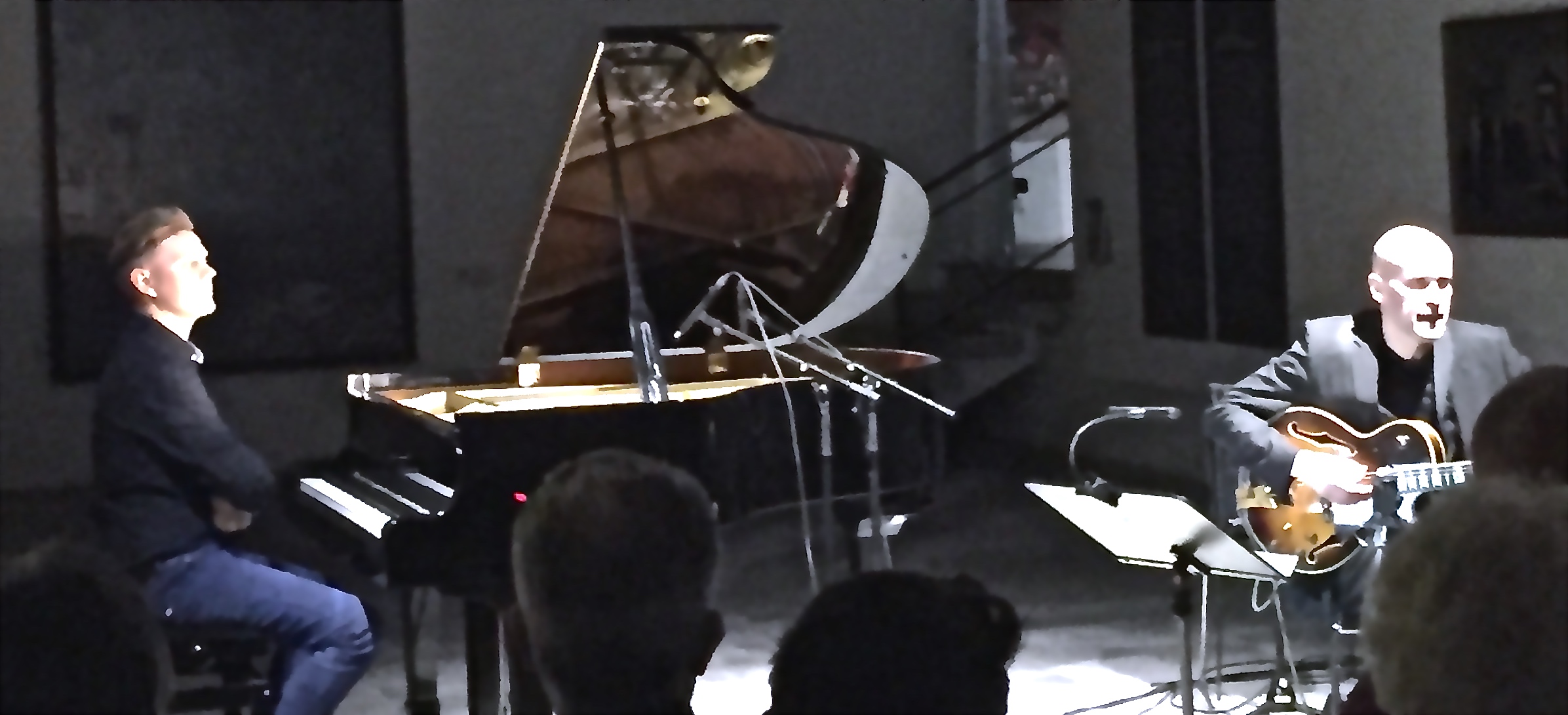
The English Department makes traditional ‘City Hikes’ to Turku destinations. This time the goal was to be jazzed at the Wäinö Aaltonen Museum with their Tuesday concert series. The programme promised a treat by the duo of the jazz pianist Aki Rissanen and the Finnish jazz guitar genius Niklas Winter.

The (unexpected, unprogrammed) overture was Aki’s solo consisting of a piece from Medieval French composer Guillaume de Machaut (d. 1377), followed by a part of the Finnish composer Leevi Madetoja’s (1887–1947) Syksy (Autumn) series of songs. All in ‘jazz’. Niklas tried to enter the stage after Aki’s first number but was, convivially, only allowed to enter after the Madetoja piece.

The programme consisted of many compositions by the duo, some of which were dedicated to memorable musicians (J. J. Cale, Charlie Parker, Billy Strayhorn). The guitar and the piano played well together, and created a timeless sound world.
jazz1

Aki Rissanen, piano, Niklas Winter, guitar. Photo: JK.

As to the etymological roots of jazz, then, it is a complex type of beast. With Western African origins, it can be said to have been brought to life and light in New Orleans (since the beginning of the 20th century). The ‘exact’ meaning is shrouded in innuendoes, ambiguities, and especially euphemisms. Subsequently, such an ambiance created a shrowd of unaccceptability (and also counterhegemonic prestige) for jazz for decades, some of which continues in its reception even in today’s (self-acclaimed) uninhibited musical sphere.

There are myriad forms of jazz – and even more of its derivatives and fusions. The most familiar ones are perhaps Bebop, Swing, Big Band, and (maybe only by reputation) Free Jazz. Even a short list of major names of jazz performers and composers (or my meagre list of favourites) itself exceeds the limits of this platform.

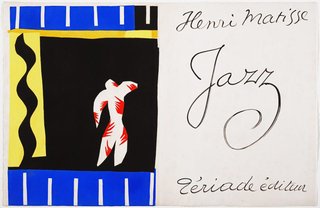
Intertextually, ‘jazz’ may bring into mind Tony Morrison’s (Chloe Anthony Wofford, born 1931–) historical 1992 novel Jazz, director Bob Fosse’s autobiographical movie All that Jazz (1979), Henri Matisse’s (1869–1954) art collage book Jazz (1947), or any number of other cultural artefacts. Be as it may, jazz is a state of mind.

jazz2
Henri Matisse, “The Clown” (1947)

Text and photo by Joel Kuortti